Perspective - (2025) Volume 17, Issue 3
Received: 01-May-2025, Manuscript No. jcst-25-172462;
Editor assigned: 05-May-2025, Pre QC No. P-172462;
Reviewed: 19-May-2025, QC No. Q-172462;
Revised: 22-May-2025, Manuscript No. R-172462;
Published:
29-May-2025
, DOI: 10.37421/1948-5956.2025.17.708
Citation: Ahmed Mahmoud. ”DNA Repair Pathways: Stability,
Cancer, Therapies.” J Cancer Sci Ther 17 (2025):708.
Copyright: © 2025 M. Ahmed This is an open-access article distributed under the terms of the Creative Commons Attribution License, which permits unrestricted use,
distribution and reproduction in any medium, provided the original author and source are credited.
DNA repair pathways are critical for maintaining genomic stability, profoundly influencing cancer development and treatment. Targeting these pathways offers new therapeutic strategies by exploiting cancer cell vulnerabilities [1].
Base excision repair (BER) mechanisms are intricate, responsible for removing damaged or modified bases from DNA. BER's essential function preserves genomic integrity and prevents diseases like cancer and neurodegeneration [2].
Cells utilize distinct pathways for DNA double-strand breaks, specifically non-homologous end joining (NHEJ) and homologous recombination (HR). Understanding the choice between these pathways is crucial for developing targeted cancer therapies that exploit repair pathway deficiencies [3].
The Fanconi Anemia pathway is a complex network vital for repairing DNA interstrand crosslinks, which represent particularly hazardous forms of DNA damage. Defects in this pathway lead to various severe genetic disorders and increased cancer predisposition [4].
Recent advancements reveal new insights into nucleotide excision repair (NER), a major pathway for removing bulky DNA lesions caused by UV light and chemical mutagens. The molecular mechanisms of NER hold significant implications for human diseases, including cancer and neurodegeneration [5].
Translesion DNA synthesis (TLS) is a specialized repair pathway that allows DNA replication to proceed past damaged templates. While crucial for cell survival, TLS can be error-prone, contributing to mutagenesis and the evolution of cancer, thus acting as a double-edged sword for genomic stability [6].
The DNA damage response (DDR) signaling network is vital for detecting and repairing DNA lesions. This sophisticated network involves a complex interplay of various proteins and pathways that coordinate cell cycle arrest, DNA repair, and apoptosis to ensure genomic stability and prevent disease [7].
Mitochondrial DNA damage presents unique challenges, with its repair mechanisms differing significantly from nuclear DNA repair. Compromised mitochondrial DNA integrity and repair processes contribute to the pathogenesis of neurodegenerative diseases [8].
There is an intricate relationship between telomere maintenance and DNA repair pathways. Telomeres, the protective caps of chromosomes, are recognized as DNA damage by cellular machinery, and their integrity is crucial for genome stability and cell longevity, influencing aging and cancer [9].
The interplay between CRISPR/Cas9 gene editing technology and endogenous DNA repair pathways is significant. It highlights the potential for unintended mutations and chromosomal rearrangements arising from the cell's repair mechanisms responding to CRISPR-induced DNA breaks, emphasizing the need for precision in gene editing applications [10].
Maintaining genomic stability is crucial for preventing disease, a task primarily handled by a sophisticated network of DNA repair pathways. These pathways are critical, profoundly influencing cancer development and treatment, as targeting them can exploit vulnerabilities in cancer cells' repair machinery [1]. The overarching DNA Damage Response (DDR) signaling network is vital for detecting and repairing DNA lesions. This complex interplay of various proteins and pathways coordinates cell cycle arrest, DNA repair, and apoptosis, ensuring genomic integrity and preventing diseases [7].
Several distinct mechanisms are employed to address specific types of DNA damage. For instance, base excision repair (BER) mechanisms intricately remove damaged or modified bases from DNA. BER's essential function in preserving genomic integrity helps prevent diseases such as cancer and neurodegeneration [2]. Similarly, nucleotide excision repair (NER) represents a major pathway for removing bulky DNA lesions, which are often caused by UV light and chemical mutagens. Understanding NER's molecular mechanisms holds significant implications for human diseases, including cancer and neurodegeneration [5].
More severe forms of DNA damage, like double-strand breaks and interstrand crosslinks, require specialized repair. Cells utilize distinct pathways such as non-homologous end joining (NHEJ) and homologous recombination (HR) to repair DNA double-strand breaks. The choice between these pathways is crucial for developing targeted cancer therapies that exploit repair pathway deficiencies [3]. Furthermore, the Fanconi Anemia pathway, a complex network of proteins, is essential for repairing particularly hazardous DNA interstrand crosslinks. Defects within this pathway can lead to severe genetic disorders and increased cancer predisposition [4].
While repair mechanisms diligently fix DNA, some processes allow replication to continue past damage. Translesion DNA synthesis (TLS) is a specialized pathway that enables DNA replication to proceed past damaged templates. While crucial for cell survival, TLS can be error-prone, thereby contributing to mutagenesis and the evolution of cancer. This makes TLS a double-edged sword for genomic stability [6].
Beyond nuclear DNA, mitochondrial DNA damage presents unique challenges, as its repair mechanisms differ significantly. Compromised mitochondrial DNA integrity and repair processes contribute to the pathogenesis of neurodegenerative diseases, highlighting their importance [8]. Additionally, telomere maintenance is intricately linked with DNA repair pathways. Telomeres, the protective caps of chromosomes, are recognized as DNA damage by cellular machinery, and their integrity is crucial for genome stability and cell longevity, influencing aging and cancer [9]. Finally, the interplay between modern CRISPR/Cas9 gene editing technology and endogenous DNA repair pathways warrants attention. This interaction can lead to unintended mutations and chromosomal rearrangements as the cell's repair mechanisms respond to CRISPR-induced DNA breaks, underscoring the critical need for precision in gene editing applications [10].
DNA repair pathways are critical for maintaining genomic stability, with significant implications for cancer development and treatment. Targeting these pathways offers new therapeutic strategies by exploiting vulnerabilities in cancer cells' repair machinery. Base excision repair (BER) mechanisms remove damaged or modified bases from DNA, essential for preserving genomic integrity and preventing diseases like cancer and neurodegeneration. Cells employ non-homologous end joining (NHEJ) and homologous recombination (HR) to repair DNA double-strand breaks. Understanding the choice between these pathways is crucial for developing targeted cancer therapies that exploit repair deficiencies. The Fanconi Anemia pathway, a complex protein network, is essential for repairing DNA interstrand crosslinksâ??a particularly hazardous form of DNA damage. Defects in this pathway lead to various severe genetic disorders and increased cancer predisposition. Recent advancements in nucleotide excision repair (NER) reveal its role as a major pathway for removing bulky DNA lesions caused by UV light and chemical mutagens. Its molecular mechanisms have implications for human diseases, including cancer and neurodegeneration. Translesion DNA synthesis (TLS) is a specialized repair pathway enabling DNA replication past damaged templates. While vital for cell survival, TLS can be error-prone, contributing to mutagenesis and cancer evolution, thus acting as a double-edged sword for genomic stability. The DNA damage response (DDR) signaling network is vital for detecting and repairing DNA lesions. It involves a complex interplay of proteins and pathways that coordinate cell cycle arrest, DNA repair, and apoptosis to ensure genomic stability and prevent disease. Mitochondrial DNA damage and its unique repair mechanisms, distinct from nuclear DNA repair, pose challenges. Compromised mitochondrial DNA integrity and repair processes contribute significantly to the pathogenesis of neurodegenerative diseases. There is an intricate relationship between telomere maintenance and DNA repair pathways. Telomeres, chromosome protective caps, are recognized as DNA damage, and their integrity is crucial for genome stability and cell longevity, influencing aging and cancer. The interplay between CRISPR/Cas9 gene editing and endogenous DNA repair pathways can lead to unintended mutations and chromosomal rearrangements arising from the cell's response to CRISPR-induced DNA breaks. This highlights the need for precision in gene editing applications.
Indexed at, Google Scholar, Crossref
Indexed at, Google Scholar, Crossref
Indexed at, Google Scholar, Crossref
Indexed at, Google Scholar, Crossref
Indexed at, Google Scholar, Crossref
Indexed at, Google Scholar, Crossref
Indexed at, Google Scholar, Crossref
Indexed at, Google Scholar, Crossref
Indexed at, Google Scholar, Crossref
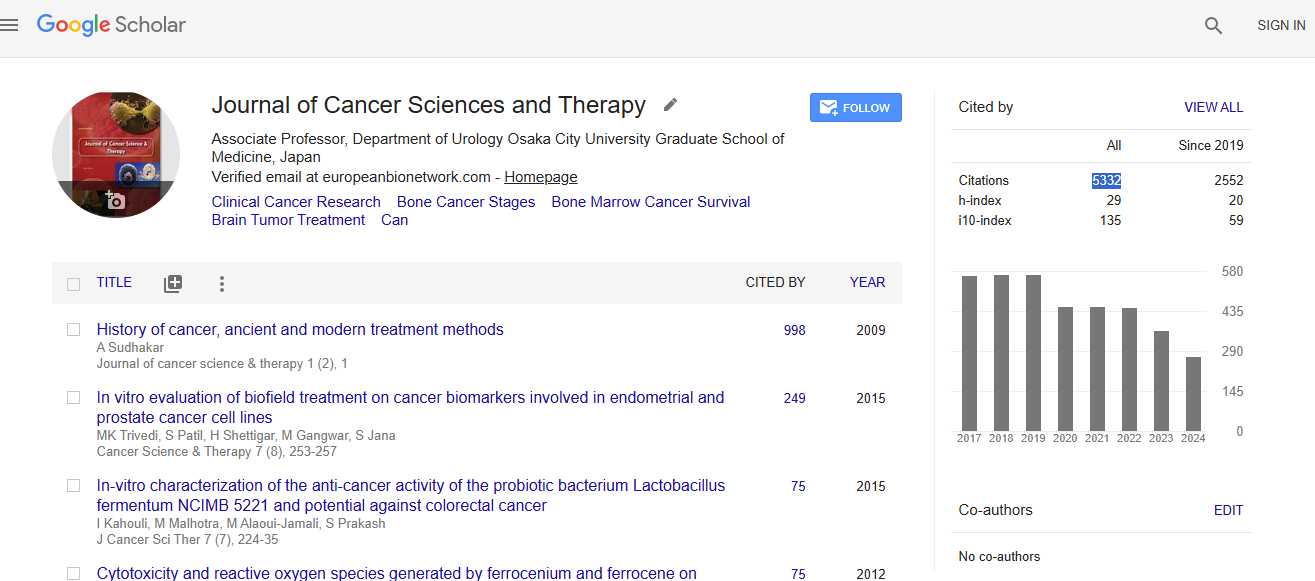
Cancer Science & Therapy received 5332 citations as per Google Scholar report