Brief Report - (2025) Volume 16, Issue 4
Received: 01-Jul-2025, Manuscript No. assj-25-174777;
Editor assigned: 03-Jul-2025, Pre QC No. P-174777;
Reviewed: 17-Jul-2025, QC No. Q-174777;
Revised: 22-Jul-2025, Manuscript No. R-174777;
Published:
29-Jul-2025
, DOI: 10.37421/2151-6200.2025.16.671
Citation: Halewyn, Mira. ”Digital Storytelling: Transformative Tool, Diverse Applications.” Arts Social Sci J 16 (2025):671
Copyright: © 2025 Halewyn M. This is an open-access article distributed under the terms of the Creative Commons Attribution License, which permits unrestricted use, distribution and reproduction in any medium, provided the original author and source are credited.
Digital storytelling has emerged as a significant pedagogical and communication tool, demonstrating its utility across a wide range of educational, health, and cultural contexts. The essence of digital storytelling lies in its ability to blend personal narratives with multimedia elements, creating compelling and interactive experiences. This approach fosters deeper understanding, engagement, and skill development in various domains. What this really means is, it helps individuals connect with content and each other on a more profound level. This study explores how digital storytelling effectively enhances empathy among nursing students. By crafting and sharing personal narratives, students gain deeper insight into patient experiences, fostering a more compassionate approach to care. The findings suggest digital storytelling is a powerful pedagogical tool for developing crucial affective skills in healthcare education, moving beyond traditional methods to connect students with the human aspect of their future profession [1].
This research explores how digital storytelling can drive sustainable innovation in higher education pedagogy. The authors present a framework where students create multimedia narratives, fostering active learning, critical thinking, and the development of digital literacies. The study concludes that integrating digital storytelling not only makes learning more engaging but also equips students with essential 21st-century skills, aligning educational practices with sustainable development goals [4].
This study investigates the positive effects of digital storytelling on English Language Learners' writing skills and overall motivation. By engaging in the creative process of developing and presenting digital narratives, students showed significant improvements in their writing fluency, coherence, and vocabulary usage. Furthermore, the interactive and personal nature of digital storytelling boosted their intrinsic motivation for language learning, making the process more enjoyable and effective [5].
This research examines the impact of digital storytelling on elementary school students' critical thinking and creativity. The findings reveal that engaging students in the digital storytelling process significantly enhances their ability to analyze, synthesize, and evaluate information, alongside fostering imaginative problem-solving. This approach provides a dynamic learning environment where young learners develop essential cognitive and creative skills, making learning more meaningful and personalized [10].
This scoping review examines the application of digital storytelling within mental health contexts, identifying its diverse uses for promoting well-being, destigmatizing conditions, and supporting recovery. The authors highlight its potential as an accessible and engaging medium for individuals to share their experiences, suggesting it can empower patients and enhance therapeutic interventions. The review outlines current practices and areas ripe for future research in this evolving field [2].
This systematic review and meta-analysis investigates the effectiveness of digital storytelling in health education. The findings indicate that digital storytelling significantly impacts various health behaviors and outcomes, proving to be an engaging and persuasive medium for conveying health information. The study highlights its potential for improving health literacy, encouraging behavior change, and supporting patient education across diverse populations and health contexts [7].
This case study explores digital storytelling as a powerful tool for fostering social change, focusing on the 'My Story Project' in rural Nicaragua. The research demonstrates how empowering individuals to share their personal narratives through digital media can raise awareness, build community, and advocate for specific social justice issues. The project effectively amplified marginalized voices, contributing to local development and inspiring collective action within the community [6].
This article discusses the effective integration of digital storytelling in cultural heritage settings, focusing on how interactive narratives and modern technologies enhance visitor engagement. It highlights techniques that bring historical contexts and artifacts to life, making heritage more accessible and meaningful for diverse audiences. The paper emphasizes the role of immersive digital experiences in fostering deeper connections with cultural narratives and preserving intangible heritage [3].
This systematic review explores the recent trends and practices of digital storytelling within museums and cultural institutions. The authors identify how these entities leverage digital narratives to enrich visitor experiences, promote collections, and engage wider audiences. Key findings reveal a shift towards interactive, personalized, and immersive storytelling techniques that transform traditional viewing into participatory cultural encounters, demonstrating a vital path for future heritage engagement [8].
This study investigates the effectiveness of digital storytelling as a tool for enhancing teachers' professional development. The research indicates that engaging teachers in creating and utilizing digital stories improves their technological pedagogical content knowledge, boosts their creativity, and equips them with innovative teaching strategies. It highlights digital storytelling as a practical and engaging approach for continuous professional learning, enabling educators to better integrate technology into their classrooms [9].
The applications are truly widespread.
Digital storytelling consistently proves its efficacy across a broad spectrum of applications, primarily by transforming passive consumption into active engagement through personalized multimedia narratives. It has demonstrated significant potential in educational settings, healthcare, cultural institutions, and even as a catalyst for social change. At its core, this method empowers individuals and communities to convey complex ideas and personal experiences in an accessible and impactful format, leading to enhanced learning outcomes, improved well-being, and deeper cultural connections.
In education, digital storytelling serves multiple critical functions. This study explores how digital storytelling effectively enhances empathy among nursing students. By crafting and sharing personal narratives, students gain deeper insight into patient experiences, fostering a more compassionate approach to care. The findings suggest digital storytelling is a powerful pedagogical tool for developing crucial affective skills in healthcare education, moving beyond traditional methods to connect students with the human aspect of their future profession [1]. This research explores how digital storytelling can drive sustainable innovation in higher education pedagogy. The authors present a framework where students create multimedia narratives, fostering active learning, critical thinking, and the development of digital literacies. The study concludes that integrating digital storytelling not only makes learning more engaging but also equips students with essential 21st-century skills, aligning educational practices with sustainable development goals [4]. This study investigates the positive effects of digital storytelling on English Language Learners' writing skills and overall motivation. By engaging in the creative process of developing and presenting digital narratives, students showed significant improvements in their writing fluency, coherence, and vocabulary usage. Furthermore, the interactive and personal nature of digital storytelling boosted their intrinsic motivation for language learning, making the process more enjoyable and effective [5]. This research examines the impact of digital storytelling on elementary school students' critical thinking and creativity. The findings reveal that engaging students in the digital storytelling process significantly enhances their ability to analyze, synthesize, and evaluate information, alongside fostering imaginative problem-solving. This approach provides a dynamic learning environment where young learners develop essential cognitive and creative skills, making learning more meaningful and personalized [10]. Lastly, this study investigates the effectiveness of digital storytelling as a tool for enhancing teachers' professional development. The research indicates that engaging teachers in creating and utilizing digital stories improves their technological pedagogical content knowledge, boosts their creativity, and equips them with innovative teaching strategies. It highlights digital storytelling as a practical and engaging approach for continuous professional learning, enabling educators to better integrate technology into their classrooms [9].
The health sector greatly leverages digital storytelling for both direct patient care and broader public health initiatives. This scoping review examines the application of digital storytelling within mental health contexts, identifying its diverse uses for promoting well-being, destigmatizing conditions, and supporting recovery. The authors highlight its potential as an accessible and engaging medium for individuals to share their experiences, suggesting it can empower patients and enhance therapeutic interventions. The review outlines current practices and areas ripe for future research in this evolving field [2]. This systematic review and meta-analysis investigates the effectiveness of digital storytelling in health education. The findings indicate that digital storytelling significantly impacts various health behaviors and outcomes, proving to be an engaging and persuasive medium for conveying health information. The study highlights its potential for improving health literacy, encouraging behavior change, and supporting patient education across diverse populations and health contexts [7]. Beyond health, digital storytelling actively contributes to social change. This case study explores digital storytelling as a powerful tool for fostering social change, focusing on the 'My Story Project' in rural Nicaragua. The research demonstrates how empowering individuals to share their personal narratives through digital media can raise awareness, build community, and advocate for specific social justice issues. The project effectively amplified marginalized voices, contributing to local development and inspiring collective action within the community [6].
Cultural institutions and museums are also at the forefront of adopting digital storytelling to revolutionize visitor engagement. This article discusses the effective integration of digital storytelling in cultural heritage settings, focusing on how interactive narratives and modern technologies enhance visitor engagement. It highlights techniques that bring historical contexts and artifacts to life, making heritage more accessible and meaningful for diverse audiences. The paper emphasizes the role of immersive digital experiences in fostering deeper connections with cultural narratives and preserving intangible heritage [3]. This systematic review explores the recent trends and practices of digital storytelling within museums and cultural institutions. The authors identify how these entities leverage digital narratives to enrich visitor experiences, promote collections, and engage wider audiences. Key findings reveal a shift towards interactive, personalized, and immersive storytelling techniques that transform traditional viewing into participatory cultural encounters, demonstrating a vital path for future heritage engagement [8]. By creating these immersive digital experiences, cultural heritage becomes more dynamic and fosters stronger connections between visitors and the narratives it holds.
The diverse applications underscore digital storytelling's adaptability and effectiveness as a modern communication and educational strategy. Its ability to create engaging, personal, and impactful narratives makes it invaluable across multiple sectors, consistently delivering positive outcomes for learners, patients, communities, and cultural audiences. It's clear that this method is here to stay and will continue to evolve.
Digital storytelling is a powerful and adaptable pedagogical tool with broad applications. It enhances empathy in nursing students by connecting them with patient experiences, fostering compassionate care. In mental health, it promotes well-being, destigmatizes conditions, and aids recovery through accessible personal narratives. Cultural heritage institutions use it to engage visitors with interactive experiences, bringing history and artifacts to life. In higher education, it drives sustainable innovation, cultivating active learning, critical thinking, and essential digital literacies. English Language Learners see improved writing skills and increased motivation from creating and presenting digital stories. It also acts as a robust tool for social change, amplifying marginalized voices and inspiring collective action, as exemplified by projects like 'My Story Project' in rural Nicaragua. Furthermore, digital storytelling effectively impacts health education by persuasively conveying information, improving health literacy, and encouraging behavior change. Museums enrich visitor experiences through interactive and immersive digital narratives. It also supports teachers' professional development, boosting their technological pedagogical content knowledge and creative teaching strategies. Finally, it significantly enhances critical thinking and creativity in elementary school students, providing a dynamic and personalized learning environment.
None
None
Indexed at, Google Scholar, Crossref
Indexed at, Google Scholar, Crossref
Indexed at, Google Scholar, Crossref
Indexed at, Google Scholar, Crossref
Indexed at, Google Scholar, Crossref
Indexed at, Google Scholar, Crossref
Indexed at, Google Scholar, Crossref
Indexed at, Google Scholar, Crossref
Indexed at, Google Scholar, Crossref
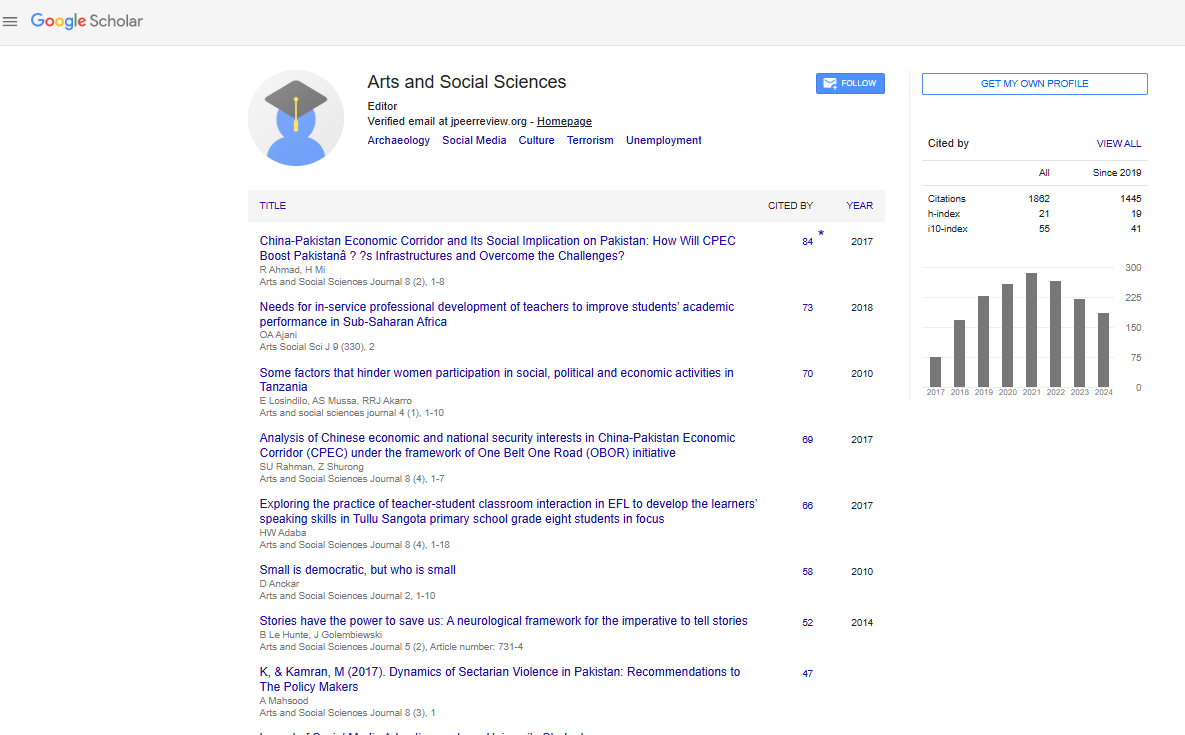
Arts and Social Sciences Journal received 1413 citations as per Google Scholar report