Opinion - (2025) Volume 13, Issue 5
Received: 01-Oct-2025, Manuscript No. JCMG-26-185557;
Editor assigned: 03-Oct-2025, Pre QC No. P-185557;
Reviewed: 17-Oct-2025, QC No. Q-185557;
Revised: 22-Oct-2025, Manuscript No. R-185557;
Published:
29-Oct-2025
, DOI: 10.37421/2472-128X.2025.13.363
Citation: Papadopoulos, George. ”Digital Pathology and Genomics: Revolutionizing Cancer Diagnosis.” J Clin Med Genomics 13 (2025):363.
Copyright: © 2025 Papadopoulos G. This is an open-access article distributed under the terms of the Creative Commons Attribution License, which permits unrestricted use, distribution and reproduction in any medium, provided the original author and source are credited.
The integration of digital pathology and genomics represents a significant advancement in precision oncology, offering enhanced diagnostic accuracy and a deeper understanding of disease at both the morphological and molecular levels [1].
This convergence allows for more precise identification of tumor subtypes, prediction of treatment response, and identification of actionable mutations, moving healthcare towards more personalized approaches. Digital pathology provides high-resolution imaging of tissue slides, enabling quantitative analysis and feature extraction, while genomic data offers molecular insights into disease. Together, these modalities facilitate a more comprehensive understanding of the tumor microenvironment and individual patient profiles, paving the way for personalized medicine [1].
Combining whole-slide imaging with next-generation sequencing (NGS) enables the identification of subtle histopathological features that are correlated with specific genomic alterations. This synergistic approach aids in the detection of rare driver mutations, assessment of tumor mutational burden, and characterization of resistance mechanisms. The synergy is particularly valuable in complex cases where traditional methods fall short, leading to improved diagnostic yield and more informed therapeutic decisions [2].
Artificial intelligence (AI) plays a crucial role in analyzing the vast datasets generated by the integration of digital pathology and genomics. Machine learning algorithms can identify predictive biomarkers from histomorphology and correlate them with genomic profiles. This integrated analysis assists pathologists in recognizing complex patterns associated with specific genetic mutations, thereby improving the accuracy and efficiency of diagnoses, especially in high-volume settings [3].
The combination of digital pathology and genomics offers novel avenues for biomarker discovery. By correlating spatial patterns observed in tissue with molecular alterations, researchers can identify new prognostic and predictive markers. This multi-modal approach enhances our understanding of tumor heterogeneity and evolution, which is vital for developing more targeted therapies and improving patient outcomes [4].
Digital pathology streamlines the workflow for genomic analysis by providing quantitative histomorphological data that can be directly linked to sequencing results. This integration facilitates the validation of findings from both modalities and aids in the interpretation of complex genomic landscapes within the context of tissue architecture. The outcome is a more robust and accurate diagnostic report [5].
The clinical utility of combining digital pathology with genomic profiling is becoming increasingly evident across various cancer types. This integrated approach allows for more precise patient stratification for targeted therapies and immunotherapies, thereby improving treatment efficacy and reducing toxicity. This multi-omic approach is a cornerstone of precision medicine, enabling tailored treatment strategies based on an individual's tumor molecular signature and histological presentation [6].
Quantitative digital pathology metrics, such as cell density, nuclear morphology, and spatial relationships, when analyzed in conjunction with genomic data, can reveal complex interactions within the tumor microenvironment. This integrated analysis provides a deeper understanding of tumor behavior, response to therapy, and potential for metastasis, ultimately improving diagnostic accuracy and prognostic prediction [7].
The challenges in implementing digital pathology and genomics integration include data standardization, interoperability between different platforms, and the need for specialized expertise. However, overcoming these hurdles is essential for realizing the full potential of this powerful diagnostic paradigm, which promises to revolutionize how we diagnose and treat diseases [8].
Multiplex immunohistochemistry (mIHC) combined with digital image analysis and genomic data provides a multi-dimensional view of the tumor microenvironment. This comprehensive approach helps in understanding immune cell infiltration patterns, receptor expression, and their correlation with genetic mutations, leading to more accurate predictions of immunotherapy response and identification of novel therapeutic targets [9].
The application of digital pathology and genomics is crucial for the accurate diagnosis of rare cancers and subtypes, where traditional diagnostic criteria might be insufficient. By integrating molecular and morphological data, researchers and clinicians can better classify these challenging cases, identify potential therapeutic vulnerabilities, and improve patient management and outcomes [10].
The integration of digital pathology with genomic analysis is revolutionizing diagnostic accuracy and enabling personalized medicine. Digital pathology provides high-resolution imaging for quantitative analysis of tissue slides, while genomics offers molecular insights. Their convergence allows for precise identification of tumor subtypes, prediction of treatment response, and discovery of actionable mutations, leading to a more comprehensive understanding of the tumor microenvironment and individual patient profiles [1].
This synergy facilitates a deeper insight into disease characteristics and guides therapeutic strategies. The combination of whole-slide imaging and next-generation sequencing (NGS) is particularly effective in identifying subtle histopathological features linked to specific genomic alterations. This aids in detecting rare driver mutations, assessing tumor mutational burden, and characterizing resistance mechanisms, which is invaluable for complex cases and improves diagnostic yield [2].
Artificial intelligence (AI) is instrumental in processing the extensive data generated by digital pathology and genomics. Machine learning algorithms can discern predictive biomarkers from histomorphological features and correlate them with genomic profiles, thereby enhancing diagnostic accuracy and efficiency. This integration assists pathologists in recognizing intricate patterns associated with genetic mutations, especially in high-volume settings [3].
The fusion of digital pathology and genomics opens new frontiers for biomarker discovery. By establishing correlations between spatial tissue patterns and molecular alterations, researchers can identify novel prognostic and predictive markers. This multi-modal approach deepens the understanding of tumor heterogeneity and evolution, which is critical for developing more targeted therapies and improving patient outcomes [4].
Digital pathology significantly enhances the workflow for genomic analysis by offering quantitative histomorphological data that can be directly linked to sequencing results. This integration supports the validation of findings from both modalities and improves the interpretation of complex genomic landscapes in the context of tissue architecture, leading to more robust and accurate diagnostic reports [5].
The clinical impact of merging digital pathology with genomic profiling is becoming increasingly apparent in managing diverse cancer types. It facilitates precise patient stratification for targeted therapies and immunotherapies, leading to enhanced treatment efficacy and reduced toxicity. This multi-omic strategy is fundamental to precision medicine, enabling the development of customized treatment plans based on individual tumor molecular signatures and histological presentations [6].
Quantitative metrics derived from digital pathology, such as cell density, nuclear morphology, and spatial relationships, when analyzed alongside genomic data, can elucidate complex tumor microenvironment interactions. This integrated analysis provides a more profound understanding of tumor behavior, therapeutic response, and metastatic potential, thereby improving diagnostic precision and prognostic prediction [7].
Despite the immense potential, challenges exist in the implementation of digital pathology and genomics integration, including data standardization, platform interoperability, and the need for specialized expertise. Addressing these obstacles is crucial for realizing the full benefits of this transformative diagnostic paradigm [8].
Multiplex immunohistochemistry (mIHC) combined with digital image analysis and genomic data offers a multi-dimensional perspective on the tumor microenvironment. This approach helps in characterizing immune cell infiltration patterns, receptor expression, and their associations with genetic mutations. Such comprehensive analysis leads to more accurate predictions of immunotherapy response and the identification of novel therapeutic targets [9].
The application of digital pathology and genomics is particularly vital for the accurate diagnosis of rare cancers and their subtypes, where traditional diagnostic methods may be inadequate. Integrating molecular and morphological data allows for better classification of these challenging cases, identification of potential therapeutic vulnerabilities, and ultimately, improved patient management and outcomes [10].
The integration of digital pathology and genomics is transforming cancer diagnosis and treatment by combining high-resolution imaging with molecular insights. This synergy enhances diagnostic accuracy, enables precise tumor subtyping, and predicts treatment response. Artificial intelligence plays a key role in analyzing the combined datasets, identifying biomarkers, and improving efficiency. The approach facilitates biomarker discovery, offers a multi-dimensional view of the tumor microenvironment, and aids in the diagnosis of rare cancers. While challenges in data standardization and interoperability exist, this powerful diagnostic paradigm is crucial for personalized medicine, leading to tailored treatment strategies and improved patient outcomes.
None
None
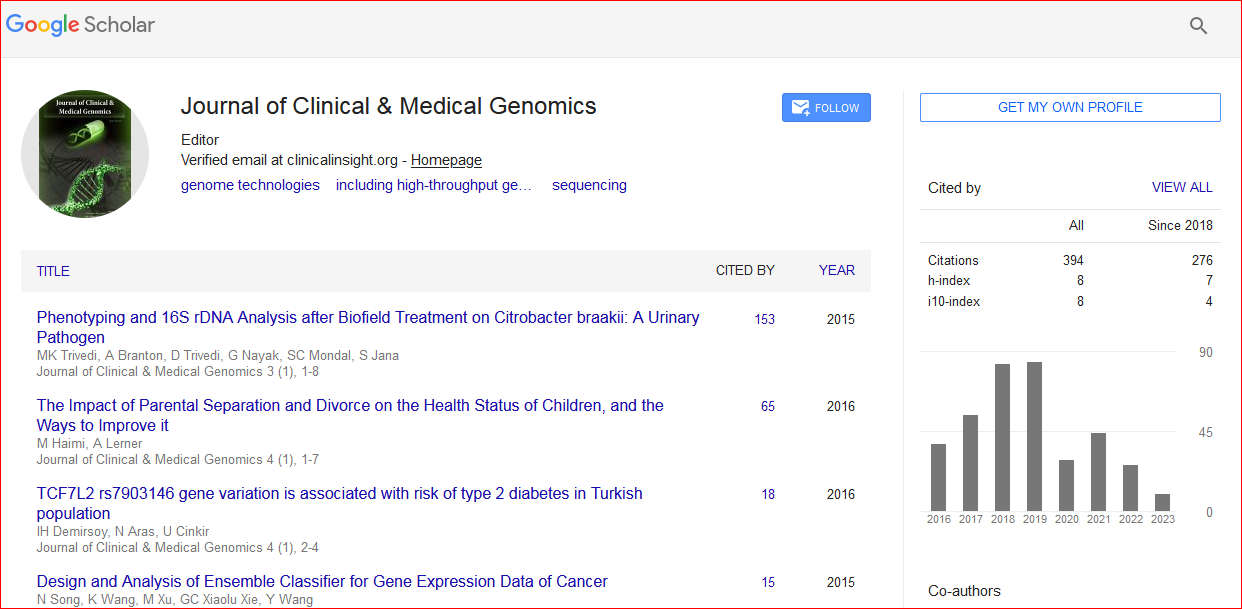
Journal of Clinical & Medical Genomics received 391 citations as per Google Scholar report