Brief Report - (2025) Volume 9, Issue 5
Received: 03-Oct-2025, Manuscript No. jcre-26-187222;
Editor assigned: 06-Oct-2025, Pre QC No. P-187222;
Reviewed: 20-Oct-2025, QC No. Q-187222;
Revised: 24-Oct-2025, Manuscript No. R-187222;
Published:
31-Oct-2025
, DOI: 10.37421/2795-6172.2025.9.352
Citation: Kuznetsova, Natalia. ”Digital Health Boosts Medication Adherence For Chronic Conditions.” J Clin Res 09 (2025):352.
Copyright: © 2025 Kuznetsova N. This is an open-access article distributed under the terms of the Creative Commons Attribution License, which permits unrestricted use, distribution and reproduction in any medium, provided the original author and source are credited.
The growing prevalence of chronic diseases necessitates innovative approaches to patient management and treatment adherence. Mobile health (mHealth) interventions have emerged as a promising avenue for enhancing self-management and improving health outcomes, particularly in conditions like hypertension. This study evaluated the effectiveness of a mobile health (mHealth) intervention designed to improve medication adherence in patients with hypertension. The intervention utilized a smartphone application to deliver personalized reminders, educational content, and self-monitoring tools. The findings suggest that mHealth interventions can significantly enhance medication adherence, leading to better blood pressure control and potentially reducing the risk of cardiovascular complications. The results highlight the utility of technology in managing chronic diseases and supporting patient self-care [1].
A systematic review and meta-analysis explored the impact of digital health interventions on medication adherence in various chronic conditions, including hypertension. The review identified common features of successful interventions, such as interactive components, personalized feedback, and integration with healthcare providers. The findings indicated a consistent positive effect of digital health solutions on adherence rates, underscoring their potential as scalable tools for improving patient outcomes [2].
This randomized controlled trial investigated the efficacy of a mobile app-based intervention to improve adherence to antihypertensive medications. Participants randomized to the intervention group received daily medication reminders and educational messages via the app. The study demonstrated a statistically significant improvement in adherence rates and a modest reduction in systolic blood pressure among the intervention group compared to the control group [3].
The role of mHealth in supporting self-management of chronic conditions, particularly hypertension, was examined. This study focused on the user experience and perceived usefulness of a tailored mHealth application. Qualitative and quantitative data indicated that patients found the app easy to use, helpful for tracking their health, and motivating for adherence. The findings emphasize the importance of user-centered design in developing effective mHealth solutions [4].
This research assessed the impact of text message-based reminders on medication adherence among hypertensive patients in a low-resource setting. The intervention involved sending daily SMS messages to prompt patients to take their medication. The results showed a significant increase in adherence rates and a trend towards improved blood pressure control in the group receiving SMS reminders compared to the control group [5].
A study explored the effectiveness of a gamified mobile health intervention in promoting medication adherence for hypertension. The intervention incorporated game-like elements such as points, badges, and leaderboards to increase user engagement. Preliminary findings suggest that gamification can enhance motivation and adherence, although further research is needed to confirm long-term effects [6].
This article reviews the current landscape of mHealth applications for managing cardiovascular diseases, with a specific focus on hypertension. It discusses the potential benefits, challenges, and future directions of mHealth in this field, including aspects like data privacy, regulatory considerations, and integration with clinical workflows. The review emphasizes the need for rigorous evaluation of mHealth interventions to ensure their safety and efficacy [7].
A qualitative study explored the experiences and perceptions of healthcare providers regarding the implementation of mHealth interventions for hypertension management. The study identified facilitators and barriers to adoption, such as the need for training, integration into existing systems, and perceived patient readiness. The findings provide insights for designing and implementing mHealth strategies that are well-received by healthcare professionals [8].
This research investigated the cost-effectiveness of a smartphone-based intervention aimed at improving medication adherence in patients with uncontrolled hypertension. The analysis considered the costs associated with intervention development and implementation versus the potential savings from reduced complications and healthcare utilization. The results suggested that such interventions can be a cost-effective strategy for managing hypertension [9].
The study examined the long-term impact of a blended mHealth and telehealth intervention on medication adherence and clinical outcomes in hypertensive patients. This approach combined mobile app features with remote consultations with healthcare professionals. Sustained improvements in adherence and blood pressure control were observed over a two-year follow-up period, demonstrating the potential of integrated digital health solutions for chronic disease management [10].
Mobile health (mHealth) interventions are increasingly recognized for their potential to transform chronic disease management by empowering patients and enhancing treatment adherence. A notable study evaluated the effectiveness of an mHealth intervention aimed at improving medication adherence in hypertensive patients. This intervention involved a smartphone application that delivered personalized reminders, educational content, and self-monitoring tools. The findings indicated that mHealth interventions can substantially improve medication adherence, leading to better blood pressure control and a reduced risk of cardiovascular complications, underscoring technology's role in chronic disease management and patient self-care [1].
Digital health solutions, encompassing a broader range of technologies, have also been investigated for their impact on medication adherence across various chronic conditions, including hypertension. A systematic review and meta-analysis identified key characteristics of successful digital health interventions, such as interactive features, personalized feedback, and seamless integration with healthcare providers. The overarching conclusion was that these digital health solutions consistently yield positive effects on adherence rates, positioning them as scalable tools for enhancing patient outcomes [2].
A randomized controlled trial specifically examined a mobile app-based intervention designed to improve adherence to antihypertensive medications. Patients in the intervention group received daily reminders and educational messages through the app. The results of this trial showed a statistically significant enhancement in medication adherence rates and a modest but notable decrease in systolic blood pressure when compared to the control group [3].
Beyond adherence, mHealth's role in facilitating self-management of chronic conditions like hypertension has been explored. One study focused on the user experience and perceived usefulness of a tailored mHealth application. Through a combination of qualitative and quantitative data, it was found that patients perceived the app as user-friendly, beneficial for health tracking, and motivating for maintaining adherence. This highlights the critical importance of user-centered design in the development of effective mHealth tools [4].
In resource-limited settings, simpler mHealth approaches like text message-based reminders have also demonstrated efficacy. A research project assessed the impact of daily SMS messages on medication adherence among hypertensive patients. The study revealed a significant increase in adherence rates and a positive trend in blood pressure control among patients receiving these text message reminders compared to a control group [5].
Novel approaches within mHealth, such as gamification, are also being explored to boost engagement and adherence. A pilot study investigated the effectiveness of a gamified mHealth intervention for hypertension medication adherence, incorporating elements like points and leaderboards. While preliminary findings suggest that gamification can positively influence motivation and adherence, further research is recommended to validate long-term effects [6].
Broader reviews of mHealth applications for cardiovascular diseases, with a specific emphasis on hypertension, highlight the technology's potential and associated challenges. These reviews discuss benefits, hurdles such as data privacy and regulatory concerns, and future integration with clinical workflows. A crucial takeaway is the necessity for rigorous evaluation of mHealth interventions to guarantee their safety and efficacy [7].
The perspective of healthcare providers is also vital for successful mHealth implementation. A qualitative study delved into their experiences and perceptions regarding mHealth interventions for hypertension management. This research identified facilitators and barriers, including the need for training, system integration challenges, and perceived patient readiness, offering valuable insights for designing and implementing widely accepted mHealth strategies [8].
From an economic standpoint, the cost-effectiveness of mHealth interventions is a critical consideration. One study investigated a smartphone-based intervention for improving medication adherence in patients with uncontrolled hypertension. The analysis indicated that these types of interventions can be a cost-effective strategy for managing hypertension by potentially reducing complications and healthcare utilization costs [9].
Finally, the long-term benefits of integrated digital health solutions are being realized. A study examined a blended mHealth and telehealth intervention for hypertensive patients, combining app features with remote professional consultations. This approach led to sustained improvements in medication adherence and blood pressure control over a two-year follow-up period, demonstrating the value of integrated digital health for ongoing chronic disease management [10].
Mobile health (mHealth) and digital health interventions show significant promise in improving medication adherence for chronic conditions like hypertension. Studies highlight the effectiveness of smartphone applications delivering reminders and educational content, leading to better blood pressure control and reduced cardiovascular risks. Features such as interactive components, personalized feedback, and user-centered design are crucial for success. Even simpler methods like text message reminders and gamified approaches can enhance engagement and adherence. While benefits are evident, challenges related to data privacy, regulatory issues, and provider adoption need careful consideration. Cost-effectiveness analyses suggest these interventions can be economically viable. Long-term studies of blended mHealth and telehealth models demonstrate sustained improvements, indicating the power of integrated digital health solutions for chronic disease management.
None
None
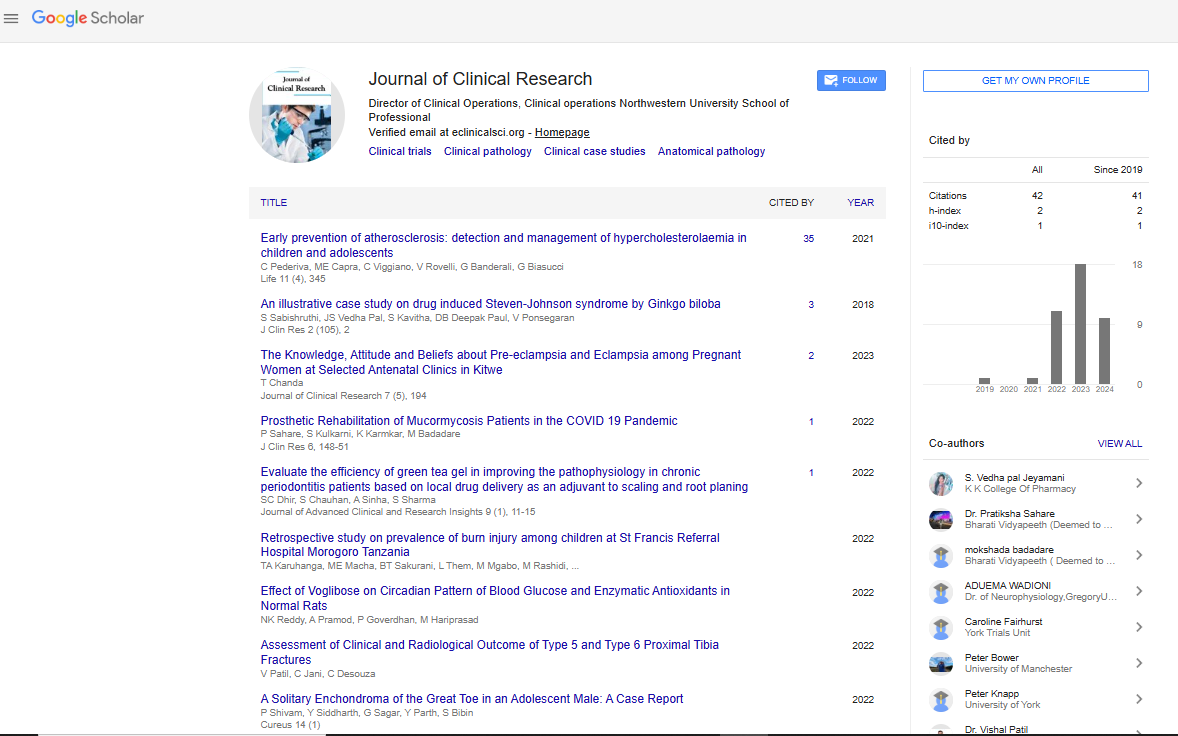
Journal of Clinical Research received 11 citations as per Google Scholar report