Commentary - (2025) Volume 16, Issue 5
Received: 01-Oct-2025, Manuscript No. jfr-26-184122;
Editor assigned: 03-Oct-2025, Pre QC No. P-184122;
Reviewed: 17-Oct-2025, QC No. Q-184122;
Revised: 22-Oct-2025, Manuscript No. R-184122;
Published:
29-Oct-2025
, DOI: 10.37421/2157-7145.2025.16.683
Citation: Kovacevic, Ivana. ”Digital Forensics: Combating Cyberbullying
and Online Threats.” J Forensic Res 16 (2025):683.
Copyright: © 2025 Kovacevic I. This is an open-access article distributed under the terms of the Creative Commons Attribution License, which permits unrestricted use,
distribution and reproduction in any medium, provided the original author and source are credited.
The digital landscape has become a fertile ground for various forms of online threats and harassment, with cyberbullying emerging as a particularly pervasive issue. Addressing these challenges necessitates a robust and systematic approach rooted in the principles of digital forensics. This field plays a critical role in unraveling the complexities of online offenses, enabling law enforcement and cybersecurity professionals to identify perpetrators and establish accountability. The process involves meticulous collection, preservation, and analysis of digital evidence, often requiring a deep understanding of the technical intricacies of diverse online platforms and communication channels used in perpetrating these offenses. Investigators must also navigate a complex web of legal and ethical considerations to ensure the integrity of their work and the admissibility of evidence in judicial proceedings. This introductory overview will explore the multifaceted contributions of digital forensics in combating cyberbullying and online threats, highlighting the methodologies, challenges, and ethical frameworks that define this crucial area of investigation.
The examination of forensic analysis of social media evidence is paramount in contemporary digital investigations. Platforms such as Facebook, Twitter, and Instagram are frequently utilized in cases involving online threats and harassment, making the acquisition and examination of data from these sources a key focus. Techniques for recovering deleted content and analyzing metadata are essential tools for investigators. However, the persistent challenges posed by encrypted communications and the ever-evolving nature of social media interfaces demand continuous adaptation and innovation in forensic methodologies. The ethical and legal dimensions surrounding the forensic examination of cyberbullying are of utmost importance. These investigations raise significant questions regarding privacy, data protection, and the admissibility of digital evidence in court. Forensic experts bear the responsibility of not only conducting thorough analyses but also effectively communicating complex technical findings to non-technical audiences, often in the capacity of expert witnesses. Understanding these ethical and legal frameworks is crucial for ensuring that digital evidence is collected and presented in a manner that upholds justice and respects individual rights. Tracing the origin of online threats and cyberbullying incidents is a core objective of digital forensics. This involves employing a range of techniques designed to identify the source of digital footprints left by perpetrators. Methods such as the analysis of IP addresses, examination of network logs, and the utilization of open-source intelligence (OSINT) are employed to link online activities to individuals. However, the effectiveness of these techniques can be significantly challenged by the use of sophisticated anonymization tools like VPNs and proxies, requiring investigators to employ advanced strategies to overcome these obstacles. The practical application of digital forensics in cyberbullying investigations relies heavily on specialized tools and software. A comprehensive survey of these resources categorizes and evaluates various digital forensic tools used for data acquisition, analysis, and reporting. Both commercial and open-source solutions are available, each with its own set of strengths and limitations in handling the diverse forms of digital evidence encountered in cyberbullying cases. The selection and effective utilization of these tools are critical for successful investigations. One of the most significant hurdles in digital forensic investigations, particularly in cases of online threats, is the prevalence of encrypted communications. Accessing and deciphering these messages presents substantial technical and legal challenges. The forensic implications of end-to-end encryption are profound, often requiring intricate legal procedures to obtain decryption keys. Addressing these challenges necessitates ongoing research and development of advanced forensic techniques capable of handling encrypted data. Mobile devices have become ubiquitous and are frequently implicated in cyberbullying cases. The forensic examination of smartphones and tablets is therefore an indispensable aspect of investigating online threats. Methods for extracting and analyzing data from these devices, including call logs, messages, social media activity, and location data, are crucial for building a comprehensive case against perpetrators. The insights gained from mobile forensics are vital for understanding the full scope of an incident. Artificial intelligence (AI) is increasingly being explored as a tool to enhance the forensic examination of cyberbullying. AI and machine learning techniques offer the potential to analyze vast volumes of data more efficiently, identify subtle patterns of abusive behavior, and detect malicious content with greater accuracy. However, it is essential to acknowledge and address the potential biases and limitations inherent in AI systems to ensure their responsible and effective application in forensic investigations. Cyberbullying and online threats often transcend national borders, introducing significant complexities into digital investigations. Cross-border investigations present unique legal and practical challenges related to obtaining evidence from different jurisdictions. International cooperation protocols and the harmonization of varying legal systems are crucial for facilitating effective forensic procedures across international boundaries. The development of standardized international approaches is vital for addressing this global challenge. The integrity and provenance of digital evidence are fundamental to its admissibility in legal proceedings. Blockchain technology offers a promising solution for ensuring these critical aspects. By creating immutable audit trails for collected digital artifacts, blockchain can significantly enhance the trustworthiness of evidence. Furthermore, its potential for secure data sharing among forensic agencies could streamline collaborative investigations and improve overall efficiency.The critical role of forensic examination in addressing cyberbullying and online threats is underscored by the multifaceted challenges and methodologies involved in digital investigations. These processes encompass the meticulous collection, preservation, and analysis of digital evidence, aiming to identify perpetrators and establish accountability for online offenses. A thorough understanding of the technical intricacies of various online platforms and communication channels is essential for investigators. Furthermore, navigating the complex legal and ethical considerations is paramount to ensuring the validity and admissibility of evidence in judicial proceedings. This systematic review highlights the importance of these elements in the fight against cyberbullying and online harassment.
The forensic analysis of social media evidence is a pivotal aspect of modern digital investigations, particularly in cases involving online threats and harassment. This involves detailed techniques for acquiring and examining data from platforms like Facebook, Twitter, and Instagram. Critical to this process is the ability to recover deleted content and conduct thorough metadata analysis. The persistent challenges presented by encrypted communications and the rapid evolution of social media interfaces necessitate continuous development of advanced forensic capabilities. Ethical considerations and legal frameworks are foundational to the forensic examination of cyberbullying. These investigations bring to the forefront issues of privacy, data protection, and the admissibility of digital evidence in court. The role of forensic experts extends to providing testimony, where they must adeptly explain complex technical findings to non-technical audiences. Adherence to established ethical and legal guidelines ensures that investigations are conducted responsibly and justly. Tracing the origin of online threats and cyberbullying incidents is a complex but crucial aspect of digital forensics. This is achieved through specialized techniques aimed at identifying IP addresses, analyzing network logs, and leveraging open-source intelligence (OSINT). These methods help in linking digital footprints to individuals. However, the use of anonymization services such as VPNs and proxies presents significant obstacles that investigators must overcome through advanced analytical approaches. The investigation of cyberbullying and online harassment relies heavily on the effective use of various digital forensic tools. A survey of these tools categorizes and evaluates their capabilities in data acquisition, analysis, and reporting. Both commercial and open-source solutions are available, each offering distinct advantages and facing specific limitations when handling diverse forms of digital evidence. The judicious selection and application of these tools are vital for successful case outcomes. Encrypted communications pose a significant challenge to forensic analysis in cases of online threats. This paper examines the difficulties associated with accessing and deciphering encrypted messages. It also addresses the legal procedures involved in obtaining decryption keys and the broader forensic implications of end-to-end encryption. Future advancements in forensic techniques for encrypted data are actively being explored to address these growing complexities. Mobile devices play an increasingly prominent role in cyberbullying investigations due to their widespread use. The forensic examination of smartphones and tablets involves detailed methods for extracting and analyzing data, including call logs, messages, social media activity, and location information. Mobile forensics is instrumental in constructing a comprehensive case against perpetrators of online threats and harassment. The integration of artificial intelligence (AI) into digital forensics is revolutionizing the examination of cyberbullying. AI and machine learning techniques can significantly enhance the efficiency of analyzing large datasets, identifying patterns of abusive behavior, and detecting malicious content. However, a critical evaluation of potential biases and limitations within AI systems is necessary for their responsible deployment. Cross-border digital investigations related to cyberbullying and online threats present unique complexities. These include legal and practical hurdles in obtaining evidence from different jurisdictions and the impact of varying legal systems on forensic procedures. The development of harmonized international standards and robust international cooperation protocols is essential for addressing these global challenges effectively. The integrity and provenance of digital evidence are paramount, and blockchain technology offers a novel approach to ensure these qualities. By establishing immutable audit trails for digital artifacts, blockchain enhances their admissibility in legal proceedings. Its potential for secure data sharing among forensic agencies further streamlines collaborative efforts, improving the overall effectiveness of cybercrime investigations.This collection of research explores the critical role of digital forensics in combating cyberbullying and online threats. It covers various aspects, including the systematic review of forensic examination methodologies, the forensic analysis of social media evidence, and the ethical and legal frameworks governing digital evidence. The papers also delve into techniques for tracing the origin of online threats, the tools used in investigations, and the challenges posed by encrypted communications. Furthermore, the importance of mobile device forensics, the application of artificial intelligence, the complexities of cross-border investigations, and the potential of blockchain technology for ensuring evidence integrity are discussed. Collectively, these works highlight the evolving landscape of digital forensics and its crucial contribution to digital safety and accountability.
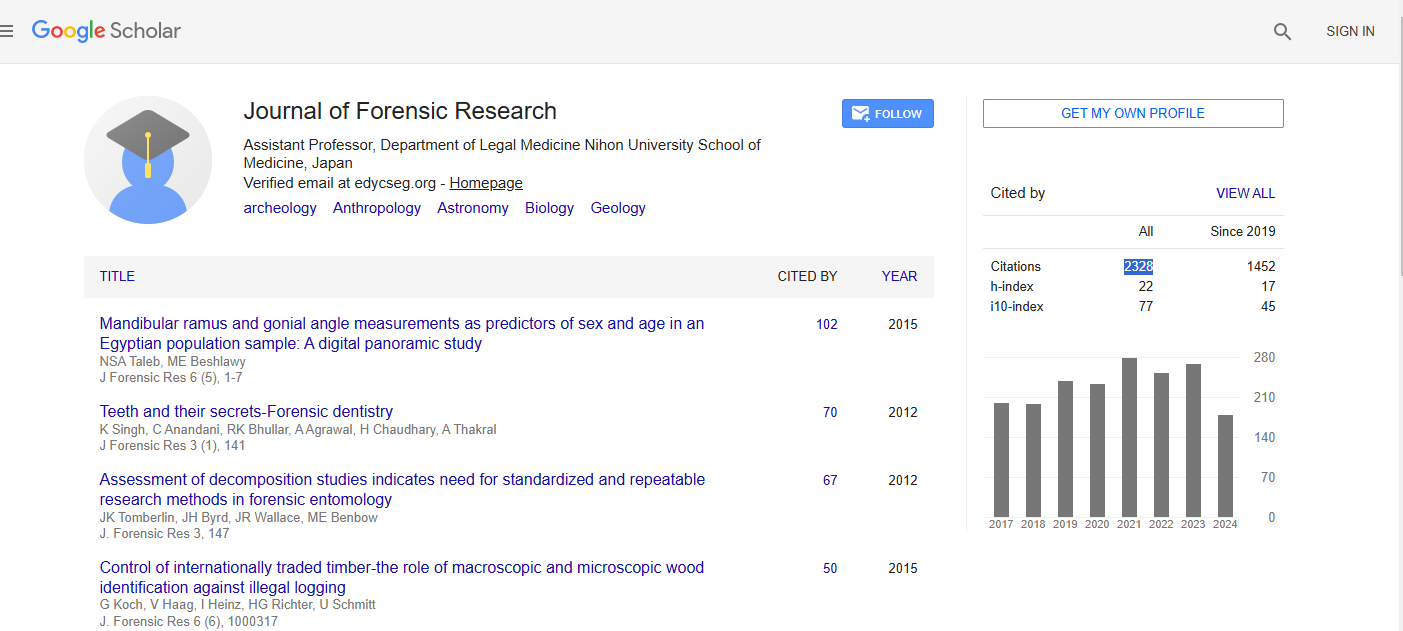
Journal of Forensic Research received 2328 citations as per Google Scholar report