Opinion - (2025) Volume 14, Issue 4
Received: 01-Jul-2025, Manuscript No. jio-26-184816;
Editor assigned: 03-Jul-2025, Pre QC No. P-184816;
Reviewed: 17-Jul-2025, QC No. Q-184816;
Revised: 22-Jul-2025, Manuscript No. R-184816;
Published:
29-Jul-2025
, DOI: DOI: 10.37421/2329-6771.2025.14.595
Citation: Dijk, Peter Van. ”Diet’s Vital Role In Cancer Prevention And Survivorship.” J Integr Onco 14 (2025):565.
Copyright: © 2025 Dijk V. Peter This is an open-access article distributed under the terms of the Creative Commons Attribution License, which permits unrestricted use, distribution and reproduction in any medium, provided the original author and source are credited.
Dietary patterns play a pivotal role in both the prevention of cancer and the enhancement of outcomes for individuals who have undergone treatment. A wealth of research underscores the significance of a nutrient-dense diet, emphasizing fruits, vegetables, and whole grains, complemented by healthy fats and lean proteins, in reducing cancer incidence and improving the prognosis for survivors [1].
Understanding the intricate interplay between macronutrient and micronutrient intake and cancer cell metabolism is fundamental to the development of effective, targeted nutritional interventions. Research indicates that specific vitamins, such as D and E, alongside minerals like selenium and zinc, are instrumental in modulating cancer progression and influencing the efficacy of therapeutic strategies [2].
For cancer survivors, nutritional management is a critical aspect of care, aimed at addressing potential malnutrition, facilitating better tolerance to treatments, and ultimately improving their overall quality of life. This involves the implementation of personalized dietary recommendations, judicious use of supplements when indicated, and the development of strategies to effectively manage treatment-induced symptoms such as nausea, fatigue, and changes in taste perception [3].
The emergent field of the gut microbiome's influence on cancer development and its response to therapy presents new avenues for nutritional intervention. Nutritional strategies that actively promote a healthy gut microbiome, including increased fiber consumption and the inclusion of fermented foods, may contribute significantly to both cancer prevention efforts and the improved survivorship experience [4].
Plant-based dietary approaches, characterized by a high intake of fruits, vegetables, legumes, and whole grains, have been consistently associated with a reduced incidence of cancer. These diets are particularly valuable for their rich content of antioxidants, fiber, and phytochemicals, which collectively provide protective effects against carcinogens and bolster cellular health [5].
The potential benefits of omega-3 fatty acids in the context of cancer prevention and management are a subject of ongoing investigation. Preliminary evidence suggests that these essential fats may contribute to reducing inflammation, inhibiting tumor growth, and improving outcomes in specific cancer types, underscoring the need for further research into optimal intake levels and diverse dietary sources [6].
Lifestyle interventions, encompassing crucial dietary modifications and regular physical activity, are indispensable components of comprehensive cancer survivorship care. These interventions are instrumental in helping survivors manage their weight, enhance their cardiovascular health, alleviate fatigue, and potentially decrease the risk of cancer recurrence [7].
Specific dietary components, notably antioxidants and fiber, exert a crucial influence on DNA repair and detoxification pathways, making them vital for cancer prevention. A diet abundant in these elements can significantly bolster the body's intrinsic defense mechanisms against cellular damage and mutations [8].
Personalized nutrition, which takes into account individual genetic makeup, metabolic status, and the specific type of cancer, is emerging as a highly promising strategy for optimizing both cancer prevention and survivorship plans. This dynamic field is being propelled forward by rapid advancements in genomics and the broader landscape of personalized medicine [9].
The profound impact of specific dietary patterns on inflammation, a known driver of cancer development and progression, cannot be overstated. Diets characterized by anti-inflammatory properties, rich in fruits, vegetables, and omega-3 fatty acids, are likely to play a significant role in both preventing cancer and supporting the recovery process for survivors [10].
Dietary patterns rich in fruits, vegetables, and whole grains, coupled with an emphasis on healthy fats and lean proteins, are strongly associated with a reduced risk of developing cancer and improved prognoses for those who are cancer survivors. Essential micronutrients and bioactive phytochemicals within these foods are critical for cellular defense and the body's repair mechanisms. For cancer survivors, tailored nutritional plans are vital for managing treatment side effects, facilitating recovery, and minimizing long-term health complications [1].
A thorough understanding of how macronutrient and micronutrient intake influences cancer cell metabolism and immune function is paramount for the creation of targeted nutritional interventions. Current research highlights the significance of specific vitamins, such as vitamin D and E, and minerals, including selenium and zinc, in their capacity to modulate cancer progression and enhance the effectiveness of cancer therapies [2].
Nutritional management for cancer survivors is primarily focused on combating malnutrition, improving tolerance to cancer treatments, and enhancing their overall quality of life. This comprehensive approach entails providing individualized dietary advice, recommending supplements only when necessary, and implementing strategies to alleviate common symptoms like nausea, fatigue, and altered taste perception experienced during or after treatment [3].
The emerging research on the gut microbiome and its role in cancer development and treatment response offers exciting prospects for nutritional science. Dietary interventions designed to foster a healthy gut microbiome, such as increasing fiber intake and incorporating fermented foods, may prove beneficial in both preventing cancer and improving the health and well-being of cancer survivors [4].
Plant-based diets, which are rich in fruits, vegetables, legumes, and whole grains, are consistently linked to a lower incidence of various cancers. These dietary patterns provide an abundant supply of antioxidants, dietary fiber, and potent phytochemicals that help protect the body against carcinogens and support optimal cellular health and function [5].
The potential therapeutic and preventative roles of omega-3 fatty acids in the context of cancer are an active area of research. Emerging evidence suggests that omega-3s may help reduce inflammation, inhibit the growth of tumors, and improve treatment outcomes in certain cancer types, emphasizing the need for further investigation into their optimal consumption and sources [6].
Lifestyle interventions, critically including modifications to diet and the incorporation of regular physical activity, are fundamental aspects of care for cancer survivors. These interventions can significantly aid survivors in managing their body weight, improving their cardiovascular health, reducing persistent fatigue, and potentially lowering their risk of cancer recurrence [7].
The impact of specific dietary constituents, such as antioxidants and dietary fiber, on the body's capacity for DNA repair and detoxification is a key factor in cancer prevention. A diet that is rich in these protective elements can significantly strengthen the body's innate defense systems against cellular damage and mutations [8].
Personalized nutrition strategies, customized to an individual's unique genetic profile, metabolic state, and specific cancer diagnosis, hold considerable promise for optimizing strategies for both cancer prevention and survivorship. This field is advancing rapidly, driven by innovations in genomics and the expanding capabilities of personalized medicine [9].
Specific dietary patterns have a notable impact on inflammation, a biological process that is deeply implicated in the development and progression of cancer. Adopting anti-inflammatory diets, which are abundant in fruits, vegetables, and omega-3 fatty acids, may be beneficial in both preventing cancer and supporting the recovery and well-being of cancer survivors [10].
Dietary interventions are crucial for both cancer prevention and survivorship, emphasizing nutrient-rich foods like fruits, vegetables, and whole grains. Specific micronutrients and phytochemicals play vital roles in cellular defense and repair. For survivors, personalized nutrition helps manage treatment side effects, supports recovery, and mitigates long-term risks. Understanding the impact of diet on cancer cell metabolism and immune function is key, with certain vitamins and minerals showing promise. Plant-based diets and omega-3 fatty acids are linked to reduced cancer incidence and potential benefits in management. Lifestyle interventions, including diet and exercise, are fundamental for survivorship. The gut microbiome's role is an emerging area, suggesting that promoting its health through diet may be beneficial. Personalized nutrition approaches tailored to individual genetics and metabolic states are gaining importance.
None
None
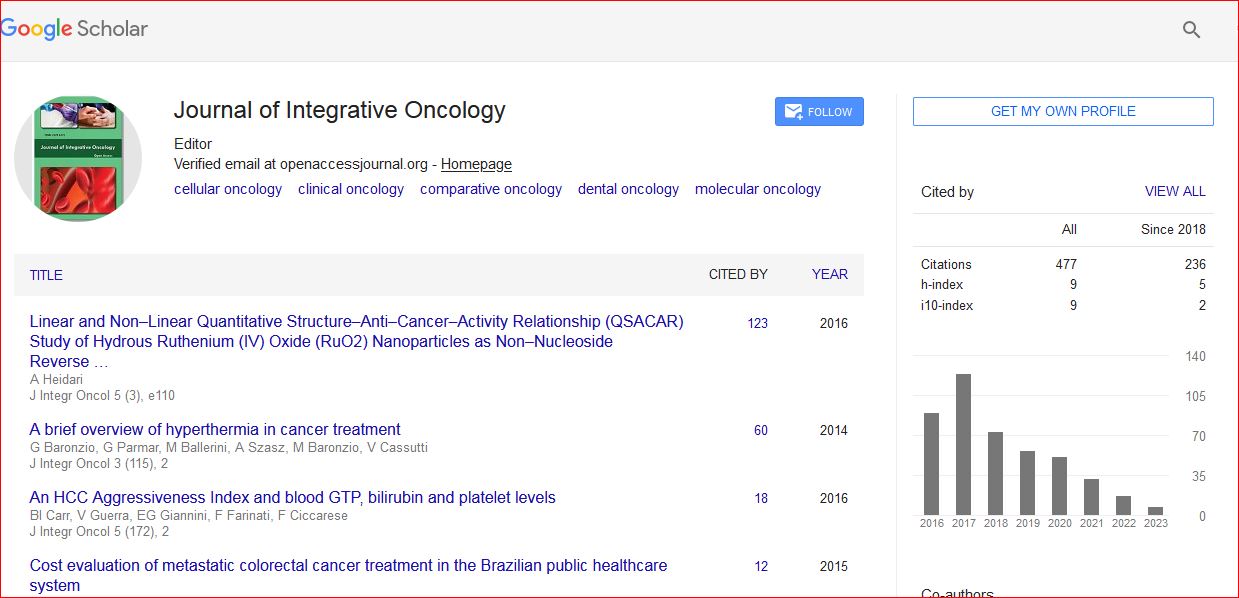
Journal of Integrative Oncology received 495 citations as per Google Scholar report