Opinion - (2025) Volume 14, Issue 4
Received: 01-Jul-2025, Manuscript No. jio-26-184817;
Editor assigned: 03-Jul-2025, Pre QC No. P-184817;
Reviewed: 17-Jul-2025, QC No. Q-184817;
Revised: 22-Jul-2025, Manuscript No. R-184817;
Published:
29-Jul-2025
, DOI: 10.37421/2329-6771.2025.14.566
Citation: Khalifa, Noura. ”Dietary Anti-Inflammation: Key To Cancer Care.” J Integr Onco 14 (2025):566.
Copyright: © 2025 Khalifa N. This is an open-access article distributed under the terms of the Creative Commons Attribution License, which permits unrestricted use, distribution and reproduction in any medium, provided the original author and source are credited.
Anti-inflammatory diets are increasingly recognized for their significant role in cancer care, focusing on modulating chronic inflammation, a well-established contributor to cancer initiation, progression, and resistance to treatment. These dietary patterns, characterized by an abundance of fruits, vegetables, whole grains, and healthy fats, are instrumental in reducing pro-inflammatory mediators within the body. Furthermore, they possess the capacity to bolster the immune system, potentially enhance the efficacy of cancer therapies, and alleviate the adverse effects associated with cancer treatments, thereby contributing to improved patient outcomes and a better quality of life [1].
The Mediterranean diet stands out as a prominent example of an anti-inflammatory dietary approach, demonstrating a consistent association with a reduced risk of developing various types of cancer and improved survival rates among individuals diagnosed with the disease. Its dietary composition, with a strong emphasis on plant-based foods, olive oil, and fish, provides a rich reservoir of antioxidants and beneficial fatty acids. These components work synergistically to combat oxidative stress and inflammation, which are central to the pathogenesis of cancer [2].
Omega-3 fatty acids, commonly found in fatty fish and specific plant-based sources, are potent anti-inflammatory agents with scientifically demonstrated roles in both cancer prevention and management. Their ability to suppress inflammatory pathways, inhibit the proliferation of tumor cells, and promote programmed cell death (apoptosis) positions them as valuable contributors to anti-inflammatory dietary strategies for cancer patients [3].
The impact of dietary polyphenols, prevalent in foods such as berries, tea, and dark chocolate, extends significantly into cancer care due to their inherent antioxidant and anti-inflammatory properties. These bioactive compounds can effectively interfere with critical cancer cell signaling pathways, reduce the formation of new blood vessels that nourish tumors (angiogenesis), and induce apoptosis, making them essential components of an anti-inflammatory dietary regimen [4].
Fibers derived from whole grains and legumes are fundamental to the efficacy of anti-inflammatory diets, primarily through their role in promoting a healthy gut microbiome. A well-balanced gut microbiota is crucial for maintaining a state of reduced systemic inflammation, which in turn influences immune responses and can positively impact both the development of cancer and the effectiveness of its treatment [5].
Certain spices, notably turmeric, containing curcumin, and ginger, are well-established for their ability to modulate inflammatory pathways within the body. Incorporating these potent anti-inflammatory agents into the diet can play a role in inhibiting cancer cell growth, reducing angiogenesis, and preventing metastasis, thus offering complementary support in the comprehensive management of cancer [6].
Conversely, the avoidance of certain foods known to be pro-inflammatory, such as processed meats and refined sugars, forms a cornerstone of anti-inflammatory dietary approaches in cancer care. Reducing the consumption of these items can effectively lower levels of systemic inflammation, thereby supporting the body's inherent capacity to combat cancer [7].
Nutritional counseling provided by registered dietitians is an indispensable component of integrating anti-inflammatory dietary principles into the care plans for cancer patients. Personalized dietary plans are essential for addressing unique nutrient requirements, managing treatment-related side effects, and empowering patients to take an active role in their recovery journey [8].
The synergistic interaction of various anti-inflammatory food components, including antioxidants and phytonutrients, can profoundly influence cancer cell behavior. This holistic approach, which prioritizes the consumption of whole foods over isolated supplements, is paramount for maximizing the therapeutic benefits derived from anti-inflammatory diets in the context of cancer care [9].
Emerging research is increasingly highlighting the potential of personalized anti-inflammatory dietary interventions. These tailored approaches, which consider an individual's unique genetic profile and gut microbiome composition, aim to optimize the anti-inflammatory response and its downstream effects on cancer treatment outcomes and long-term survivorship [10].
Anti-inflammatory diets are critical in modern cancer care, primarily through their ability to modulate chronic inflammation, a known driver of cancer initiation, progression, and treatment resistance. These dietary patterns, rich in fruits, vegetables, whole grains, and healthy fats, effectively reduce pro-inflammatory mediators. They also support the immune system, enhance treatment efficacy, and mitigate treatment-related side effects, ultimately improving patient outcomes and quality of life [1].
A prime example of an anti-inflammatory dietary approach is the Mediterranean diet, which has been associated with a reduced risk of several cancers and improved survival rates in cancer patients. Its emphasis on plant-based foods, olive oil, and fish provides a rich source of antioxidants and healthy fats, effectively combating oxidative stress and inflammation central to cancer development [2].
Omega-3 fatty acids, abundant in fatty fish and certain plant sources, are potent anti-inflammatory agents with demonstrated roles in cancer prevention and management. They can suppress inflammatory pathways, inhibit tumor cell proliferation, and promote apoptosis, offering significant benefit in anti-inflammatory dietary strategies for cancer patients [3].
The impact of dietary polyphenols, found in berries, tea, and dark chocolate, extends to cancer care through their antioxidant and anti-inflammatory properties. These compounds can interfere with cancer cell signaling pathways, reduce angiogenesis, and induce apoptosis, making them valuable components of an anti-inflammatory diet [4].
Fibers from whole grains and legumes are integral to anti-inflammatory diets by promoting a healthy gut microbiome. A balanced microbiome can reduce systemic inflammation, influencing immune responses and potentially impacting cancer development and treatment outcomes [5].
The role of certain spices, such as turmeric (curcumin) and ginger, in modulating inflammatory pathways is well-established. Incorporating these into an anti-inflammatory diet can help inhibit cancer cell growth, angiogenesis, and metastasis, offering complementary support in cancer care [6].
While some foods are pro-inflammatory, such as processed meats and refined sugars, their avoidance is a cornerstone of anti-inflammatory dietary approaches in cancer care. Reducing intake of these items can help lower systemic inflammation and support the body's ability to fight cancer [7].
Nutritional counseling by registered dietitians is vital for integrating anti-inflammatory dietary principles into cancer patient care. Personalized dietary plans can address specific nutrient needs, manage treatment side effects, and empower patients to actively participate in their recovery [8].
The synergistic effects of various anti-inflammatory food components, like antioxidants and phytonutrients, can significantly impact cancer cell behavior. This holistic approach, focusing on whole foods rather than isolated supplements, is key to maximizing the benefits of anti-inflammatory diets in cancer care [9].
Emerging research highlights the potential of personalized anti-inflammatory dietary interventions based on an individual's genetic profile and microbiome. This tailored approach aims to optimize the anti-inflammatory response and its impact on cancer treatment and survivorship [10].
Anti-inflammatory diets are crucial in cancer care by modulating chronic inflammation, a key factor in cancer development and treatment resistance. These diets, rich in fruits, vegetables, whole grains, and healthy fats, reduce inflammation, support immunity, and improve treatment outcomes. Examples include the Mediterranean diet and the inclusion of omega-3 fatty acids, polyphenols, dietary fiber, and spices like turmeric and ginger. Avoiding pro-inflammatory foods like processed meats and refined sugars is also essential. Nutritional counseling from registered dietitians and personalized dietary plans, considering genetic profiles and the microbiome, are vital for optimizing benefits and improving patient care and survivorship.
None
None
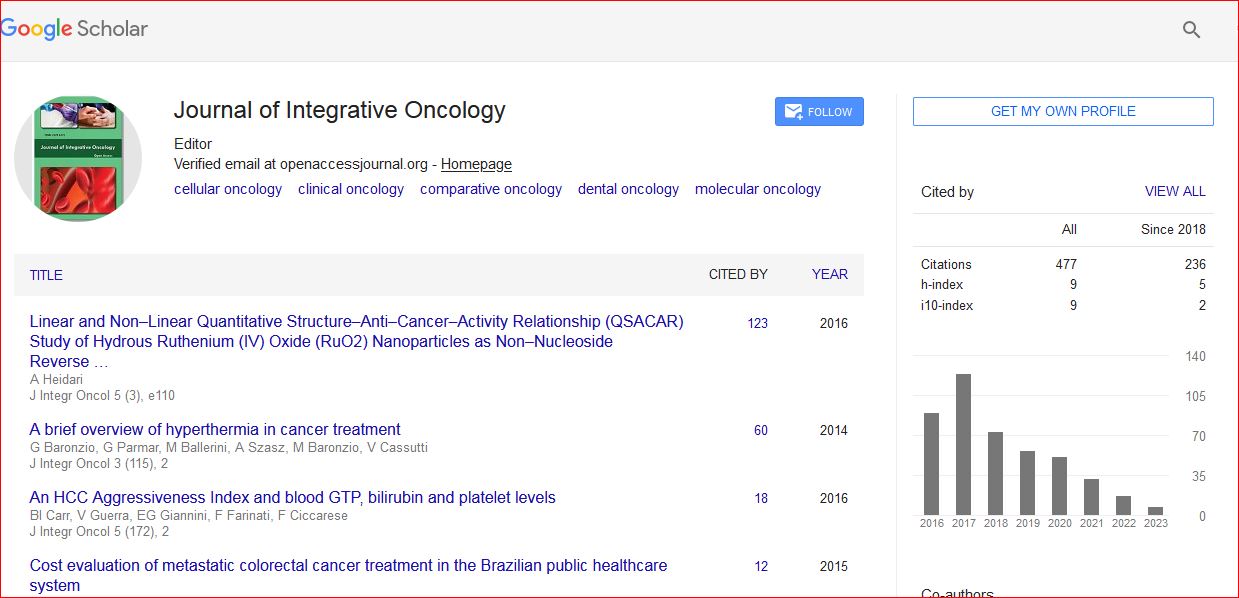
Journal of Integrative Oncology received 495 citations as per Google Scholar report