Short Communication - (2025) Volume 9, Issue 3
Received: 01-Jun-2025, Manuscript No. cmcr-25-178074;
Editor assigned: 03-Jun-2025, Pre QC No. P-178074;
Reviewed: 17-Jun-2025, QC No. Q-178074;
Revised: 23-Jun-2025, Manuscript No. R-178074;
Published:
30-Jun-2025
, DOI: 10.37421/2684-4915.2025.9. 381
Citation: Nogueira, Beatriz. ”Diagnostic Challenges: Technology, Education, Systemic Reform.” Clin Med Case Rep 09 (2025):380.
Copyright: © 2025 Nogueira B. This is an open-access article distributed under the terms of the Creative Commons Attribution License, which permits unrestricted use, distribution and reproduction in any medium, provided the original author and source are credited.
The challenge of diagnosing rare diseases is a profound issue, often characterized by a protracted and arduous journey for patients. This diagnostic odyssey typically spans years, involving consultations with numerous specialists, which significantly diminishes the patient's quality of life. A study focusing on Italian patients specifically highlighted how vital improved coordination among healthcare providers and heightened public awareness are in significantly shortening this difficult process[1].
Similarly, diagnosing autoimmune encephalitis presents its own set of considerable complexities. The symptoms often mirror those of other neurological or psychiatric conditions, making initial identification quite tricky. Clinicians must maintain a heightened index of suspicion, truly grasp the diverse ways this condition can manifest, and skillfully employ a combination of diagnostic tools. This proactive approach is essential to prevent delays and ensure patients receive timely and appropriate treatment[2].
Looking for solutions, Artificial Intelligence emerges as a powerful tool in addressing the diagnostic hurdles associated with rare diseases. By adeptly analyzing vast datasets of patient information, AI technologies hold immense potential to unearth subtle patterns and intricate correlations that human medical professionals might easily overlook. Ultimately, this capability promises to accelerate diagnosis dramatically and guide patients onto effective care pathways much sooner, transforming the diagnostic landscape for these conditions[3].
Diagnostic difficulties are not limited to rare conditions; they also appear in more common presentations, such as severe community-acquired pneumonia where standard viral and bacterial tests yield negative results. The absence of an identifiable pathogen significantly complicates treatment decisions. This situation compels clinicians to explore less common etiologies or even non-infectious causes, thereby emphasizing a critical need for more advanced diagnostic methodologies and techniques to guide effective patient care[4].
Further illustrating these challenges, a case report specifically highlighted the inherent difficulties in accurately diagnosing rare tumors, especially when the clinical symptoms deviate significantly from typical presentations. An unusual or atypical clinical picture can lead to substantial diagnostic delays. Overcoming this requires not only a high degree of clinical suspicion but also a collaborative, multidisciplinary approach to thoroughly investigate and correctly identify the underlying condition, ensuring patients receive the precise care they need[5].
Addressing these pervasive diagnostic challenges calls for a reevaluation of medical education itself. The argument is made that current training often falls short in adequately preparing future doctors for the intricate complexities of real-world diagnostics. There's a clear need for curricula that rigorously emphasize critical thinking, refine clinical reasoning skills, and teach effective strategies for managing inherent uncertainties. Such improvements are vital to significantly reduce the occurrence of diagnostic errors in practice[6].
Insights from a tertiary care center underscore the complex diagnostic hurdles specific to head and neck carcinoma. The varied anatomical locations of tumors, the diversity of histological subtypes, and the absolute necessity for advanced imaging and precise biopsy techniques collectively make an accurate and timely diagnosis a significant undertaking. These diagnostic complexities ultimately bear considerable impact on patient prognosis and the meticulous planning of effective treatment strategies[7].
Beyond individual conditions, the essence of diagnostic challenges extends far beyond simply missing a diagnosis. It is recognized as a sophisticated interplay involving cognitive biases, systemic failures within healthcare infrastructure, and critical communication gaps between providers and patients. A comprehensive review outlined a variety of strategies and overarching frameworks designed to confront these multifaceted issues across the entire healthcare spectrum. The emphasis here is on adopting a robust, multifaceted approach that integrates innovative technology, fosters improved teamwork, and enhances patient engagement to significantly diminish the likelihood of diagnostic errors[8].
Identifying adult Attention Deficit Hyperactivity Disorder (ADHD) presents its own distinct challenges, as a particular case series demonstrated. This is largely due to its significant symptomatic overlap with various other mental health conditions and the prevailing misconception that ADHD is exclusively a childhood disorder. These cases profoundly highlight the crucial importance of conducting a thorough patient history, performing a careful differential diagnosis, and actively considering late-onset or subtly masked presentations to ensure accurate identification and provide appropriate support for affected adults[9].
Crucially, genomic diagnostics are increasingly proving to be indispensable in navigating the intricate diagnostic terrain of rare diseases. This article elucidates how cutting-edge genetic sequencing technologies can precisely identify underlying genetic causes that conventional diagnostic tests frequently overlook. Such advancements effectively streamline and shorten the often-prolonged diagnostic journey, ultimately paving the way for more targeted and personalized therapies for patients who have endured years of debilitating uncertainty. This technological leap represents a significant stride forward in precision medicine[10].
Across the medical landscape, the difficulty in achieving a timely and accurate diagnosis remains a significant hurdle, particularly for patients grappling with rare diseases. The path to a diagnosis is often described as a 'diagnostic odyssey,' a prolonged and frustrating experience that can span many years and involve countless consultations with various specialists [1]. This arduous journey not only delays appropriate treatment but also profoundly impacts patients' overall quality of life. Similar complexities arise in diagnosing rare tumors, where atypical clinical presentations can significantly prolong the diagnostic process, necessitating a heightened clinical suspicion and often a collaborative, multidisciplinary approach to unveil the underlying condition [5]. Even in seemingly more common but severe conditions, such as community-acquired pneumonia with inconclusive standard tests, clinicians face the challenge of identifying less common or non-infectious causes, highlighting the urgent need for more advanced diagnostic tools [4]. This pervasive issue underscores a fundamental problem in modern healthcare: the inherent difficulty in identifying conditions that do not fit standard diagnostic patterns or manifest atypically.
Specific medical conditions present unique diagnostic hurdles due to their symptomatic overlap with other disorders. For example, diagnosing autoimmune encephalitis can be quite tricky because its varied symptoms frequently mimic those of other neurological or psychiatric conditions [2]. This demands that clinicians maintain a very high index of suspicion, a deep understanding of its diverse presentations, and a strategic use of combined diagnostic tools to avoid treatment delays. Similarly, identifying Attention Deficit Hyperactivity Disorder (ADHD) in adults is fraught with challenges. A key reason is its symptomatic overlap with various other mental health conditions and the common, yet mistaken, belief that it is exclusively a childhood disorder [9]. Accurate diagnosis in adults therefore requires a thorough historical assessment, meticulous differential diagnosis, and a readiness to consider late-onset or masked presentations to provide appropriate support.
Fortunately, technological advancements are emerging as powerful allies in confronting these diagnostic dilemmas. Artificial Intelligence (AI) holds considerable promise in accelerating the diagnosis of rare diseases. By analyzing vast quantities of patient data, AI tools can identify subtle patterns and correlations that human clinicians might easily miss, thereby shortening the diagnostic timeline and guiding patients to appropriate care pathways much faster [3]. Complementing AI, genomic diagnostics are becoming increasingly vital, particularly for rare diseases. Advanced genetic sequencing technologies can pinpoint underlying genetic causes that conventional tests often fail to detect, effectively shortening the diagnostic journey and enabling more targeted and personalized therapies for patients who have endured prolonged uncertainty [10]. These technological innovations represent a crucial step forward in precision medicine and improving diagnostic accuracy.
Beyond individual patient presentations and technological solutions, diagnostic challenges are deeply rooted in systemic issues within healthcare. They are often a complex interplay of cognitive biases, fundamental system failures, and critical communication gaps across different levels of care [8]. Addressing these multifaceted issues requires a comprehensive approach that includes leveraging technology, fostering improved teamwork, and enhancing patient engagement to significantly reduce diagnostic errors. Furthermore, the quality of medical education plays a pivotal role. There's a compelling argument that current undergraduate training often fails to adequately prepare future physicians for the intricate complexities of real-world diagnostic scenarios. Curricula need to evolve to place greater emphasis on critical thinking, sophisticated clinical reasoning, and effective strategies for managing inherent diagnostic uncertainty, thereby equipping doctors to minimize errors effectively [6]. Insights from tertiary care centers, such as those studying head and neck carcinoma, further highlight how factors like varied tumor locations, diverse histological subtypes, and the necessity for advanced imaging and biopsy techniques represent significant diagnostic hurdles, directly impacting patient prognosis and the intricate planning of their treatment [7].
The landscape of medical diagnosis is riddled with significant challenges, especially for rare diseases where patients often endure a lengthy 'diagnostic odyssey' involving multiple specialists and profound impacts on their quality of life [1]. These difficulties extend to conditions like autoimmune encephalitis, where symptoms mimic other neurological disorders, requiring a high index of suspicion and varied diagnostic tools [2]. Even in cases of severe community-acquired pneumonia with negative standard tests, clinicians struggle to pinpoint etiologies, underscoring the need for advanced techniques [4]. Rare tumors also present diagnostic hurdles due to atypical presentations, demanding multidisciplinary approaches [5]. Addressing these issues, Artificial Intelligence (AI) and genomic diagnostics offer promising solutions. AI can analyze vast data to detect subtle patterns in rare diseases, speeding up diagnosis [3], while genetic sequencing identifies underlying causes missed by conventional tests, leading to more targeted therapies [10]. However, the problem isn't solely technical; it's also rooted in systemic failures, cognitive biases, and communication gaps [8]. Medical education needs reform to better prepare future physicians by emphasizing critical thinking and managing uncertainty, ultimately reducing diagnostic errors in complex scenarios like head and neck carcinoma [6, 7]. Diagnostic challenges in conditions such as adult Attention Deficit Hyperactivity Disorder (ADHD), with its overlap with other mental health conditions, further highlight the necessity of thorough history and differential diagnosis [9]. What this really means is a multifaceted approach, combining advanced technology, improved education, and systemic enhancements, is essential to overcome diagnostic complexities across various medical fields.
None
None
Indexed at, Google Scholar, Crossref
Indexed at, Google Scholar, Crossref
Indexed at, Google Scholar, Crossref
Indexed at, Google Scholar, Crossref
Indexed at, Google Scholar, Crossref
Indexed at, Google Scholar, Crossref
Indexed at, Google Scholar, Crossref
Indexed at, Google Scholar, Crossref
Indexed at, Google Scholar, Crossref
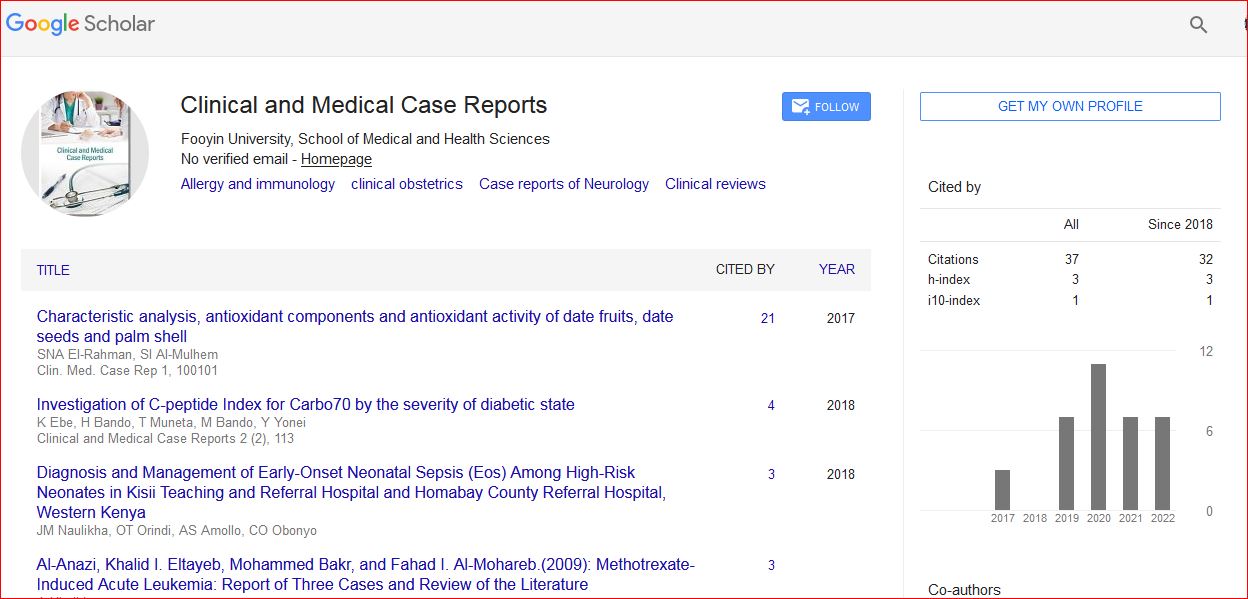
Clinical and Medical Case Reports received 53 citations as per Google Scholar report