Opinion - (2025) Volume 10, Issue 4
Received: 01-Aug-2025, Manuscript No. jdcm-26-182203;
Editor assigned: 04-Aug-2025, Pre QC No. P-182203;
Reviewed: 18-Aug-2025, QC No. Q-182203;
Revised: 22-Aug-2025, Manuscript No. R-182203;
Published:
29-Aug-2025
, DOI: 10.37421/2475-3211.2025.10.322
Citation: Al-Mutairi, Farah. ”Diabetic Erectile Dysfunction: Causes, Treatments, and Hope.” J Diabetic Complications Med 10 (2025):322.
Copyright: © 2025 Al-Mutairi F. This is an open-access article distributed under the terms of the Creative Commons Attribution License, which permits unrestricted use, distribution and reproduction in any medium, provided the original author and source are credited.
Diabetic erectile dysfunction (ED) represents a significant and prevalent complication stemming from diabetes mellitus, a chronic metabolic disorder characterized by persistently high blood glucose levels. The pathophysiology of diabetic ED is intricate, involving a complex interplay of vascular, neurological, hormonal, and psychological factors that collectively impair erectile function. Pathologically, hyperglycemia-induced oxidative stress and the subsequent damage to penile tissues play a central role, contributing to the development and progression of this condition [1].
Endothelial dysfunction is recognized as a critical hallmark of diabetes and a major contributor to diabetic ED. The elevated glucose levels characteristic of diabetes lead to an increased production of reactive oxygen species (ROS), which in turn inactivate nitric oxide (NO). This reduction in NO bioavailability is pivotal, as NO is essential for smooth muscle relaxation in the corpus cavernosum, a necessary step for achieving and maintaining an erection. Furthermore, inflammatory pathways and the accumulation of advanced glycation end-products (AGEs) further exacerbate endothelial damage in diabetic individuals [2].
Neuropathy, encompassing both autonomic and peripheral nerve damage, is another key pathophysiological mechanism underlying diabetic ED. Diabetic peripheral neuropathy can affect the somatic nerves that control penile sensation, while autonomic neuropathy disrupts the crucial parasympathetic and sympathetic innervations that regulate penile vascular response. This widespread nerve damage compromises the intricate signaling pathways required for proper erectile function [3].
Hormonal imbalances, particularly hypogonadism, characterized by low testosterone levels, frequently coexist with diabetes and can significantly worsen ED. Testosterone plays a vital role in maintaining libido and contributing to erectile function. Its deficiency in diabetic men can compound the effects of other pathophysiological factors, making a comprehensive assessment and treatment of hypogonadism essential for managing ED [4].
Psychological factors such as anxiety, depression, and the stress associated with managing diabetes are also significant contributors to ED. The relationship between psychological well-being and ED is often bidirectional; ED itself can cause significant psychological distress, which in turn can further impair sexual function. Therefore, a holistic approach that addresses mental health alongside physical treatments is crucial for effective management [5].
The pharmacotherapy for diabetic ED is largely centered around phosphodiesterase type 5 inhibitors (PDE5is). These agents are considered the cornerstone of treatment, working by enhancing the effects of nitric oxide. They achieve this by inhibiting the breakdown of cyclic guanosine monophosphate (cGMP), a process that leads to smooth muscle relaxation and increased blood flow to the penis, thereby facilitating erection. However, the efficacy of PDE5is can be variable, often depending on the severity of the underlying pathophysiological mechanisms [6].
Glycemic control stands out as a paramount factor in both the prevention and effective management of diabetic ED. Maintaining blood glucose levels within the recommended target range is crucial for reducing the progression of microvascular and macrovascular complications that are fundamental to the development of ED. Consequently, intensified diabetes management strategies are indispensable for preserving erectile health [7].
Lifestyle modifications constitute another critical component in the comprehensive approach to managing diabetic ED. Engaging in weight loss, regular physical activity, quitting smoking, and moderating alcohol consumption can significantly improve erectile function. These interventions address several key risk factors for ED and contribute to an overall improvement in cardiovascular and metabolic health, which are intimately linked to sexual function [8].
Emerging therapeutic avenues, particularly in the realm of regenerative medicine, are showing considerable promise for diabetic ED. Approaches such as stem cell therapy and platelet-rich plasma (PRP) injections aim to promote tissue repair and stimulate the formation of new blood vessels (neoangiogenesis) within the penile corpus cavernosum. These innovative methods strive to restore intrinsic erectile function rather than merely providing symptomatic relief [9].
Finally, the effective management of comorbidities that frequently accompany diabetes, such as hypertension, dyslipidemia, and obesity, is critical for the holistic treatment of diabetic ED. These coexisting conditions often exacerbate vascular and endothelial dysfunction, thereby negatively impacting erectile capacity and overall cardiovascular health. Addressing these comorbidities is an integral part of a comprehensive treatment plan [10].
Diabetic erectile dysfunction (ED) is a prevalent complication of diabetes, arising from a complex interplay of vascular, neurological, hormonal, and psychological factors that detrimentally affect penile function. Pathologically, hyperglycemia-induced oxidative stress and the resultant damage to penile tissues are central mechanisms in its development. Treatments are designed to target these underlying causes and improve erectile capacity. Phosphodiesterase type 5 inhibitors (PDE5is) are established as the first-line pharmacological intervention, offering symptomatic relief by enhancing nitric oxide signaling [1].
Endothelial dysfunction is a key characteristic of diabetes and a significant contributor to diabetic ED. The elevated glucose levels in diabetes promote the generation of reactive oxygen species (ROS), which inactivate nitric oxide (NO). This diminished NO availability impairs the relaxation of smooth muscle in the corpus cavernosum, hindering the erectile process. The progression of endothelial damage is further aggravated by inflammatory pathways and the formation of advanced glycation end-products (AGEs) [2].
Neuropathy, affecting both the autonomic and peripheral nervous systems, is a critical pathophysiological factor in diabetic ED. Diabetic peripheral neuropathy can compromise sensory pathways in the penis, while autonomic neuropathy disrupts the essential parasympathetic and sympathetic nerve signals that are vital for initiating and sustaining an erection. This nerve damage interferes with the complex signaling required for proper penile vascular responses [3].
Hormonal dysregulation, particularly hypogonadism (low testosterone levels), commonly coexists with diabetes and can exacerbate ED. Testosterone plays a role in sexual desire and erectile function, and its deficiency in diabetic men can compound other underlying pathophysiological issues. Therefore, assessing and treating hypogonadism, when present, is an important aspect of comprehensive ED management [4].
Psychological factors, including anxiety, depression, and stress associated with managing diabetes, are significant contributors to ED. The relationship is often bidirectional, where ED can lead to psychological distress, and psychological issues can further impair sexual function. A holistic approach that addresses mental health in conjunction with physical treatments is therefore essential for optimal outcomes [5].
Phosphodiesterase type 5 inhibitors (PDE5is) are considered the mainstay of pharmacotherapy for diabetic ED. They potentiate the action of nitric oxide by inhibiting the breakdown of cyclic guanosine monophosphate (cGMP), leading to smooth muscle relaxation and increased penile blood flow. However, the effectiveness of PDE5is can vary depending on the severity of the underlying pathophysiological mechanisms contributing to ED [6].
Effective glycemic control is fundamental to the prevention and management of diabetic ED. Maintaining blood glucose levels within the recommended therapeutic range is crucial for mitigating the progression of microvascular and macrovascular complications that underlie ED. Consequently, intensified diabetes management strategies are vital for preserving erectile function [7].
Lifestyle modifications, encompassing weight loss, regular physical activity, smoking cessation, and moderate alcohol consumption, have a significant positive impact on erectile function in men with diabetes. These changes address key risk factors and contribute to improved overall cardiovascular and metabolic health, which are intrinsically linked to sexual well-being [8].
Regenerative medicine, including stem cell therapy and platelet-rich plasma (PRP) injections, represents a promising frontier in treating diabetic ED. These approaches aim to promote tissue regeneration and the formation of new blood vessels within the penile corpus cavernosum, thereby restoring intrinsic erectile function rather than merely providing symptomatic relief [9].
Crucially, the management of comorbidities such as hypertension, dyslipidemia, and obesity is essential in the comprehensive treatment of diabetic ED. These conditions frequently coexist with diabetes and can significantly worsen vascular and endothelial dysfunction, further impairing erectile capacity. Addressing these comorbidities is an integral part of a holistic treatment plan [10].
Diabetic erectile dysfunction (ED) is a widespread complication of diabetes, resulting from a complex interplay of vascular, neurological, hormonal, and psychological factors. Key pathological mechanisms include hyperglycemia-induced oxidative stress, endothelial dysfunction, and neuropathy. Treatments focus on addressing these underlying issues. Phosphodiesterase type 5 inhibitors (PDE5is) are the primary pharmacotherapy, offering symptomatic relief. Lifestyle modifications, stringent glycemic control, and management of comorbidities like hypertension and hypogonadism are crucial for long-term outcomes. Emerging regenerative therapies hold promise for restoring intrinsic function.
None
None
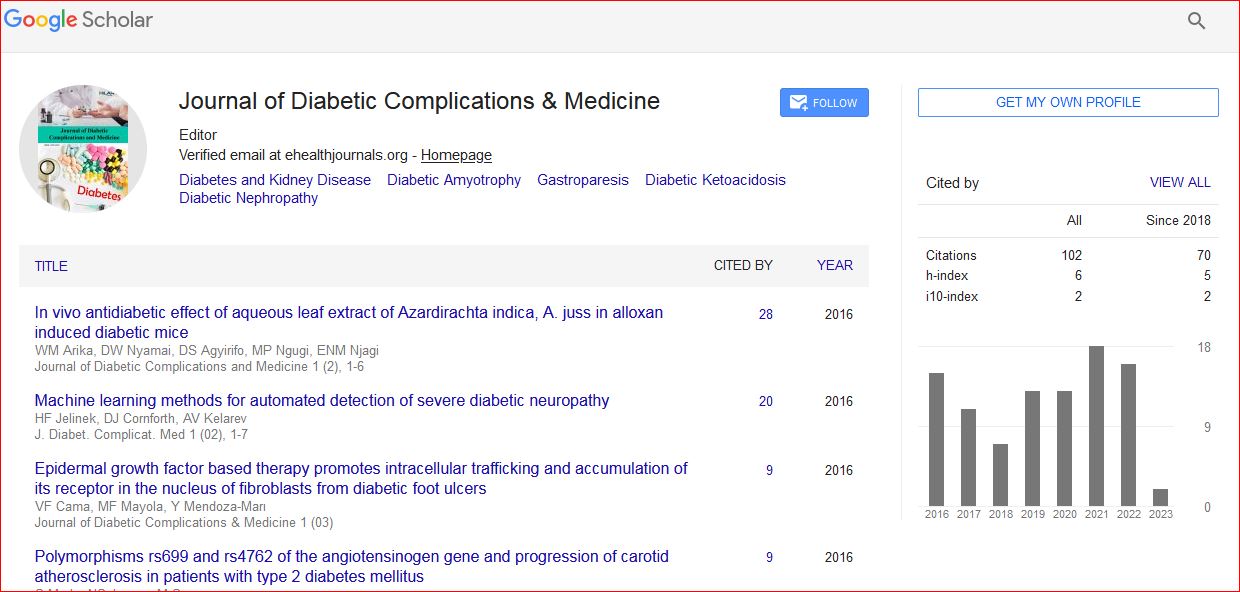
Journal of Diabetic Complications & Medicine received 102 citations as per Google Scholar report