Commentary - (2025) Volume 16, Issue 4
Received: 01-Jul-2025, Manuscript No. assj-25-174779;
Editor assigned: 03-Jul-2025, Pre QC No. P-174779;
Reviewed: 17-Jul-2025, QC No. Q-174779;
Revised: 22-Jul-2025, Manuscript No. R-174779;
Published:
29-Jul-2025
, DOI: 10.37421/2151-6200.2025.16.673
Citation: Marsten, Jules. "Cultural Mediation: Bridging Divides for Inclusive Societies." Arts Social Sci J 16 (2025):673.
Copyright: © 2025 Marsten J. This is an open-access article distributed under the terms of the Creative Commons Attribution License, which permits unrestricted use, distribution and reproduction in any medium, provided the original author and source are credited.
Cultural mediation is a multifaceted and indispensable practice bridging communication and understanding across diverse sectors. It plays a crucial role in health and social services, where it helps bridge communication gaps, build trust, and ensure equitable access for varied populations. The need for standardized training and professional recognition for mediators is often highlighted to maximize their impact on these vital services [1].
In participatory art practices, cultural mediation connects diverse communities with artistic expression. Mediators facilitate engagement, interpretation, and co-creation, fostering inclusive environments in art spaces. What this really means is that mediators are essential in translating complex artistic concepts into relatable experiences for broader audiences, making art accessible and meaningful [2].
Looking at migrant integration, cultural mediation serves as a vital resource across various contexts. Mediators act as crucial facilitators, helping migrants navigate new societal norms, access services, and overcome cultural barriers. This work emphasizes that successful integration often hinges on effective communication and mutual understanding, something cultural mediators are uniquely positioned to provide [3].
Higher education also benefits significantly from cultural mediation, which fosters intercultural dialogue and global citizenship. Mediators are key in helping students from diverse backgrounds connect, understand different perspectives, and develop essential cross-cultural communication skills. The point here is that intentional mediation can transform classrooms into truly global learning environments, preparing students for an interconnected world [4].
In mental healthcare, cultural mediation has a profound impact, as evidenced by syntheses of empirical data and lived experiences. Mediators improve patient-provider communication, reduce stigma, and tailor care to specific cultural contexts, ultimately enhancing mental health outcomes for diverse populations. The core idea is that culturally sensitive approaches are vital for effective mental health support, leading to better patient engagement and recovery [5].
Tourism too sees the influence of cultural mediation, particularly in destination branding and enhancing the visitor experience. Exploratory studies suggest mediators bridge cultural gaps, offering deeper insights into local heritage and traditions. This enriches tourists' understanding and appreciation, transforming a simple trip into a meaningful cultural encounter and promoting a more profound connection with destinations [6].
The digital realm introduces new challenges and opportunities for cultural mediation within museums and heritage sites. Digital tools and platforms create novel avenues for engaging audiences, interpreting cultural content, and making heritage more globally accessible. The key insight is that integrating technology thoughtfully can amplify the reach and impact of cultural institutions, offering richer, more interactive experiences to a wider audience [7].
In social work, cultural mediation holds a vital role, especially when working with migrant and refugee populations. Mediators facilitate communication, interpret cultural nuances, and bridge trust gaps between service providers and vulnerable groups. Here's the thing: effective social support for diverse communities often depends on understanding and navigating complex cultural contexts, a task where mediators excel, ensuring comprehensive care [8].
Beyond individual services, cultural mediation contributes significantly to community development through various strategies. Mediators are key players in fostering social cohesion, resolving conflicts, and empowering marginalized groups by ensuring their voices are heard and understood across cultural divides. The essence is that mediators build stronger, more inclusive communities by facilitating genuine cross-cultural engagement and understanding [9].
Finally, cultural mediation is critical in international business negotiations, where it helps navigate complex cross-cultural communication. A proposed framework demonstrates how mediators can manage linguistic and cultural differences, interpret subtle cues, and build rapport to achieve mutually beneficial outcomes. What this really means is that a skilled cultural mediator is an invaluable asset in global business, ensuring smooth interactions and preventing costly misunderstandings [10].
Cultural mediation serves as a pivotal bridge across numerous societal domains, addressing challenges arising from diverse cultural backgrounds. In the critical areas of health and social services, mediators play an indispensable role by fostering communication and understanding between service providers and diverse populations [1]. This is particularly evident in mental healthcare, where mediators enhance patient-provider communication, actively work to reduce stigma, and ensure care is culturally tailored, which significantly improves mental health outcomes [5]. Here's the thing: culturally sensitive approaches are vital for effective mental health support. Similarly, within broader social work contexts, especially with migrant and refugee populations, mediators are crucial for facilitating clear communication, interpreting subtle cultural nuances, and bridging trust gaps between service providers and vulnerable groups [8]. Effective social support for these communities often depends on navigating complex cultural contexts, a task where skilled mediators truly excel, ensuring comprehensive and equitable care.
The journey of migrant integration is another area where cultural mediation proves invaluable. Mediators act as essential facilitators, guiding migrants through new societal norms, helping them access vital services, and aiding in overcoming the inherent cultural barriers they face [3]. What this really means is that successful integration is deeply tied to effective communication and mutual understanding, capabilities cultural mediators are uniquely equipped to provide. Furthermore, higher education leverages cultural mediation to cultivate intercultural dialogue and promote global citizenship among students. Mediators are instrumental in helping students from varied backgrounds connect, grasp different perspectives, and develop crucial cross-cultural communication skills [4]. The point here is that intentional mediation can transform conventional classrooms into truly global learning environments, preparing a new generation for an increasingly interconnected world.
Cultural mediation extends its reach into the arts and heritage sectors, enriching public engagement and accessibility. In participatory art practices, mediators serve to connect diverse communities with artistic expression. They facilitate active engagement, deeper interpretation, and collaborative co-creation, thereby fostering more inclusive environments within art spaces [2]. Mediators are essential in translating complex artistic concepts into relatable experiences for broader audiences, making art more accessible and meaningful. Moreover, the burgeoning field of digital cultural mediation offers new frontiers for museums and heritage sites. Through digital tools and platforms, institutions can create novel avenues for engaging audiences, interpreting cultural content, and making heritage more globally accessible [7]. The key insight here is that thoughtful integration of technology can significantly amplify the reach and impact of cultural institutions, delivering richer, more interactive experiences to a worldwide audience.
The economic and experiential realms of tourism and international business also deeply benefit from cultural mediation. In tourism, exploratory studies show how cultural mediation influences destination branding and enhances the overall visitor experience [6]. Mediators bridge cultural gaps, offering deeper insights into local heritage and traditions, which enriches tourists' understanding and appreciation. The takeaway is that thoughtful cultural mediation transforms a simple trip into a meaningful cultural encounter. Similarly, in the high-stakes environment of international business negotiations, cultural mediation is critical for successful cross-cultural communication [10]. A proposed framework highlights how mediators skillfully navigate linguistic and cultural differences, interpret subtle cues, and build rapport to achieve mutually beneficial outcomes. What this really means is that a skilled cultural mediator is an invaluable asset in the complex world of global business, ensuring smooth interactions and preventing costly misunderstandings.
Finally, cultural mediation is a powerful force for broader community development. It contributes significantly through various strategies and practices, with mediators acting as key players in fostering social cohesion, resolving conflicts, and empowering marginalized groups [9]. By ensuring that diverse voices are heard and understood across cultural divides, mediators facilitate genuine cross-cultural engagement. The essence here is that mediators build stronger, more inclusive communities, cultivating environments where understanding and cooperation thrive for collective benefit.
None
None
Indexed at, Google Scholar, Crossref
Indexed at, Google Scholar, Crossref
Indexed at, Google Scholar, Crossref
Indexed at, Google Scholar, Crossref
Indexed at, Google Scholar, Crossref
Indexed at, Google Scholar, Crossref
Indexed at, Google Scholar, Crossref
Indexed at, Google Scholar, Crossref
Indexed at, Google Scholar, Crossref
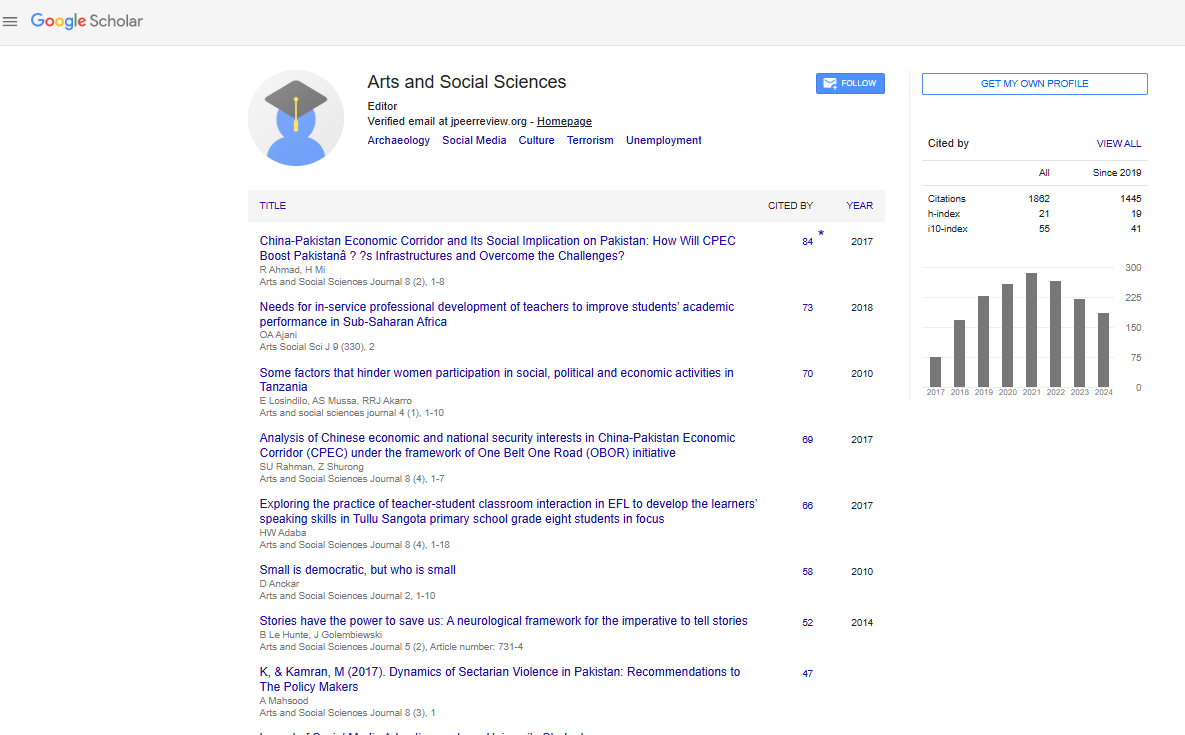
Arts and Social Sciences Journal received 1413 citations as per Google Scholar report