Short Communication - (2025) Volume 10, Issue 5
Received: 01-Sep-2025, Manuscript No. PE-26-179311;
Editor assigned: 03-Sep-2025, Pre QC No. P-179311;
Reviewed: 17-Sep-2025, QC No. Q-179311;
Revised: 22-Sep-2025, Manuscript No. R-179311;
Published:
29-Sep-2025
, DOI: 10.37421/2472-1042.2025.10.309
Citation: Santis, Marco De. ”Cost-Benefit Analysis in Public Health Drug Policies.” Pharmacoeconomics 10 (2025):309.
Copyright: © 2025 Santis D. Marco This is an open-access article distributed under the terms of the Creative Commons Attribution License, which permits unrestricted use, distribution and reproduction in any medium, provided the original author and source are credited.
The critical role of cost-benefit analysis (CBA) in shaping effective public health drug policies is increasingly recognized, offering a quantitative framework to assess the economic implications of various policy interventions. This approach allows for the meticulous evaluation of drug pricing regulations, reimbursement strategies, and access programs, aiming to optimize resource allocation and maximize the value of public health investments in pharmaceuticals [1].
The economic impact of pharmaceutical pricing policies on public health systems is a significant area of study, with CBA providing a robust framework to evaluate different pricing models. By considering both direct drug costs and indirect benefits such as improved patient adherence and reduced hospitalizations, these evaluations can guide the development of cost-efficient strategies that enhance access to essential medicines [2].
Conducting CBA for novel drug technologies within public health settings presents unique challenges and opportunities, necessitating careful consideration of methodological aspects. Issues such as the valuation of health gains, uncertainty in long-term outcomes, and the chosen perspective of analysis are crucial for making informed decisions about adopting and funding new, potentially expensive, yet highly effective treatments [3].
Pharmacovigilance programs, vital for ensuring drug safety, also benefit from rigorous economic evaluation, including cost-benefit assessments. Investments in monitoring drug safety can yield substantial economic benefits by preventing adverse drug reactions, reducing associated healthcare costs, and improving overall population health, underscoring the often-underestimated importance of these economic analyses [4].
The application of CBA to public health interventions aimed at improving medication adherence is another key area. Quantifying the costs of non-adherence against the benefits of adherence-enhancing strategies demonstrates that investing in these programs yields significant economic returns through better health outcomes and reduced healthcare utilization, providing evidence for policy support [5].
Antimicrobial stewardship programs within public health systems leverage CBA to evaluate their economic advantages. Strategies optimizing antibiotic use lead to reduced healthcare-associated infections, shorter hospital stays, and prevention of antimicrobial resistance, highlighting substantial cost savings and societal benefits that justify policy support and resource allocation [6].
Public health policies related to vaccine procurement and distribution are increasingly informed by CBA. These analyses assess the economic trade-offs between vaccine costs and the significant benefits of disease prevention, reduced healthcare burdens, and improved economic productivity, guiding efficient resource allocation for vaccination programs [7].
Improving access to essential medicines in low- and middle-income countries is a critical public health goal where CBA plays a vital role. Evaluating policy implementation costs against benefits like improved health outcomes and reduced patient expenditures helps design sustainable and equitable drug access policies tailored to specific contexts [8].
The ethical dimensions intertwined with CBA in public health drug policies warrant careful examination. Economic evaluations can influence resource allocation decisions, leading to trade-offs that have ethical implications. Ensuring transparency, fairness, and inclusivity in the CBA process is paramount for developing policies that are not only economically efficient but also ethically sound and equitable [9].
Applying CBA to rare disease drug policies within a public health framework presents specific difficulties, including estimating costs and benefits for small populations and valuing health gains for severe conditions. Adaptable CBA frameworks are proposed to accommodate the unique economic and ethical aspects of rare disease treatments, advocating for policies that ensure access and affordability [10].
Cost-benefit analysis (CBA) serves as a pivotal tool in the strategic formulation of public health drug policies. By quantifying the economic implications of diverse policy interventions such as drug pricing regulations, reimbursement schemes, and access programs, CBA enables policymakers to make informed decisions that optimize resource allocation and maximize the societal value derived from public health investments in pharmaceuticals [1].
Evaluating the economic ramifications of pharmaceutical pricing policies on public health systems is significantly enhanced by a cost-benefit framework. This analytical approach scrutinizes various pricing models, weighing direct drug expenditures against indirect advantages like improved patient adherence and decreased hospitalizations, thereby fostering cost efficiencies and broader access to essential medicines [2].
The development and application of CBA for novel drug technologies within public health contexts involve intricate methodological considerations. Key aspects include the accurate valuation of health gains, managing uncertainty in long-term outcomes, and adopting appropriate analytical perspectives, all of which are critical for judicious decisions regarding the adoption and funding of innovative treatments [3].
Economic evaluations, particularly CBA, are crucial for assessing the value of pharmacovigilance programs in public health. These analyses highlight how investments in monitoring drug safety translate into significant economic benefits through the prevention of adverse drug reactions and a reduction in associated healthcare costs, reinforcing the importance of robust economic justification for continued support [4].
The practical implementation of CBA extends to public health interventions designed to enhance medication adherence. By systematically comparing the costs of non-adherence with the benefits derived from adherence-enhancing strategies, studies demonstrate a strong economic rationale for investing in such programs, leading to improved health outcomes and reduced healthcare utilization [5].
Antimicrobial stewardship programs within public health systems are increasingly being evaluated through CBA. This analysis reveals the economic advantages of optimizing antibiotic use, such as minimizing healthcare-associated infections and hospital stays, and preventing the development of antimicrobial resistance, underscoring substantial cost savings and societal gains that advocate for dedicated policy support [6].
For public health vaccine policies, CBA provides a clear lens through which to examine the economic trade-offs inherent in procurement and distribution strategies. It facilitates a balance between the costs of vaccine acquisition and the substantial benefits of disease prevention, reduced healthcare burdens, and enhanced economic productivity, thereby guiding resource allocation for maximal impact [7].
In low- and middle-income countries, CBA is instrumental in evaluating policies aimed at improving access to essential medicines. By comparing policy implementation costs with benefits such as better health outcomes and lower out-of-pocket patient expenditures, context-specific CBA informs the design of sustainable and equitable drug access strategies [8].
Ethical considerations are deeply embedded within the process of CBA for public health drug policies. The potential for economic evaluations to influence resource allocation necessitates a commitment to transparency, fairness, and inclusivity to ensure that drug policies are not only economically sound but also ethically justifiable and promote health equity for all populations [9].
Addressing the unique challenges of applying CBA to rare disease drug policies within public health requires specialized approaches. Difficulties in estimating costs and benefits for small patient groups and valuing health gains for severe conditions necessitate adaptable CBA frameworks that consider the specific economic and ethical dimensions of these treatments, promoting access and affordability [10].
This collection of research explores the multifaceted application of cost-benefit analysis (CBA) in public health drug policies. Studies highlight CBA's essential role in evaluating drug pricing, novel technologies, pharmacovigilance, medication adherence, antimicrobial stewardship, vaccine policies, access to essential medicines, and rare disease treatments. The analyses consistently demonstrate that economic evaluations are crucial for optimizing resource allocation, enhancing health outcomes, reducing healthcare burdens, and ensuring policies are both economically efficient and ethically sound. The findings underscore the value of integrating robust economic assessments into decision-making processes to maximize societal benefits and promote health equity.
None
None
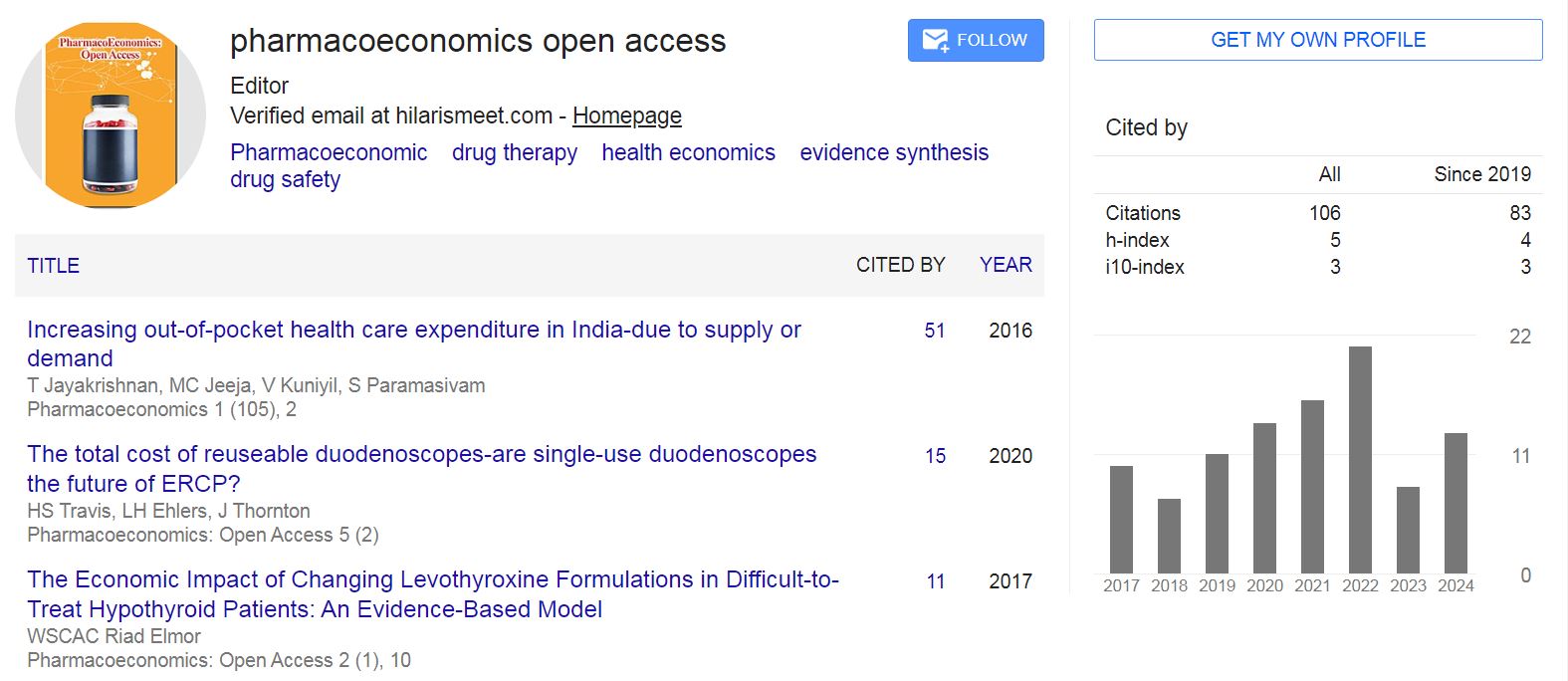
Pharmacoeconomics: Open Access received 106 citations as per Google Scholar report