Perspective - (2025) Volume 9, Issue 5
Received: 01-Sep-2025, Manuscript No. jchd-26-185710;
Editor assigned: 03-Sep-2025, Pre QC No. P-185710;
Reviewed: 17-Sep-2025, QC No. Q-185710;
Revised: 22-Sep-2025, Manuscript No. R-185710;
Published:
29-Sep-2025
, DOI: 10.37421/2684-6020.2024.9.266
Citation: Vasilenko, Marina. ”Coronary Heart Disease: A Costly
Burden.” J Coron Heart Dis 09 (2025):266.
Copyright: © 2025 Vasilenko M. This is an open-access article distributed under the terms of the Creative Commons Attribution License, which permits unrestricted use,
distribution and reproduction in any medium, provided the original author and source are credited.
Coronary heart disease (CHD) represents a significant public health challenge, characterized by substantial direct healthcare costs stemming from hospitalizations, prescribed medications, and various medical procedures. These financial outlays are compounded by equally, if not more, considerable indirect costs, which encompass lost productivity resulting from illness, the impact of disability, and premature mortality within the affected population. The broader societal burden of CHD extends to the profound emotional distress experienced by patients and their families, the ongoing necessity for long-term care provisions, and the resultant strain on essential public health resources [1].
Comprehending the full spectrum of CHD costs necessitates an appreciation for not only the immediate financial expenditures associated with treatment but also the enduring ramifications for individuals and society as a whole. This understanding must include the downstream effects on employment stability, the adequacy of social support systems, and the diminished overall quality of life for those living with the condition [2].
The financial implications of CHD extend far beyond the initial medical bills, encompassing the considerable expenses related to rehabilitation programs, the adoption of necessary lifestyle modifications, and the potential for significant income loss. These cumulative factors collectively impose a substantial economic burden that impacts individuals, their families, and the wider healthcare systems responsible for their care [3].
Beyond the direct medical expenses, the effective management of CHD demands a significant investment in comprehensive cardiac rehabilitation programs. These programs are paramount for facilitating patient recovery and ensuring their long-term well-being. The demonstrable success of these rehabilitation initiatives directly influences future healthcare utilization patterns and overall productivity levels of individuals [4].
The long-term management protocols for individuals diagnosed with CHD invariably involve continuous medication, routine medical check-ups, and the potential for unforeseen interventions. Each of these components contributes to substantial direct healthcare expenditure. It is critical to acknowledge that these ongoing costs are frequently underestimated when a comprehensive evaluation of the disease's overall impact is undertaken [5].
Premature mortality directly attributable to CHD signifies a profound loss of human capital and diminishes potential economic output across various sectors. Strategic initiatives aimed at addressing the underlying risk factors for CHD and improving treatment outcomes can effectively mitigate these deeply impactful indirect costs, thereby preserving societal economic potential [6].
While direct financial impacts are often quantified, the psychological and social burdens imposed by CHD on both patients and their families are immense. These burdens profoundly affect mental health, strain interpersonal relationships, and diminish overall life satisfaction, often representing an unquantified aspect in many economic analyses of the disease [7].
The escalating prevalence of CHD places considerable strain on public health resources, necessitating continuous and substantial investment in critical areas such as prevention strategies, early screening programs, and effective management protocols. The economic cost associated with failing to proactively address this growing epidemic far surpasses the financial investment required for informed, proactive interventions [8].
Disability arising as a consequence of CHD can lead to prolonged periods of absence from the workforce, resulting in reduced earning capacity and an increased reliance on social support structures. A thorough quantification of these productivity losses is an indispensable component for achieving a comprehensive understanding of the disease's extensive economic ramifications [9].
The management of various complications intrinsically linked to CHD, such as the development of heart failure and the occurrence of arrhythmias, substantially escalates direct healthcare costs. This is primarily driven by the need for repeated hospitalizations and the administration of intensive treatments, underscoring the chronic and demanding nature of the disease's progression [10].
Coronary heart disease (CHD) imposes a considerable economic burden characterized by substantial direct healthcare costs. These expenses are primarily associated with hospitalizations, the procurement of necessary medications, and the performance of various medical procedures. However, the indirect costs associated with CHD are equally, if not more, significant, encompassing a wide array of economic losses such as reduced productivity due to illness, the societal impact of disability, and the economic consequences of premature mortality within the population. Furthermore, the broader societal burden includes the substantial emotional toll experienced by patients and their families, the ongoing need for long-term care services, and the increased demand placed upon public health resources [1].
A comprehensive understanding of the multifaceted costs incurred by CHD requires a deep appreciation for both the immediate financial outlays required for medical treatment and the long-term, pervasive consequences for both affected individuals and society at large. This holistic view must incorporate the downstream effects on an individual's employment status, the strain on social support systems, and the overall diminution of life quality for those living with the condition [2].
The financial strain imposed by CHD extends considerably beyond the direct payment of medical bills. It encompasses the significant costs associated with essential rehabilitation programs, the implementation of necessary lifestyle modifications aimed at disease management, and the potential for substantial loss of personal income. These interconnected factors collectively contribute to a profound economic burden that affects individuals, their immediate families, and the healthcare systems tasked with their care [3].
Beyond the direct financial expenditures on medical treatments, the effective management of CHD necessitates a considerable investment in comprehensive cardiac rehabilitation programs. These programs are critically important for promoting patient recovery and ensuring sustained long-term well-being. The ultimate success of these rehabilitation initiatives has a direct and measurable impact on future healthcare utilization patterns and the overall productivity of individuals [4].
The long-term management of patients diagnosed with CHD involves a continuous regimen of medication, regular medical check-ups, and the potential for unforeseen interventions. All these aspects contribute to significant and ongoing direct healthcare expenditure. It is crucial to recognize that these cumulative costs are often underestimated when attempting to quantify the full economic impact of the disease [5].
Premature mortality resulting from CHD represents a substantial loss of human capital and a reduction in potential economic output for nations. Strategic efforts focused on addressing modifiable risk factors and enhancing the effectiveness of treatment outcomes can significantly mitigate these profound indirect economic costs, thereby preserving societal economic potential [6].
In addition to the quantifiable direct financial impacts, the psychological and social burdens associated with CHD on patients and their families can be exceptionally severe. These burdens profoundly affect mental health, can strain interpersonal relationships, and significantly diminish overall life satisfaction, aspects that are frequently unquantified in economic analyses of the disease [7].
The increasing prevalence of CHD exerts considerable pressure on public health resources, necessitating continuous and substantial investment in crucial areas such as disease prevention, widespread screening initiatives, and effective management programs. The economic consequences of inaction in addressing this growing epidemic are demonstrably far greater than the financial investment required for proactive and informed interventions [8].
Disability stemming from CHD often leads to prolonged periods of absence from work, resulting in reduced earning capacity and an increased dependence on social support systems. The accurate quantification of these productivity losses is an essential step toward achieving a comprehensive understanding of the disease's extensive economic impact on society [9].
The management of complications frequently associated with CHD, such as the onset of heart failure and the occurrence of arrhythmias, adds significantly to direct healthcare costs. This increase is primarily driven by the necessity for repeated hospitalizations and the administration of intensive treatments, highlighting the chronic and resource-intensive nature of the disease's ongoing management [10].
Coronary heart disease (CHD) imposes a substantial economic burden through both direct healthcare costs (hospitalizations, medications, procedures) and indirect costs (lost productivity due to illness, disability, premature mortality). The societal impact also includes emotional distress for patients and families, the need for long-term care, and strain on public health resources. Understanding these costs requires acknowledging the long-term consequences on employment, social support, and quality of life. Rehabilitation programs and ongoing management significantly contribute to expenses. Premature mortality represents a loss of human capital, while psychological and social burdens are often unquantified. The increasing prevalence strains public health resources, making proactive interventions more cost-effective than inaction. Disability leads to lost earnings and increased reliance on social support. Managing complications like heart failure further escalates costs, underscoring the chronic nature of CHD.
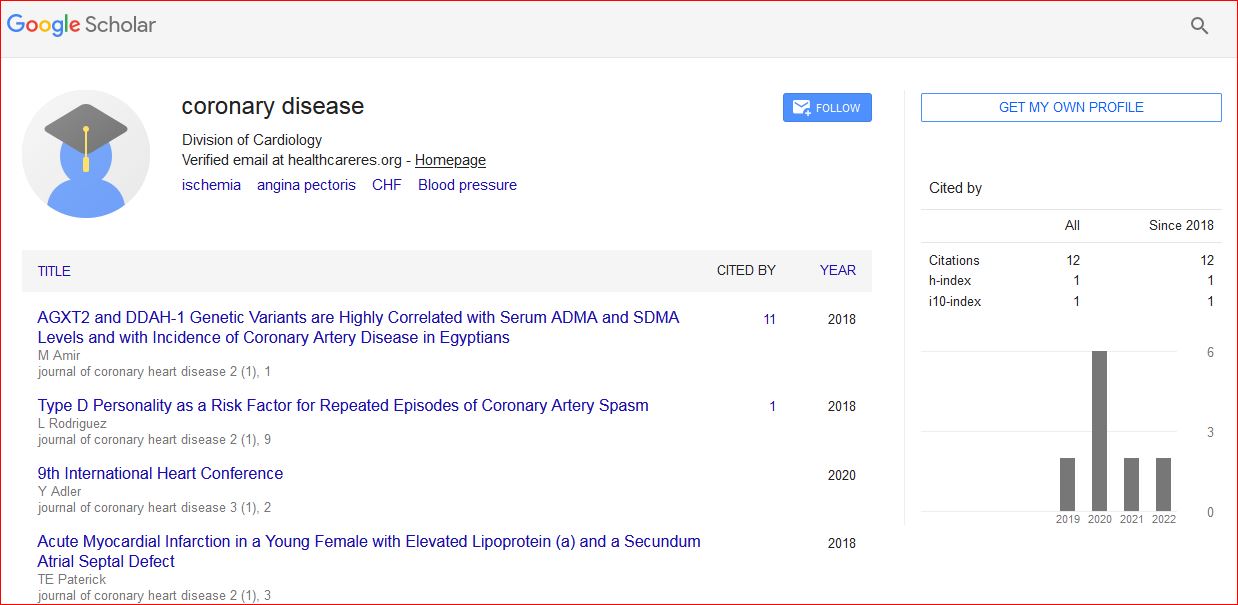
Journal of Coronary Heart Diseases received 15 citations as per Google Scholar report