Perspective - (2025) Volume 9, Issue 3
Received: 01-May-2025, Manuscript No. jchd-26-185690;
Editor assigned: 04-May-2025, Pre QC No. P-185690;
Reviewed: 18-May-2025, QC No. Q-185690;
Revised: 22-May-2025, Manuscript No. R-185690;
Published:
29-May-2025
, DOI: 10.37421/2684-6020.2024.9.246
Citation: Ivanov, Mikhail. ”Coronary Artery Disease: Diagnosis,
Management, and Outcomes.” J Coron Heart Dis 09 (2025):246.
Copyright: © 2025 Ivanov M. This is an open-access article distributed under the terms of the Creative Commons Attribution License, which permits unrestricted use,
distribution and reproduction in any medium, provided the original author and source are credited.
Coronary artery disease (CAD) represents a paramount global health challenge, fundamentally characterized by the pathological accumulation of atherosclerotic plaque within the coronary arteries, leading to a narrowing and potential obstruction of blood flow to the myocardium. This complex condition necessitates a comprehensive understanding of its multifaceted origins, intricate disease processes, precise diagnostic methodologies, and evolving therapeutic strategies, all of which are critical for the timely identification and effective management of cardiovascular events [1].
The pathological underpinnings of atherosclerosis, the primary etiological factor driving the development and progression of CAD, are intricately linked to a cascade of molecular events. These include pervasive inflammatory responses within the arterial wall, dysregulation of lipid metabolism, and compromised endothelial function, collectively contributing to the formation and advancement of atherosclerotic lesions, thereby revealing promising avenues for the development of novel therapeutic interventions [2].
The contemporary landscape of CAD management is undergoing continuous refinement, marked by an increasing emphasis on the synergistic integration of fundamental lifestyle modifications, targeted pharmacotherapy, and advanced interventional procedures. Adherence to current clinical guidelines, coupled with the adoption of personalized treatment paradigms tailored to individual patient characteristics, is increasingly recognized as paramount for optimizing outcomes in CAD patients [3].
The accurate diagnosis and meticulous risk stratification of individuals suspected of harboring CAD are significantly enhanced by the judicious application of advanced imaging modalities. Techniques such as computed tomography angiography (CTA) and fractional flow reserve (FFR) play an indispensable role in providing precise anatomical and physiological insights, thereby profoundly influencing clinical decision-making processes and guiding subsequent therapeutic pathways [4].
The advent of novel therapeutic agents has substantially reshaped the management of CAD, offering more targeted and effective interventions. Notable among these are PCSK9 inhibitors and a new generation of anti-inflammatory drugs, which have demonstrated significant efficacy and favorable safety profiles, offering substantial potential to reduce the incidence of adverse cardiovascular events, particularly in high-risk patient populations [5].
Genetic predisposition plays a discernible role in the etiology of CAD, with research highlighting the heritability of the disease and identifying specific genetic variants that confer an increased susceptibility. This growing understanding of the genetic architecture of CAD opens up possibilities for genetic screening, which could prove instrumental in developing highly personalized and proactive prevention strategies for at-risk individuals [6].
Cardiovascular risk factors, including but not limited to hypertension, diabetes mellitus, and dyslipidemia, exert a profound influence on both the initiation and perpetuation of CAD. The aggressive and effective modification of these modifiable risk factors is unequivocally critical for the primary and secondary prevention of adverse cardiovascular outcomes and the overall management of patients with or at risk for CAD [7].
Cardiac rehabilitation programs are an integral component of comprehensive CAD management, offering a structured approach that encompasses supervised exercise training, crucial patient education, and diligent risk factor management. Participation in these programs has consistently been shown to improve functional capacity, enhance quality of life, and significantly reduce mortality rates among patients with established CAD [8].
The effective management of stable CAD necessitates a coordinated, multidisciplinary approach, fostering robust collaboration among cardiologists, cardiac surgeons, primary care physicians, and other allied healthcare professionals. This collaborative framework ensures comprehensive patient care and facilitates shared decision-making processes, thereby optimizing treatment planning and enhancing patient adherence to therapeutic regimens [9].
Beyond the physical manifestations, living with CAD often carries a significant psychological burden, with a notable prevalence of anxiety and depression among affected individuals. Addressing these psychosocial aspects, alongside the physical management of the disease, is imperative for achieving optimal patient outcomes, promoting long-term well-being, and improving the overall quality of life for individuals navigating the challenges of CAD [10].
Coronary artery disease (CAD) is a pervasive and serious health concern, defined by the gradual deposition of atherosclerotic plaque within the coronary arteries, which can progressively obstruct blood flow to the heart muscle. A thorough exploration of its origins, the underlying pathological mechanisms, the diverse diagnostic tools available, and the current spectrum of treatment interventions is essential for improving early detection rates and mitigating the risk of debilitating cardiovascular events [1].
The fundamental disease process driving CAD is atherosclerosis, a complex inflammatory condition characterized by intricate molecular pathways. Key among these are the inflammatory processes within the arterial wall, disturbances in lipid metabolism, and a decline in endothelial function. These interconnected factors contribute significantly to the formation and growth of atherosclerotic plaques, providing valuable insights for the development of innovative therapeutic targets aimed at halting or reversing disease progression [2].
The current paradigm for managing CAD is dynamic and continually evolving, with a pronounced focus on the seamless integration of fundamental lifestyle adjustments, precise pharmacological interventions, and advanced procedural techniques. The adherence to established clinical guidelines, alongside the development and implementation of personalized treatment strategies, are increasingly recognized as cornerstones of effective CAD care [3].
Advanced imaging technologies have revolutionized the diagnostic capabilities for CAD, offering unprecedented accuracy in identifying and assessing the severity of coronary artery stenosis. Modalities such as computed tomography angiography (CTA) and fractional flow reserve (FFR) provide critical anatomical and physiological data, enabling clinicians to make more informed decisions regarding patient management and risk stratification [4].
Significant advancements have been made in the therapeutic armamentarium for CAD, with the introduction of novel agents that offer enhanced efficacy and improved safety profiles. Prominent among these are PCSK9 inhibitors, which effectively lower low-density lipoprotein cholesterol levels, and emerging anti-inflammatory drugs, both of which hold considerable promise in reducing the burden of cardiovascular events in high-risk individuals [5].
The genetic underpinnings of CAD are an active area of research, with studies consistently demonstrating a significant heritable component to the disease. Identifying specific genetic variants associated with an increased risk of developing CAD is crucial, as it paves the way for targeted genetic screening and the implementation of personalized preventive measures tailored to an individual's genetic susceptibility [6].
Modifiable cardiovascular risk factors, including hypertension, diabetes mellitus, and dyslipidemia, are universally recognized as potent contributors to the development and progression of CAD. A vigorous and sustained effort to manage and control these risk factors is of paramount importance in preventing the occurrence of adverse cardiovascular events and improving long-term prognosis in patients with CAD [7].
Cardiac rehabilitation programs are a cornerstone of comprehensive post-CAD care, providing a structured and evidence-based approach to recovery. These programs typically involve supervised exercise, educational components aimed at promoting healthy lifestyle choices, and ongoing management of cardiovascular risk factors, leading to significant improvements in physical function and a reduction in mortality [8].
The management of stable CAD is best achieved through a collaborative, multidisciplinary model that ensures seamless coordination among various healthcare specialists. This approach emphasizes shared decision-making between clinicians and patients, fostering a partnership that optimizes treatment planning and enhances patient engagement in their own care [9].
The psychosocial impact of living with CAD is a critical, yet often overlooked, aspect of patient care. The high incidence of anxiety and depression among individuals with CAD underscores the necessity of integrating mental health support into the overall management strategy. Addressing these psychological factors is vital for improving treatment adherence, enhancing functional recovery, and ultimately improving the patient's quality of life [10].
Coronary artery disease (CAD) is a significant health concern characterized by plaque buildup in coronary arteries. This condition arises from complex molecular mechanisms involving inflammation and lipid metabolism, driven by risk factors like hypertension and diabetes. Diagnosis relies on advanced imaging techniques, and management involves lifestyle changes, pharmacotherapy including novel agents like PCSK9 inhibitors, and interventional procedures. Genetic predisposition also plays a role. Comprehensive care includes cardiac rehabilitation and addressing psychosocial aspects like anxiety and depression. A multidisciplinary approach and personalized treatment are crucial for optimal patient outcomes and reducing cardiovascular events.
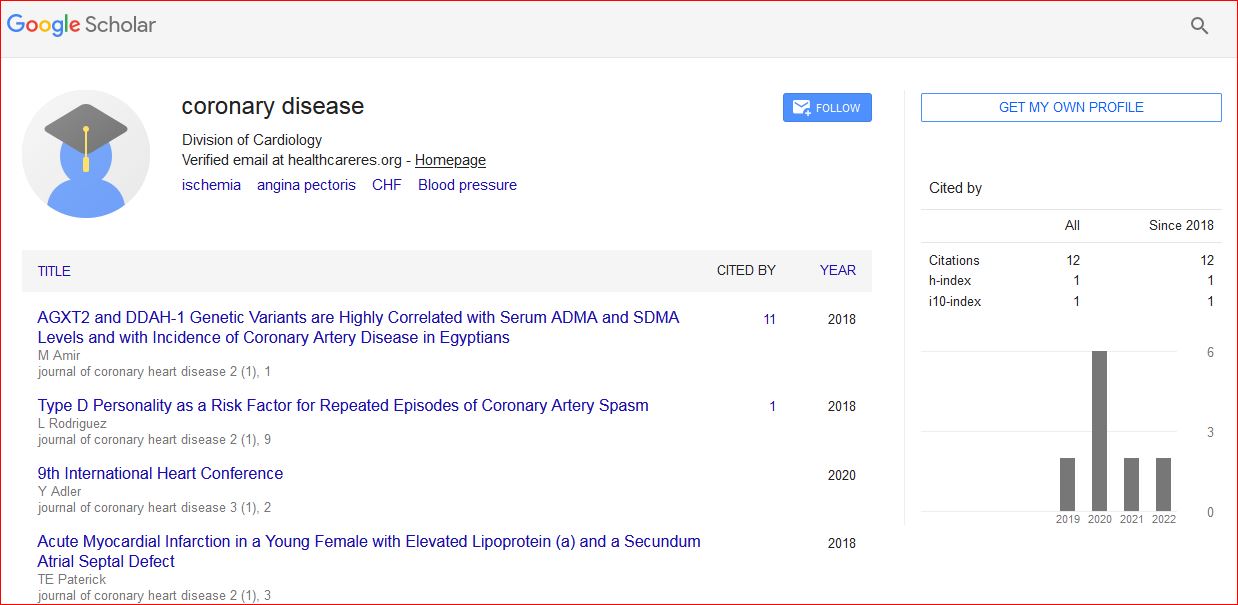
Journal of Coronary Heart Diseases received 15 citations as per Google Scholar report