Perspective - (2025) Volume 14, Issue 2
Received: 01-Jun-2025, Manuscript No. jms-25-172635;
Editor assigned: 03-Jun-2025, Pre QC No. P-172635;
Reviewed: 17-Jun-2025, QC No. Q-172635;
Revised: 23-Jun-2025, Manuscript No. R-172635;
Published:
30-Jun-2025
, DOI: 10.37421/2167-0943.2024.13.408
Citation: Fairweather, Isla. ”Comprehensive Nutrition: From Gut to Global Health.” J Metabolic Synd 14 (2025):408.
Copyright: © 2025 Fairweather I. This is an open-access article distributed under the terms of the Creative Commons Attribution License, which permits unrestricted use,
distribution and reproduction in any medium, provided the original author and source are credited.
The profound influence of dietary choices on human health continues to be a central focus of scientific inquiry. Understanding how different ways of eating impact vital physiological systems is essential for preventing and managing widespread health conditions. For instance, the discussion around dietary patterns and their effect on heart health and metabolism underscores a crucial point: it is the overall approach to eating, rather than isolated nutrients, that holds the greatest sway in warding off ailments like heart disease, stroke, and type 2 diabetes. The established benefits of plant-based diets and the Mediterranean diet are often cited as prime examples, demonstrating protective mechanisms against a spectrum of chronic diseases[1].
Moreover, the intricate ecosystem within our digestive tract, known as the gut microbiota, is profoundly shaped by what we consume. Diet plays an indispensable role in maintaining a healthy balance of these microbial communities, which in turn exert significant influence over broad aspects of human health, ranging from immune system function to metabolic processes. This dynamic interaction highlights the potential of targeted nutritional interventions to modulate the gut microbiome, paving the way for therapeutic benefits[2].
Extending this understanding to diverse demographics, the advantages of plant-based diets for specific populations are increasingly recognized. Pregnant women, children, and athletes, for example, can derive substantial health benefits, including adequate nutrition and optimal health outcomes like reduced chronic disease risk and enhanced athletic performance, provided these diets are carefully planned. This underscores the adaptability and safety of plant-based nutrition across various life stages and physiological demands[3].
In a similar vein, the movement towards personalized nutrition represents a significant advancement in preventing and managing long-term health conditions. This approach advocates for tailoring dietary recommendations based on an individualâ??s unique genetic makeup, lifestyle choices, and current health status. By moving beyond a generic, one-size-fits-all model, precision nutrition promises more effective interventions and improved health outcomes, especially for those managing chronic diseases[4].
The broader societal implications of nutrition also come into sharp focus when considering sustainable nutrition, food security, and the promotion of healthy eating habits. The global challenge of sustainably feeding a burgeoning population while minimizing environmental impact necessitates innovative strategies. Developing food systems that are both ecologically sound and capable of providing nutritious provisions for everyone is a pressing concern, requiring integrated approaches to achieve these ambitious goals[5].
Adding to this global perspective, micronutrient deficiencies remain a significant public health challenge worldwide. Addressing these deficiencies requires a concerted effort, with particular emphasis on the role and responsibilities of the food industry in fortification initiatives and product development. Ensuring that essential vitamins and minerals reach vulnerable populations effectively is paramount to mitigating the widespread impact of these deficiencies[6].
As individuals age, the relationship between nutritional intake and cognitive health becomes increasingly vital. Research delves into how specific nutrients and dietary patterns can directly influence brain function, memory retention, and overall cognitive performance in older adults. Nutritional strategies offer promising avenues for mitigating cognitive decline and supporting brain vitality throughout the aging process, offering hope for healthier aging[7].
For those engaged in physical activity, sports nutrition provides a specialized framework for optimizing performance. Covering topics like energy balance, precise macronutrient timing, effective hydration strategies, and the judicious use of supplements, this field offers evidence-based guidance for both elite athletes and recreational exercisers. Tailoring nutritional plans to individual training goals and demands is key to maximizing physical capabilities and facilitating recovery[8].
Furthermore, the earliest stages of life present a critical window for nutritional impact. Maternal nutrition during pregnancy and the first two years of a child's lifeâ??often referred to as the first 1000 daysâ??is fundamental. Adequate nutrient intake during this foundational period profoundly shapes fetal development, influences infant growth, and sets the trajectory for long-term health outcomes for both mother and child. Identifying and implementing specific nutritional interventions is crucial for optimizing these early life health trajectories[9].
Finally, the widespread use of dietary supplements necessitates a clear understanding of their regulatory frameworks, safety profiles, and scientifically proven effectiveness. A critical assessment of various supplements highlights ongoing challenges in assuring product quality and consumer protection. Emphasizing evidence-based decisions regarding supplement use and fostering transparent communication between healthcare professionals and the public are essential for informed choices[10].
The foundational role of nutrition in preventing and managing chronic diseases is consistently highlighted. Modern research emphasizes that comprehensive dietary patterns, such as the Mediterranean and plant-based diets, are more influential in protecting against conditions like heart disease, stroke, and type 2 diabetes than isolated nutrients. These patterns offer protective mechanisms through synergistic effects of various food components, moving beyond a simplistic view of individual dietary elements [1]. Plant-based diets, when properly structured, also demonstrate specific health advantages across different life stages and populations, including pregnant women, children, and athletes, by reducing chronic disease risk and enhancing performance [3].
Our deeper understanding of nutritionâ??s impact extends to the gut microbiota, recognizing diet as a critical modulator of its composition and function. A healthy balance of gut bacteria, directly influenced by dietary intake, profoundly affects overall human health, impacting everything from immune responses to metabolic processes. This understanding opens avenues for therapeutic nutritional interventions aimed at modulating the gut microbiome [2]. Complementing this, personalized nutrition approaches are emerging as powerful tools for chronic disease management. By tailoring dietary recommendations based on an individual's unique genetic profile, lifestyle, and existing health conditions, these precision interventions promise more effective health outcomes than traditional generalized advice [4].
Addressing global nutritional challenges requires an integrated perspective, connecting sustainable nutrition with food security and healthy eating habits. Feeding a growing global population while minimizing environmental impact is a complex task that demands the development of ecologically sound food systems capable of providing nutritious food for all [5]. Simultaneously, tackling widespread micronutrient deficiencies remains a significant public health priority. The food industry bears a substantial responsibility in this effort, through fortification and product development, to ensure essential vitamins and minerals reach vulnerable populations globally [6].
Nutrition's influence is especially profound during critical life stages. Maternal nutrition during pregnancy and the crucial 'first 1000 days' of a child's life is recognized as fundamental for fetal development, infant growth, and establishing long-term health trajectories for both mother and child. Specific nutritional needs and timely interventions during this period are vital [9]. Likewise, the relationship between nutritional intake and cognitive health in aging populations is a significant area of focus. Specific nutrients and dietary patterns are shown to influence brain function, memory, and overall cognitive performance, suggesting nutritional strategies can mitigate cognitive decline and support brain vitality as we age [7].
Beyond general health, specialized nutritional applications cater to distinct needs. Sports nutrition, for instance, provides comprehensive principles for optimizing physical performance and recovery in both elite and recreational exercisers. This includes guidance on energy balance, macronutrient timing, hydration, and the strategic use of supplements to meet individual training goals [8]. However, the landscape of dietary supplements itself warrants careful scrutiny, with ongoing discussions around regulatory frameworks, safety concerns, and the scientific evidence for their effectiveness. Critical assessment and an emphasis on evidence-based decisions are essential for consumer protection and informed choices regarding supplement use [10].
These articles collectively highlight the multifaceted impact of nutrition on human health and well-being. They emphasize that overall dietary patterns, such as plant-based and Mediterranean diets, are crucial for preventing cardiometabolic conditions, rather than focusing solely on individual nutrients. The gut microbiota emerges as a key player, with diet significantly shaping its composition and function, thereby influencing immune and metabolic processes. Personalized nutrition approaches are explored for their potential to prevent and manage chronic diseases by tailoring dietary recommendations to individual genetic and lifestyle factors. Beyond general health, specific populations have unique nutritional considerations. Plant-based diets offer distinct health advantages for groups like pregnant women, children, and athletes, provided they are properly planned. Maternal nutrition during the first 1000 days is presented as critical for fetal development and long-term health outcomes. Sports nutrition principles are detailed for optimizing performance and recovery in athletes. The broader context of nutrition involves addressing global challenges like micronutrient deficiencies, emphasizing the food industry's role in fortification. Sustainable nutrition, food security, and healthy eating habits are intertwined, calling for integrated approaches to feed a growing population responsibly. Finally, the role of dietary supplements is critically assessed, highlighting regulatory frameworks, safety, and the need for evidence-based decisions. This body of work reinforces the idea that nutrition is a dynamic and essential component of public health, requiring comprehensive and tailored strategies.
None
None
Indexed at, Google Scholar, Crossref
Indexed at, Google Scholar, Crossref
Indexed at, Google Scholar, Crossref
Indexed at, Google Scholar, Crossref
Indexed at, Google Scholar, Crossref
Indexed at, Google Scholar, Crossref
Indexed at, Google Scholar, Crossref
Indexed at, Google Scholar, Crossref
Indexed at, Google Scholar, Crossref
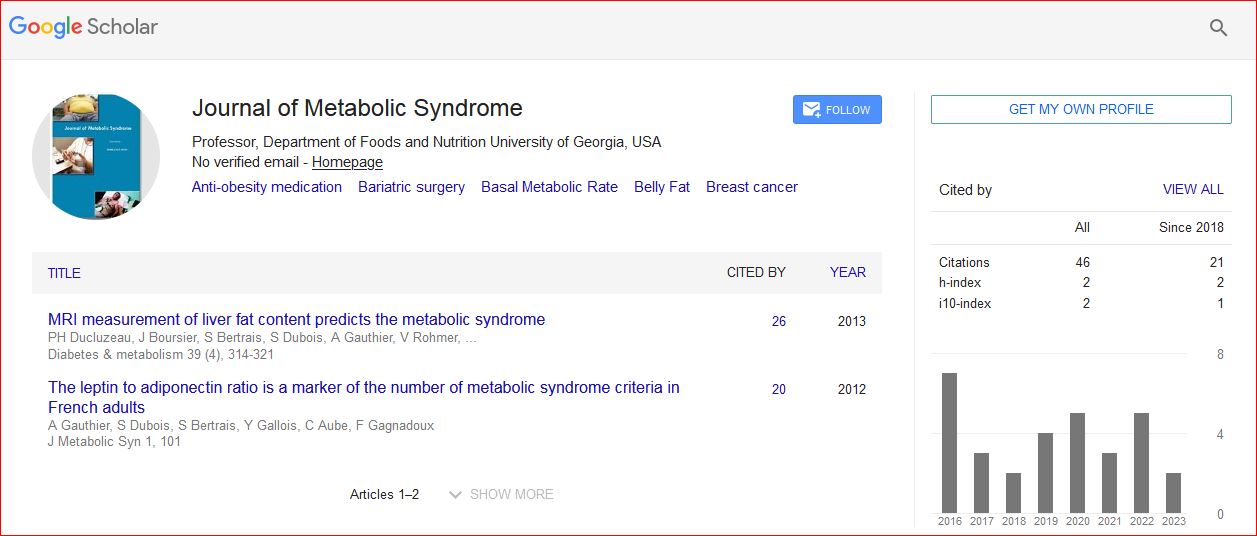
Journal of Metabolic Syndrome received 48 citations as per Google Scholar report