Commentary - (2025) Volume 11, Issue 2
Received: 01-Apr-2025, Manuscript No. elj-25-172491;
Editor assigned: 03-Apr-2025, Pre QC No. P-172491;
Reviewed: 17-Apr-2025, QC No. Q-172491;
Revised: 22-Apr-2025, Manuscript No. R-172491;
Published:
29-Apr-2025
, DOI: 10.37421/2472-0895.2025.11.307
Citation: Voss, Aria. ”Comprehensive Epilepsy Management: Strategies and Advances.” Epilepsy J 11 (2025):307.
Copyright: © 2025 Voss A. This is an open-access article distributed under the terms of the Creative Commons Attribution License, which permits unrestricted use, distribution and reproduction in any medium, provided the original author and source are credited.
Managing status epilepticus demands immediate, structured care, primarily focusing on the rapid administration of benzodiazepines, followed by appropriate anti-seizure medications to prevent potentially severe and long-lasting brain damage. The critical takeaway here is that timely, protocol-driven intervention is not merely beneficial but absolutely crucial for achieving better patient outcomes and minimizing neurological sequelae[1].
New Onset Refractory Status Epilepticus (NORSE) and Febrile Infection-Related Epilepsy Syndrome (FIRES) pose particularly significant diagnostic and therapeutic challenges for clinicians. These conditions are notable for their often inflammatory origins and severe clinical courses, necessitating a highly specialized and frequently individualized approach to treatment strategies, moving beyond standard protocols to address their unique complexities[2].
The International League Against Epilepsy (ILAE) seizure classification system remains an indispensable cornerstone for current clinical practice. It actively guides both diagnosis and subsequent management plans, all while continuously evolving in parallel with our deepening understanding of seizure semiology and the intricate underlying brain networks. What this system truly offers is a standardized framework, allowing medical professionals globally to speak a common language when describing and discussing seizure presentations[3].
Sudden Unexpected Death in Epilepsy (SUDEP) represents a devastating and often unforeseen complication associated with epilepsy. This tragic event is frequently linked to the occurrence of generalized tonic-clonic seizures and inadequately controlled epilepsy. To mitigate this risk, it is fundamentally important to foster open discussions about identified risk factors and to consistently apply preventive strategies, which critically include achieving optimal seizure control to safeguard patients' lives and well-being[4].
Epilepsy surgery has undergone considerable advancements, transitioning significantly from traditional lesionectomy procedures to more sophisticated and less invasive techniques, notably including various forms of neuromodulation. Across all these methods, the primary goal remains constant: to achieve complete seizure freedom or at least a significant reduction in seizure frequency and severity. These modern, tailored approaches now offer hope even for individuals previously deemed inoperable, expanding the horizons of epilepsy treatment[5].
When prescribing anti-seizure medications for children, paramount importance must be placed on effectively managing potential adverse effects. This reality underscores a critical need for clinicians to exercise extreme care in selecting appropriate drugs, meticulously titrating doses to individual needs, and consistently monitoring patients closely. The objective is to ensure not only effective seizure control but also to do so without compromising the child's overall growth, development, and general well-being[6].
The field of genetic epilepsies is experiencing rapid advancements, with molecular diagnostics increasingly capable of revealing specific, underlying gene mutations. This significant progress translates into the ability to offer more precise prognoses for affected individuals and, critically, to explore and implement targeted therapies. This exciting evolution moves the medical community considerably closer to realizing truly personalized medicine, tailored specifically for these complex and often challenging genetic conditions[7].
Wearable technologies are demonstrating substantial promise for the prediction of seizures, holding the potential to significantly improve the safety and overall quality of life for individuals living with epilepsy. However, it's essential to maintain a clear perspective: while these advancements are undoubtedly exciting, more rigorous and extensive research is absolutely needed to definitively confirm their accuracy, reliability, and practical effectiveness in diverse, real-world clinical settings[8].
Status epilepticus, a severe and prolonged seizure, can unfortunately lead to significant and often lasting cognitive impairments, impacting various crucial aspects of brain function. Given these serious potential outcomes, it is absolutely vital to recognize these effects early and to implement comprehensive, multidisciplinary rehabilitation efforts. Such interventions are essential to help mitigate long-term neurological damage and support patients in their recovery journey[9].
The ketogenic diet stands as a valuable non-pharmacological treatment option specifically for individuals with refractory epilepsy, demonstrating its impact on seizure control through various intricate metabolic pathways. Due to its exceptionally strict nature and the potential for a range of side effects, its implementation requires very careful and continuous medical supervision. Physician guidance is therefore essential for ensuring its effective and safe application in clinical practice[10].
Epilepsy management spans critical interventions for acute episodes and intricate long-term care aimed at enhancing patient quality of life. For instance, managing status epilepticus demands immediate, structured care, prioritizing rapid benzodiazepine administration followed by anti-seizure medications to prevent long-term brain damage. Timely, protocol-driven intervention is crucial for better patient outcomes [1]. Complex conditions like New Onset Refractory Status Epilepticus (NORSE) and Febrile Infection-Related Epilepsy Syndrome (FIRES) present significant diagnostic and therapeutic challenges due to their inflammatory origins and severe clinical courses, necessitating highly specialized and individualized treatment strategies [2]. Moreover, status epilepticus can lead to lasting cognitive impairments, impacting various brain functions, which makes early recognition and comprehensive rehabilitation efforts vital to mitigate long-term neurological damage [9].
Accurate diagnosis and classification form the bedrock of effective epilepsy care. The International League Against Epilepsy (ILAE) seizure classification system remains a cornerstone for clinical practice, guiding diagnosis and management while continuously evolving with our understanding of seizure semiology and underlying brain networks. This system ensures a common language for describing seizures globally [3]. Parallel to this, the field of genetic epilepsies is rapidly advancing, with molecular diagnostics increasingly revealing specific gene mutations. This progress allows for more precise prognoses and the exploration of targeted therapies, moving towards personalized medicine for these complex conditions [7].
Treatment options for epilepsy have diversified considerably. Anti-seizure medications are a primary approach, but managing potential adverse effects, especially in children, is paramount. This highlights the need for clinicians to carefully select drugs, titrate doses, and monitor patients closely to ensure effective seizure control without compromising overall well-being [6]. For refractory cases, epilepsy surgery has advanced from traditional lesionectomy to sophisticated, less invasive techniques like neuromodulation. The consistent goal is to achieve seizure freedom or significant reduction through tailored approaches, even for those previously considered inoperable [5]. Additionally, the ketogenic diet offers a valuable non-pharmacological treatment for refractory epilepsy, impacting seizure control via metabolic pathways. Its strict nature and potential side effects necessitate careful supervision and physician guidance for effective implementation [10].
Beyond direct treatment, understanding and mitigating associated risks are crucial. Sudden Unexpected Death in Epilepsy (SUDEP) is a devastating complication, often linked to generalized tonic-clonic seizures and uncontrolled epilepsy. Open discussion of risk factors and consistent application of preventive strategies, including optimal seizure control, is essential to protect patients [4]. Looking to the future, wearable technologies show promise for predicting seizures, potentially improving safety and quality of life for individuals with epilepsy. However, while exciting, more rigorous research is needed to confirm their accuracy and reliability in real-world settings before widespread adoption [8].
Epilepsy management encompasses a wide range of critical areas, from immediate intervention in status epilepticus to long-term preventive strategies and innovative therapies. Timely, protocol-driven care is crucial for better patient outcomes in status epilepticus, and early recognition and comprehensive rehabilitation are vital to mitigate long-term neurological damage. Highly specialized and often individualized treatment strategies are necessary for complex conditions like New Onset Refractory Status Epilepticus (NORSE) and Febrile Infection-Related Epilepsy Syndrome (FIRES) due to their inflammatory origins. The International League Against Epilepsy (ILAE) classification system provides a common language for describing seizures, guiding diagnosis and management while continuously adapting to new understandings. Preventing Sudden Unexpected Death in Epilepsy (SUDEP) demands open discussion of risk factors and consistent application of preventive strategies, including optimal seizure control. Advances in epilepsy surgery now include less invasive neuromodulation, aiming for seizure freedom or significant reduction even in previously inoperable cases. For children, careful selection, titration, and monitoring of anti-seizure medications are paramount to manage potential adverse effects while ensuring effective seizure control. Genetic epilepsies benefit from rapidly advancing molecular diagnostics, offering precise prognoses and targeted therapies, moving towards personalized medicine. Wearable technologies show promise for seizure prediction, but require rigorous research to confirm real-world accuracy and reliability. Finally, the ketogenic diet serves as a valuable non-pharmacological option for refractory epilepsy, though it necessitates careful physician supervision for effective and safe implementation.
None
None
Indexed at, Google Scholar, Crossref
Indexed at, Google Scholar, Crossref
Indexed at, Google Scholar, Crossref
Indexed at, Google Scholar, Crossref
Indexed at, Google Scholar, Crossref
Indexed at, Google Scholar, Crossref
Indexed at, Google Scholar, Crossref
Indexed at, Google Scholar, Crossref
Indexed at, Google Scholar, Crossref
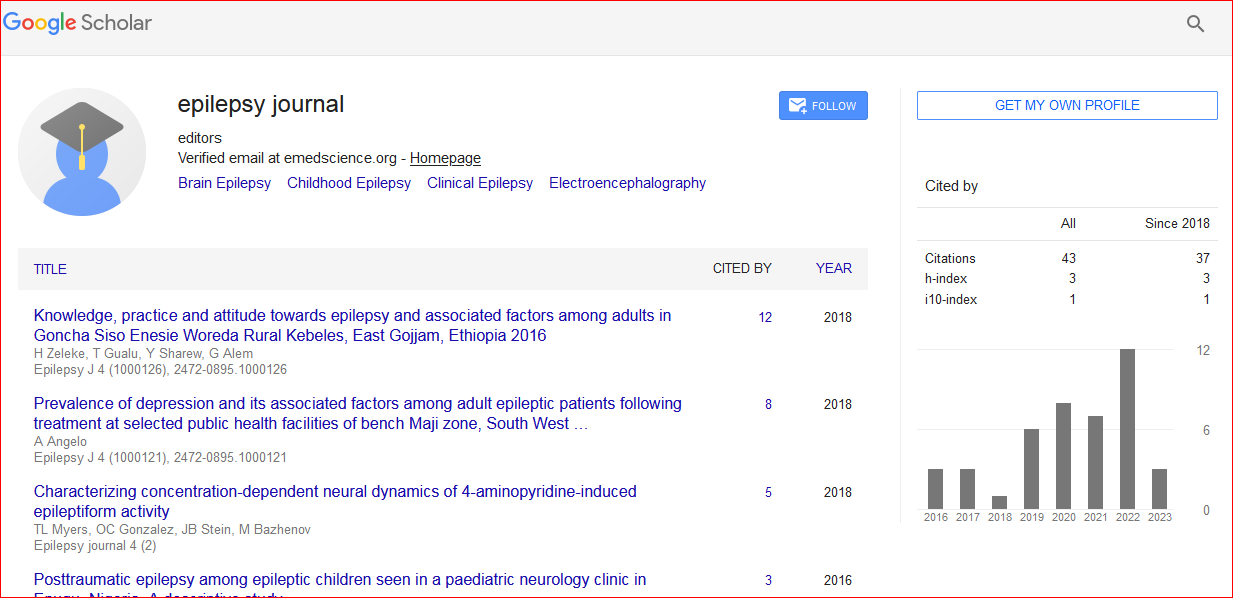
Epilepsy Journal received 41 citations as per Google Scholar report