Perspective - (2025) Volume 9, Issue 4
Received: 01-Jul-2025, Manuscript No. jchd-26-185700;
Editor assigned: 03-Jul-2025, Pre QC No. P-185700;
Reviewed: 17-Jul-2025, QC No. Q-185700;
Revised: 22-Jul-2025, Manuscript No. R-185700;
Published:
29-Jul-2025
, DOI: 10.37421/2684-6020.2024.9.256
Citation: Lee, Grace. ”Comprehensive Coronary Heart Disease
Management: A Personalized Approach.” J Coron Heart Dis 09 (2025):256.
Copyright: © 2025 Lee G. This is an open-access article distributed under the terms of the Creative Commons Attribution License, which permits unrestricted use, distribution
and reproduction in any medium, provided the original author and source are credited.
Coronary heart disease (CHD) remains a leading cause of morbidity and mortality worldwide, necessitating a comprehensive and evolving management strategy. This strategy encompasses a spectrum of interventions, from initial risk identification to long-term recovery and sustained prevention, acknowledging the intricate interplay of various factors influencing cardiovascular health. The cornerstone of effective CHD management lies in a multi-faceted approach that integrates lifestyle modifications, sophisticated pharmacological interventions, and advanced therapeutic techniques, all tailored to the unique profile of each patient, including their specific genetic predispositions.
A critical element in this comprehensive approach is the emphasis on early detection. Identifying individuals at risk before the onset of overt symptoms allows for timely intervention and can significantly alter the disease trajectory, thereby improving long-term outcomes and enhancing the quality of life. Personalized treatment plans are paramount, moving beyond one-size-fits-all approaches to address the individual complexities of each patient's condition, thereby optimizing therapeutic efficacy and minimizing adverse effects. Furthermore, ongoing patient engagement is indispensable for achieving and maintaining optimal cardiovascular health. Educating patients about their condition, empowering them to actively participate in their care, and fostering adherence to treatment regimens are vital components that contribute to sustained positive health outcomes. This holistic view recognizes that managing CHD is a continuous process, not merely a series of isolated interventions. Genetic factors play a profoundly significant role in shaping an individual's susceptibility to coronary heart disease. These genetic underpinnings also dictate how effectively a patient will respond to different treatment modalities, underscoring the importance of personalized medicine. Research into specific gene variants offers a powerful lens through which to predict CHD risk and guide the development of highly targeted therapeutic strategies, moving towards a more precise and effective approach to cardiovascular care. Understanding these genetic determinants enables more accurate risk stratification, allowing clinicians to identify individuals who may benefit most from specific preventive measures or early therapeutic interventions. This precise understanding paves the way for the development of interventions that are not only effective but also minimize unnecessary exposure to treatments that may be less beneficial or carry a higher risk of side effects for certain genetic profiles. Lifestyle modifications, including significant alterations in diet and regular physical activity, have been consistently shown to exert a profound impact on the progression and overall management of coronary heart disease. These comprehensive changes are not merely supportive measures but are active therapeutic tools that can substantially reduce the incidence of cardiovascular events and markedly improve the quality of life for individuals living with established CHD. The findings from studies focusing on lifestyle interventions strongly underscore the critical role of dedicated patient education and unwavering adherence to prescribed programs. When patients are well-informed and committed to adopting and maintaining healthy lifestyle habits, the benefits extend beyond symptom management to encompass long-term cardiovascular well-being and a reduced burden of disease. In parallel with lifestyle and genetic considerations, advanced pharmacological strategies are crucial for managing complex cases of coronary heart disease. This domain involves a rigorous analysis of novel drug classes and an assessment of their effectiveness in mitigating residual cardiovascular risk, particularly within high-risk patient populations who may not achieve optimal outcomes with standard therapies alone. The optimization of medical therapy is highlighted as a fundamental pillar in the comprehensive management of CHD. This involves judicious selection and combination of medications to target multiple risk factors and pathophysiological pathways, ensuring that patients receive the most appropriate and effective pharmacological support to achieve their cardiovascular health goals and prevent adverse events. The integration of these diverse elementsâ??early detection, personalized treatment plans informed by genetics, robust lifestyle interventions, advanced pharmacological approaches, and continuous patient engagementâ??forms the bedrock of modern coronary heart disease management, aiming to provide a roadmap to conquer this prevalent and serious condition.The management of coronary heart disease (CHD) is increasingly recognized as a multifaceted endeavor, requiring a strategic and adaptable approach that extends from the earliest stages of risk identification through to the complexities of long-term recovery and prevention. This comprehensive strategy advocates for a unified approach that meticulously integrates lifestyle modifications, targeted pharmacological interventions, and state-of-the-art advanced therapies, all meticulously customized to align with the individual patient's unique needs and genetic makeup.
The roadmap to effective CHD management places a significant emphasis on the importance of early detection. The ability to identify individuals at high risk for developing CHD, or those in the nascent stages of the disease, is paramount. This proactive approach allows for timely and appropriate interventions, which can substantially alter the natural course of the disease, improve prognosis, and enhance the overall quality of life for affected individuals. Personalized treatment plans are another critical component of this evolving landscape. Moving away from a one-size-fits-all model, these plans are designed to address the specific biological, clinical, and genetic characteristics of each patient. This tailored approach aims to maximize therapeutic efficacy while minimizing the potential for adverse effects, thereby optimizing patient outcomes and promoting adherence to treatment. Moreover, the sustained engagement of patients throughout their treatment journey is identified as a vital factor in achieving and maintaining optimal cardiovascular health. Empowering patients with knowledge, fostering self-management skills, and ensuring consistent adherence to therapeutic regimens are all essential elements that contribute to long-term success in managing CHD and preventing recurrent cardiovascular events. Genetic factors are now understood to play a substantial role in determining an individual's susceptibility to developing coronary heart disease. Furthermore, these genetic predispositions significantly influence how a person responds to various therapeutic interventions, highlighting the growing importance of genetic profiling in clinical decision-making for cardiovascular disease. Research focused on specific gene variants provides invaluable insights for predicting an individual's risk of developing CHD. This understanding allows for more precise risk stratification, enabling healthcare providers to identify those who may benefit most from intensive preventive measures or early therapeutic interventions. The ultimate goal is to develop highly targeted strategies that are both effective and efficient. Consequently, the ability to leverage genetic information allows for the development of truly personalized therapeutic strategies. By understanding the genetic underpinnings of a patient's condition, clinicians can select treatments that are most likely to be effective, thereby enhancing the precision of care and improving outcomes for individuals with CHD. In conjunction with genetic insights and pharmacological treatments, the impact of lifestyle interventions, encompassing dietary adjustments and regular exercise, on the progression and management of coronary heart disease is profound. These lifestyle changes are not merely adjunctive but form a critical therapeutic platform that can significantly reduce the occurrence of cardiovascular events. Evidence strongly indicates that comprehensive lifestyle modifications can lead to a marked improvement in the quality of life for patients diagnosed with CHD. The findings from numerous studies underscore the indispensable role of robust patient education and consistent adherence to these lifestyle programs as cornerstones of effective disease management and long-term well-being. Advanced pharmacological strategies are essential for the management of complex coronary heart disease, particularly in patients with refractory disease or those at high residual risk. This area of research continually explores novel drug classes and evaluates their efficacy in improving cardiovascular outcomes, solidifying the role of optimized medical therapy as a fundamental aspect of CHD care.Coronary heart disease (CHD) management requires a comprehensive strategy from risk identification to long-term recovery, integrating lifestyle changes, pharmacotherapy, and advanced therapies tailored to individual needs and genetics. Early detection and personalized treatment plans are crucial for optimal cardiovascular health, supported by ongoing patient engagement. Genetic factors significantly influence CHD susceptibility and treatment response, enabling precise risk stratification and targeted interventions. Lifestyle modifications, including diet and exercise, are vital for reducing cardiovascular events and improving quality of life. Advanced pharmacological approaches and interventional cardiology techniques are key for managing complex cases. Psychological well-being is also recognized as important, with mental health support integrated into care protocols. Furthermore, advanced imaging techniques aid in risk assessment, and updated guidelines focus on secondary prevention through a multidisciplinary approach to manage residual risk factors and promote sustained lifestyle changes.
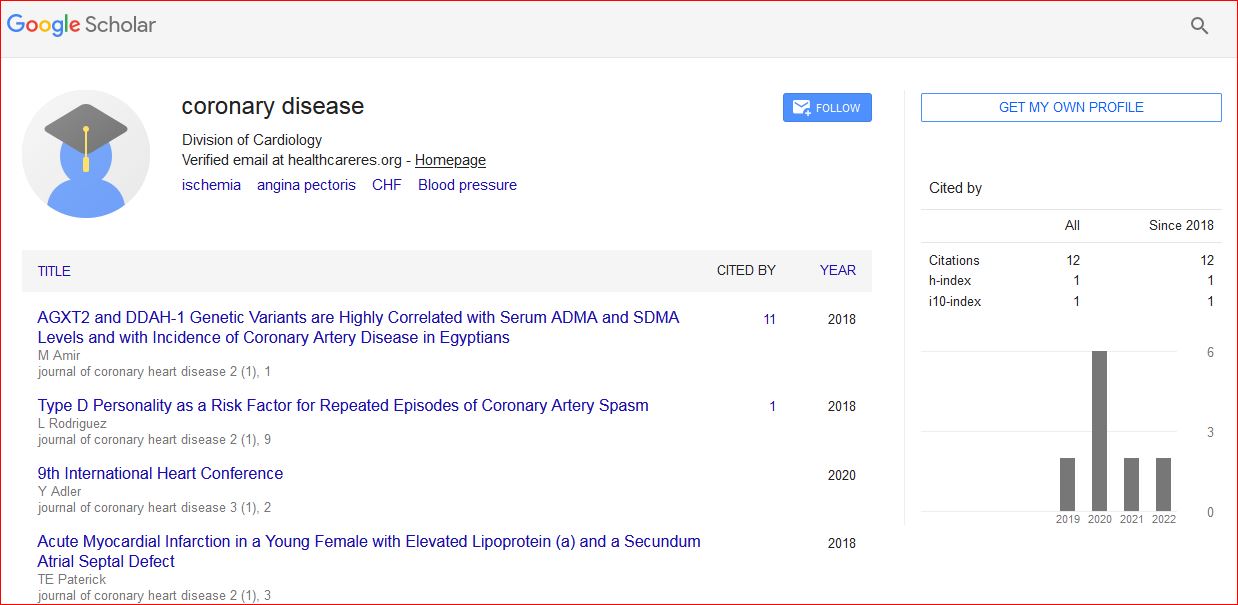
Journal of Coronary Heart Diseases received 15 citations as per Google Scholar report