Perspective - (2025) Volume 14, Issue 3
Received: 02-May-2025, Manuscript No. aim-25-177353;
Editor assigned: 05-May-2025, Pre QC No. P-177353;
Reviewed: 19-May-2025, QC No. Q-177353;
Revised: 23-May-2025, Manuscript No. R-177353;
Published:
30-May-2025
, DOI: 10.37421/2427-5162.2025.14.574
Citation: Wangchuk, Tenzin. ”Complementary Medicine: Evidence, Benefits and Caution.” Alt Integr Med 14 (2025):574.
Copyright: © 2025 Wangchuk T. This is an open-access article distributed under the terms of the Creative Commons Attribution License, which permits unrestricted use, distribution and reproduction in any medium, provided the original author and source are credited.
A systematic review and meta-analysis provides strong evidence that acupuncture significantly alleviates cancer-related pain. Integrating acupuncture into multimodal pain management strategies offers meaningful patient benefits, particularly given its safety profile. This research validates acupuncture as a therapeutic option, supported by studies for managing challenging symptoms, moving beyond a folk remedy perception [1].
This comprehensive review explores how mindfulness-based interventions effectively manage chronic pain. It highlights that these practices lead to significant reductions in pain intensity and an improved quality of life for individuals dealing with persistent discomfort. The insight suggests relating differently to pain through mindfulness offers a powerful complement to traditional treatments [2].
The article presents a systematic review of herbal medicines for cardiovascular diseases, examining clinical evidence and underlying mechanisms. It shows certain herbal interventions have promising effects, often reducing inflammation or improving lipid profiles. This highlights the potential of natural compounds to support heart health, while underscoring the need for continued rigorous study [3].
A systematic review of randomized controlled trials investigates yogaâ??s impact on mental health outcomes. Findings suggest yoga practices significantly reduce symptoms of anxiety and depression, and improve overall psychological well-being. This highlights yogaâ??s role as an accessible, non-pharmacological intervention for mental health support, complementing conventional therapies [4].
A critical review evaluates current evidence on dietary supplements for cancer prevention and treatment. It clarifies that while some supplements show promise in specific contexts, many lack robust evidence or can interfere with conventional treatments. The key takeaway emphasizes that patients and clinicians must exercise caution, basing decisions on solid scientific evidence rather than anecdotal claims [5].
This scoping review explores the implementation and outcomes of integrative medicine approaches within primary care settings. It shows increasing adoption of integrative models, but with wide variation in integration and measurement. Understanding the practical challenges and benefits of bringing alternative practices into mainstream healthcare, and their impact on patient care, is crucial [6].
A systematic review and meta-analysis assesses the efficacy of Ayurvedic medicine for various chronic diseases through clinical trials. It finds certain Ayurvedic interventions benefit conditions like osteoarthritis and metabolic syndrome, offering a valuable traditional perspective on long-term health management. The work highlights the necessity for standardized research to further validate and integrate these ancient practices [7].
The paper provides a systematic review and meta-analysis of clinical trials investigating naturopathic medicine for metabolic syndrome. It indicates that naturopathic interventions, often involving lifestyle modifications and natural remedies, can improve metabolic markers like blood pressure and glucose levels. A holistic, natural approach can be a significant part of managing complex conditions like metabolic syndrome [8].
This systematic review and meta-analysis evaluates Traditional Chinese Medicine (TCM) for insomnia. It found that various TCM modalities, including acupuncture and herbal remedies, significantly improve sleep quality and duration. Evidence suggests TCM offers a valid alternative or complementary treatment option for individuals struggling with sleep disorders, moving beyond conventional pharmacology [9].
This systematic review and meta-analysis examines mindfulness-based stress reduction (MBSR) effects on anxiety and depression specifically in cancer patients. It concludes MBSR significantly reduces these psychological distress symptoms, enhancing patient well-being during a challenging health journey. The finding is that non-pharmacological interventions like mindfulness play a crucial role in supportive cancer care [10].
A systematic review and meta-analysis provides strong evidence that acupuncture significantly alleviates cancer-related pain. Its integration into multimodal pain management offers meaningful benefits, particularly considering its safety profile. This research validates acupuncture as a therapeutic option supported by studies for managing challenging symptoms [1]. Comprehensive review explores how mindfulness-based interventions effectively manage chronic pain. These practices lead to significant reductions in pain intensity and improved quality of life. The insight is that relating differently to pain through mindfulness offers a powerful complement to traditional treatments [2]. The article presents a systematic review of herbal medicines for cardiovascular diseases, examining clinical evidence and mechanisms. It shows certain herbal interventions have promising effects, often reducing inflammation or improving lipid profiles. This highlights natural compounds' potential for heart health, while underscoring the need for rigorous study [3]. A systematic review of randomized controlled trials investigates yogaâ??s impact on mental health. Findings suggest yoga practices significantly reduce anxiety and depression symptoms, and improve psychological well-being. It highlights yogaâ??s role as an accessible, non-pharmacological intervention for mental health support, complementing conventional therapies [4]. A critical review evaluates current evidence on dietary supplements for cancer prevention and treatment. It clarifies that while some show promise, many lack robust evidence or can interfere with conventional treatments. The key takeaway emphasizes caution, basing decisions on solid scientific evidence rather than anecdotal claims [5]. This scoping review explores integrative medicine implementation and outcomes within primary care. It shows increasing adoption of integrative models, but with wide variation in integration and measurement. Understanding practical challenges and benefits of bringing alternative practices into mainstream healthcare, and their impact on patient care, is crucial [6]. This systematic review and meta-analysis assesses Ayurvedic medicine efficacy for various chronic diseases through clinical trials. It finds certain Ayurvedic interventions benefit conditions like osteoarthritis and metabolic syndrome, offering a valuable traditional perspective. The work highlights the necessity for standardized research to validate and integrate these ancient practices [7]. The paper provides a systematic review and meta-analysis of clinical trials on naturopathic medicine for metabolic syndrome. It indicates naturopathic interventions, involving lifestyle modifications and natural remedies, can improve metabolic markers like blood pressure and glucose. A holistic, natural approach can be a significant part of managing complex conditions like metabolic syndrome [8]. This systematic review and meta-analysis evaluates Traditional Chinese Medicine (TCM) for insomnia. It found that various TCM modalities, including acupuncture and herbal remedies, significantly improve sleep quality and duration. Evidence suggests TCM offers a valid alternative or complementary treatment option for individuals struggling with sleep disorders [9]. This systematic review and meta-analysis examines mindfulness-based stress reduction (MBSR) effects on anxiety and depression in cancer patients. It concludes MBSR significantly reduces psychological distress symptoms, enhancing patient well-being during a challenging health journey. Non-pharmacological interventions like mindfulness play a crucial role in supportive cancer care [10].
This collection of systematic reviews and meta-analyses examines the efficacy of various complementary and integrative medicine approaches across a range of health conditions. Acupuncture demonstrates significant relief for cancer-related pain, while mindfulness-based interventions are effective for chronic pain and psychological distress in cancer patients. Yoga is shown to improve mental health outcomes, reducing anxiety and depression. Herbal medicines exhibit promise for cardiovascular health, and Ayurvedic and naturopathic approaches show benefits for chronic diseases like osteoarthritis and metabolic syndrome. Traditional Chinese Medicine offers a valid option for insomnia. However, a critical review on dietary supplements for cancer prevention and treatment emphasizes caution due to a lack of robust evidence for many, and potential interference with conventional therapies. The overarching theme is the growing body of evidence supporting the integration of these practices into mainstream healthcare, while also highlighting the imperative for continued rigorous research and evidence-based decision-making.
None
None
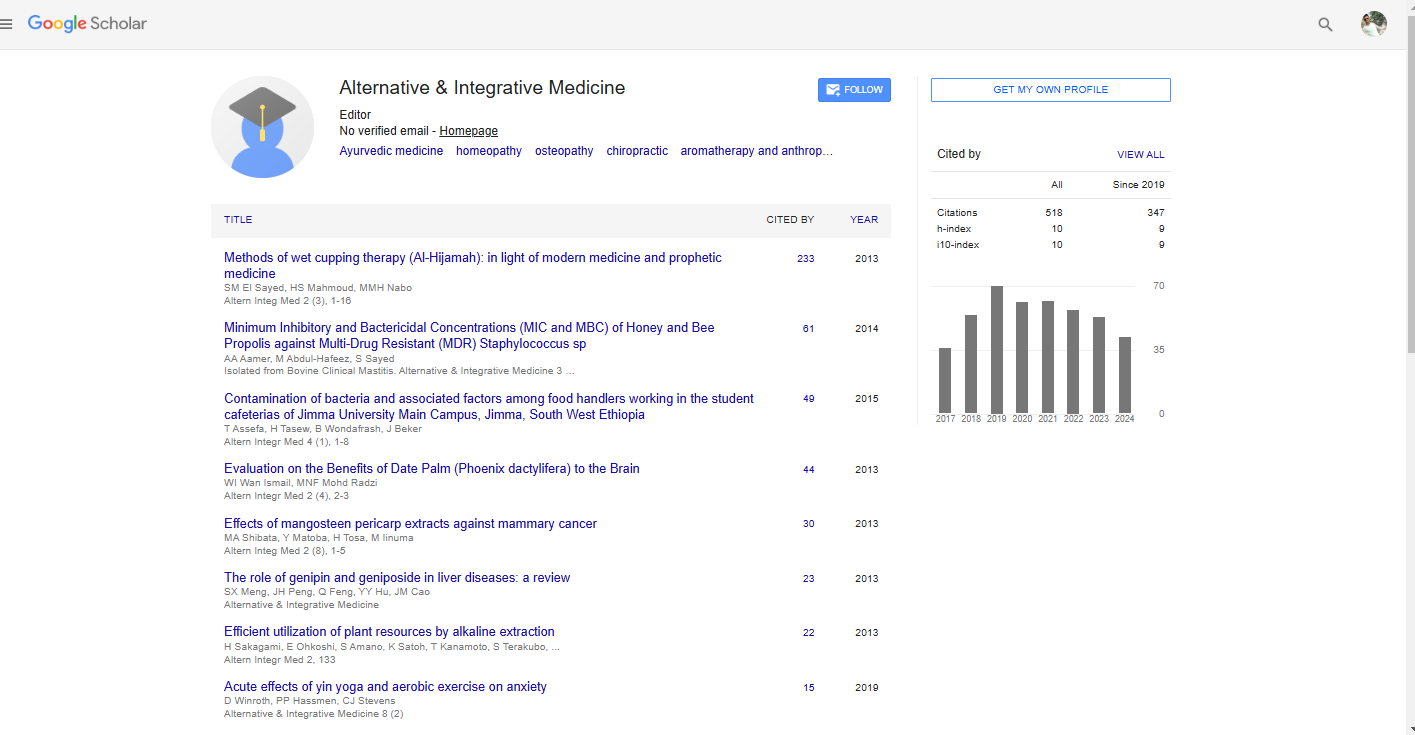
Alternative & Integrative Medicine received 476 citations as per Google Scholar report