Research Article - (2025) Volume 9, Issue 1
Received: 17-Jul-2024, Manuscript No. JMA-24-142225;
Editor assigned: 23-Jul-2025, Pre QC No. JMA-24-142225 (PQ);
Reviewed: 06-Aug-2024, QC No. JMA-24-142225;
Revised: 18-Feb-2025, Manuscript No. JMA-24-142225 (R);
Published:
25-Feb-2025
, DOI: 10.37421/2684-4265.2025.09.357
Citation: Jabbar, Junaid, Razia Kausar, Aimen Sabir, Huma Jamil and Zubair Luqman. "Comparative Osteometric Study of Cranial and
Caudal Appendicular Skeleton in Domestic Backyard Poultry of Pakistan." J Morphol Anat 09 (2025): 357.
Copyright: © 2025 Jabbar J, et al. This is an open-access article distributed under the terms of the creative commons attribution license which permits unrestricted use, distribution and reproduction in any medium, provided the original author and source are credited.
Gallus gallus or chickens, are birds commonly consumed by people and are found in assemblages on regular basis. They are being domesticated for decades and constitutes about 90% of total poultry population. This study was designed with intent to determine osteometric parameters of selected long bones of cranial and caudal appendicular skeleton in both male and female groups of domestic backyard poultry breeds of Pakistan. Chickens were reared in a scavenging environment with zero external input for six months (~26 weeks). Bone length, breadth and weight was assessed. Aseel reigned over all studied groups of male and female with statistically significant higher length, breadth and weight in most of the selected bones with mean (± SEM) length (cm) of humerus (8.19 ± 0.11), radius (7.47 ± 0.06), ulna (8.26 ± 0.09), femur (8.23 ± 0.08), tibia (13.46 ± 0.19), metatarsals (8.68 ± 0.05) and weight (g) of humerus (4.81 ± 0.24), radius (0.97 ± 0.05), ulna (2.64 ± 0.06), femur (6.30 ± 0.37) and tibia (8.49 ± 0.41) in male studied groups while length (cm) of humerus (7.92 ± 0.02), radius (6.96 ± 0.01), ulna (7.42 ± 0.04), femur (8.76 ± 0.06), tibia (12.34 ± 0.01), metatarsals (8.47 ± 0.01) and weight (g) of humerus (3.46 ± 0.02), radius (0.69 ± 0.01) and femur (4.18 ± 0.05) in female groups. Naked neck exhibited lowest length (cm) of humerus (2.43 ± 0.11), ulna (0.59 ± 0.02), femur (7.64 ± 0.13), tibia (11.12 ± 0.25), metatarsals (7.67 ± 0.19) and lowest weight (g) of humerus (2.43 ± 0.11), radius (0.59 ± 0.02), ulna (1.56 ± 0.06), femur (2.65 ± 0.27), and tibia (3.67 ± 0.36) among male groups. Such osteometric data values are helpful in taxonomic and zooarchaeological studies as well.
Aseel • Fayoumi • Misri gold • Naked neck • Chicken • Bones • Appendicular skeleton • Backyard • Poultry • Pakistan
Poultry is the most frequently kept companion animal species in the history of mankind. Archaeological evidence indicates the existence of chicken for at least 8000 years in China and its spread in Europe and to other regions of the world through land or sea. Chicken represents about 90% of total population of poultry worldwide and is considered the most important poultry specie in almost every region of world.
Native poultry breeds are often trademarked as “the genomic gold mines” having a gene pool to yield germplasm for enhancements [1]. They are being reared for decades yet their genetic potential is not fully exploited [2]. Since health is the primary motive of mankind and focus on organic food chain is on the rise, Current study is aimed to be a first baby step towards establishing reference values for such valuable assets, being ignored for decades.
Pakistan is the 11th largest poultry producer in the world. Poultry industry provides livelihood to 1.5 million people and have a worth of 700 billion rupees in Pakistan [3]. Eggs, meat, and feather were the major objectives of poultry domestication among all avian species. They were raised freely, lived a life of scavenger. With increase in protein demand, need of commercial poultry farming was acknowledged and selection for high meat and egg production was favoured with very little emphasis on aspects like their bone density, mass or even nutrient profile [4] putting utmost pressure on the skeleton of a bird [5]. The world has been brought to its knees by COVID-19 pandemic. The world might not be the same as before. Poultry industry is one of the victims and is currently facing challenges like health, immunity ad production of birds as it is directly linked to zoonotic and foodborne diseases [6]. Studies are being carried out to assess outcomes of crosses between native breeds and broiler breeds [7].
Current study forms a part of a larger project funded by HEC (NRPU7618) i.e., “Comparative anatomical, histological and physiobiochemical analysis of different chicken breeds (Gallus gallus) of Pakistan” which is conducted to explore genetic potential of native backyard poultry breeds of Pakistan. It was designed to estimate osteometric parameters of selected long bones of cranial and caudal appendicular skeleton of domestic backyard poultry breeds i.e., Aseel, Fayoumi, Misri Gold and Naked Neck.
A total of 25 male and 25 female birds of each domestic breed of Pakistan i.e., Aseel, Fayoumi, Misri Gold and Naked neck, were raised up to 6 months of age. Free ranging system i.e., scavenger rearing system was used for all birds without any input in any form, to mimic the local rural environment provided by typical rural small household. After duration of six months, healthy birds were brought into the Anatomy Laboratory, Faculty of Veterinary Science, University of Agriculture, Faisalabad.
Bone collection
Birds were slaughtered and long bones (humerus, radius, ulna, femur, tibia and metatarsals) were removed. For loosening of the soft tissues, specimens were boiled and soft tissue was removed manually from each selected bone. To break cartilage and collagenous tissue, specimens were simmered in borax while residual fats were removed by soaking specimens into xylol solution [8]. Specimens were then labelled accordingly.
Osteometry
To study gross osteometry, vernier calipers was used to observe each bone’s respective Length (L), Proximal (PB), Middle (MB) and Distal Breadth (DB) in centimeters (Figure 1) while digital weighing balance was used to determine their respective Weights (W) in grams (Figure 2). Breadth/diameter/width of each bone was measured in Mediolateral (ML) direction.
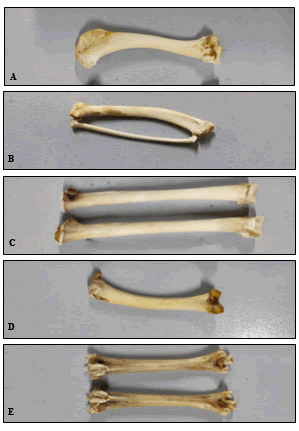
Figure 1. Selected long bones (A) Humerus, (B) Radius and Ulna, (C) Tibia, (D) Femur and (E) Metatarsals for osteometric measurements.
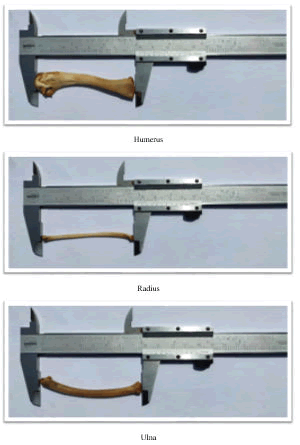
Figure 2. Measurement of length of cranial appendicular skeleton bones using vernier calipers.
Vernier calipers
Measurements using vernier calipers were taken using following method. For precise readings, at first, zero error of vernier calipers was calculated. For this, both jaws of vernier calipers were closed and it was verified that whether mark 0 on vernier scale coincide correctly with the mark 0 on main scale. In our scale, both marks coincided exactly to each other which showed that our instrument had no zero error. Least Count (LC) also known as maximum permissible error of vernier calipers was calculated by following formula:
LC (mm)=W (mm)/X (mm)
Where, LC: Least count of vernier calipers used, W: Value of one main scale division, X: Total vernier scale divisions. For osteometry, parameters (length, proximal, middle and distal breadth) were calculated using following formula.
R (cm)=Y (cm)+(Z (mm) × LC (mm)/10)
Where, R: Total reading, Y: Main scale reading, Z: Vernier scale reading, LC: Least count of vernier calipers used as shown in Figures 3 and 4.
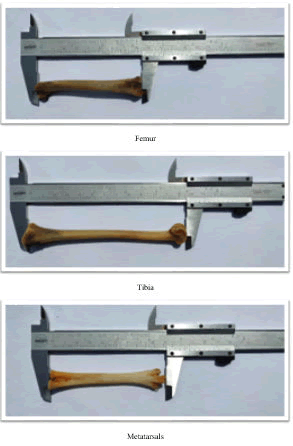
Figure 3. Measurement of length of caudal appendicular skeleton bones using vernier calipers.
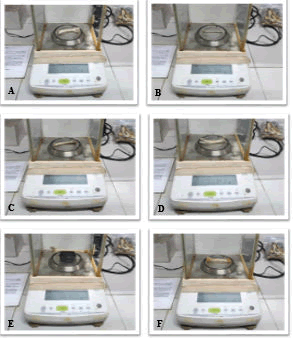
Figure 4. Measurement of weight of (A) Humerus, (B) Radius, (C) Ulna, (D) Femur, (E) Tibia (F) Metatarsals using digital weighing balance.
Statistical analysis
Calculation of descriptive statistics of each parameter was done using software MS excel®. One-way analysis of variance was applied to get the means of parameters by descriptive stat in Minitab® 20.4 (64-bit) software. The group means were compared using Tukey’s honest significance test (THS, α=0.05) [9].
Present study focuses on the measurements of selected long bones of cranial and caudal appendicular skeleton of domestic backyard poultry in Pakistan. The group means (± SEM) of osteometric parameters i.e., length, breadth (proximal, middle and distal) and weight of cranial appendicular skeleton i.e., humerus, radius and ulna in male birds are presented in Table 1 while means (± SEM) of caudal appendicular skeleton i.e., femur, tibia and metatarsals are showed in Table 2. Group means (± SEM) of osteometric parameters of cranial and caudal appendicular skeleton in females are presented in Tables 3 and 4, respectively.
| Genotype | Aseel | Fayoumi | Misri Gold | Naked Neck | |
| Humerus | |||||
| Length | cm | 8.19 ± 0.11a | 7.65 ± 0.07b | 7.59 ± 0.02bc | 7.34 ± 0.08c |
| Proximal width | cm | 2.14 ± 0.04a | 2.03 ± 0.02ab | 1.92 ± 0.01b | 1.96 ± 0.05b |
| Middle width | cm | 0.73 ± 0.03b | 0.78 ± 0.01ab | 0.81 ± 0.01a | 0.82 ± 0.02a |
| Distal width | cm | 1.70 ± 0.02a | 1.59 ± 0.02b | 1.68 ± 0.01a | 1.58 ± 0.03b |
| Weight | g | 4.81 ± 0.24a | 3.16 ± 0.11b | 3.43 ± 0.04b | 2.43 ± 0.11c |
| Radius | |||||
| Length | cm | 7.47 ± 0.06a | 6.82 ± 0.04b | 6.97 ± 0.04b | 6.91 ± 0.08b |
| Proximal width | cm | 1.05 ± 0.34a | 0.69 ± 0.01a | 0.65 ± 0.02a | 0.84 ± 0.05a |
| Middle width | cm | 0.65 ± 0.36a | 0.33 ± 0.003a | 0.46 ± 0.02a | 0.44 ± 0.04a |
| Distal width | cm | 0.90 ± 0.35a | 0.53 ± 0.005a | 0.61 ± 0.01a | 0.64 ± 0.04a |
| Weight | g | 0.97 ± 0.05a | 0.72 ± 0.01b | 0.81 ± 0.01b | 0.59 ± 0.02c |
| Ulna | |||||
| Length | cm | 8.26 ± 0.09a | 7.50 ± 0.07b | 7.68 ± 0.04b | 7.43 ± 0.09b |
| Proximal width | cm | 1.28 ± 0.02a | 1.21 ± 0.02ab | 1.16 ± 0.01b | 1.20 ± 0.03ab |
| Middle width | cm | 0.61 ± 0.02ab | 0.59 ± 0.01b | 0.67 ± 0.01ab | 0.67 ± 0.03a |
| Distal width | cm | 1.03 ± 0.01a | 0.98 ± 0.02a | 1.03 ± 0.01a | 1.02 ± 0.03a |
| Weight | g | 2.64 ± 0.06a | 1.80 ± 0.05b | 1.61 ± 0.03bc | 1.56 ± 0.06c |
| Note: Different superscripts in same row indicates their statistically significant difference from each other at 5% level of significance | |||||
Table 1. Comparative presentation of the cranial appendicular skeleton bones osteometric parameter means (± SEM) in male birds.
| Genotype | Aseel | Fayoumi | Misri Gold | Naked Neck | |
| Femur | |||||
| Length | cm |
8.23 ± 0.08a |
8.53 ± 0.05a | 8.30 ± 0.04a | 7.64 ± 0.13b |
| Proximal width | cm | 1.97 ± 0.35a | 1.74 ± 0.02ab | 1.23 ± 0.06b | 1.65 ± 0.02ab |
| Middle width | cm | 1.08 ± 0.39a | 0.74 ± 0.005a | 1.09 ± 0.10a | 0.79 ± 0.02a |
| Distal width | cm | 1.99 ± 0.35a | 1.65 ± 0.01a | 1.74 ± 0.01a | 1.51 ± 0.03a |
| Weight | g | 6.30 ± 0.37a | 4.83 ± 0.14b | 5.62 ± 0.06ab | 2.65 ± 0.27c |
| Tibia | |||||
| Length | cm | 13.46 ± 0.19a | 12.55 ± 0.04b | 12.99 ± 0.03ab | 11.12 ± 0.25c |
| Proximal width | cm | 2.26 ± 0.08a | 2.27 ± 0.02a | 2.24 ± 0.01a | 1.99 ± 0.04b |
| Middle width | cm | 0.68 ± 0.04b | 0.74 ± 0.003b | 0.97 ± 0.06a | 0.78 ± 0.03b |
| Distal width | cm | 1.36 ± 0.05a | 1.15 ± 0.01b | 1.27 ± 0.02ab | 1.34 ± 0.03a |
| Weight | g | 8.49 ± 0.41a | 6.21 ± 0.09b | 7.69 ± 0.02a | 3.67 ± 0.36c |
| Metatarsals | |||||
| Length | cm | 8.68 ± 0.05a | 8.47 ± 0.03a | 8.54 ± 0.03a | 7.67 ± 0.19b |
| Proximal width | cm | 1.57 ± 0.02a | 1.48 ± 0.01b | 1.56 ± 0.01a | 1.47 ± 0.03b |
| Middle width | cm | 0.77 ± 0.02b | 0.69 ± 0.01b | 1.04 ± 0.08a | 0.75 ± 0.02b |
| Distal width | cm | 1.41 ± 0.01c | 1.43 ± 0.001bc | 1.55 ± 0.01a | 1.48 ± 0.03b |
| Weight | g | 2.47 ± 0.03b | 1.62 ± 0.36c | 3.83 ± 0.01a | 2.06 ± 0.14bc |
| Note: Different superscripts in same row indicates their statistically significant difference from each other at 5% level of significance | |||||
Table 2. Comparative presentation of the caudal appendicular skeleton bones osteometric parameter means (± SEM) in male birds.
| Genotype | Aseel | Fayoumi | Misri Gold | Naked Neck | |
| Humerus | |||||
| Length | cm | 7.92 ± 0.02a | 7.17 ± 0.04b | 7.13 ± 0.02b | 6.70 ± 0.02c |
| Proximal width | cm | 2.11 ± 0.01a | 1.95 ± 0.01b | 1.82 ± 0.005c | 1.62 ± 0.01d |
| Middle width | cm | 0.78 ± 0.01a | 0.71 ± 0.002b | 0.79 ± 0.005a | 0.65 ± 0.01c |
| Distal width | cm | 1.65 ± 0.03a | 1.55 ± 0.01b | 1.37 ± 0.04c | 1.37 ± 0.01c |
| Weight | g | 3.46 ± 0.02a | 2.64 ± 0.08c | 2.92 ± 0.03b | 1.51 ± 0.04d |
| Radius | |||||
| Length | cm | 6.69 ± 0.01a | 6.61 ± 0.03b | 6.21 ± 0.01c | 6.18 ± 0.02c |
| Proximal width | cm | 0.80 ± 0.07a | 0.68 ± 0.005ab | 0.68 ± 0.01ab | 0.61 ± 0.01b |
| Middle width | cm | 0.39 ± 0.01a | 0.31 ± 0.002b | 0.31 ± 0.002b | 0.25 ± 0.01c |
| Distal width | cm | 0.57 ± 0.01a | 0.49 ± 0.002b | 0.50 ± 0.01b | 0.47 ± 0.01b |
| Weight | g | 0.69 ± 0.01a | 0.63 ± 0.01b | 0.64 ± 0.01b | 0.38 ± 0.01c |
| Ulna | |||||
| Length | cm | 7.42 ± 0.04a | 7.22 ± 0.03b | 6.94 ± 0.01c | 6.61 ± 0.03d |
| Proximal width | cm | 1.22 ± 0.03a | 1.18 ± 0.01ab | 1.12 ± 0.01b | 0.88 ± 0.04c |
| Middle width | cm | 0.69 ± 0.01a | 0.57 ± 0.01b | 0.59 ± 0.01b | 0.47 ± 0.03c |
| Distal width | cm | 0.56 ± 0.10b | 0.99 ± 0.002a | 0.91 ± 0.005a | 0.89 ± 0.01a |
| Weight | g | 1.60 ± 0.12a | 1.67 ± 0.03a | 1.61 ± 0.005a | 0.91 ± 0.05b |
| Note: Different superscripts in same row indicates their statistically significant difference from each other at 5% level of significance | |||||
Table 3. Comparative presentation of the cranial appendicular skeleton bones osteometric parameter means (± SEM) in female birds.
| Genotype | Aseel | Fayoumi | Misri Gold | Naked Neck | |
| Femur | |||||
| Length | cm | 8.76 ± 0.06a | 8.02 ± 0.04b | 7.80 ± 0.02c | 7.18 ± 0.02d |
| Proximal width | cm | 1.82 ± 0.03a | 1.63 ± 0.003b | 1.56 ± 0.01c | 1.40 ± 0.01d |
| Middle width | cm | 0.74 ± 0.01a | 0.66 ± 0.003b | 0.65 ± 0.01b | 0.61 ± 0.01c |
| Distal width | cm | 1.62 ± 0.08a | 1.55 ± 0.01ab | 1.47 ± 0.01bc | 1.33 ± 0.01c |
| Weight | g | 4.18 ± 0.05a | 3.98 ± 0.07b | 4.00 ± 0.02b | 1.98 ± 0.02c |
| Tibia | |||||
| Length | cm | 12.34 ± 0.01a | 11.77 ± 0.08b | 11.29 ± 0.05c | 10.14 ± 0.02d |
| Proximal width | cm | 2.23 ± 0.02a | 2.12 ± 0.01a | 1.96 ± 0.02b | 1.61 ± 0.05c |
| Middle width | cm | 0.80 ± 0.01a | 0.63 ± 0.005b | 0.49 ± 0.04c | 0.55 ± 0.01c |
| Distal width | cm | 1.41 ± 0.02a | 1.17 ± 0.01b | 1.15 ± 0.01b | 1.19 ± 0.03b |
| Weight | g | 5.07 ± 0.25a | 5.10 ± 0.05a | 5.08 ± 0.09a | 2.83 ± 0.04b |
| Metatarsals | |||||
| Length | cm | 8.47 ± 0.01a | 7.74 ± 0.05b | 7.59 ± 0.02c | 7.35 ± 0.02d |
| Proximal width | cm | 1.35 ± 0.07ab | 1.43 ± 0.01a | 1.32 ± 0.01ab | 1.23 ± 0.04 |
| Middle width | cm | 0.74 ± 0.01a | 0.63 ± 0.004b | 0.65 ± 0.006b | 0.56 ± 0.01c |
| Distal width | cm | 1.34 ± 0.01b | 1.44 ± 0.001a | 1.27 ± 0.03c | 1.28 ± 0.01bc |
| Weight | g | 2.47 ± 0.01a | 2.65 ± 0.05a | 2.16 ± 0.01b | 1.50 ± 0.11c |
| Note: Different superscripts in same row indicates their statistically significant difference from each other at 5% level of significance | |||||
Table 4. Comparative presentation of the caudal appendicular skeleton bones osteometric parameter means (± SEM) in female birds.
Humerus
Aseel, in both male and female of all studied groups, differed significantly (P ≤ 0.05) with highest (8.19 ± 0.11) (7.92 ± 0.02) mean length of humerus while lowest (7.34 ± 0.08) (6.70 ± 0.02) mean length was recorded in Naked Neck respectively. Statistically nonsignificant (P ≥ 0.05) difference was observed between female studied groups of Fayoumi and Misri Gold in mean length of Humerus.
The proximal breadth of Humerus was recorded maximum in both male (2.14 ± 0.04) and female (2.11 ± 0.01) groups of Aseel among all studied groups. Minimum proximal breadth was observed in Misri Gold among male groups and in Naked Neck among female studied groups. Middle breadth of humerus was reported maximum (0.82 ± 0.02) in Naked Neck followed by Misri Gold (0.81 ± 0.01), Fayoumi (0.78 ± 0.01) and Aseel (0.73 ± 0.03) among male studied groups. Among females, Misri Gold recorded the maximum (0.79 ± 0.005) and Naked Neck recorded the minimum (0.65 ± 0.01) middle breadth of humerus. Distal breadth of humerus, among male studied groups, was observed highest (1.70 ± 0.02) in Aseel and lowest (1.58 ± 0.03) in Naked Neck. Among male groups, a non-significant (P ≥ 0.05) difference was observed between Aseel and Misri Gold and between Fayoumi and Naked Neck in mean (± SEM) distal breadth of humerus (Table 3). Distal breadth of humerus was observed highest (1.65 ± 0.03) in Aseel and lowest (1.37 ± 0.01) in Naked Neck. A nonsignificant (P ≥ 0.05) difference was observed between Misri Gold and Naked Neck in mean distal breadth of humerus among female studied groups.
Aseel showed maximum (4.8 ± 0.24) while Naked Neck showed minimum (2.43 ± 0.11) mean (± SEM) weight of humerus among male studied groups with statistically non-significant (P ≥ 0.05) difference between Misri Gold and Fayoumi. Among females, all studied groups differed significantly (P ≤ 0.05) in mean weight of humerus with Aseel recording the maximum (3.46 ± 0.02) weight followed by Misri Gold (2.92 ± 0.03), Fayoumi (2.64 ± 0.08) and Naked Neck (1.51 ± 0.04) (Figures 5 and 6).
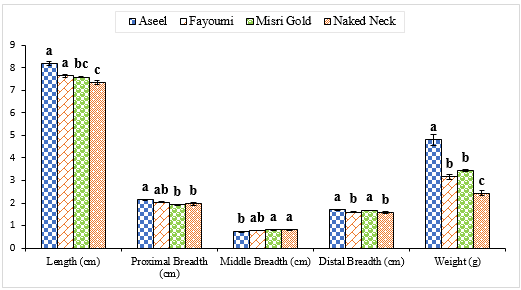
Figure 5. Breed wise comparative presentation of overall means (± SEM) of osteometric parameters of humerus among male groups.
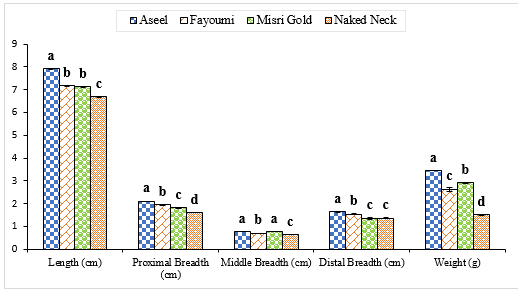
Figure 6. Breed wise comparative presentation of overall means (± SEM) of osteometric parameters of humerus among female groups.
Radius
Mean Length of radius among male groups was observed highest (7.47 ± 0.06) in Aseel and lowest (6.82 ± 0.04) in Fayoumi while Misri Gold, Naked Neck and Fayoumi differed statistically non-significantly (P ≥ 0.05) among male studied groups. Among females, length of humerus was recorded maximum (6.96 ± 0.01) in Aseel and minimum (6.18 ± 0.02) in Naked Neck with statistically non-significant (P ≥ 0.05) trend observed among female groups of Misri Gold and Naked Neck.
A similar trend of statistically non-significant (P ≥ 0.05) difference was observed among male groups in proximal, middle and distal breadths of radius. Proximal, middle and distal breadths of radius were observed highest in Aseel in both male (1.05 ± 0.34), (0.65 ± 0.36), (0.90 ± 0.35) and female (0.80 ± 0.07), (0.39 ± 0.01), (0.57 ± 0.01) groups respectively. Among female groups, statistically nonsignificant (P ≥ 0.05) difference was observed in proximal, middle and distal breadths of radius between Fayoumi and Misri Gold respectively.
Aseel recorded significantly (P ≤ 0.05) higher (0.97 ± 0.05)(0.69 ± 0.01) while Naked Neck showed significantly (P ≤ 0.05) lower (0.59 ± 0.02) (0.38 ± 0.01) mean weight of radius in both male and female groups respectively. A non-significant (P ≥ 0.05) difference was observed both in male and female studied groups in mean weight of radius between Misri Gold and Fayoumi (Figures 7 and 8).
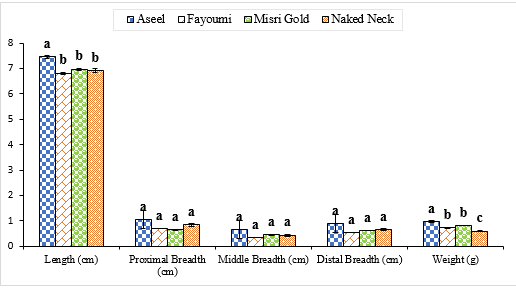
Figure 7. Breed wise comparative presentation of overall means (± SEM) of osteometric parameters of radius among male groups.
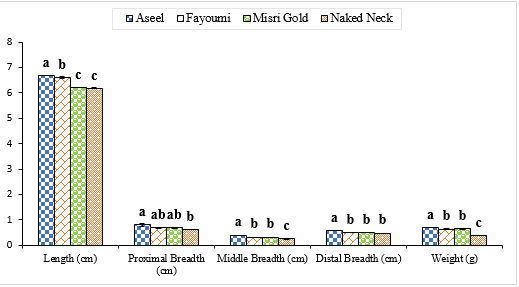
Figure 8. Breed wise comparative presentation of overall means (± SEM) of osteometric parameters of radius among female groups.
Ulna
Length of ulna was recorded highest (8.26 ± 0.09) in Aseel and lowest (7.43 ± 0.09) in Naked Neck though Misri Gold, Fayoumi and Naked Neck differed non-significantly (P ≥ 0.05) among male studied groups. Among female groups, all groups differed significantly (P≤0.05) from each other in their mean length of ulna with Aseel recording maximum (7.42 ± 0.04) and Naked Neck recording minimum (6.61 ± 0.03).
Aseel showed maximum proximal breadth of ulna in both male (1.28 ± 0.02) and female (1.22 ± 0.03) groups while Misri Gold recorded lowest (1.16 ± 0.01) among male groups and Naked Neck recorded lowest (0.88 ± 0.04) among female groups. Middle breadth of ulna was observed highest (0.67 ± 0.03) in Naked Neck among male groups but minimum (0.47± 0.03) among female groups. Aseel recorded maximum (0.69± 0.01) middle breadth of ulna among female groups. Statistically non-significant (P ≥ 0.05) difference was observed in distal breadth of ulna among all studied male groups with maximum (1.03 ± 0.01) distal breadth in Misri Gold followed by Naked Neck (1.02 ± 0.03), Aseel (1.03 ± 0.01) and Fayoumi (0.98 ± 0.02). Among female groups, Fayoumi recorded highest (0.99 ± 0.002) and Aseel recorded lowest (0.56 ± 0.10) distal breadth of ulna.
Aseel showed maximum (2.66 ± 0.06) while Naked Neck showed minimum (1.56 ± 0.06) weight of ulna among male groups while among female groups, Fayoumi reported highest (1.67 ± 0.03) and Naked Neck reported lowest (0.91 ± 0.05) weight of ulna (Figures 9 and 10).
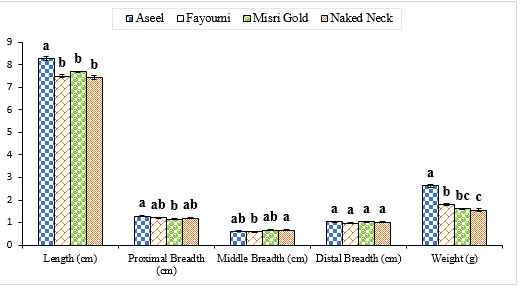
Figure 9. Breed wise comparative presentation of overall means (± SEM) of osteometric parameters of ulna among male groups.
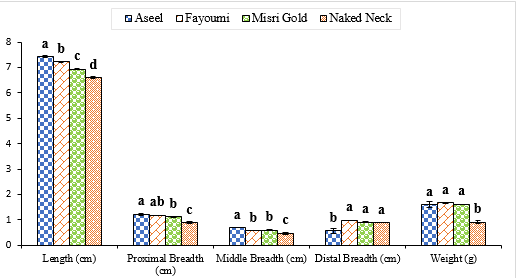
Figure 10. Breed wise comparative presentation of overall means (± SEM) of osteometric parameters of ulna among female groups.
Femur
Length of femur differed non-significantly (P ≥ 0.05) between Fayoumi, Misri Gold and Aseel among male studied groups. Fayoumi recorded maximum (8.53 ± 0.05) while Naked Neck recorded minimum (7.64 ± 0.13) length of femur among male groups. All female groups differed significantly (P ≤ 0.05) from each other with Aseel reporting maximum (8.76 ± 0.06) and Naked Neck reporting minimum (7.18 ± 0.02) length of femur.
Aseel recorded highest proximal breadth of femur in both male (1.97 ± 0.35) and female (1.82 ± 0.03) studied groups where Misri Gold reported lowest (1.23 ± 0.06) in male and Naked Neck (1.40 ± 0.01) reported lowest in female studied groups. Among females, all groups differed significantly (P ≤ 0.05) from each other in proximal breadth of femur. A non-significant (P ≥ 0.05) difference was observed in middle breadth of femur among male studied groups where Misri Gold showed maximum (1.09 ± 0.10) and Fayoumi showed minimum (0.74 ± 0.005) middle breadth of femur. Among female groups, maximum (0.74 ± 0.01) middle breadth of femur was observed in Aseel and minimum (0.61 ± 0.01) in Naked Neck. Distal breadth of femur was observed maximum (1.99 ± 0.35) (1.619 ± 0.0786) in Aseel and minimum (1.51 ± 0.03) (1.33 ± 0.01) in Naked Neck, both in male and female studied groups respectively.
Aseel showed highest (6.30 ± 0.37) (4.18 ± 0.0471) while Naked Neck showed lowest (2.65 ± 0.27) (1.98 ± 0.02) weight of femur in both male and female studied groups respectively while nonsignificant (P ≥ 0.05) difference was observed between Misri Gold and Aseel in mean (± SEM) weight of femur among female groups (Figures 11 and 12).
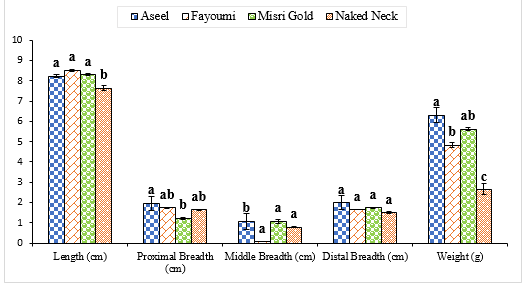
Figure 11. Breed wise comparative presentation of overall means (± SEM) of osteometric parameters of femur among male groups.
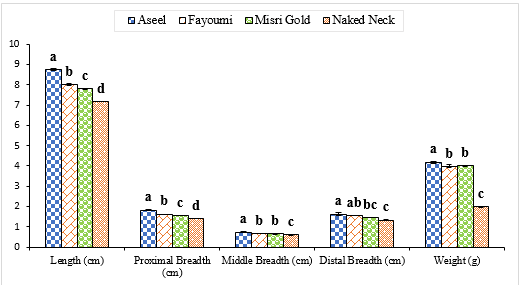
Figure 12. Breed wise comparative presentation of overall means (± SEM) of osteometric parameters of femur among female groups.
Aseel recorded maximum (13.46 ± 0.19) while Naked Neck recorded minimum (11.12 ± 0.25) length of tibia among male groups. Among female groups, all groups differed significantly (P ≤ 0.05) from each other where Aseel showed maximum (12.34 ± 0.01) and Naked Neck showed minimum (10.14 ± 0.02) length of tibia.
Maximum (2.27 ± 0.02) and minimum (1.99 ± 0.04) proximal breadth of tibia was observed in Fayoumi and Naked Neck among male groups respectively while among females, Aseel recorded highest (2.23 ± 0.02) and Naked Neck recorded lowest (1.61 ± 0.05) proximal breadth of tibia. Mean (± SEM) middle breadth of tibia was observed maximum (0.97± 0.06) in Misri Gold and minimum (0.68 ± 0.04) in Aseel among male groups while among female groups, Aseel showed highest (0.80 ± 0.01) and Misri Gold showed lowest (0.49 ± 0.04) middle breadth of tibia. Maximum (1.36 ± 0.05) distal breadth of tibia was observed in Aseel followed by Naked Neck (1.34 ± 0.03), Misri Gold (1.27 ± 0.02) and Fayoumi (1.15 ± 0.01) among male studied groups. Among female groups, Aseel recorded maximum (1.41 ± 0.02) and Misri Gold recorded minimum (1.15 ± 0.01) distal breadth of tibia.
Weight of tibia was recorded maximum (8.49 ± 0.41) in Aseel followed by Misri Gold (7.69 ± 0.02), Fayoumi (6.21 ± 0.09) and Naked Neck (3.67 ± 0.36) among male studied groups. Among female groups, Fayoumi showed maximum (5.10 ± 0.05) weight of tibia followed by Misri Gold (5.08 ± 0.09), Aseel (5.07 ± 0.25) and Naked Neck (2.83 ± 0.04) (Figures 13 and 14).
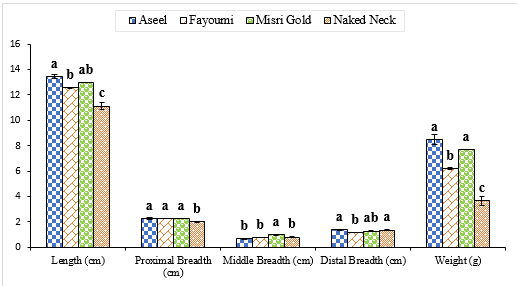
Figure 13. Breed wise comparative presentation of overall means (± SEM) of osteometric parameters of tibia among male groups.
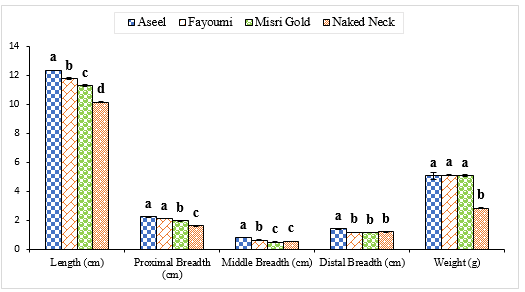
Figure 14. Breed wise comparative presentation of overall means (± SEM) of osteometric parameters of tibia among female groups.
Metatarsals
Aseel exhibited maximum (8.68 ± 0.05) length of metatarsal followed by Misri Gold (8.54 ± 0.03), Fayoumi (8.47 ± 0.03) and Naked Neck (7.67 ± 0.19) among male groups though all female groups differed significantly (P ≤ 0.05) from each other with maximum (8.47 ± 0.01) weight recorded in Aseel and minimum (7.35 ± 0.02) in Naked Neck.
Proximal breadth of metatarsals was observed highest (1.57± 0.02) in Aseel and lowest (1.47 ± 0.03) in Naked Neck among male groups while maximum (1.43 ± 0.01) in Fayoumi and minimum (1.23 ± 0.04) in Naked Neck among female studied groups. Middle breadth of metatarsal was recorded maximum (1.04 ± 0.08) in Misri Gold and minimum (0.69 ± 0.01) in Fayoumi among male groups. Among female groups, Aseel recorded highest (0.74 ± 0.01) and Naked Neck recorded lowest (0.56 ± 0.01) middle breadth of metatarsal. Maximum and minimum distal breadth of metatarsal was observed in male groups of Misri Gold (1.55 ± 0.01) and Aseel (1.41 ± 0.01), while in Fayoumi (1.44 ± 0.001) and Misri Gold (1.27 ± 0.03) among female groups respectively.
Among male groups, Misri Gold showed maximum (3.83 ± 0.01) while Fayoumi showed minimum (1.62 ± 0.36) weight of metatarsal though among female groups, Fayoumi recorded highest (2.65 ± 0.05) and Naked Neck recorded lowest (1.50 ± 0.11) weight of metatarsals (Figures 15 and 16).
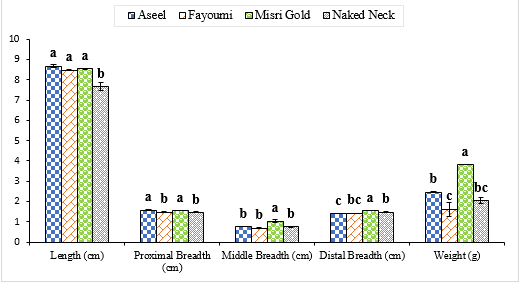
Figure 15. Breed wise comparative presentation of overall means (± SEM) of osteometric parameters of metatarsals among male groups.
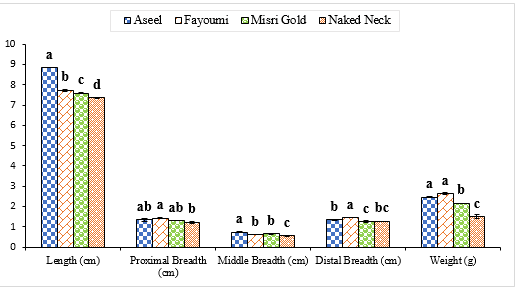
Figure 16. Breed wise comparative presentation of overall means (± SEM) of osteometric parameters of metatarsals among female groups.
This is a baseline study, a first baby step, aiming towards establishing reference values for osteometric parameters in domestic poultry breeds. There have been lots of studies on phenotypic characters of studied groups [10] yet this study focuses on the detailed measurements of cranial and caudal appendicular skeleton. Long bones of the said skeleton were measured in centimeters and weighed in grams using vernier calipers and digital weight machine respectively.
In this study, mean lengths of humerus (8.19 ± 0.11), radius (7.47 ± 0.06), ulna (8.26 ± 0.09), femur (8.23 ± 0.08), tibia (13.46 ± 0.19), metatarsals (8.68 ± 0.05) in male groups while length (cm) of humerus (7.92 ± 0.02), radius (6.96 ± 0.01), ulna (7.42 ± 0.04), femur (8.76 ± 0.06), tibia (12.34 ± 0.01) and metatarsals (8.47 ± 0.01) in female groups were observed statistically significant (P ≤ 0.05) in Aseel, indicating towards its elongated, muscular body of all indigenous chicken breeds in Indian subcontinent (Usman et al., 2014). Length (cm) of ulna (8.26 ± 0.09) and metatarsals (8.68 ± 0.05) in current study of Aseel male and female group lies close to the minimum length of radius and ulna measured previously who described the phenotypic characters of Aseel breeds in Bangladesh though metatarsal length of Aseel, both male and female, were in line with the observations of Mahmood, who studied the phenotypic diversity among Aseel breeds of Pakistan. The difference may be due to high variations in Aseel breeds (Qureshi et al., 2018; Soglia et al., 2020) or difference in environments or rearing systems (Abo Ghanima et al., 2020). Metatarsal length (cm) of Aseel male groups was also found in line with the findings of Richard.
Weight of the femur was observed highest in Aseel (6.30 ± 0.37) but lowest in Naked Neck (2.65 ± 0.27). VitoroviÄ? studied the morphometric characteristics of leg bones in Naked Neck after 98- day fattening period. Current findings of femur length fall closer to his observations, but weight of femur in Naked Neck of current study was lower than his findings which can be due to difference in rearing system in both studies.
Length (cm) of humerus and radius/ulna (combined) of Naked Neck lies close to the previous observations of Liyanage who studied the wing length as a whole not as detailed as in present study. The length (cm) of metatarsals in Naked Neck both male and female were lower than the findings of Galal who studied the characteristics of Naked Neck but in controlled and hygienic conditions as oppose to current study. This indicates that Naked Neck performs better if a hospitable environment is provided.
Rural economy plays a role of backbone in some developing countries. Native breeds are often reared as backyard poultry in many developing countries. Their importance differs from country to country. Indigenous breeds have tremendous production potential. Efforts should be made to identify and exploit their genetic potential and selection-based breeding should be adopted. Continuous crossbreeding of indigenous breeds, without any selection criteria, even with rearing with exotic breeds, may cause loss of indigenous germplasm leading to non-broodiness like issues.
Aseel has already shown great potential with high weight gain and better feed conversion ratio with supplementation of probiotics as observed by Zia-ud-din and higher weight gain in less time than usual can also be achieved through crossbreeding of Aseel with Broiler as observed by Ullengala. The genetic superiority of Aseel with slender and heavy body and a popular game bird among all indigenous breeds of Indian subcontinent makes it the most suitable choice for backyard poultry especially in underdeveloped countries.
Phenotypically similar species makes it difficult to differentiate among them, holding us back from assessing key information about their value and the importance of geography these genetically invaluable birds dwell in. Post cranial osteometry has been studied by Watson and Ledogar and has proved its usefulness for identification of morphologically similar important breeds. The success of his study highlights the importance of long bone measurements in differentiation of birds withing genus or even at specie level suggesting long bone metrics to be adopted as a standard by zoo archeologists, as a complementary technique, to identify and differentiate unknown galliform species.
All birds were reared for six months, in a scavenging environment, with zero external input in any form. Aseel dominated almost all osteometric parameters, either in male or female studied groups, while Naked Neck performed inefficiently in most cases. Studies have been carried out on different morphometric parameters in all studied groups of this study but there are very few studies in detail which gives information on the osteometric measurements. Currently, whole world is focussed on biodiversity and genetic preservation. One way or another such detailed osteometric data can allegedly help in genetic, taxonomic and zooarchaeological studies. More scientific data is required to establish reference values though.
All procedures performed in this study which involves animals were carried out in compliance to the guidelines, ethical standards and recommendations of the Office of Research, Innovation and Commercialization and Animal Ethical Committee of University of Agriculture, Faisalabad.
The present study forms a part of a larger project funded by HEC (NRPU7618) i.e., “Comparative anatomical, histological and physiobiochemical analysis of different chicken breeds (Gallus gallus) of Pakistan.” We are thankful to Higher Education Commission (HEC) Pakistan.
All authors contributed equally to the execution of this project.
Data sharing policy: The data that support the findings of this study are available from the corresponding author upon reasonable request.
[Google Scholar] [Crossref] [PubMed]
[Google Scholar] [Crossref] [PubMed]
[Google Scholar] [Crossref] [PubMed]
Journal of Morphology and Anatomy received 63 citations as per Google Scholar report