Opinion - (2025) Volume 14, Issue 3
Received: 01-May-2025, Manuscript No. jmmd-26-184680;
Editor assigned: 03-May-2025, Pre QC No. P-184680;
Reviewed: 19-May-2025, QC No. Q-184680;
Revised: 22-May-2025, Manuscript No. R-184680;
Published:
29-May-2025
, DOI: 10.37421/2161-0703.2025.14.524
Citation: Osei, Daniel K.. ”Combating Medical Device Biofilms: Novel Strategies.” J Med Microb Diagn 14 (2025):524.
Copyright: © 2025 Osei K. Daniel This is an open-access article distributed under the terms of the Creative Commons Attribution License, which permits unrestricted use, distribution and reproduction in any medium, provided the original author and source are credited.
Biofilms represent a significant challenge in the realm of medical device-associated infections, primarily due to the protective matrix they construct that shields bacteria from both the host immune system and antimicrobial agents [1].
This inherent recalcitrance to treatment underscores the urgent need for novel strategies aimed at preventing biofilm formation or facilitating their eradication, with a focus on disrupting the early stages of development or degrading the established extracellular matrix [1].
A thorough understanding of the molecular mechanisms governing initial bacterial adhesion, subsequent proliferation, and the production of the biofilm matrix is paramount to the successful development of effective interventions [1].
Quorum sensing mechanisms play a critical and pivotal role in the complex process of biofilm development. These systems serve to coordinate bacterial gene expression, influencing a wide array of cellular functions including the production of virulence factors and the synthesis of the biofilm matrix [2].
The identification and targeting of these intricate bacterial communication pathways present a highly promising avenue for the prevention of biofilm formation on medical implants, offering the potential to substantially reduce the incidence of persistent and chronic infections [2].
The host immune response frequently proves to be insufficient in clearing biofilm-associated infections. This inadequacy is largely attributed to the physical barrier provided by the biofilm matrix and the altered physiological state of bacteria residing within it, which often confers increased resistance to immune effectors [3].
Consequently, a comprehensive understanding of the intricate interplay between the host immune system and biofilm-forming bacteria is absolutely crucial for the development of adjunct therapies designed to bolster immune clearance or effectively neutralize the protective mechanisms employed by the biofilm [3].
Antimicrobial resistance is substantially exacerbated by the presence of biofilm structures. Bacteria embedded within the protective matrix exhibit significantly reduced susceptibility to conventional antibiotics, posing a formidable therapeutic challenge [4].
This heightened resistance necessitates a concerted effort to explore and develop alternative therapeutic strategies. These may include the utilization of specialized antibiofilm agents, the application of bacteriophage therapy, and the implementation of novel immunotherapy approaches to effectively overcome this widespread resistance [4].
The development of advanced biomaterials and innovative surface modifications for medical devices offers a proactive approach to combating biofilm formation by preventing the initial bacterial adhesion, which is a critical prerequisite for biofilm development [5].
Various strategies are currently under investigation, including the application of antimicrobial coatings, the precise engineering of surface topography to deter bacterial attachment, and the incorporation of specific anti-adhesion molecules into device surfaces [5].
Bacterial adhesion to the surfaces of medical devices is an inherently complex process, influenced by a confluence of factors relating to the surface properties of the device and the specific characteristics of the bacterial species involved [6].
A deep and detailed understanding of the molecular mechanisms underpinning this adhesion process, particularly the roles played by bacterial adhesins and surface proteins, is vital for the rational design and implementation of effective anti-adhesion strategies [6].
The extracellular polymeric substance (EPS) matrix, a defining component of biofilms, is responsible for providing essential structural integrity to the biofilm and offering crucial protection against antimicrobial agents [7].
Consequently, strategies that specifically target the various components of the EPS, such as polysaccharides and proteins, or employ enzymes capable of degrading the matrix, are under active development for the effective disruption of established biofilms [7].
Diagnostic approaches for identifying and characterizing biofilm infections on medical devices require the development and implementation of sensitive and specific methods. These methods are essential for accurately detecting biofilm formation and identifying the causative microorganisms [8].
The advancement and utilization of molecular diagnostic tools, alongside sophisticated imaging techniques, are deemed crucial for achieving early diagnosis and enabling timely and effective clinical intervention [8].
Phage therapy emerges as a highly promising alternative or complementary therapeutic strategy to conventional antibiotics for the treatment of challenging biofilm infections [9].
Bacteriophages possess the unique ability to specifically target and lyse bacteria residing within biofilms. Furthermore, their inherent lytic activity can be significantly enhanced through genetic engineering or by employing them in combination therapies [9].
Nanotechnology presents a wealth of innovative solutions for both preventing the formation of biofilms and treating established infections associated with medical devices [10].
Nanoparticles can be meticulously engineered to serve as carriers for delivering antimicrobial agents directly to the infection site, to actively disrupt the biofilm matrix, or to enhance the host's immune responses. This versatility makes nanotechnology a powerful platform for advanced medical device infection control [10].
Biofilms pose a substantial hurdle in the context of medical device-associated infections, primarily due to their inherent ability to form a resilient protective matrix. This matrix effectively shields bacteria from the host's natural defenses and renders them less susceptible to the action of antimicrobial agents [1].
The significant recalcitrance of these biofilms to conventional treatments highlights the critical necessity for developing novel strategies that focus on either preventing their formation or facilitating their eradication. Such strategies must emphasize disrupting the fundamental processes of biofilm development or effectively degrading the extracellular matrix [1].
Understanding the intricate molecular mechanisms that govern the initial stages of bacterial adhesion, the subsequent proliferation of bacterial populations, and the production of the biofilm matrix itself is of paramount importance for the successful design and implementation of truly effective interventions [1].
Within the complex architecture and development of biofilms, quorum sensing mechanisms play a decidedly pivotal role. These sophisticated cell-to-cell communication systems are responsible for coordinating bacterial gene expression, which directly influences a broad spectrum of bacterial activities, including the production of virulence factors and the synthesis of the components of the biofilm matrix [2].
Consequently, the identification and strategic targeting of these intricate bacterial communication pathways offer a highly promising avenue for the prevention of biofilm formation on critical medical implants, thereby holding the potential to significantly reduce the incidence of chronic and persistent infections [2].
In many instances, the host immune response proves to be inadequate in effectively clearing biofilm-associated infections. This deficiency can be attributed to a combination of factors, including the physical barrier presented by the dense biofilm matrix and the altered physiological state of the bacteria residing within it, which often leads to increased resistance to immune effector mechanisms [3].
Therefore, a thorough and comprehensive understanding of the complex and dynamic interplay between the host immune system and the biofilm-forming bacteria is absolutely essential for the development of adjunct therapies. These therapies aim to either enhance the host's immune clearance capabilities or effectively neutralize the protective mechanisms employed by the biofilm [3].
The phenomenon of antimicrobial resistance is notably exacerbated by the formation of biofilms. Bacteria embedded within the protective matrix exhibit a significantly diminished susceptibility to standard antibiotic treatments, presenting a formidable challenge to clinicians [4].
This heightened resistance profile necessitates a focused and concerted effort to explore and develop alternative therapeutic strategies. Such strategies may encompass the use of specialized antibiofilm agents, the application of bacteriophage therapy, and the implementation of novel immunotherapy approaches, all aimed at overcoming this significant resistance barrier [4].
The ongoing development of advanced biomaterials and innovative surface modifications for medical devices represents a crucial proactive approach to combating biofilm formation. These advancements primarily aim to prevent the critical initial step of bacterial adhesion, which is a prerequisite for subsequent biofilm development [5].
A variety of strategies are actively being investigated and refined, including the application of antimicrobial coatings, the precise engineering of surface topography to discourage bacterial attachment, and the incorporation of specific anti-adhesion molecules into the materials used for device construction [5].
Bacterial adhesion to the surfaces of medical devices is an inherently multifaceted process. Its occurrence and efficiency are significantly influenced by a complex interplay of factors related to the physical and chemical properties of the device surface, as well as the specific characteristics of the bacterial species involved [6].
Therefore, a deep and comprehensive understanding of the molecular mechanisms that govern this initial adhesion process, particularly the roles played by bacterial adhesins and various surface proteins, is vital for the rational design and successful implementation of effective anti-adhesion strategies [6].
The extracellular polymeric substance (EPS) matrix is a defining characteristic of biofilms, providing them with essential structural integrity and conferring a significant degree of protection against the action of antimicrobial agents [7].
Consequently, research efforts are increasingly focused on developing strategies that specifically target the diverse components of the EPS, such as polysaccharides and proteins, or that employ enzymes capable of effectively degrading the matrix. These approaches hold considerable promise for the disruption of established biofilms [7].
Diagnostic approaches designed for the identification and characterization of biofilm infections associated with medical devices require the development and application of methods that are both highly sensitive and specific [8].
These methods are critical for accurately detecting the presence of biofilm formation and for reliably identifying the specific microorganisms responsible for the infection [8].
The advancement and widespread utilization of molecular diagnostic tools, in conjunction with sophisticated imaging techniques, are considered indispensable for achieving early diagnosis and enabling timely and effective clinical intervention [8].
Phage therapy is emerging as a highly promising therapeutic option, either as a standalone treatment or as an adjunct to conventional antibiotic therapy, for managing challenging biofilm infections [9].
Bacteriophages possess the unique capability to specifically target and efficiently lyse bacteria that are residing within biofilms. Moreover, their inherent lytic activity can be significantly augmented through techniques such as genetic engineering or by employing them in carefully designed combination therapies [9].
Nanotechnology offers a diverse array of innovative solutions that can be applied to both prevent the formation of biofilms and effectively treat established infections on medical devices [10].
Nanoparticles can be engineered with remarkable precision to serve multiple functions: delivering antimicrobial agents directly to the site of infection, actively disrupting the biofilm matrix, or enhancing the host's immune responses. This inherent versatility positions nanotechnology as a powerful and adaptable platform for advanced medical device infection control strategies [10].
Biofilms on medical devices pose significant challenges due to their protective matrix, which shields bacteria from host defenses and antimicrobials. This recalcitrance necessitates novel prevention and eradication strategies targeting biofilm formation and matrix degradation. Understanding bacterial adhesion, proliferation, and matrix production is key. Quorum sensing coordinates gene expression, making these communication pathways a target for intervention. The host immune response is often insufficient against biofilms, highlighting the need for therapies that enhance immune clearance or neutralize protective mechanisms. Biofilm formation exacerbates antimicrobial resistance, driving the search for alternatives like antibiofilm agents, phages, and immunotherapy. Novel biomaterials and surface modifications aim to prevent initial bacterial adhesion. Molecular mechanisms of adhesion are crucial for designing anti-adhesion strategies. Targeting the extracellular polymeric substance (EPS) matrix is vital for biofilm disruption. Sensitive and specific diagnostic tools are needed for early detection and intervention. Phage therapy offers a promising alternative for treating biofilm infections. Nanotechnology provides versatile solutions for prevention and treatment by delivering antimicrobials, disrupting matrices, and enhancing immune responses.
None
None
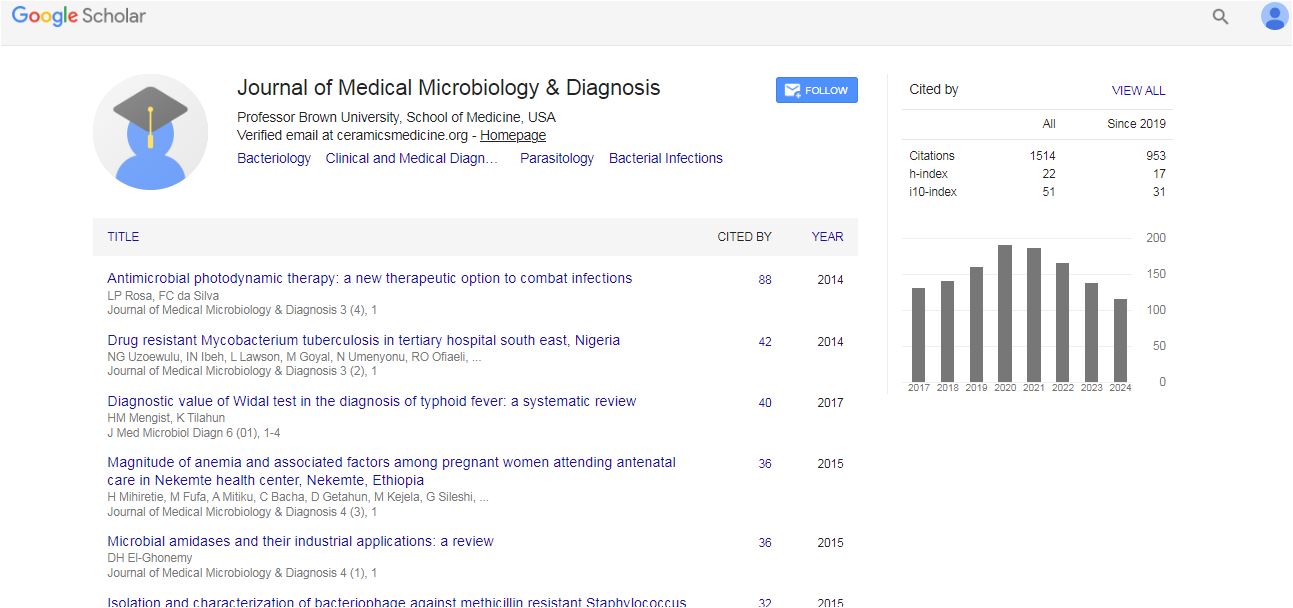
Medical Microbiology & Diagnosis received 14 citations as per Google Scholar report