Commentary - (2025) Volume 10, Issue 6
Received: 03-Nov-2025, Manuscript No. JPNM-26-185748;
Editor assigned: 05-Nov-2025, Pre QC No. P-185748;
Reviewed: 17-Nov-2025, QC No. Q-185748;
Revised: 24-Nov-2025, Manuscript No. R-185748;
Published:
29-Nov-2025
, DOI: 10.37421/2472-100X.2025.10.375
Citation: Johansen, Ingrid. ”Children’s Thyroid Health: Early Detection, Lifelong Management.” J Pediatr Neurol Med 10 (2025):375.
Copyright: © 2025 Johansen I. This is an open-access article distributed under the terms of the Creative Commons Attribution License, which permits unrestricted use, distribution and reproduction in any medium, provided the original author and source are credited.
Thyroid disorders in children represent a critical area of pediatric healthcare, encompassing a range of conditions that can significantly impact growth and development [1].
These disorders necessitate early identification and effective management to ensure optimal long-term health outcomes for affected youth [1].
The presentation of thyroid issues in children can be diverse and subtle, often leading to diagnostic delays that may exacerbate their impact on development [1].
A comprehensive diagnostic approach is therefore essential, involving thorough physical examinations, detailed laboratory assessments of thyroid hormones and autoantibodies, and advanced imaging modalities such as ultrasound [1].
Treatment strategies are highly individualized, adapting to the specific nature of the thyroid condition, which may involve hormone replacement therapy for hypothyroidism, antithyroid medications or radioiodine therapy for hyperthyroidism, and surgical intervention for suspicious thyroid nodules [1].
Congenital hypothyroidism stands out as a particularly significant concern, being a leading cause of preventable intellectual disability in newborns [2].
The implementation of robust neonatal screening programs has proven instrumental in the early detection of affected infants, facilitating the prompt initiation of levothyroxine treatment, a crucial step in averting irreversible neurological deficits [2].
Among the hyperthyroid conditions, Graves' disease is the most prevalent in pediatric populations, manifesting with a spectrum of symptoms that can include hyperactivity, unintended weight loss, and an enlarged thyroid gland or goiter [3].
The underlying pathology involves an autoimmune process where thyroid-stimulating hormone receptor antibodies lead to the destruction of thyroid tissue [3].
The investigation of thyroid nodules in children requires a heightened level of vigilance, given the proportionally higher risk of malignancy compared to adults [4].
Thyroid ultrasound serves as the primary imaging tool, frequently augmented by fine-needle aspiration biopsy for precise cytological evaluation of nodule characteristics [4].
Hashimoto's thyroiditis, an autoimmune condition leading to hypothyroidism, is managed primarily through lifelong thyroid hormone replacement in pediatric patients [5].
Ongoing monitoring of thyroid function tests and antibody titers is indispensable for guiding therapeutic adjustments and assessing disease progression [5].
Subclinical hypothyroidism in childhood warrants careful observation, as it carries the potential to evolve into overt hypothyroidism and adversely affect developmental trajectories [6].
Therapeutic intervention with levothyroxine is generally considered in cases with elevated thyroid antibody levels or persistently high TSH concentrations [6].
Thyroid cancer, although rare in children, generally presents with a more favorable prognosis than in adult counterparts [7].
Papillary thyroid carcinoma is the most common histological subtype, with surgical management, often involving total thyroidectomy and lymph node dissection, forming the cornerstone of its treatment [7].
The influence of genetic factors on the susceptibility to pediatric thyroid disorders is increasingly acknowledged within the medical community [8].
Specific genetic mutations have been identified as contributors to an increased predisposition to autoimmune thyroid diseases and thyroid cancer development [8].
Close monitoring of the growth and pubertal development of children diagnosed with thyroid disorders is paramount, as thyroid hormones play a pivotal role in these fundamental physiological processes [9].
Any imbalance in thyroid hormone levels can lead to significant deviations from normal developmental timelines [9].
Addressing complex pediatric thyroid cases effectively necessitates a collaborative, multidisciplinary approach [10].
This involves the coordinated efforts of pediatric endocrinologists, surgeons, radiologists, and geneticists, ensuring comprehensive care and the optimization of treatment outcomes for these young patients [10].
Thyroid disorders in the pediatric population encompass a diverse array of conditions, including hypothyroidism, hyperthyroidism, and thyroid nodules, all of which pose significant health concerns [1].
Early and accurate detection, coupled with appropriate therapeutic interventions, is fundamental to supporting the normal growth and developmental trajectories of children [1].
The symptomatic presentation of these disorders can be highly variable and often subtle, frequently contributing to delays in diagnosis and subsequent management [1].
Diagnostic pathways for thyroid dysfunction involve a multi-faceted approach, commencing with a meticulous physical examination, followed by specific blood tests to quantify thyroid hormone levels and detect relevant antibodies, and often supplemented by imaging studies such as thyroid ultrasound [1].
Treatment regimens are carefully tailored to the specific diagnosed disorder; for instance, hypothyroidism is typically managed with hormone replacement therapy, hyperthyroidism may be treated with antithyroid medications or radioactive iodine, and suspicious thyroid nodules often require surgical assessment [1].
Congenital hypothyroidism is recognized as a major preventable cause of intellectual disability in infants [2].
The widespread implementation of neonatal screening programs has been highly effective in identifying affected newborns, thereby enabling the timely initiation of levothyroxine therapy, which is critical for preventing long-term cognitive impairments [2].
Graves' disease is identified as the predominant cause of hyperthyroidism in children and adolescents, presenting with a range of clinical manifestations that may include increased energy, unexplained weight loss, and visible thyroid enlargement [3].
The pathogenesis of this condition involves an autoimmune process where antibodies target the thyroid-stimulating hormone receptor, leading to overproduction of thyroid hormones [3].
In the pediatric population, the evaluation of thyroid nodules demands particular caution due to a statistically higher propensity for malignancy compared to adult cases [4].
Thyroid ultrasound stands as the principal imaging modality for initial assessment, often complemented by fine-needle aspiration biopsy for detailed cytological analysis of the nodule [4].
Hashimoto's thyroiditis, an autoimmune disorder causing hypothyroidism, typically requires lifelong thyroid hormone replacement therapy for children [5].
Regular monitoring of thyroid function tests and specific antibody levels is essential for effective disease management and tracking its progress [5].
Subclinical hypothyroidism in children warrants close observation, as it may progress to overt disease and impact developmental milestones [6].
Levothyroxine treatment is typically considered in instances where significant thyroid antibody titers are present or when TSH levels remain persistently elevated [6].
Thyroid cancer, although a less common malignancy in children, generally carries a better prognosis than in adults [7].
Papillary thyroid carcinoma is the most frequent subtype encountered, and surgical intervention, often comprising total thyroidectomy and lymph node dissection, is the primary treatment strategy [7].
Emerging research highlights the significant role of genetic predispositions in the development of pediatric thyroid disorders [8].
Certain identified genetic mutations are associated with an increased susceptibility to autoimmune thyroid conditions and the development of thyroid cancer in children [8].
Continuous monitoring of growth parameters and pubertal development is crucial for children with thyroid dysfunction, as thyroid hormones are integral to these processes [9].
Disruptions in thyroid hormone levels can lead to significant deviations from expected developmental patterns [9].
Optimal management of complex pediatric thyroid conditions is best achieved through a coordinated, multidisciplinary team approach [10].
This collaborative model, involving specialists such as pediatric endocrinologists, surgeons, radiologists, and geneticists, ensures a comprehensive care strategy and aims for the best possible outcomes for affected children [10].
Thyroid disorders in children, including hypothyroidism, hyperthyroidism, and nodules, are a significant concern requiring early detection and management for proper growth and development. Diagnostic tools include physical exams, blood tests, and ultrasound, with treatment tailored to the specific condition. Congenital hypothyroidism is a major cause of preventable intellectual disability, addressed by neonatal screening and levothyroxine therapy. Graves' disease is the most common hyperthyroidism in children, driven by autoimmune processes. Pediatric thyroid nodules have a higher malignancy risk, necessitating careful evaluation. Hashimoto's thyroiditis requires lifelong hormone replacement, and subclinical hypothyroidism needs monitoring for progression. Pediatric thyroid cancer, though rare, has a better prognosis with surgery as the main treatment. Genetics plays a role in susceptibility to these disorders. Monitoring growth and puberty is vital. Multidisciplinary care involving various specialists ensures comprehensive management for optimal outcomes.
None
None
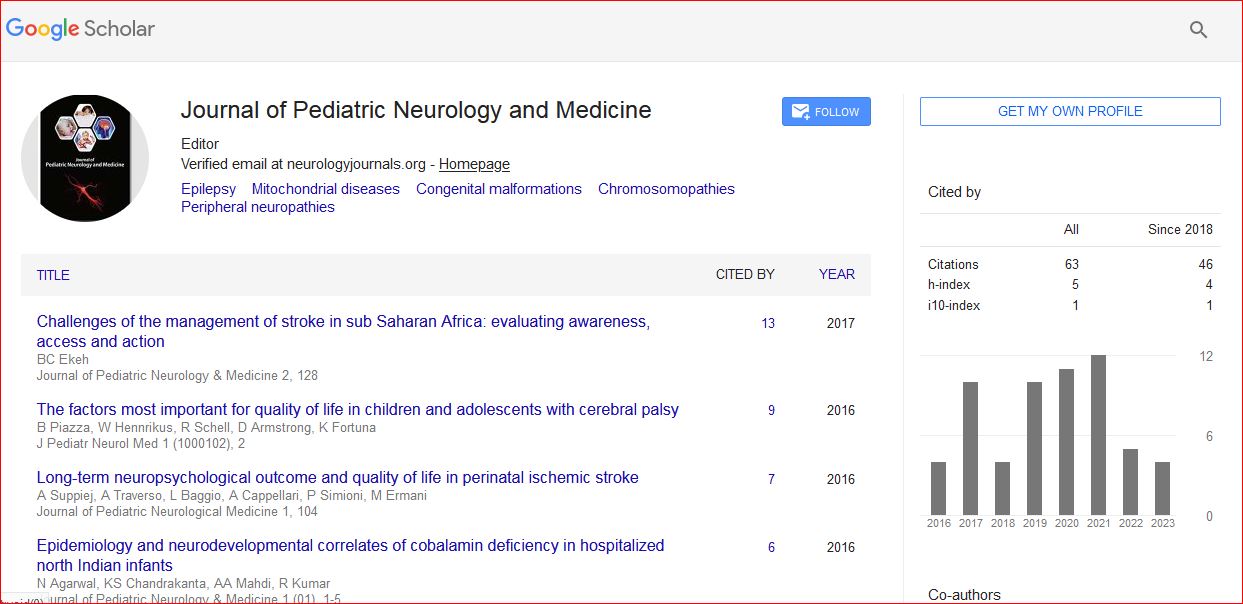
Journal of Pediatric Neurology and Medicine received 68 citations as per Google Scholar report