Brief Report - (2025) Volume 14, Issue 4
Received: 01-Jul-2025, Manuscript No. jio-26-184815;
Editor assigned: 03-Jul-2025, Pre QC No. P-184815;
Reviewed: 17-Jul-2025, QC No. Q-184815;
Revised: 22-Jul-2025, Manuscript No. R-184815;
Published:
29-Jul-2025
, DOI: DOI: 10.37421/2329-6771.2025.14.564
Citation: Haddad, Leila. ”CBT: Empowering Cancer Survivors’ Mental Well-being.” J Integr Onco 14 (2025):564.
Copyright: © 2025 Haddad L. This is an open-access article distributed under the terms of the Creative Commons Attribution License, which permits unrestricted use, distribution and reproduction in any medium, provided the original author and source are credited.
Cognitive Behavioral Therapy (CBT) has emerged as a cornerstone in addressing the multifaceted psychological sequelae experienced by individuals navigating the journey of cancer survivorship. Its efficacy is well-documented in helping survivors manage a spectrum of emotional challenges, including anxiety, depression, and the pervasive fear of recurrence. By equipping survivors with practical coping strategies, CBT empowers them to reframe negative thought patterns and maladaptive behaviors, fostering a more positive and adaptive outlook on life post-treatment. This therapeutic approach is critically important for enhancing the overall quality of life and facilitating a smoother transition into survivorship [1].
Integrating CBT into the routine care of cancer survivors can significantly mitigate the long-term psychological impacts that may persist long after active treatment concludes. Such interventions are crucial for addressing issues like post-traumatic stress and existential distress, which can profoundly affect a survivor's well-being. Specialized CBT programs, meticulously tailored to the unique challenges faced by cancer survivorsâ??from managing treatment-related side effects to confronting concerns about body imageâ??demonstrate particularly pronounced benefits [2].
The application of CBT in cancer survivorship is further underscored by its capacity to bolster adaptive coping mechanisms and cultivate resilience among survivors. By directly confronting and modifying cognitive distortions that often accompany a cancer diagnosis and treatment, CBT empowers individuals to navigate the complexities of life beyond the acute phase of illness. This process ultimately leads to substantial improvements in emotional well-being and functional capacity, enabling survivors to reclaim their lives with greater confidence [3].
In an era of evolving healthcare delivery, CBT interventions, especially those delivered via telehealth, offer a flexible and accessible avenue for supporting cancer survivors. This digital modality has proven effective in reducing symptoms of depression and anxiety, thereby facilitating greater engagement with survivorship care plans. Such accessibility is vital for overcoming geographical barriers and providing timely psychological support, ultimately improving overall psychological adjustment to survivorship [4].
The therapeutic benefits of CBT extend beyond immediate psychological well-being to encompass the management of common physical complaints that often trouble cancer survivors. Specifically, CBT has shown efficacy in improving sleep disturbances and alleviating fatigue, two prevalent issues that can significantly impair daily functioning. By targeting the underlying psychological factors contributing to these symptoms, CBT promotes restorative sleep and reduces feelings of exhaustion, thereby enhancing energy levels and overall daily performance [5].
For survivors grappling with the persistent fear of cancer recurrence, CBT provides a structured and effective framework for addressing these anxieties. Through tailored techniques, survivors learn to challenge catastrophic thinking patterns and develop more realistic appraisals of their current health status. This cognitive restructuring process leads to a notable reduction in intrusive thoughts and a greater capacity to engage in meaningful life activities without being perpetually overshadowed by fear [6].
The role of CBT in enhancing the social functioning and interpersonal relationships of cancer survivors is a significant, yet sometimes overlooked, benefit. By directly addressing issues such as social isolation, communication difficulties, and body image concerns that can arise post-cancer, CBT assists survivors in rebuilding and maintaining vital supportive social connections. These connections are fundamental for long-term psychological health and overall well-being [7].
Furthermore, CBT serves as a valuable therapeutic tool for managing the profound existential distress that can manifest during cancer survivorship. This distress often involves grappling with fundamental questions about life's meaning, purpose, and one's own mortality. By providing a safe space for exploring these themes and fostering acceptance, CBT aids survivors in discovering or rediscovering a renewed sense of meaning and purpose in their lives [8].
To maximize the impact of CBT, its delivery within a multidisciplinary survivorship care model is crucial. When conducted by trained professionals who collaborate closely within a comprehensive healthcare team, CBT ensures that psychological support is seamlessly integrated with ongoing medical management. This integrated approach fosters a holistic and robust strategy for addressing the multifaceted needs of cancer survivors [9].
While current evidence strongly supports the immediate benefits of CBT in cancer survivorship, long-term follow-up studies are essential for fully understanding its sustained impact. Assessing how the improvements achieved through CBT are maintained over extended periods is critical for refining and guiding effective long-term survivorship care strategies. Continued research in this area will further solidify the role of CBT in promoting lasting well-being for cancer survivors [10].
Cognitive Behavioral Therapy (CBT) demonstrates significant efficacy in addressing the psychological distress experienced by cancer survivors. It assists in managing symptoms such as anxiety, depression, and the fear of recurrence by equipping survivors with coping strategies to reframe negative thoughts and behaviors. This approach is paramount for enhancing quality of life and facilitating adaptation to survivorship [1].
Integrating CBT into the routine care of cancer survivors can effectively mitigate long-term psychological sequelae, including post-traumatic stress and existential distress. Specialized CBT interventions, tailored to the unique challenges of cancer survivorship, such as treatment-related side effects and body image concerns, prove particularly beneficial [2].
The application of CBT in cancer survivorship is supported by its ability to foster adaptive coping mechanisms and promote resilience. By addressing cognitive distortions related to cancer, CBT empowers survivors to navigate the complexities of life post-treatment, leading to improved emotional well-being and functional outcomes [3].
CBT interventions, particularly those delivered via telehealth, provide a flexible and accessible means to support cancer survivors. This modality is effective in reducing symptoms of depression and anxiety, thereby facilitating greater engagement with survivorship care and improving overall psychological adjustment [4].
Moreover, the impact of CBT extends to improving sleep disturbances and fatigue, common complaints among cancer survivors. By addressing underlying psychological factors contributing to these symptoms, CBT enhances restorative sleep and alleviates feelings of exhaustion, boosting energy levels and daily functioning [5].
For survivors experiencing fear of cancer recurrence, CBT offers structured techniques to challenge catastrophic thinking and develop realistic appraisals of their health status. This leads to a reduction in intrusive thoughts and an improved ability to engage in meaningful activities without being overwhelmed by fear [6].
The role of CBT in improving social functioning and relationships for cancer survivors is noteworthy. By addressing issues such as isolation, communication difficulties, and body image concerns, CBT helps survivors rebuild and maintain supportive social connections, which are vital for long-term well-being [7].
CBT is a valuable tool in managing the existential distress that can arise in cancer survivorship, including questions of meaning, purpose, and mortality. By facilitating exploration of these themes and promoting acceptance, CBT aids survivors in finding a renewed sense of meaning in their lives [8].
The effectiveness of CBT is enhanced when delivered by trained professionals within a multidisciplinary survivorship care model. This ensures that psychological support is integrated with ongoing medical management, creating a comprehensive approach to survivor well-being [9].
Long-term follow-up studies are essential to assess the sustained benefits of CBT in cancer survivorship. While evidence supports immediate post-intervention improvements, understanding how these gains are maintained over years is critical for guiding survivorship care strategies [10].
Cognitive Behavioral Therapy (CBT) is a highly effective intervention for cancer survivors, addressing psychological distress including anxiety, depression, and fear of recurrence. It equips survivors with coping strategies to reframe negative thoughts and improve quality of life. CBT helps mitigate long-term issues like post-traumatic stress and existential distress, particularly when tailored to survivorship challenges. The therapy enhances resilience by modifying cognitive distortions, leading to better emotional well-being and functioning. Telehealth delivery of CBT offers flexible and accessible support, reducing depression and anxiety. It also improves common issues like sleep disturbances and fatigue. CBT aids in managing fear of recurrence by challenging catastrophic thinking. Furthermore, it enhances social functioning and relationships by addressing isolation and body image concerns. CBT assists in processing existential distress and finding renewed meaning. Its effectiveness is maximized within multidisciplinary care models. Long-term studies are crucial to understand sustained benefits.
None
None
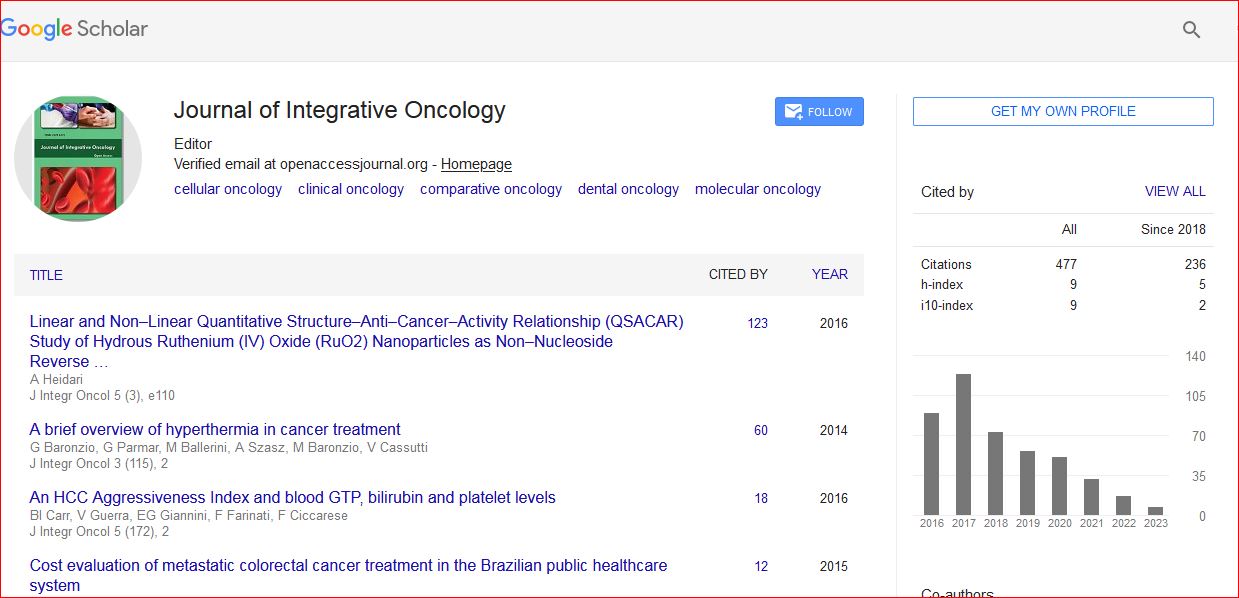
Journal of Integrative Oncology received 495 citations as per Google Scholar report