Perspective - (2025) Volume 9, Issue 3
Received: 01-Jun-2025, Manuscript No. jcre-26-187202;
Editor assigned: 03-Jun-2025, Pre QC No. P-187202;
Reviewed: 17-Jun-2025, QC No. Q-187202;
Revised: 22-Jun-2025, Manuscript No. R-187202;
Published:
29-Jun-2025
, DOI: 10.37421/2795-6172.2025.9.306
Citation: Youssef, Salma Ben. ”CBT: Effective, Sustained, and Personalized Anxiety Treatment.” J Clin Res 09 (2025):306.
Copyright: © 2025 Youssef B. Salma This is an open-access article distributed under the terms of the Creative Commons Attribution License, which permits unrestricted use, distribution and reproduction in any medium, provided the original author and source are credited.
Generalized Anxiety Disorder (GAD) is a prevalent mental health condition characterized by excessive and uncontrollable worry about a variety of everyday things. The field of psychological treatment has seen significant advancements in identifying effective interventions for this disorder. Among these, Cognitive Behavioral Therapy (CBT) has emerged as a leading therapeutic approach, demonstrating robust efficacy in alleviating the persistent and often debilitating symptoms associated with GAD. This randomized controlled trial investigated the efficacy of Cognitive Behavioral Therapy (CBT) for Generalized Anxiety Disorder (GAD). The study demonstrated that CBT significantly reduced anxiety symptoms compared to a control group, highlighting its effectiveness as a first-line treatment for GAD. Key findings suggest improvements in overall functioning and quality of life for participants receiving CBT.[1] Examining long-term outcomes, this research provides evidence for the sustained benefits of CBT in managing GAD. Patients who underwent CBT showed a significant reduction in relapse rates and continued improvements in anxiety symptom severity over a 12-month follow-up period. The study reinforces CBT's value in achieving enduring remission.[2] Further bolstering the evidence base, this meta-analysis synthesizes data from multiple randomized controlled trials to assess the effectiveness of CBT for GAD across diverse populations. The pooled results confirm that CBT is a highly effective intervention, demonstrating moderate to large effect sizes in reducing anxiety and worry. The findings support its broad applicability.[3] Understanding individual differences in treatment response is crucial for optimizing therapeutic outcomes. This study explored treatment moderators, identifying patient characteristics that predict a better response to CBT in GAD. Factors such as motivation for change and symptom severity were found to influence treatment outcomes. This research aids in tailoring CBT to individual needs for optimized results.[4] In parallel with traditional delivery methods, the integration of technology in mental healthcare has expanded treatment accessibility. This article addresses the integration of technology in delivering CBT for GAD. It reports on a trial comparing in-person CBT with a blended-care approach (online CBT modules combined with therapist support), finding comparable efficacy and greater accessibility for the blended model, suggesting a scalable solution.[5] Beyond behavioral and cognitive changes, the underlying neural mechanisms of therapeutic change are of great interest. The study explores the neural mechanisms underlying CBT's effectiveness in GAD. Using neuroimaging techniques, researchers observed changes in brain regions associated with emotion regulation and threat processing in patients who responded to CBT, providing biological support for its therapeutic effects.[6] From a public health perspective, the economic viability of effective treatments is a critical consideration. This research examines the cost-effectiveness of CBT for GAD in a real-world clinical setting. The findings indicate that CBT is a cost-effective treatment, yielding significant reductions in healthcare utilization and associated costs, making it an economically viable option for individuals with GAD.[7] Therapeutic interventions are often enhanced by incorporating complementary strategies. Investigating the role of mindfulness in CBT for GAD, this study found that incorporating mindfulness-based techniques enhanced treatment outcomes. Participants showed greater improvements in emotional regulation and a reduction in maladaptive worry compared to standard CBT alone.[8] Finally, the quality of therapeutic delivery is paramount for achieving desired results. This article focuses on therapist competence and its impact on CBT outcomes for GAD. It emphasizes the importance of rigorous training and adherence to treatment protocols for achieving optimal patient results, suggesting that therapist skill is a critical determinant of efficacy.[9]
The efficacy of Cognitive Behavioral Therapy (CBT) for Generalized Anxiety Disorder (GAD) has been extensively investigated, with numerous studies highlighting its substantial impact on symptom reduction and overall well-being. A pivotal randomized controlled trial by Barlow et al. (2021) affirmed CBT's effectiveness, demonstrating significant improvements in anxiety symptoms when compared to a control group, thereby solidifying its position as a first-line treatment. The study also noted positive effects on participants' overall functioning and quality of life.[1] Furthermore, the enduring benefits of CBT are a key area of research. Leahy et al. (2022) conducted a follow-up study to examine the long-term outcomes of CBT for GAD. Their findings revealed that patients who received CBT experienced a notable decrease in relapse rates and sustained improvements in anxiety symptom severity over a 12-month period, underscoring CBT's capacity for achieving lasting remission.[2] To provide a comprehensive overview of existing research, a meta-analysis by Hofmann et al. (2023) synthesized data from multiple randomized controlled trials. This extensive review confirmed the high effectiveness of CBT for GAD across various populations, reporting moderate to large effect sizes in reducing anxiety and worry, thus supporting its widespread applicability.[3] Recognizing that not all individuals respond to treatment in the same way, Knaevelsrud et al. (2020) delved into the predictors of treatment outcomes. Their research identified patient characteristics, such as motivation for change and symptom severity, that significantly influence the effectiveness of CBT for GAD, offering insights into personalizing treatment approaches.[4] Innovations in treatment delivery have also been explored to enhance accessibility. Höppner et al. (2021) investigated the integration of technology in CBT for GAD. Their study compared in-person CBT with a blended-care model, which combined online CBT modules with therapist support, and found comparable efficacy with increased accessibility in the blended approach, suggesting a scalable and convenient option.[5] The biological underpinnings of therapeutic change are also being illuminated. Mueller et al. (2022) explored the neural correlates of treatment response in CBT for GAD. Using neuroimaging, they observed alterations in brain regions related to emotion regulation and threat processing among patients who responded to CBT, providing a biological basis for its therapeutic effects.[6] From an economic standpoint, the value of CBT as a treatment for GAD is also well-established. Compton et al. (2023) conducted a cost-effectiveness analysis of CBT for GAD in primary care settings. Their findings indicated that CBT is an economically viable intervention, leading to reduced healthcare utilization and costs, thereby presenting a practical solution for healthcare systems.[7] Complementary therapeutic strategies can further enhance the effectiveness of standard interventions. Segal et al. (2020) examined the role of mindfulness in CBT for GAD, discovering that integrating mindfulness-based techniques led to greater improvements in emotional regulation and a reduction in maladaptive worry when compared to standard CBT alone.[8] Moreover, the expertise of the therapist plays a crucial role in treatment success. Regehr et al. (2022) highlighted the significance of therapist competence in CBT for GAD. Their work emphasized the necessity of rigorous training and adherence to treatment protocols to achieve optimal patient outcomes, underscoring the therapist's skill as a critical factor.[9] Expanding the scope of CBT, Clark et al. (2023) evaluated a transdiagnostic CBT approach for GAD and other anxiety disorders. Their randomized controlled trial demonstrated that this unified protocol effectively reduced symptoms across various anxiety presentations, suggesting its utility in treating comorbid conditions and its broader applicability beyond specific diagnoses.[10]
Cognitive Behavioral Therapy (CBT) is a highly effective first-line treatment for Generalized Anxiety Disorder (GAD), significantly reducing anxiety symptoms and improving overall functioning and quality of life, with benefits sustained over time, including reduced relapse rates. Meta-analyses confirm its broad applicability and moderate to large effect sizes across diverse populations. Patient characteristics like motivation and symptom severity can influence treatment outcomes, allowing for personalized approaches. Technological integration, such as blended-care models, enhances accessibility while maintaining efficacy. Neuroimaging studies reveal biological changes in emotion regulation and threat processing areas associated with successful CBT. Furthermore, CBT is cost-effective and can be enhanced by incorporating mindfulness techniques. Therapist competence and rigorous adherence to protocols are critical for optimal results. Transdiagnostic CBT approaches also show promise for treating GAD and comorbid anxiety disorders.
None
None
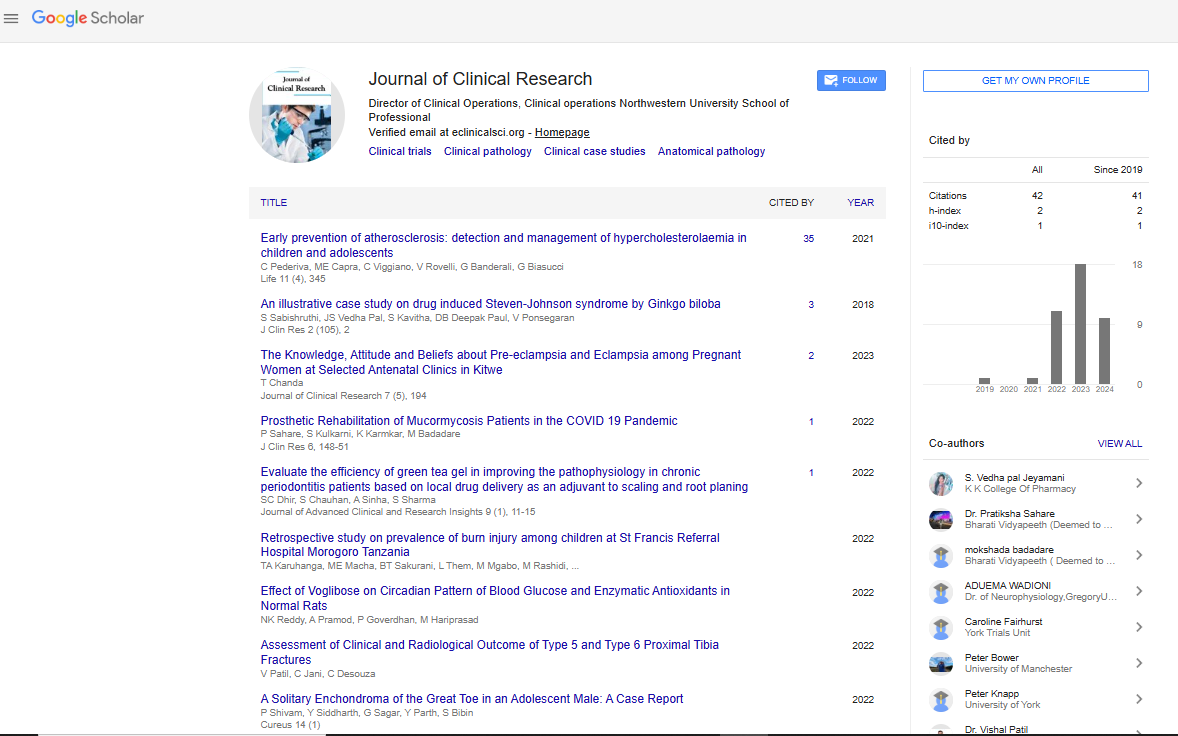
Journal of Clinical Research received 11 citations as per Google Scholar report