Short Communication - (2025) Volume 9, Issue 4
Received: 02-Aug-2025, Manuscript No. jcre-26-187210;
Editor assigned: 04-Aug-2025, Pre QC No. P-187210;
Reviewed: 18-Aug-2025, QC No. Q-187210;
Revised: 25-Aug-2025, Manuscript No. R-187210;
Published:
01-Sep-2025
, DOI: 10.37421/2795-6172.2025.9.313
Citation: Costa, Valeria. ”Cbt: Effective, Lasting Treatment for Generalized Anxiety.” J Clin Res 09 (2025):313.
Copyright: © 2025 Costa V. This is an open-access article distributed under the terms of the Creative Commons Attribution License, which permits unrestricted use, distribution and reproduction in any medium, provided the original author and source are credited.
Generalized Anxiety Disorder (GAD) is a prevalent mental health condition characterized by excessive worry and apprehension. Cognitive Behavioral Therapy (CBT) has emerged as a leading evidence-based treatment for GAD, demonstrating significant efficacy in reducing symptom severity and improving overall functioning. This randomized controlled trial investigated the efficacy of Cognitive Behavioral Therapy (CBT) for Generalized Anxiety Disorder (GAD). The study demonstrated that CBT significantly reduced symptom severity and improved functional outcomes in participants compared to a control group. Key findings highlight CBT as a potent therapeutic intervention for GAD, offering sustained benefits [1].
Exploring the neural correlates of CBT for GAD, this research utilized neuroimaging techniques to identify brain regions modulated by the therapy. Findings suggest that CBT impacts specific prefrontal and limbic areas, leading to altered emotional regulation and threat processing, which underpin symptom reduction in GAD [2].
This study assessed the long-term effectiveness of CBT in individuals with GAD. Results indicated that the gains achieved during therapy were maintained at a 12-month follow-up, with continued improvements in anxiety symptoms and quality of life, reinforcing CBT as a durable treatment option for GAD [3].
A meta-analysis was conducted to synthesize findings from multiple randomized controlled trials of CBT for GAD. The pooled analysis confirmed a significant effect of CBT in reducing anxiety symptoms, generalized worry, and improving overall functioning across diverse patient populations. This provides strong evidence for CBT's effectiveness [4].
This trial examined the impact of therapist-delivered versus self-guided CBT for GAD. While both modalities showed benefits, therapist-delivered CBT resulted in greater symptom reduction and higher adherence rates, suggesting the importance of direct therapeutic support for optimal outcomes [5].
Investigating the role of cognitive restructuring in CBT for GAD, this study found that participants who showed greater improvement in cognitive distortions also experienced more significant reductions in anxiety symptoms. This underscores the critical function of modifying maladaptive thinking patterns [6].
This research explored the moderating effect of comorbid conditions on CBT outcomes in GAD. Findings suggest that while CBT is generally effective, the presence of certain comorbidities may influence treatment response, highlighting the need for tailored therapeutic approaches [7].
This study examined patient expectations and their relationship with CBT outcomes in GAD. Higher initial expectations for improvement were associated with greater symptom reduction, suggesting that addressing and fostering positive therapeutic expectations can enhance treatment efficacy [8].
A cost-effectiveness analysis of CBT for GAD was performed. The results indicated that CBT is a cost-effective intervention, providing significant clinical benefits at a reasonable cost, particularly when compared to pharmacotherapy or no treatment [9].
This trial explored the addition of mindfulness-based techniques to standard CBT for GAD. Preliminary findings suggest that integrating mindfulness may enhance treatment outcomes, particularly in reducing rumination and increasing present-moment awareness, although further research is needed [10].
Cognitive Behavioral Therapy (CBT) has been rigorously evaluated as a primary treatment modality for Generalized Anxiety Disorder (GAD). Numerous studies have affirmed its potent capacity to alleviate the core symptoms of GAD, including persistent worry, restlessness, and somatic complaints. This randomized controlled trial investigated the efficacy of Cognitive Behavioral Therapy (CBT) for Generalized Anxiety Disorder (GAD). The study demonstrated that CBT significantly reduced symptom severity and improved functional outcomes in participants compared to a control group. Key findings highlight CBT as a potent therapeutic intervention for GAD, offering sustained benefits [1].
Exploring the neural correlates of CBT for GAD, this research utilized neuroimaging techniques to identify brain regions modulated by the therapy. Findings suggest that CBT impacts specific prefrontal and limbic areas, leading to altered emotional regulation and threat processing, which underpin symptom reduction in GAD [2].
This study assessed the long-term effectiveness of CBT in individuals with GAD. Results indicated that the gains achieved during therapy were maintained at a 12-month follow-up, with continued improvements in anxiety symptoms and quality of life, reinforcing CBT as a durable treatment option for GAD [3].
A meta-analysis was conducted to synthesize findings from multiple randomized controlled trials of CBT for GAD. The pooled analysis confirmed a significant effect of CBT in reducing anxiety symptoms, generalized worry, and improving overall functioning across diverse patient populations. This provides strong evidence for CBT's effectiveness [4].
This trial examined the impact of therapist-delivered versus self-guided CBT for GAD. While both modalities showed benefits, therapist-delivered CBT resulted in greater symptom reduction and higher adherence rates, suggesting the importance of direct therapeutic support for optimal outcomes [5].
Investigating the role of cognitive restructuring in CBT for GAD, this study found that participants who showed greater improvement in cognitive distortions also experienced more significant reductions in anxiety symptoms. This underscores the critical function of modifying maladaptive thinking patterns [6].
This research explored the moderating effect of comorbid conditions on CBT outcomes in GAD. Findings suggest that while CBT is generally effective, the presence of certain comorbidities may influence treatment response, highlighting the need for tailored therapeutic approaches [7].
This study examined patient expectations and their relationship with CBT outcomes in GAD. Higher initial expectations for improvement were associated with greater symptom reduction, suggesting that addressing and fostering positive therapeutic expectations can enhance treatment efficacy [8].
A cost-effectiveness analysis of CBT for GAD was performed. The results indicated that CBT is a cost-effective intervention, providing significant clinical benefits at a reasonable cost, particularly when compared to pharmacotherapy or no treatment [9].
This trial explored the addition of mindfulness-based techniques to standard CBT for GAD. Preliminary findings suggest that integrating mindfulness may enhance treatment outcomes, particularly in reducing rumination and increasing present-moment awareness, although further research is needed [10].
Cognitive Behavioral Therapy (CBT) is a highly effective treatment for Generalized Anxiety Disorder (GAD), significantly reducing symptom severity and improving functional outcomes. Research has elucidated the neural mechanisms behind CBT's efficacy, showing its impact on specific brain regions involved in emotional regulation. The benefits of CBT have been observed to be long-lasting, with gains maintained for at least 12 months. Meta-analyses confirm its robust effectiveness across numerous studies. Both therapist-delivered and self-guided CBT show promise, though therapist support appears to enhance outcomes. Cognitive restructuring is identified as a key component driving symptom reduction. Comorbid conditions may influence treatment response, necessitating personalized approaches. Patient expectations play a role in treatment success. CBT is also recognized as a cost-effective intervention. Integrating mindfulness-based techniques may offer additional benefits. Overall, CBT stands as a well-supported and valuable therapeutic option for GAD.
None
None
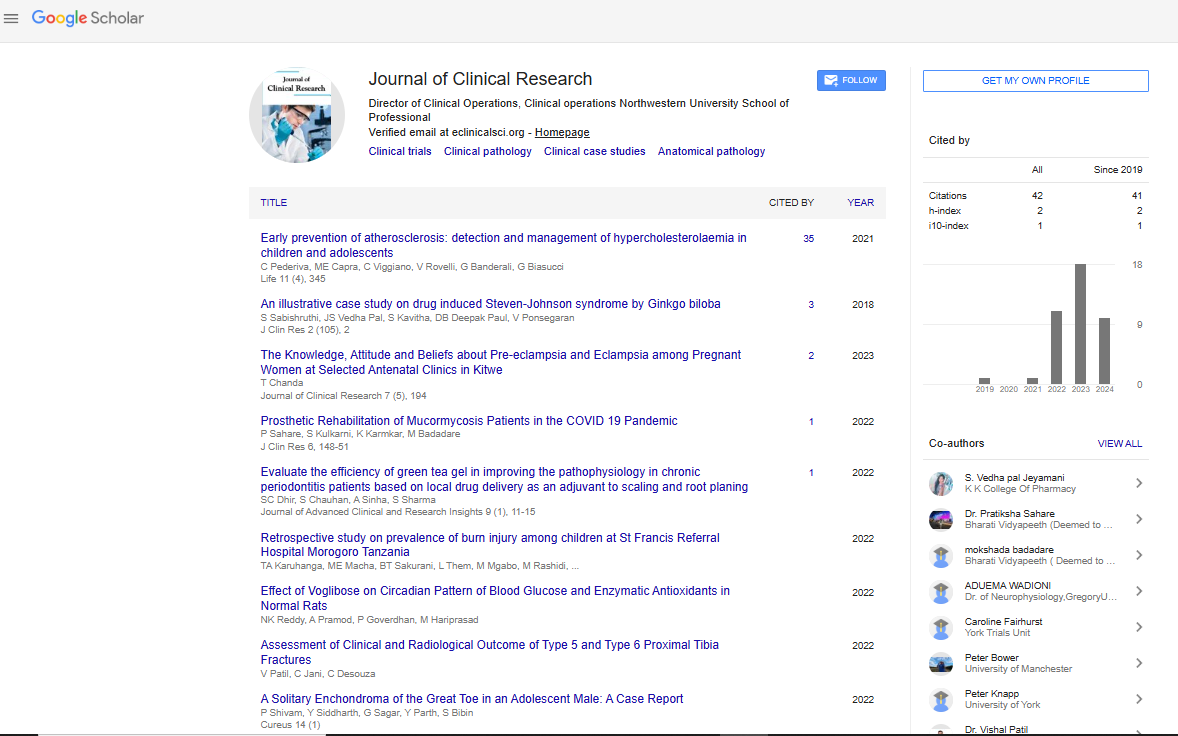
Journal of Clinical Research received 11 citations as per Google Scholar report