Short Communication - (2025) Volume 9, Issue 5
Received: 01-Oct-2025, Manuscript No. jmp-26-190048;
Editor assigned: 03-Oct-2025, Pre QC No. P-190048;
Reviewed: 17-Oct-2025, QC No. Q-190048;
Revised: 22-Oct-2025, Manuscript No. R-190048;
Published:
29-Oct-2025
, DOI: 10.37421/2684-4931.2025.9.273
Citation: Ionescu, Elena. ”Candida Morphogenesis: Virulence, Regulation, and Therapy.” J Microb Path 09 (2025):273.
Copyright: © 2025 Ionescu E. This is an open-access article distributed under the terms of the Creative Commons Attribution License, which permits unrestricted use, distribution and reproduction in any medium, provided the original author and source are credited.
The morphological plasticity of Candida albicans, particularly its ability to transition between yeast and hyphal forms, is intrinsically linked to its virulence and pathogenicity. This remarkable adaptability allows the fungus to thrive in diverse host environments, effectively evade immune surveillance, and facilitate tissue invasion. The hyphal morphology is strongly associated with enhanced adherence to host cells, a critical step for colonization, and greater capacity for penetrating host tissues, contributing significantly to the establishment of infection. Furthermore, the hyphal state often confers increased resistance to phagocytosis by immune cells, enabling the pathogen to survive and proliferate within the host. Key regulators orchestrating this morphological switch, such as the transcription factors Efg1 and Brg1, along with crucial signaling pathways like the cAMP-PKA and MAPK cascades, are fundamental to initiating and sustaining hyphal development, thereby playing pivotal roles in pathogenesis. Understanding these intricate molecular mechanisms is therefore vital for the development of targeted and effective antifungal therapies aimed at disrupting the virulence of Candida albicans. The transition of Candida albicans from its yeast form to hyphae is a complex biological process meticulously driven by a confluence of environmental cues and sophisticated intracellular signaling cascades. This inherent dimorphism stands as a cardinal feature of its virulence, equipping the fungus with the necessary tools for invasion and subsequent dissemination throughout the host organism. Extensive research has progressively elucidated the specific roles played by critical transcription factors and signaling pathways, including the TUP1/NRG1 locus and the MAP kinase pathway, in the precise control of this morphological switch, thereby presenting promising avenues for novel therapeutic interventions. Biofilm formation represents another significant virulence factor associated with Candida albicans, playing a crucial role in the development of persistent infections and contributing to the emergence of antifungal resistance. The transition to a hyphal growth pattern is absolutely critical for the structured development of these protective communities, involving complex regulatory networks that govern gene expression and intercellular communication, ultimately leading to the formation of a robust extracellular matrix. Comprehending the underlying molecular basis of biofilm formation, with a particular emphasis on the role of hyphal development, is absolutely essential for devising effective strategies to combat these particularly challenging and persistent infections. The phenotypic plasticity exhibited by Candida albicans, most notably its capacity to readily switch between yeast and hyphal developmental forms, is a primary determinant of its overall pathogenicity. This dynamic morphological transition is meticulously controlled by an intricate network of signaling pathways and transcription factors that are exquisitely sensitive to environmental cues encountered within the host milieu. The hyphal form is particularly instrumental in facilitating crucial processes such as adhesion to host surfaces, invasion into host tissues, and evasion of host immune responses, all of which significantly contribute to the progression of candidiasis. Recent scientific advancements have provided significant insights into the specific molecular mechanisms that govern this critical switch and its profound impact on the fungus's virulence. The regulation of morphogenesis in Candida albicans is a highly dynamic biological process that is significantly influenced by a variety of environmental factors, including changes in temperature, pH levels, and the availability of essential nutrients. This switch towards hyphal growth is directly implicated in the pathogen's capacity to establish invasive infections by effectively facilitating penetration of host tissues and evading host immune defenses. Key signaling pathways, notably the cyclic AMP-protein kinase A (cAMP-PKA) and the mitogen-activated protein kinase (MAPK) pathways, play pivotal roles in mediating this essential transition, and their disruption can lead to a marked attenuation of virulence, underscoring their significant therapeutic potential. The inherent morphological plasticity of Candida albicans, characterized by its facile ability to interconvert between yeast and hyphal growth forms, represents a critical attribute underpinning its remarkable virulence. Hyphal development is indispensable for enabling the fungus to efficiently adhere to host cells, successfully invade host tissues, and mount effective resistance against host immune defenses, thereby contributing substantially to the overall pathogenesis of candidiasis. A thorough understanding of the genetic and molecular mechanisms that govern this crucial developmental switch, including the significant roles played by key transcription factors such as Efg1, is paramount for the development of potent and effective antifungal strategies. Targeting these critical regulatory pathways holds the promise of disarming the pathogen's virulence factors. The switch to filamentous growth in Candida albicans serves as a principal virulence mechanism, empowering the fungus to effectively overcome host defenses and establish persistent infections. This morphological transition is meticulously orchestrated by a sophisticated regulatory network that exhibits remarkable responsiveness to environmental cues present within the host environment. The hyphal form, in particular, demonstrates a pronounced aptitude for adhering to host tissues, invading host cells, and exhibiting robust resistance to phagocytic clearance by immune cells. Ongoing advancements in the comprehension of the signaling pathways and transcription factors that meticulously control hyphal development are continuously providing novel targets for the development of innovative therapeutic interventions. The dimorphic transition exhibited by Candida albicans, encompassing its transformation from a yeast morphology to a hyphal form, constitutes a central and critical process in its overall pathogenesis. Hyphal formation is absolutely essential for a range of virulence-associated activities, including robust biofilm development, effective adherence to host surfaces, and the successful invasion of host tissues. This morphological switch is meticulously regulated by intricate signaling pathways, prominently featuring the Ras1-cAMP-PKA pathway and the MAPK pathway, and is further influenced by a diverse array of environmental signals. A comprehensive understanding of these complex regulatory networks is therefore crucial for the development of targeted therapies designed to effectively disrupt the virulence mechanisms of this opportunistic pathogen. The pronounced ability of Candida albicans to dynamically switch between its yeast and hyphal morphological states is a fundamental and indispensable aspect of its pathogenic potential. Hyphal development is critically important for enabling the fungus to effectively invade host tissues, establish resilient biofilms, and adeptly evade host immune responses. This intricate transition is under the stringent regulation of a complex network of signaling pathways, including the well-characterized MAPK pathway and the TOR signaling pathway. Consequently, targeting these specific pathways represents a highly promising and attractive strategy for the development of novel antifungal therapies aimed at disarming the pathogen's virulence without directly impacting the host.
Morphological switching in Candida albicans, specifically the transition between its yeast and hyphal forms, is intrinsically linked to its virulence and pathogenicity. This remarkable plasticity allows the fungus to adapt to diverse host environments, effectively evade immune responses, and facilitate tissue invasion. The hyphal morphology is strongly associated with increased adherence to host cells, a critical step for colonization, and enhanced tissue invasion capabilities, both of which contribute significantly to pathogenesis. Furthermore, the hyphal state often confers increased resistance to phagocytosis by immune cells, enabling the pathogen to survive and proliferate within the host. Key regulators orchestrating this morphological switch, such as the transcription factors Efg1 and Brg1, along with crucial signaling pathways like the cAMP-PKA and MAPK cascades, are fundamental to initiating and sustaining hyphal development, thereby playing pivotal roles in pathogenesis. Understanding these intricate molecular mechanisms is therefore vital for the development of targeted and effective antifungal therapies aimed at disrupting the virulence of Candida albicans. The transition of Candida albicans from its yeast form to hyphae is a complex biological process meticulously driven by a confluence of environmental cues and sophisticated intracellular signaling cascades. This inherent dimorphism stands as a cardinal feature of its virulence, equipping the fungus with the necessary tools for invasion and subsequent dissemination throughout the host organism. Extensive research has progressively elucidated the specific roles played by critical transcription factors and signaling pathways, including the TUP1/NRG1 locus and the MAP kinase pathway, in the precise control of this morphological switch, thereby presenting promising avenues for novel therapeutic interventions. Biofilm formation represents another significant virulence factor associated with Candida albicans, playing a crucial role in the development of persistent infections and contributing to the emergence of antifungal resistance. The transition to a hyphal growth pattern is absolutely critical for the structured development of these protective communities, involving complex regulatory networks that govern gene expression and intercellular communication, ultimately leading to the formation of a robust extracellular matrix. Comprehending the underlying molecular basis of biofilm formation, with a particular emphasis on the role of hyphal development, is absolutely essential for devising effective strategies to combat these particularly challenging and persistent infections. The phenotypic plasticity exhibited by Candida albicans, most notably its capacity to readily switch between yeast and hyphal developmental forms, is a primary determinant of its overall pathogenicity. This dynamic morphological transition is meticulously controlled by an intricate network of signaling pathways and transcription factors that are exquisitely sensitive to environmental cues encountered within the host milieu. The hyphal form is particularly instrumental in facilitating crucial processes such as adhesion to host surfaces, invasion into host tissues, and evasion of host immune responses, all of which significantly contribute to the progression of candidiasis. Recent scientific advancements have provided significant insights into the specific molecular mechanisms that govern this critical switch and its profound impact on the fungus's virulence. The regulation of morphogenesis in Candida albicans is a highly dynamic biological process that is significantly influenced by a variety of environmental factors, including changes in temperature, pH levels, and the availability of essential nutrients. This switch towards hyphal growth is directly implicated in the pathogen's capacity to establish invasive infections by effectively facilitating penetration of host tissues and evading host immune defenses. Key signaling pathways, notably the cyclic AMP-protein kinase A (cAMP-PKA) and the mitogen-activated protein kinase (MAPK) pathways, play pivotal roles in mediating this essential transition, and their disruption can lead to a marked attenuation of virulence, underscoring their significant therapeutic potential. The inherent morphological plasticity of Candida albicans, characterized by its facile ability to interconvert between yeast and hyphal growth forms, represents a critical attribute underpinning its remarkable virulence. Hyphal development is indispensable for enabling the fungus to efficiently adhere to host cells, successfully invade host tissues, and mount effective resistance against host immune defenses, thereby contributing substantially to the overall pathogenesis of candidiasis. A thorough understanding of the genetic and molecular mechanisms that govern this crucial developmental switch, including the significant roles played by key transcription factors such as Efg1, is paramount for the development of potent and effective antifungal strategies. Targeting these critical regulatory pathways holds the promise of disarming the pathogen's virulence factors. The switch to filamentous growth in Candida albicans serves as a principal virulence mechanism, empowering the fungus to effectively overcome host defenses and establish persistent infections. This morphological transition is meticulously orchestrated by a sophisticated regulatory network that exhibits remarkable responsiveness to environmental cues present within the host environment. The hyphal form, in particular, demonstrates a pronounced aptitude for adhering to host tissues, invading host cells, and exhibiting robust resistance to phagocytic clearance by immune cells. Ongoing advancements in the comprehension of the signaling pathways and transcription factors that meticulously control hyphal development are continuously providing novel targets for the development of innovative therapeutic interventions. The dimorphic transition exhibited by Candida albicans, encompassing its transformation from a yeast morphology to a hyphal form, constitutes a central and critical process in its overall pathogenesis. Hyphal formation is absolutely essential for a range of virulence-associated activities, including robust biofilm development, effective adherence to host surfaces, and the successful invasion of host tissues. This morphological switch is meticulously regulated by intricate signaling pathways, prominently featuring the Ras1-cAMP-PKA pathway and the MAPK pathway, and is further influenced by a diverse array of environmental signals. A comprehensive understanding of these complex regulatory networks is therefore crucial for the development of targeted therapies designed to effectively disrupt the virulence mechanisms of this opportunistic pathogen. The pronounced ability of Candida albicans to dynamically switch between its yeast and hyphal morphological states is a fundamental and indispensable aspect of its pathogenic potential. Hyphal development is critically important for enabling the fungus to effectively invade host tissues, establish resilient biofilms, and adeptly evade host immune responses. This intricate transition is under the stringent regulation of a complex network of signaling pathways, including the well-characterized MAPK pathway and the TOR signaling pathway. Consequently, targeting these specific pathways represents a highly promising and attractive strategy for the development of novel antifungal therapies aimed at disarming the pathogen's virulence without directly impacting the host.
Candida albicans exhibits morphological plasticity, transitioning between yeast and hyphal forms, which is directly linked to its virulence. This dimorphism enables adaptation to host environments, immune evasion, and tissue invasion. Key regulators like Efg1 and Brg1, and signaling pathways such as cAMP-PKA and MAPK, control this switch. The hyphal form enhances adherence, invasion, and resistance to phagocytosis, contributing to pathogenesis. Biofilm formation, crucial for persistent infections and antifungal resistance, also relies on hyphal development. Understanding these regulatory mechanisms is essential for developing targeted antifungal therapies. The pathways controlling hyphal morphogenesis present promising targets for disarming the pathogen's virulence.
None
None
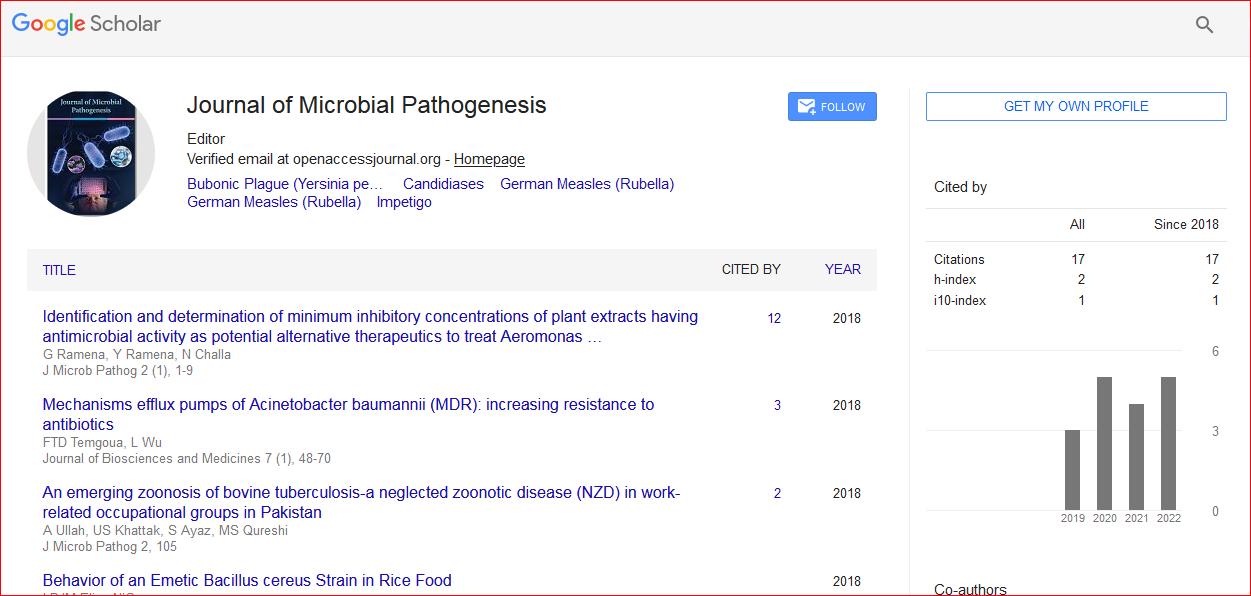
Journal of Microbial Pathogenesis received 17 citations as per Google Scholar report