Opinion - (2025) Volume 10, Issue 5
Received: 01-Oct-2025, Manuscript No. jcct-26-183267;
Editor assigned: 03-Oct-2025, Pre QC No. P-183267;
Reviewed: 17-Oct-2025, QC No. Q-183267;
Revised: 22-Oct-2026, Manuscript No. R-183267;
Published:
29-Oct-2025
, DOI: 10.37421/2577-0535.2025.9.330
Citation: Haddad, Yara. ”Bridging Gaps in Cancer Trial Diversity and Equity.” J Cancer Clin Trials 10 (2025):330.
Copyright: © 2025 Haddad Y. This is an open-access article distributed under the terms of the Creative Commons Attribution License, which permits unrestricted use, distribution and reproduction in any medium, provided the original author and source are credited.
Addressing health disparities in cancer trial enrollment is critical for ensuring that research findings are applicable to the entire patient population. Diverse participation guarantees that trial results are generalizable, which is essential for developing more effective and equitable cancer treatments that benefit everyone. This necessitates a concerted effort to actively engage underrepresented groups and to systematically dismantle the various barriers that hinder their access to clinical trials. Such efforts are fundamental to achieving true equity in cancer care and research [1].
Understanding and effectively overcoming socioeconomic barriers represents a key strategy for enhancing diversity in cancer trial participation. Numerous factors, including the availability of transportation, reliable childcare, and the potential for lost wages, can collectively prevent individuals from enrolling or remaining in clinical trials. Therefore, the development and implementation of innovative approaches are urgently needed to mitigate these significant financial and logistical challenges that disproportionately affect certain populations [2].
Geographic location has emerged as a significant determinant of access to cancer clinical trials, particularly for individuals residing in rural or underserved areas. These patients often encounter greater logistical hurdles in reaching trial sites, which are frequently concentrated in urban centers. Bridging this accessibility gap requires exploring and implementing decentralized trial models and leveraging telemedicine technologies to bring research closer to patients, irrespective of their location [3].
A pervasive barrier to cancer trial participation for certain minority groups is the mistrust within the healthcare system. This mistrust is often deeply rooted in historical injustices and discriminatory practices that have eroded confidence in medical institutions. Rebuilding this trust is a paramount undertaking that can be achieved through sustained community engagement efforts and transparent, consistent communication about the purpose and conduct of clinical research [4].
Language barriers and low health literacy pose substantial impediments to understanding complex clinical trial protocols and the intricacies of informed consent. This is particularly relevant for non-English speakers and individuals with limited educational backgrounds. To address this, it is essential to provide trial-related information and materials in multiple languages and at literacy levels that are accessible and comprehensible to all potential participants [5].
Cultural beliefs and practices surrounding illness, health, and treatment significantly influence an individual's willingness to participate in clinical trials. Recognizing and respecting these diverse cultural perspectives is crucial for fostering greater trust and encouraging participation. Engaging with community leaders and carefully tailoring recruitment strategies to be culturally sensitive are vital steps in this process [6].
The persistent underrepresentation of diverse populations in clinical trials has a direct and detrimental impact on the reliability and applicability of research data. This can lead to the development of treatments that are less effective or exhibit different side effect profiles in these underrepresented groups. This situation underscores the profound ethical imperative for conducting inclusive research that accurately reflects the heterogeneity of the patient population [7].
Patient navigation programs have demonstrated considerable promise in their ability to improve both the recruitment and retention of diverse participants in cancer trials. These programs provide invaluable personalized support to patients throughout the trial process, effectively addressing the logistical and informational barriers that often deter participation. Their role in facilitating access is increasingly recognized [8].
Engaging communities directly in the design and implementation phases of clinical trials is a powerful strategy for cultivating greater trust and ensuring the relevance of research to the populations it aims to serve. The utilization of community advisory boards and the adoption of participatory research models are valuable tools that can help ensure that clinical trials are designed and conducted in ways that genuinely meet the needs of diverse populations [9].
The role of healthcare providers in educating patients about the benefits and processes of clinical trials, as well as in addressing their concerns, is of paramount importance. Physicians and nurses are uniquely positioned to play a significant role in promoting trial awareness, facilitating informed decision-making, and ultimately encouraging the participation of diverse patient groups in vital cancer research [10].
Addressing the critical issue of health disparities in cancer trial enrollment is fundamental to ensuring that the scientific advancements derived from clinical research are generalizable and beneficial to the entire patient population. Ensuring diverse participation guarantees that the results obtained from clinical trials accurately reflect the broader patient demographic, thereby leading to the development of more effective, targeted, and equitable cancer treatments that benefit everyone. This endeavor requires a proactive and intentional approach to actively engage underrepresented groups and to systematically identify and dismantle the multifaceted barriers that impede their access to these vital research opportunities. Such comprehensive efforts are indispensable for achieving true equity in cancer care and advancing the frontiers of cancer research [1].
A deep understanding of and effective strategies for overcoming socioeconomic barriers are absolutely key to significantly improving diversity in cancer trial participation. A complex interplay of factors, including the availability of affordable transportation, reliable and accessible childcare services, and the potential for lost wages due to time off work, can collectively and profoundly prevent individuals from enrolling or remaining actively involved in clinical trials. Consequently, the urgent need for the development and rigorous implementation of innovative, patient-centered approaches is paramount to effectively mitigate these substantial financial and logistical challenges that disproportionately affect vulnerable and underserved populations [2].
Geographic location has been clearly identified as a significant determinant that profoundly impacts an individual's access to cancer clinical trials. Specifically, patients who reside in rural or otherwise underserved areas often encounter considerably greater logistical hurdles and inconveniences in reaching trial sites, which are typically concentrated in major urban centers. To effectively bridge this pervasive accessibility gap, it is imperative to explore, develop, and implement innovative decentralized trial models and to strategically leverage the capabilities of telemedicine technologies. These approaches can help bring vital research opportunities closer to patients, irrespective of their geographic location [3].
A substantial and persistent barrier that can significantly hinder cancer trial participation for certain minority groups is the prevalent mistrust directed towards the healthcare system. This deeply entrenched mistrust is frequently and understandably rooted in historical injustices, systemic discrimination, and past exploitative practices that have regrettably eroded confidence in medical institutions and research endeavors. Rebuilding this essential trust is an undertaking of paramount importance that can be effectively achieved through sustained, meaningful community engagement initiatives and through transparent, consistent, and honest communication about the purpose, processes, and ethical conduct of clinical research [4].
Language barriers and the pervasive issue of low health literacy represent substantial impediments that can significantly hinder a patient's ability to fully comprehend complex clinical trial protocols and the critical nuances of informed consent. This challenge is particularly acute for individuals who are non-English speakers and for those with limited educational backgrounds or prior exposure to medical terminology. To effectively address this, it is absolutely essential to provide all trial-related information and educational materials in multiple languages and at various literacy levels that are easily accessible and comprehensible to all potential participants [5].
Cultural beliefs and deeply ingrained practices surrounding illness, health, and treatment decisions can profoundly influence an individual's willingness to consider and participate in clinical trials. It is therefore crucial to recognize and respectfully acknowledge these diverse cultural perspectives to foster greater trust and encourage broader participation. Engaging actively with respected community leaders and meticulously tailoring recruitment strategies to be culturally sensitive and appropriate are vital steps in this essential process [6].
The persistent and widespread underrepresentation of diverse populations in clinical trials has a direct, profound, and detrimental impact on the reliability, accuracy, and applicability of the research data generated. This underrepresentation can regrettably lead to the development and approval of treatments that are less effective or exhibit significantly different and potentially more severe side effect profiles in these underrepresented groups. This critical situation unequivocally underscores the profound ethical imperative for conducting truly inclusive research that accurately reflects the vast heterogeneity of the patient population it aims to serve [7].
Patient navigation programs have emerged as a highly promising intervention strategy for effectively improving both the recruitment and retention of diverse participants in cancer trials. These programs provide invaluable, personalized, and consistent support to patients throughout their entire journey within the trial process, thereby actively addressing the complex logistical and informational barriers that often deter participation. Their crucial role in facilitating equitable access to clinical research is increasingly being recognized and validated [8].
Actively engaging communities in a meaningful way throughout the design and implementation phases of clinical trials is a powerful and effective strategy for cultivating greater trust, fostering a sense of ownership, and ensuring the genuine relevance of research to the specific populations it aims to serve. The strategic utilization of community advisory boards and the consistent adoption of participatory research models are invaluable tools that can help ensure that clinical trials are designed, conducted, and disseminated in ways that genuinely meet the unique needs and priorities of diverse populations [9].
The pivotal role of healthcare providers in educating patients about the potential benefits, risks, and processes of clinical trials, as well as in actively addressing their specific concerns and questions, is of paramount importance. Physicians and nurses are uniquely positioned within the patient care continuum to play a significant role in promoting trial awareness, facilitating informed decision-making, and ultimately encouraging the participation of diverse patient groups in vital cancer research endeavors [10].
Cancer clinical trials face significant challenges in achieving diverse participation, impacting the generalizability and equity of cancer treatments. Key barriers include racial and ethnic disparities, socioeconomic factors such as transportation and childcare, geographic limitations for rural populations, historical mistrust in healthcare systems, language barriers, low health literacy, and cultural beliefs. Underrepresentation leads to biased data and potentially less effective treatments for certain groups. Strategies to improve diversity involve actively engaging underrepresented communities, addressing financial and logistical challenges, utilizing decentralized trial models and telemedicine, building trust through transparency, providing information in multiple languages and at appropriate literacy levels, and tailoring recruitment to cultural sensitivities. Patient navigation programs and community engagement in trial design are crucial for support and relevance. Healthcare providers play a vital role in patient education and informed decision-making.
None
None
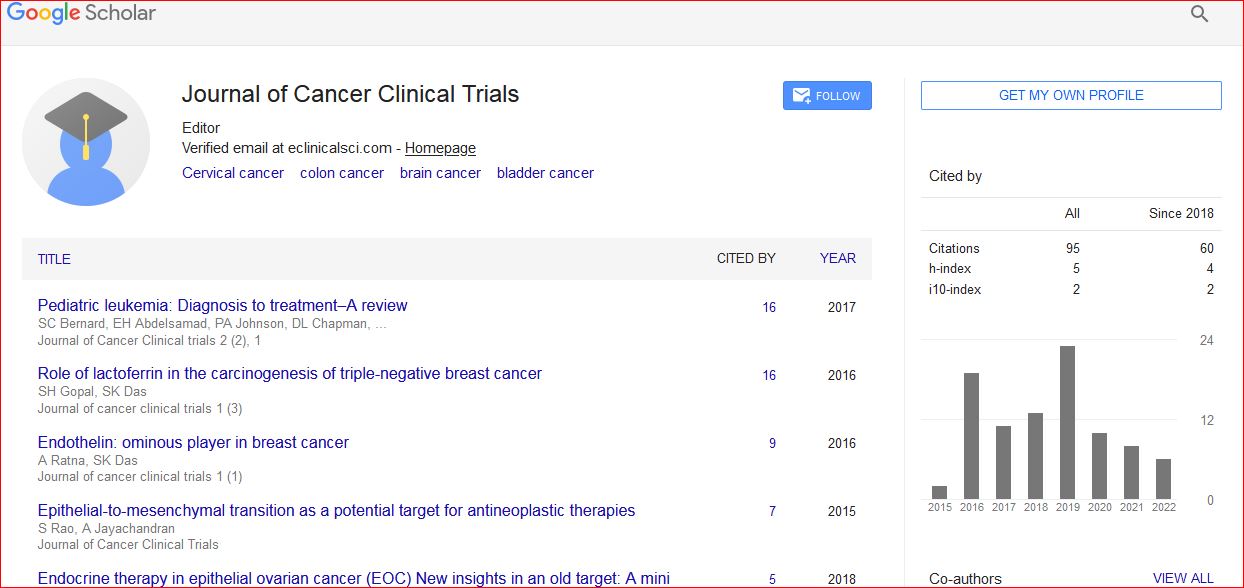
Journal of Cancer Clinical Trials received 95 citations as per Google Scholar report