Brief Report - (2025) Volume 9, Issue 3
Received: 01-May-2025, Manuscript No. hps-26-184451;
Editor assigned: 05-May-2025, Pre QC No. P-184451;
Reviewed: 19-May-2025, QC No. Q-184451;
Revised: 22-May-2025, Manuscript No. R-184451;
Published:
29-May-2025
, DOI: 10.37421/2573-4563.2025.9.343
Citation: Romano, Luca B.. ”Biomarkers and Omics for NAFLD/NASH Diagnosis.” J Hepatol Pancreat Sci 09 (2025):343.
Copyright: © 2025 Romano B. Luca This is an open-access article distributed under the terms of the Creative Commons Attribution License, which permits unrestricted use, distribution and reproduction in any medium, provided the original author and source are credited.
Emerging biomarkers are poised to significantly enhance the diagnosis, prognosis, and therapeutic monitoring of Non-Alcoholic Fatty Liver Disease (NAFLD) and its more aggressive form, Non-Alcoholic Steatohepatitis (NASH). The current reliance on invasive liver biopsy underscores a critical need for less invasive, more accurate, and scalable diagnostic alternatives, a gap that ongoing research is actively addressing [1].
This field is characterized by rapid evolution, driven by a deepening understanding of the complex pathogenesis of NAFLD/NASH and the subsequent discovery of novel molecular targets. A primary focus is the identification of biomarkers capable of distinguishing between simple steatosis and NASH, predicting the progression of fibrosis, and assessing patient responses to emerging therapeutic interventions [2].
The comprehensive integration of multi-omic data, encompassing genomics, transcriptomics, proteomics, and metabolomics, alongside advanced imaging techniques, is deemed essential for the development of robust biomarker panels [10].
Novel circulating biomarkers are revolutionizing NASH diagnostics by accurately identifying patients with significant liver damage and fibrosis, thereby reducing the dependence on liver biopsy. Researchers are exploring a broad spectrum of molecules, including microRNAs, extracellular vesicles, and specific proteins, which serve as indicators of the underlying inflammatory and fibrotic processes in NASH [2].
The development of multiplex biomarker panels shows particular promise for improving diagnostic accuracy and predicting disease progression [2].
Successful clinical implementation of these biomarkers necessitates rigorous validation in large, diverse patient cohorts and the standardization of assay methodologies [2].
This shift towards non-invasive biomarkers is paramount for improving the clinical management of NASH and facilitating the development of effective treatments [2].
MicroRNAs (miRNAs) have emerged as a highly promising class of biomarkers for NASH due to their inherent stability in circulation and their crucial role in regulating cellular pathways implicated in liver disease pathogenesis. Specific miRNA profiles have demonstrated associations with various stages of NAFLD, ranging from simple steatosis to advanced fibrosis and NASH itself. Their potential utility extends to predicting treatment response and the recurrence of disease following liver transplantation [3].
A key challenge remains the identification of robust and reproducible miRNA signatures that can be reliably translated into clinical practice. Ongoing research efforts are concentrated on developing highly sensitive and specific miRNA-based assays and validating their performance through prospective studies [3].
Extracellular vesicles (EVs), including exosomes, are increasingly recognized as invaluable sources of biomarkers for a variety of diseases, including NASH. These vesicles encapsulate a diverse array of biomolecules, such as proteins, lipids, and nucleic acids, originating from their parent cells. This cargo composition reflects the pathophysiological state of the liver, making EVs potent diagnostic indicators. Current research is focused on exploring the potential of EV-derived components, like specific proteins and non-coding RNAs, as non-invasive markers of NASH activity, fibrosis, and therapeutic efficacy [4].
The development and standardization of methods for EV isolation and characterization are critical prerequisites for their successful clinical translation [4].
The fibrotic component of NASH is a critical determinant of patient prognosis and a primary target for therapeutic intervention. The development of novel biomarkers aimed at accurately assessing liver fibrosis non-invasively is a significant area of research. This includes the investigation of circulating biomarkers such as hyaluronic acid, TIMP-1, and procollagen-III N-terminal peptide, as well as composite scores derived from routine blood tests. Advanced imaging modalities, including transient elastography and magnetic resonance elastography, are also playing an increasingly vital role in fibrosis assessment [5].
Identifying biomarkers that can reliably differentiate between various stages of fibrosis is essential for effective patient management and for evaluating the efficacy of antifibrotic therapies [5].
Given that metabolic dysregulation is inherent to NAFLD/NASH, metabolomics offers a powerful approach for discovering diagnostic and prognostic biomarkers. Alterations in lipid metabolism, amino acid profiles, and bile acid composition are frequently observed in patients with NASH. Identified metabolites can serve as valuable indicators of disease severity, insulin resistance, and systemic inflammation. The integration of metabolomic data with other 'omic' datasets holds significant potential for unraveling intricate metabolic pathways and identifying novel therapeutic targets. Standardization of metabolomic profiling and rigorous validation in large patient cohorts are essential steps for their eventual clinical implementation [6].
Proteomics provides a high-throughput methodology for identifying proteins that are differentially expressed in NAFLD and NASH, thereby offering critical insights into disease mechanisms and potential biomarker candidates. Changes in the abundance of specific liver proteins, as well as secreted proteins found in serum, can signify inflammation, oxidative stress, and the process of fibrogenesis. The development of sensitive and specific proteomic assays is crucial for their successful clinical application. Furthermore, the integration of proteomic data with other omics technologies promises a more holistic understanding of NASH pathogenesis and the identification of novel therapeutic avenues [7].
The rapid advancement of novel therapeutic agents for NASH necessitates the availability of reliable biomarkers for patient stratification in clinical trials and for monitoring treatment response. Biomarkers that can accurately reflect disease activity, fibrosis progression, and resolution are of utmost importance. This encompasses markers of inflammation, hepatocellular injury, and fibrogenesis. A combination of different biomarker types, including both imaging and biochemical markers, is likely to provide the most accurate assessment of treatment efficacy. However, a significant challenge remains in establishing clinically validated biomarker panels that can effectively guide therapeutic decisions [8].
Genetic predisposition significantly influences the pathogenesis of NAFLD and NASH. Investigating genetic variations associated with disease susceptibility and progression can lead to the identification of novel biomarkers and therapeutic targets. Genome-wide association studies (GWAS) have successfully identified several genes and single nucleotide polymorphisms (SNPs) linked to NAFLD. Although not yet routinely used as direct diagnostic biomarkers in clinical practice, genetic information can contribute to risk stratification and enhance our understanding of individual disease trajectories. Future research may involve the integration of genetic data with other biomarker types to facilitate a more personalized approach to patient care [9].
The integration of multi-omics data, including genomics, transcriptomics, proteomics, and metabolomics, in conjunction with advanced imaging and clinical data, is fundamental for the development of comprehensive biomarker panels for NAFLD/NASH. This systems biology approach facilitates a deeper comprehension of the intricate interactions underlying disease pathogenesis and can reveal novel, multi-faceted biomarkers. Challenges include the complex nature of data integration, standardization of methodologies, and validation of intricate panels in real-world clinical settings. Nevertheless, the potential for achieving enhanced diagnostic accuracy, improved prognostic prediction, and personalized treatment strategies renders this a highly promising area of research [10].
Emerging biomarkers are critically important for advancing the diagnosis, prognosis, and therapeutic management of Non-Alcoholic Fatty Liver Disease (NAFLD) and its more severe form, Non-Alcoholic Steatohepatitis (NASH). The current standard of care, which often involves invasive liver biopsy, highlights an urgent need for less invasive, more accurate, and scalable diagnostic alternatives. This research area is dynamic, fueled by a growing understanding of the complex mechanisms driving NAFLD/NASH and the subsequent identification of novel molecular targets. Key research priorities include discovering biomarkers that can differentiate simple steatosis from NASH, predict the progression of liver fibrosis, and evaluate the effectiveness of novel therapies. A comprehensive approach involving the integration of multi-omic data, such as genomics, transcriptomics, proteomics, and metabolomics, alongside advanced imaging techniques, is essential for developing robust biomarker panels [1].
The landscape of NASH diagnostics is undergoing a significant transformation due to novel circulating biomarkers that can accurately identify patients with substantial liver damage and fibrosis, thereby minimizing the need for liver biopsies. Researchers are investigating a wide array of molecules, including microRNAs, extracellular vesicles, and specific proteins, which reflect the inflammatory and fibrotic processes characteristic of NASH. The development of panels that combine multiple biomarkers is showing particular promise for enhancing diagnostic accuracy and improving the ability to predict disease progression. For these biomarkers to be successfully implemented clinically, robust validation in large, diverse patient cohorts and standardization of assay methodologies are crucial. This paradigm shift towards non-invasive biomarkers is vital for improving the clinical management of NASH and accelerating the development of effective treatments [2].
MicroRNAs (miRNAs) stand out as a promising class of biomarkers for NASH due to their stability in circulation and their regulatory roles in cellular pathways central to liver disease pathogenesis. Specific miRNA profiles have been linked to different stages of NAFLD, from simple steatosis to advanced fibrosis and NASH. Their potential applications extend to predicting treatment response and the recurrence of disease after liver transplantation. The primary challenge lies in identifying reliable and reproducible miRNA signatures that can be translated into clinical practice. Ongoing research is focused on developing highly sensitive and specific miRNA-based assays and validating their performance in prospective studies [3].
Extracellular vesicles (EVs), including exosomes, are increasingly recognized as valuable sources of biomarkers for various diseases, notably NASH. These vesicles encapsulate a variety of biomolecules, such as proteins, lipids, and nucleic acids, which originate from their parent cells, thereby reflecting the pathophysiological state of the liver. Research efforts are exploring the potential of EV-derived cargo, including specific proteins and non-coding RNAs, as non-invasive indicators of NASH activity, fibrosis, and therapeutic efficacy. The development of standardized methods for EV isolation and characterization is a critical step for their successful clinical translation [4].
The fibrotic component of NASH is a key factor influencing prognosis and a primary target for therapeutic intervention. Novel biomarkers are being developed to accurately assess liver fibrosis non-invasively. This category includes circulating biomarkers like hyaluronic acid, TIMP-1, and procollagen-III N-terminal peptide, as well as composite scores derived from blood tests. Advanced imaging techniques, such as transient elastography and magnetic resonance elastography, are also playing an increasingly important role in fibrosis assessment. The ability to reliably differentiate between different stages of fibrosis using these biomarkers is essential for effective patient management and for evaluating the efficacy of antifibrotic therapies [5].
Given the inherent metabolic dysregulation in NAFLD/NASH, metabolomics emerges as a powerful tool for discovering diagnostic and prognostic biomarkers. Alterations in lipid metabolism, amino acid profiles, and bile acid composition are frequently observed in patients with NASH. Identified metabolites can serve as indicators of disease severity, insulin resistance, and inflammation. The integration of metabolomic data with other 'omic' datasets holds the potential to elucidate complex metabolic pathways and identify novel therapeutic targets. Standardization of metabolomic profiling and validation in large cohorts are crucial for clinical implementation [6].
Proteomics offers a high-throughput approach to identify proteins that are differentially expressed in NAFLD and NASH, providing valuable insights into disease mechanisms and potential biomarker candidates. Changes in the abundance of liver proteins, as well as secreted proteins in serum, can indicate inflammation, oxidative stress, and fibrogenesis. The development of sensitive and specific proteomic assays is essential for their clinical application. Furthermore, integrating proteomics with other omics technologies can lead to a more comprehensive understanding of NASH pathogenesis and the identification of novel therapeutic targets [7].
The rapid development of novel therapeutic agents for NASH necessitates the availability of reliable biomarkers to stratify patients for clinical trials and to monitor treatment response effectively. Biomarkers that can accurately reflect disease activity, fibrosis progression, and resolution are of critical importance. This includes markers related to inflammation, hepatocellular injury, and fibrogenesis. Combining different types of biomarkers, such as imaging and biochemical markers, is likely to provide the most accurate assessment of treatment efficacy. The ongoing challenge lies in establishing clinically validated biomarker panels that can guide therapeutic decisions [8].
Genetic predisposition plays a significant role in the pathogenesis of NAFLD and NASH. Investigating genetic variations associated with disease susceptibility and progression can lead to the identification of novel biomarkers and therapeutic targets. Genome-wide association studies (GWAS) have identified several genes and single nucleotide polymorphisms (SNPs) associated with NAFLD. While not yet directly used as diagnostic biomarkers in routine clinical practice, genetic information can contribute to risk stratification and understanding individual disease trajectories. Future research may integrate genetic data with other biomarker types for a more personalized therapeutic approach [9].
The integration of multi-omics data (genomics, transcriptomics, proteomics, metabolomics) with advanced imaging and clinical data is fundamental for developing comprehensive biomarker panels for NAFLD/NASH. This systems biology approach allows for a deeper understanding of the complex interactions underlying disease pathogenesis and can reveal novel, multi-faceted biomarkers. Key challenges include data integration, standardization, and validation of complex panels in real-world clinical settings. However, the potential to achieve higher diagnostic accuracy, better prognostic prediction, and personalized treatment strategies makes this a highly promising area of research [10].
Non-Alcoholic Fatty Liver Disease (NAFLD) and Non-Alcoholic Steatohepatitis (NASH) are global health concerns requiring improved diagnostic and prognostic tools. Current methods often rely on invasive liver biopsies, driving research into less invasive alternatives. Emerging biomarkers, including circulating molecules like microRNAs and extracellular vesicles, are showing promise in identifying liver damage and fibrosis. Metabolomics and proteomics offer insights into disease mechanisms and potential indicators of severity. Genetic factors also play a role in disease susceptibility. The integration of multi-omic data with advanced imaging is seen as crucial for developing comprehensive biomarker panels. The ultimate goal is to enable earlier detection, more precise patient stratification for clinical trials, and personalized treatment strategies for NAFLD/NASH.
None
None
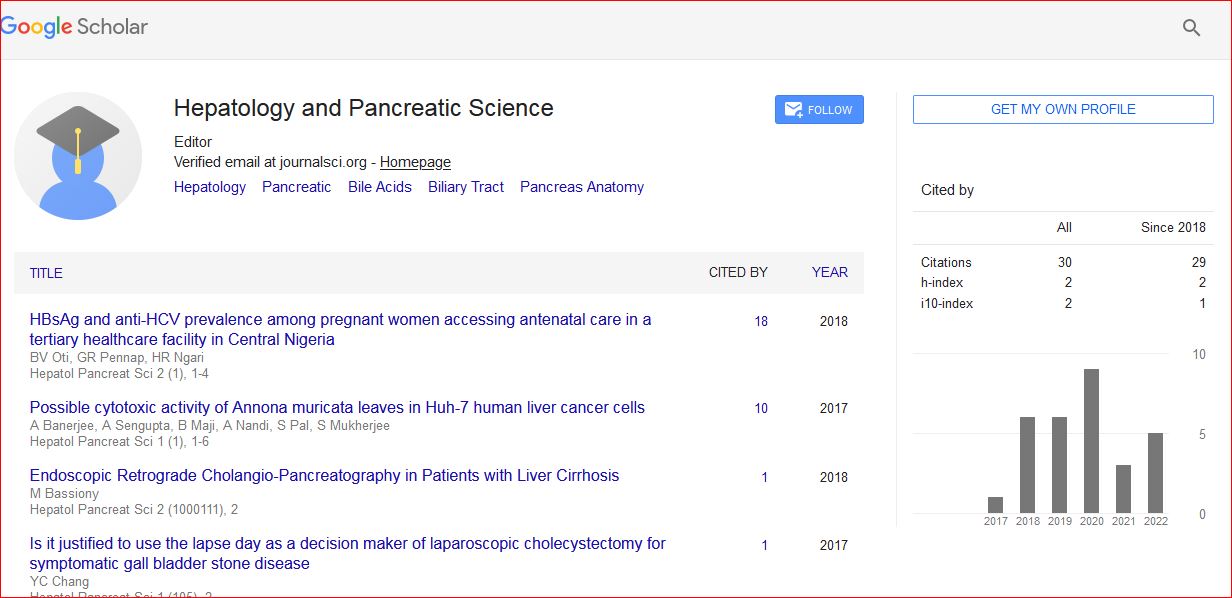
Hepatology and Pancreatic Science received 34 citations as per Google Scholar report