Perspective - (2025) Volume 10, Issue 4
Received: 02-Jun-2025, Manuscript No. jomp-26-185103;
Editor assigned: 04-Jun-2025, Pre QC No. P-185103;
Reviewed: 18-Jun-2025, QC No. Q-185103;
Revised: 22-Jun-2025, Manuscript No. Y-185103;
Published:
29-Jun-2025
, DOI: 10.37421/2576-3857.2025.10.320
Citation: Dupont, Nicolas. ”Bioinformatics Revolutionizes Sarcoma Research: Novel Targets.” J Oncol Med and Pract 10 (2025):320.
Copyright: © 2025 Dupont N. This is an open-access article distributed under the terms of the Creative Commons Attribution License, which permits unrestricted use, distribution and reproduction in any medium, provided the original author and source are credited.
Bioinformatic approaches are profoundly transforming the landscape of therapeutic target identification in sarcoma, leveraging the integration of diverse biological data to illuminate novel avenues for treatment. These sophisticated methods facilitate the in-depth analysis of genomic, transcriptomic, proteomic, and epigenomic profiles within sarcoma tumors, thereby enabling the precise pinpointing of driver mutations, aberrant signaling pathways, and intricate immune evasion mechanisms. By strategically identifying these molecular vulnerabilities, researchers are empowered to develop more precise and demonstrably effective targeted therapies and immunotherapies tailored for this complex and challenging group of cancers. Key insights emerging from these analyses include the identification of specific gene fusions, critical oncogenic mutations, and the characterization of immune cell infiltrates, all of which present exploitable opportunities for therapeutic intervention [1].
Genomic profiling of sarcomas, particularly through the application of next-generation sequencing (NGS), has been instrumental in revealing a rich landscape of recurrent genetic alterations that hold significant promise as therapeutic targets. This advanced sequencing technology allows for the identification of actionable mutations within key genes such as *TP53*, *NF1*, and *MDM2*, alongside recurrent gene fusions like *EWSR1-FLI1* characteristic of Ewing sarcoma and *SS18-SSX* observed in synovial sarcoma. The subsequent bioinformatic analysis of these extensive NGS datasets is crucial for deciphering the complexity of these genomic events, thereby guiding the judicious selection of targeted therapies and informing the strategic development of novel treatment modalities that address the underlying genetic drivers of sarcoma [2].
Transcriptomic analysis, with a strong emphasis on RNA sequencing, offers invaluable insights into the intricate patterns of gene expression and is particularly effective in identifying fusion transcripts within sarcomas. Sophisticated bioinformatic pipelines are absolutely essential for the accurate detection and subsequent validation of these fusion events, which frequently play a pivotal role in driving oncogenesis and can be effectively targeted by specific therapeutic agents. Furthermore, transcriptomic studies have the capability to reveal dysregulated signaling pathways that are critical to tumor growth and to identify potential biomarkers that may predict patient response or resistance to various treatments [3].
The tumor microenvironment (TME) is increasingly recognized as a crucial determinant in sarcoma progression and its response to therapeutic interventions. Computational approaches are now being extensively utilized to dissect complex datasets derived from single-cell RNA sequencing (scRNA-seq) and spatial transcriptomics. These advanced analyses aim to precisely delineate the cellular composition of the TME, encompassing not only immune cell infiltrates but also crucial stromal components like fibroblasts and endothelial cells. This detailed understanding of the TME is vital for identifying specific targets that possess the potential to effectively modulate the anti-tumor immune response or disrupt the pro-tumorigenic interactions occurring within this complex cellular ecosystem [4].
Proteogenomics, an approach that synergistically integrates proteomic and genomic data, provides a more holistic and comprehensive perspective on the molecular alterations that characterize sarcoma. By meticulously analyzing protein expression levels in conjunction with genomic variations, researchers can identify subtle yet critical post-translational modifications, intricate protein-protein interactions, and dynamic changes in protein expression that might otherwise remain undetected when relying on genomic data alone. This integrated approach significantly enhances the ability to uncover novel therapeutic targets and fosters a deeper, more nuanced understanding of the underlying mechanisms driving sarcoma pathogenesis [5].
Network-based bioinformatics methods have emerged as exceptionally powerful tools for the systematic identification of dysregulated molecular pathways and potential therapeutic targets in the complex context of sarcoma. These sophisticated approaches involve the meticulous analysis of interdependencies between genes, proteins, and a wide array of other biomolecules to construct intricate and comprehensive biological networks. By identifying critical nodes or modules within these networks that exhibit significant alterations in sarcoma, researchers can precisely pinpoint key pathways that, when effectively targeted, hold the potential to yield significant and beneficial therapeutic outcomes [6].
Machine learning (ML) algorithms are progressively being integrated into sarcoma research, demonstrating remarkable efficacy in identifying complex patterns within large-scale biological datasets that are highly indicative of novel therapeutic targets. ML possesses the unique capability to predict drug sensitivity with increasing accuracy, identify specific patient subgroups that are most likely to respond favorably to particular therapies, and uncover previously unrecognized molecular subtypes of sarcoma that may require distinct treatment strategies. The diligent application of ML methodologies is significantly accelerating the discovery and subsequent validation of therapeutically relevant targets, thereby streamlining the development of more personalized treatment regimens [7].
Epigenetic alterations, encompassing critical processes such as DNA methylation and histone modifications, are increasingly understood to be fundamental drivers of sarcoma pathogenesis and represent promising targets for therapeutic intervention. Bioinformatic analysis of epigenomic data, including but not limited to techniques like ChIP-seq and whole-genome bisulfite sequencing (WGBS), plays a pivotal role in identifying aberrant epigenetic landscapes that contribute to oncogene activation or the silencing of tumor suppressor genes. This detailed understanding of epigenetic dysregulation provides a robust scientific basis for the development of novel epigenetic drugs designed to reverse these pathological changes and restore normal cellular gene expression patterns [8].
The development and implementation of immunotherapies for sarcoma are experiencing significant momentum, and bioinformatic approaches are proving indispensable for deciphering the intricate interplay between sarcoma cells and the host immune system. The comprehensive analysis of key metrics such as tumor mutational burden (TMB), neoantigen prediction accuracy, and detailed immune cell infiltration patterns is crucial for identifying optimal targets for novel immune checkpoint inhibitors and a range of other immunomodulatory agents. This critical work is essential for accurately stratifying patients who are most likely to derive substantial benefit from immunotherapy, thereby optimizing treatment efficacy [9].
Integrative bioinformatics, characterized by its ability to combine and analyze data from multiple omics layersâ??including genomics, transcriptomics, proteomics, and epigenomicsâ??is paramount for achieving a holistic understanding of sarcoma biology and for the reliable discovery of robust therapeutic targets. By meticulously integrating these diverse datasets, researchers can construct more comprehensive and accurate models of disease progression, identify convergent signaling pathways that are critical for tumor survival, and discover targets that are consistently validated across different molecular levels. This sophisticated approach ultimately paves the way for the development of more effective, personalized, and impactful cancer treatments [10].
Bioinformatic approaches are revolutionizing the identification of novel therapeutic targets in sarcoma by integrating diverse biological data. These methods enable the analysis of genomic, transcriptomic, proteomic, and epigenomic profiles of sarcoma tumors to uncover driver mutations, aberrant signaling pathways, and immune evasion mechanisms. By pinpointing these molecular vulnerabilities, researchers can develop more precise and effective targeted therapies and immunotherapies for this complex group of cancers. Key insights include the identification of specific gene fusions, oncogenic mutations, and immune cell infiltrates that can be exploited for therapeutic intervention [1].
Genomic profiling of sarcomas using next-generation sequencing (NGS) has revealed a landscape of recurrent genetic alterations that can serve as therapeutic targets. This includes identifying actionable mutations in genes like *TP53*, *NF1*, and *MDM2*, as well as recurrent gene fusions such as *EWSR1-FLI1* in Ewing sarcoma and *SS18-SSX* in synovial sarcoma. Bioinformatic analysis of NGS data facilitates the interpretation of these complex genomic events, guiding the selection of targeted therapies and informing the development of novel treatment strategies [2].
Transcriptomic analysis, particularly RNA sequencing, offers insights into gene expression patterns and the identification of fusion transcripts in sarcomas. Bioinformatic pipelines are crucial for detecting and validating these fusion events, which often drive oncogenesis and can be targeted by specific therapies. Furthermore, transcriptomics can reveal dysregulated signaling pathways and identify potential biomarkers for treatment response or resistance [3].
The tumor microenvironment (TME) plays a significant role in sarcoma progression and response to therapy. Computational approaches are increasingly used to analyze single-cell RNA sequencing (scRNA-seq) and spatial transcriptomics data to dissect the cellular composition of the TME, including immune cell infiltrates, fibroblasts, and endothelial cells. This information is vital for identifying targets that can modulate the immune response or disrupt pro-tumorigenic interactions within the TME [4].
Proteogenomics, the integration of proteomic and genomic data, offers a more comprehensive view of molecular alterations in sarcoma. By analyzing protein expression alongside genomic variations, researchers can identify post-translational modifications, protein-protein interactions, and protein expression levels that may not be evident from genomic data alone. This can uncover novel therapeutic targets and provide a deeper understanding of disease mechanisms [5].
Network-based bioinformatics methods are powerful tools for identifying dysregulated molecular pathways and potential therapeutic targets in sarcoma. These approaches analyze interactions between genes, proteins, and other biomolecules to construct complex biological networks. By identifying key nodes or modules within these networks that are significantly altered in sarcoma, researchers can pinpoint critical pathways that, when targeted, may lead to effective therapeutic outcomes [6].
Machine learning (ML) algorithms are increasingly employed in sarcoma research to identify complex patterns in large-scale biological datasets that are indicative of novel therapeutic targets. ML can predict drug sensitivity, identify patient subgroups likely to respond to specific therapies, and uncover previously unrecognized molecular subtypes of sarcoma. The application of ML accelerates the discovery and validation of therapeutically relevant targets [7].
Epigenetic alterations, such as DNA methylation and histone modifications, are critical drivers in sarcoma pathogenesis and can be targeted therapeutically. Bioinformatic analysis of epigenomic data (e.g., ChIP-seq, WGBS) helps identify aberrant epigenetic landscapes that lead to oncogene activation or tumor suppressor gene silencing. This provides a basis for developing epigenetic drugs to reverse these changes and restore normal gene expression [8].
The development of immunotherapies for sarcoma is gaining momentum, and bioinformatic approaches are essential for understanding the complex interplay between sarcoma cells and the immune system. Analysis of tumor mutational burden (TMB), neoantigen prediction, and immune cell infiltration patterns helps identify potential targets for immune checkpoint inhibitors and other immunomodulatory agents. This work is crucial for stratifying patients who are most likely to benefit from immunotherapy [9].
Integrative bioinformatics, which combines data from multiple omics layers (genomics, transcriptomics, proteomics, epigenomics), is paramount for a holistic understanding of sarcoma biology and for the discovery of robust therapeutic targets. By integrating these datasets, researchers can build more comprehensive models of disease, identify convergent pathways, and discover targets that are validated across different molecular levels, ultimately leading to more effective and personalized cancer treatments [10].
Bioinformatic approaches are revolutionizing sarcoma research by integrating multi-omics data to identify novel therapeutic targets. Genomic, transcriptomic, proteomic, and epigenomic analyses uncover driver mutations, gene fusions, and aberrant signaling pathways. Next-generation sequencing (NGS) reveals actionable mutations and fusions like EWSR1-FLI1. RNA sequencing helps identify fusion transcripts and dysregulated gene expression. The tumor microenvironment (TME) is dissected using scRNA-seq and spatial transcriptomics to identify immune modulation targets. Proteogenomics integrates protein and genomic data for a comprehensive view. Network-based methods map molecular interactions and identify key pathways. Machine learning algorithms predict drug sensitivity and patient responses. Epigenetic alterations are targeted by analyzing methylation and histone modification data. Immunotherapy development benefits from analyzing tumor mutational burden and immune infiltration. Integrative bioinformatics combining all these layers provides a holistic understanding for developing personalized treatments.
None
None
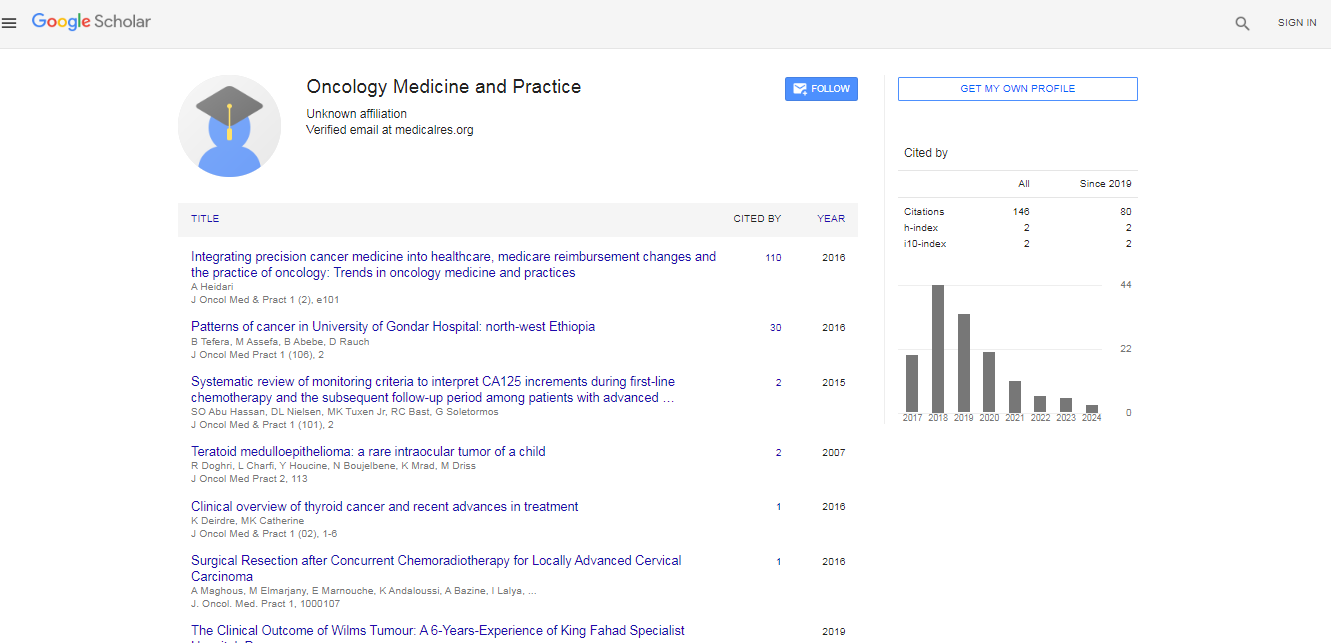
Journal of Oncology Medicine & Practice received 142 citations as per Google Scholar report