Commentary - (2025) Volume 9, Issue 6
Received: 01-Dec-2025, Manuscript No. ahbs-26-182565;
Editor assigned: 03-Dec-2025, Pre QC No. P-182565;
Reviewed: 17-Dec-2025, QC No. Q-182565;
Revised: 22-Dec-2025, Manuscript No. R-182565;
Published:
29-Dec-2025
, DOI: 10.37421/2952-8097.2025.9.344
Citation: Larsson, Henrik. ”Behavioral Cues: Key To Animal
Geriatric Health.” J Anim Health Behav Sci 09 (2025):344.
Copyright: © 2025 Larsson H. This is an open-access article distributed under the terms of the Creative Commons Attribution License, which permits unrestricted use,
distribution and reproduction in any medium, provided the original author and source are credited.
The aging process in companion animals is accompanied by a spectrum of observable behavioral shifts that can serve as crucial indicators of their health and well-being. These changes, often subtle at first, encompass alterations in activity levels, social interactions, sleep patterns, and cognitive functions, signaling potential age-related decline or underlying health issues. Recognizing these nuances is paramount for timely veterinary intervention and enhancing the quality of life for senior pets [1].
Domestic dogs, as they age, can exhibit changes in their cognitive abilities, sometimes manifesting as Cognitive Dysfunction Syndrome (CDS). Specific behavioral alterations such as disorientation, altered social interactions, and changes in sleep-wake cycles are often correlated with this cognitive decline, underscoring the importance of owner observations in diagnosis and management [2].
In feline companions, chronic pain is a significant concern in older animals and can be evinced through a variety of behavioral changes. Altered mobility, reduced grooming, shifts in appetite, and increased vocalization or hiding behaviors are common manifestations that necessitate veterinary assessment and pain management strategies for their welfare [3].
Senior horses also undergo behavioral adaptations indicative of their aging process and potential health challenges. Changes in their social behavior, feeding patterns, and responsiveness to stimuli can point towards conditions like osteoarthritis, metabolic disorders, or neurological issues, making behavioral monitoring vital for early detection [4].
Aging in captive parrots can lead to noticeable changes in their social behavior and overall well-being. Alterations in preening habits, social interactions with other birds, and vocalizations may signal stress, illness, or cognitive decline, emphasizing the need for consistent behavioral monitoring to assess welfare [5].
For rabbits, a variety of behavioral indicators can signal the onset of age-related diseases. Changes in activity, feeding habits, grooming, and social interactions are key signals that may suggest conditions such as arthritis or dental problems, highlighting the role of caregivers in early detection [6].
Geriatric pigs can exhibit specific behavioral manifestations of chronic pain and discomfort. Reduced locomotion, altered posture, decreased social engagement, and changes in feeding behaviors are important signs that require attentive observation by caretakers and veterinarians to ensure prompt diagnosis and effective pain management [7].
Ferrets, like other species, experience age-related changes in their behavior and cognitive functions. Shifts in sleep patterns, activity levels, exploration, and social interactions can indicate aging and potential health issues, necessitating the recognition of these cues for early veterinary care [8].
In aging guinea pigs, behavioral indicators of pain and discomfort are often subtle but significant. Reduced foraging behavior, changes in posture, decreased grooming, and altered vocalizations can signify underlying health problems, underscoring the importance of careful observation for early diagnosis and management [9].
Companion birds also display a range of behavioral changes associated with aging and potential health concerns. Alterations in social interactions, vocalizations, preening habits, and activity levels can indicate age-related issues such as chronic pain, cognitive decline, or systemic diseases, emphasizing the value of attentive observation for early detection and intervention [10].
The observable behavioral shifts that accompany aging in geriatric animals are critical for understanding their health status and well-being. These changes, encompassing activity levels, social interactions, sleep patterns, and cognitive functions, can be early indicators of age-related decline or underlying health conditions. Recognizing these subtle cues is vital for timely veterinary intervention and for improving the quality of life in senior pets and animals [1].
In domestic dogs, the aging process can impact cognitive abilities, often leading to Cognitive Dysfunction Syndrome (CDS). Specific behavioral markers such as disorientation, altered social interactions, and changes in sleep-wake cycles are strongly associated with cognitive decline. The observations of pet owners play a significant role in the diagnosis and management of CDS, advocating for strategies that promote cognitive health maintenance in aging dogs [2].
Older cats frequently experience chronic pain, which can manifest through a range of behavioral changes. These include modifications in mobility, a decrease in grooming frequency, alterations in appetite, and increased vocalization or a tendency to hide. The presence of these behaviors necessitates veterinary assessment and effective pain management to enhance the welfare of aging felines [3].
Senior horses exhibit behavioral adaptations that signal their aging process and potential health problems. Changes in social dynamics, feeding patterns, and responsiveness to external stimuli are key indicators that can point towards underlying conditions such as osteoarthritis, metabolic disorders, or neurological issues. Proactive monitoring of these behaviors is essential for timely diagnosis and intervention [4].
In captive parrots, aging can influence social behavior and overall well-being. Alterations in preening patterns, social engagement with conspecifics, and vocalization behaviors can serve as potential indicators of stress, illness, or cognitive decline in older birds. Continuous behavioral monitoring is crucial for assessing the welfare of aging psittacine species and implementing proactive health management [5].
For rabbits, behavioral changes associated with aging can signal the presence of age-related diseases. Deviations in activity levels, feeding habits, grooming routines, and social interactions may indicate conditions such as arthritis or dental problems. The astute observation of these subtle shifts by owners and caregivers is critical for early detection and the provision of necessary veterinary care, thereby improving longevity and life quality [6].
Geriatric pigs may display specific behavioral indicators of chronic pain and discomfort. Reduced mobility, altered postural stances, diminished social engagement, and changes in feeding behaviors are significant signs that require careful observation by caretakers and veterinarians. This attentiveness facilitates prompt diagnosis and the implementation of effective pain management strategies to enhance welfare [7].
Ferrets, as they age, can undergo alterations in behavior and cognitive function. Changes in sleep patterns, overall activity levels, exploration tendencies, and social interactions can signify aging and potential health issues. Recognizing these subtle behavioral cues is crucial for the early detection of age-related conditions, including cognitive decline or endocrine disorders, and for initiating timely veterinary care [8].
Aging guinea pigs can exhibit behavioral indicators of pain and discomfort that require careful attention. A reduction in foraging behavior, modifications in posture, decreased grooming, and altered vocalizations can signal underlying health problems. The importance of close observation by owners and veterinarians cannot be overstated for ensuring early diagnosis and effective pain management, thereby improving the welfare of older guinea pigs [9].
Companion birds present a spectrum of behavioral changes related to aging and health. Modifications in social interactions, vocalizations, preening habits, and general activity levels can serve as indicators of age-related health concerns, such as chronic pain, cognitive decline, or systemic diseases. Attentive observation by owners and veterinary professionals is vital for early detection and intervention, leading to improved health outcomes and a better quality of life for aging avian companions [10].
This collection of research highlights the significant role of behavioral observation in identifying age-related health issues in a diverse range of animal species. From companion animals like dogs and cats to livestock and birds, subtle changes in activity, social interaction, sleep patterns, and cognitive function often signal underlying problems such as chronic pain, cognitive decline, or systemic diseases. Early detection through attentive monitoring by owners and veterinary professionals is emphasized as crucial for timely intervention, effective management, and ultimately, the enhancement of an animal's quality of life and longevity. The studies collectively underscore that behavioral cues are indispensable diagnostic tools in geriatric animal care.
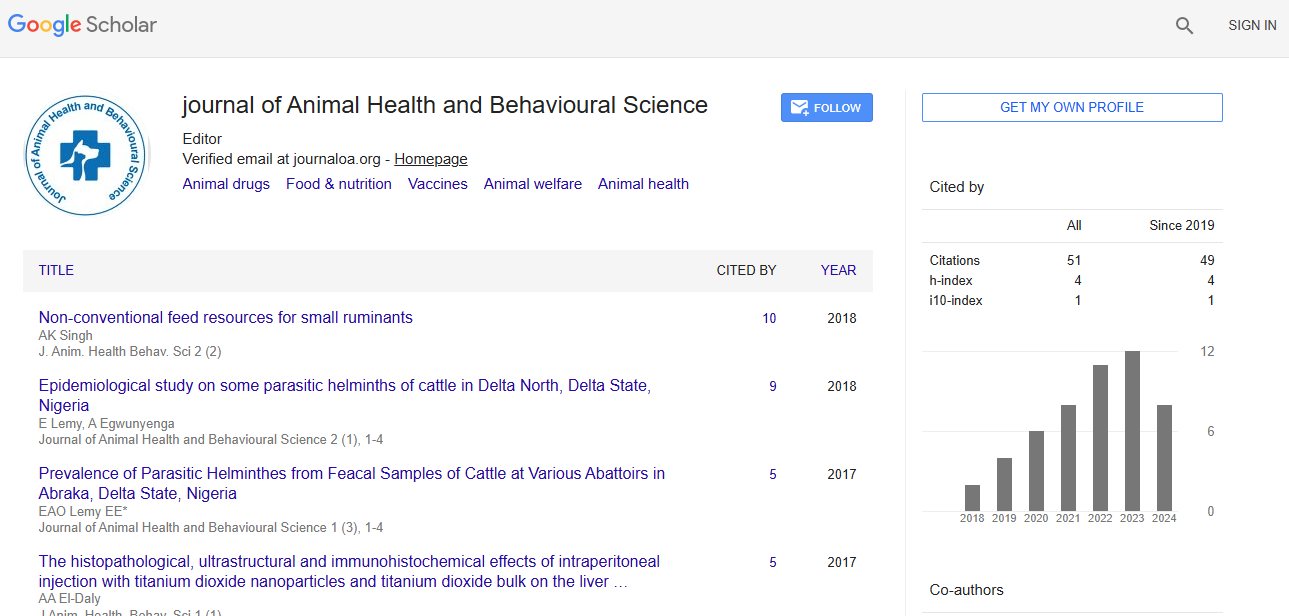
Journal of Animal Health and Behavioural Science received 38 citations as per Google Scholar report