Commentary - (127) Volume 14, Issue 2
Received: 01-Jun-2025, Manuscript No. jms-25-172630;
Editor assigned: 03-Jun-2025, Pre QC No. P-172630;
Reviewed: 17-Jun-2025, QC No. Q-172630;
Revised: 23-Jun-2025, Manuscript No. R-172630;
Published:
30-Jun-2025
, DOI: 10.37421/2167-0943.2024.13.403
Citation: Han, Eun-Ji. ”Bariatric Surgery: Impact, Risks, Lifelong Care.” J Metabolic Synd 14 (2025):403.
Copyright: © 2025 Han E. This is an open-access article distributed under the terms of the Creative Commons Attribution License, which permits unrestricted use, distribution
and reproduction in any medium, provided the original author and source are credited.
Bariatric surgery stands as a critical and evolving treatment for obesity and its associated health challenges, with a growing body of evidence exploring its wide-ranging effects. Recent systematic reviews and meta-analyses illuminate the multifaceted impact of these procedures, from significant physiological improvements to long-term patient considerations. The effectiveness and safety of metabolic and bariatric surgery in obese adolescents have been rigorously investigated. This research consistently highlights substantial improvements in weight loss, along with a remarkable resolution of comorbidities such as type 2 diabetes and hypertension. Furthermore, adolescents undergoing surgery often experience an enhanced quality of life, affirming bariatric surgery as a viable, albeit carefully considered, treatment option for severe adolescent obesity. Patient selection and long-term follow-up are critical for optimizing outcomes in this younger population [1].
Beyond adolescence, the scope of bariatric surgery extends to managing specific metabolic conditions, even in less severely obese individuals. For patients with a Body Mass Index (BMI) under 35 kg/m² struggling with type 2 diabetes, metabolic surgery has demonstrated superior efficacy compared to conventional medical therapy. It significantly improves glycemic control and increases the likelihood of diabetes remission, suggesting a broader applicability for these procedures in diabetes management [4].
Similarly, the positive impact on cardiovascular health is well-documented. Bariatric surgery leads to considerable improvements in various cardiovascular risk factors, including hypertension, dyslipidemia, and obstructive sleep apnea. These improvements ultimately contribute to a reduction in major adverse cardiovascular events over the long term, as evidenced by systematic reviews of randomized controlled trials [6].
The benefits also extend to hepatic health, with studies showing that bariatric procedures lead to significant improvements in non-alcoholic fatty liver disease (NAFLD), often resulting in the remission of hepatic steatosis, inflammation, and fibrosis. This positions surgery as a highly effective treatment for obesity-related liver disease [10].
However, the profound physiological changes induced by bariatric surgery also necessitate careful attention to potential long-term consequences and patient support. A consistent pattern of decreased bone mineral density (BMD), particularly at the hip and lumbar spine, has been observed following bariatric surgery. This emphasizes the critical need for routine screening of bone health and proactive nutritional and pharmacological interventions to mitigate fracture risk in post-bariatric patients [2].
Furthermore, nutritional deficiencies are a recognized challenge. Various micronutrient deficiencies, notably of iron, vitamin B12, folate, and vitamin D, are common post-surgery. Lifelong nutritional supplementation and regular monitoring are crucial to prevent adverse health consequences arising from these deficiencies [5].
The journey through bariatric surgery also involves significant psychological dimensions. There is a high prevalence of pre-existing mental health conditions, such as depression and anxiety, among patients considering or undergoing bariatric surgery. This underscores the necessity for comprehensive psychological evaluations before surgery and ongoing mental health support throughout the bariatric journey to optimize surgical outcomes and ensure holistic well-being [3].
Moreover, the overall impact on health-related quality of life is overwhelmingly positive, extending beyond mere weight loss. Surgery significantly enhances physical functioning, self-esteem, social interactions, and general mental well-being, highlighting its comprehensive benefits [7].
Despite the many benefits, potential complications and challenges like weight regain are important considerations. Identifying common early and late complications, such as anastomotic leaks, strictures, and internal hernias, highlights the need for meticulous surgical technique, vigilant post-operative care, and thorough patient education to minimize risks [8].
Lastly, while initial weight loss is substantial, a considerable number of patients experience weight regain over time. This phenomenon emphasizes the critical importance of sustained lifestyle modifications, continuous psychological support, and diligent long-term follow-up to maintain optimal results and ensure the enduring success of bariatric intervention [9].
The collective evidence demonstrates that bariatric surgery is a powerful tool against obesity and its sequelae, but requires an integrated, patient-centric approach for maximum benefit and safety.
Bariatric surgery has emerged as a transformative medical intervention, addressing not only severe obesity but also a spectrum of related metabolic disorders. Extensive research, frequently presented as systematic reviews and meta-analyses, has thoroughly investigated the efficacy, safety, and long-term implications of these procedures. The body of evidence highlights both profound benefits and critical challenges that necessitate a comprehensive approach to patient care.
One significant area of impact is observed in younger populations and those with less severe obesity. For obese adolescents, bariatric surgery has been shown to induce significant improvements in weight loss and resolve comorbidities like type 2 diabetes and hypertension, substantially enhancing their quality of life. This positions surgery as a viable treatment for severe adolescent obesity, though careful patient selection and long-term follow-up are paramount for success [1]. Similarly, for individuals with type 2 diabetes but a Body Mass Index (BMI) under 35 kg/m², metabolic surgery proves significantly more effective than medical therapy in achieving diabetes remission and improving glycemic control. This suggests a broader application of bariatric procedures for diabetes management beyond traditional obesity criteria [4]. Furthermore, the benefits extend to cardiovascular health, with bariatric surgery leading to notable improvements in risk factors such as hypertension, dyslipidemia, and obstructive sleep apnea, which contribute to a reduction in major adverse cardiovascular events over time [6]. The positive effects also encompass hepatic health, where bariatric procedures demonstrate significant improvements in non-alcoholic fatty liver disease (NAFLD), often leading to the remission of hepatic steatosis, inflammation, and fibrosis, thus making it an effective treatment for obesity-related liver disease [10].
Despite these impressive metabolic and systemic benefits, bariatric surgery introduces specific long-term physiological challenges that require vigilant management. Studies consistently reveal a decrease in bone mineral density (BMD) following bariatric surgery, particularly in critical areas like the hip and lumbar spine. This emphasizes the necessity for routine bone health screening and proactive nutritional and pharmacological interventions to mitigate the risk of fractures in post-bariatric patients [2]. Concurrently, nutritional deficiencies are a well-documented concern. Patients frequently experience various micronutrient deficiencies, most notably of iron, vitamin B12, folate, and vitamin D. Preventing adverse health consequences from these deficiencies mandates lifelong nutritional supplementation and regular monitoring, forming a cornerstone of post-operative care [5].
The psychological landscape surrounding bariatric surgery is equally important. A high prevalence of pre-existing mental health conditions, including depression and anxiety, has been identified among bariatric surgery candidates. This underscores the critical need for comprehensive psychological evaluations pre-operatively and continuous mental health support throughout the bariatric journey, which is vital for optimizing surgical outcomes and patient well-being [3]. In a broader sense, the surgery profoundly impacts health-related quality of life. Patients report significant enhancements in physical functioning, self-esteem, social interactions, and overall mental well-being, showcasing the comprehensive benefits that extend beyond mere weight reduction [7].
However, the path to long-term success is not without obstacles. Complications associated with bariatric surgery are varied, ranging from early issues like anastomotic leaks and strictures to late complications such as nutritional deficiencies and internal hernias. These findings highlight the absolute necessity for meticulous surgical technique, vigilant post-operative care, and thorough patient education to minimize risks effectively [8]. Moreover, the challenge of weight regain after initial significant loss is a prevalent concern. While many achieve substantial weight reduction, a considerable number of patients experience weight regain over time. This emphasizes the crucial role of sustained lifestyle modifications, ongoing psychological support, and diligent long-term follow-up as essential components for maintaining optimal and enduring results after bariatric intervention [9]. Collectively, the evidence points to bariatric surgery as a highly effective intervention, but one that demands an integrated, multidisciplinary, and patient-centered approach to achieve lasting health improvements.
Bariatric surgery emerges as a significant intervention for severe obesity and related comorbidities, with extensive research highlighting its diverse impacts. It proves highly effective in achieving substantial weight loss and improving conditions like type 2 diabetes and hypertension, even in adolescents and individuals with a BMI under 35 kg/m². Beyond metabolic benefits, the surgery profoundly enhances patients' health-related quality of life, boosting physical functioning, self-esteem, and social interactions. Furthermore, it demonstrates positive effects on specific organ systems, notably resolving non-alcoholic fatty liver disease (NAFLD) and improving cardiovascular outcomes by reducing risk factors. However, the procedure is not without its complexities. Long-term studies consistently report a decrease in bone mineral density, necessitating careful monitoring and intervention to prevent fracture risk. Mental health disorders, such as depression and anxiety, are prevalent both before and after surgery, underscoring the need for comprehensive psychological support. Nutritional deficiencies, particularly of iron, vitamin B12, folate, and vitamin D, are common post-surgery, mandating lifelong supplementation and regular monitoring. Complications, both early and late, including anastomotic leaks and internal hernias, require meticulous surgical technique and vigilant post-operative care. Moreover, a considerable number of patients experience weight regain over time, emphasizing the crucial role of sustained lifestyle modifications and long-term follow-up to maintain optimal results. Overall, while offering profound benefits, bariatric surgery demands a holistic approach encompassing thorough patient selection, pre-operative psychological evaluation, meticulous surgical execution, and diligent lifelong follow-up care to manage potential risks and ensure lasting success.
None
None
Indexed at, Google Scholar, Crossref
Indexed at, Google Scholar, Crossref
Indexed at, Google Scholar, Crossref
Indexed at, Google Scholar, Crossref
Indexed at, Google Scholar, Crossref
Indexed at, Google Scholar, Crossref
Indexed at, Google Scholar, Crossref
Indexed at, Google Scholar, Crossref
Indexed at, Google Scholar, Crossref
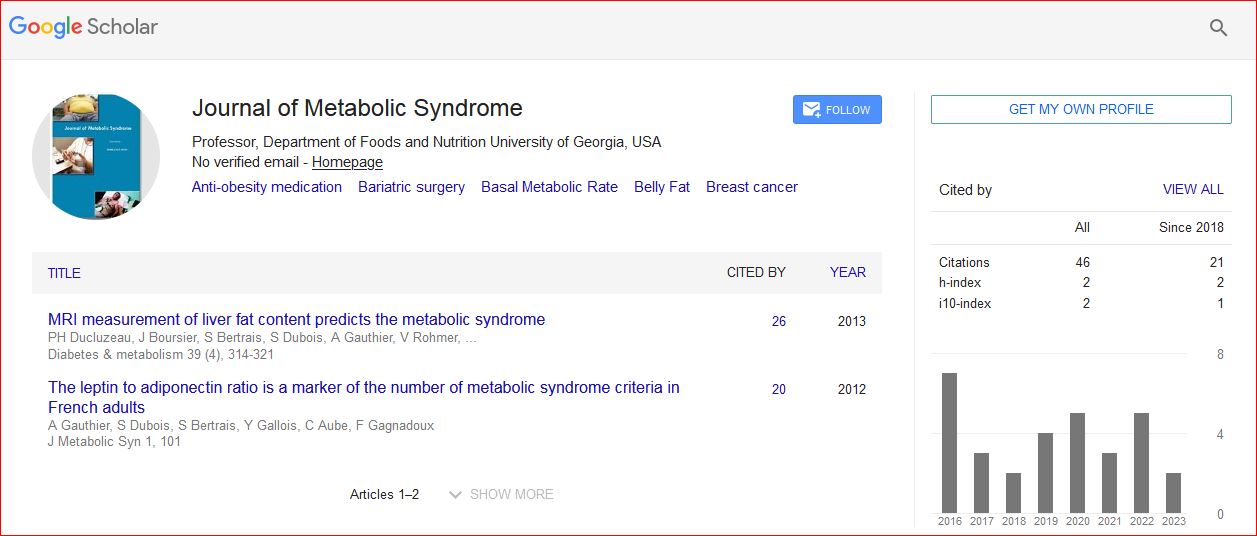
Journal of Metabolic Syndrome received 48 citations as per Google Scholar report