Brief Report - (2025) Volume 14, Issue 6
Received: 03-Nov-2025, Manuscript No. aim-25-178064;
Editor assigned: 05-Nov-2025, Pre QC No. P-178064;
Reviewed: 19-Nov-2025, QC No. Q-178064;
Revised: 24-Nov-2025, Manuscript No. R-178064;
Published:
29-Nov-2025
, DOI: 10.37421/2427-5162.2025.14.607
Citation: Mehta, Anaya. ”Ayurveda: Holistic Metabolic Syndrome Management.” Alt Integr Med 14 (2025):607.
Copyright: © 2025 Mehta A. This is an open-access article distributed under the terms of the Creative Commons Attribution License, which permits unrestricted use, distribution and reproduction in any medium, provided the original author and source are credited.
Ayurveda, an ancient Indian system of medicine, offers a comprehensive and holistic perspective on managing metabolic syndrome, a cluster of conditions that significantly elevate the risk of heart disease, stroke, and diabetes [1].
This traditional approach emphasizes individualized care, focusing on restoring balance within the body's fundamental energies, known as doshas (Vata, Pitta, and Kapha) [1].
By addressing the root causes of imbalances, Ayurveda seeks to prevent and manage key components of metabolic syndrome such as insulin resistance, dyslipidemia, and hypertension [1].
Specific Ayurvedic herbs and formulations have demonstrated efficacy in targeting different facets of metabolic syndrome, with compounds like curcumin from Curcuma longa and fenugreek exhibiting anti-inflammatory and hypoglycemic properties [2].
Beyond herbal remedies, Ayurvedic lifestyle interventions, including yoga and meditation, play a crucial role in stress reduction, a known contributor to the development and exacerbation of metabolic syndrome [3].
These practices help regulate cortisol levels, improve insulin sensitivity, and promote overall well-being, thereby supporting metabolic health [3].
A cornerstone of Ayurvedic preventive and care strategies for metabolic syndrome lies in personalized dietary recommendations based on an individual's unique constitution, or Prakriti [4].
This tailored approach aims to optimize digestion and metabolism by recommending foods best suited to an individual's inherent physiological makeup, thereby preventing the accumulation of toxins (Ama) and promoting balanced metabolic function [4].
Furthermore, Panchakarma, a profound set of detoxification and rejuvenation therapies within Ayurveda, can be instrumental in managing metabolic syndrome by eliminating toxins that may impede metabolic processes and by strengthening the body's natural healing mechanisms [5].
Therapies such as Vamana (therapeutic emesis) and Virechana (therapeutic purgation) are employed to cleanse specific bodily channels and organs [5].
The concept of Agni, or digestive fire, is central to metabolic health in Ayurveda [6].
Maintaining a strong and balanced Agni is deemed crucial for proper digestion, absorption, and metabolism of nutrients, directly impacting conditions like insulin resistance and obesity, which are key components of metabolic syndrome [6].
Specialized Ayurvedic formulations, often comprising multiple herbs, are meticulously designed to address the underlying imbalances contributing to metabolic syndrome [7].
These formulations can effectively regulate blood sugar, improve lipid profiles, reduce inflammation, and support cardiovascular health, offering a valuable complementary approach to conventional treatments [7].
The profound mind-body connection is recognized as paramount in Ayurveda's approach to chronic diseases, including metabolic syndrome [8].
Stress, anxiety, and emotional imbalances are understood as significant contributors to physiological dysregulation, and Ayurvedic practices are geared towards restoring mental equilibrium, which in turn supports metabolic function [8].
Understanding the Ayurvedic concepts of Dhatus (tissues) and Ama (toxins) provides critical insights into the pathogenesis of metabolic syndrome [9].
When Dhatus become imbalanced due to factors such as poor diet, stress, or lifestyle, it can lead to toxin accumulation and adversely affect the functioning of metabolic organs like the liver and pancreas [9].
Ultimately, the integration of Ayurvedic principles with conventional medical care presents a powerful strategy for the comprehensive management of metabolic syndrome [10].
By addressing lifestyle, diet, and stress alongside established pharmacological interventions, a more personalized and effective management plan can be developed, leading to improved patient outcomes and a reduced risk of complications [10].
Ayurveda proposes a multifaceted strategy for the prevention and management of metabolic syndrome, emphasizing a holistic approach that integrates personalized lifestyle modifications, targeted dietary interventions, and the judicious use of herbal therapies [1].
A central tenet of this ancient medical system is the meticulous balancing of the three fundamental bio-energies, or doshas Vata, Pitta, and Kapha, to address the root causes of physiological imbalances that often underlie insulin resistance, dyslipidemia, and hypertension, all critical components of metabolic syndrome [1].
Ayurvedic practitioners often recommend specialized therapies such as Panchakarma, a comprehensive detoxification and rejuvenation program, alongside specific yoga practices and dietary guidelines meticulously tailored to an individual's unique constitution (Prakriti), which can significantly contribute to the improvement of metabolic markers [1].
Certain Ayurvedic herbs and complex formulations have shown considerable promise in addressing the diverse aspects of metabolic syndrome [2].
For instance, compounds derived from Curcuma longa (turmeric) and Trigonella foenum-graecum (fenugreek) have been recognized for their potent anti-inflammatory and hypoglycemic effects, respectively [2].
Furthermore, dietary patterns advocated within Ayurveda, which prioritize whole grains, fresh vegetables, and the practice of mindful eating, play an indispensable role in effective weight management and the enhancement of glycemic control [2].
Within the broader Ayurvedic framework, lifestyle interventions, particularly the consistent practice of yoga and meditation, are instrumental in fostering stress reduction, a factor widely acknowledged to precipitate and exacerbate metabolic syndrome [3].
The regular engagement in these practices can lead to the regulation of cortisol levels, an improvement in insulin sensitivity, and an overall enhancement of well-being, thereby bolstering metabolic health [3].
A fundamental aspect of Ayurvedic preventive and care strategies for metabolic syndrome involves the creation of personalized dietary recommendations deeply rooted in an individual's Prakriti (constitutional type) [4].
This personalized dietary approach is designed to optimize digestion and metabolism by prescribing foods that are most harmonious with an individual's inherent physiological makeup, thereby preventing the formation of Ama (metabolic toxins) and promoting the establishment of balanced metabolic function [4].
Panchakarma, a time-honored series of purification and rejuvenation therapies in Ayurveda, offers significant benefits in the management of metabolic syndrome by facilitating the elimination of toxins that can hinder metabolic processes and by fortifying the body's intrinsic healing capabilities [5].
Specific Panchakarma procedures, such as Vamana (therapeutic emesis) and Virechana (therapeutic purgation), are carefully employed to cleanse particular bodily channels and vital organs [5].
The concept of Agni, often translated as digestive or metabolic fire, occupies a pivotal position in Ayurveda's understanding of metabolic health [6].
Maintaining a robust and balanced Agni is considered paramount for ensuring efficient digestion, optimal nutrient absorption, and effective metabolism, all of which have a direct and profound impact on metabolic syndrome-related conditions like insulin resistance and obesity [6].
Ayurvedic formulations, frequently characterized by their multi-herbal composition, are specifically engineered to address and rectify the underlying energetic and physiological imbalances that contribute to the development of metabolic syndrome [7].
These carefully crafted formulations are known to assist in regulating blood sugar levels, improving the body's lipid profiles, mitigating inflammation, and supporting overall cardiovascular health, thereby providing a valuable complementary therapeutic avenue to conventional medical treatments [7].
The intrinsic connection between the mind and the body is recognized in Ayurveda as being of utmost importance in the management of chronic diseases, including metabolic syndrome [8].
Ayurvedic philosophy acknowledges that psychological factors such as stress, anxiety, and emotional disharmony can significantly contribute to physiological dysregulation, and thus, Ayurvedic interventions are designed to restore mental and emotional equilibrium, which in turn positively influences metabolic function [8].
The Ayurvedic understanding of 'Dhatus' (bodily tissues) and the concept of 'Ama' (toxins) offers profound insights into the development and progression of metabolic syndrome [9].
When Dhatus become imbalanced, often as a consequence of factors like an inappropriate diet, chronic stress, or sedentary lifestyles, it can lead to the accumulation of Ama, thereby impairing the functional integrity of organs crucial for metabolism, such as the liver and pancreas [9].
The integration of Ayurvedic principles into the conventional medical paradigm holds the potential to create a truly comprehensive and synergistic strategy for managing metabolic syndrome [10].
By holistically addressing lifestyle factors, dietary habits, and stress management in conjunction with established pharmacological interventions, healthcare providers can develop more personalized and ultimately more effective management plans, leading to demonstrably improved patient outcomes and a reduced likelihood of developing serious complications [10].
None
None
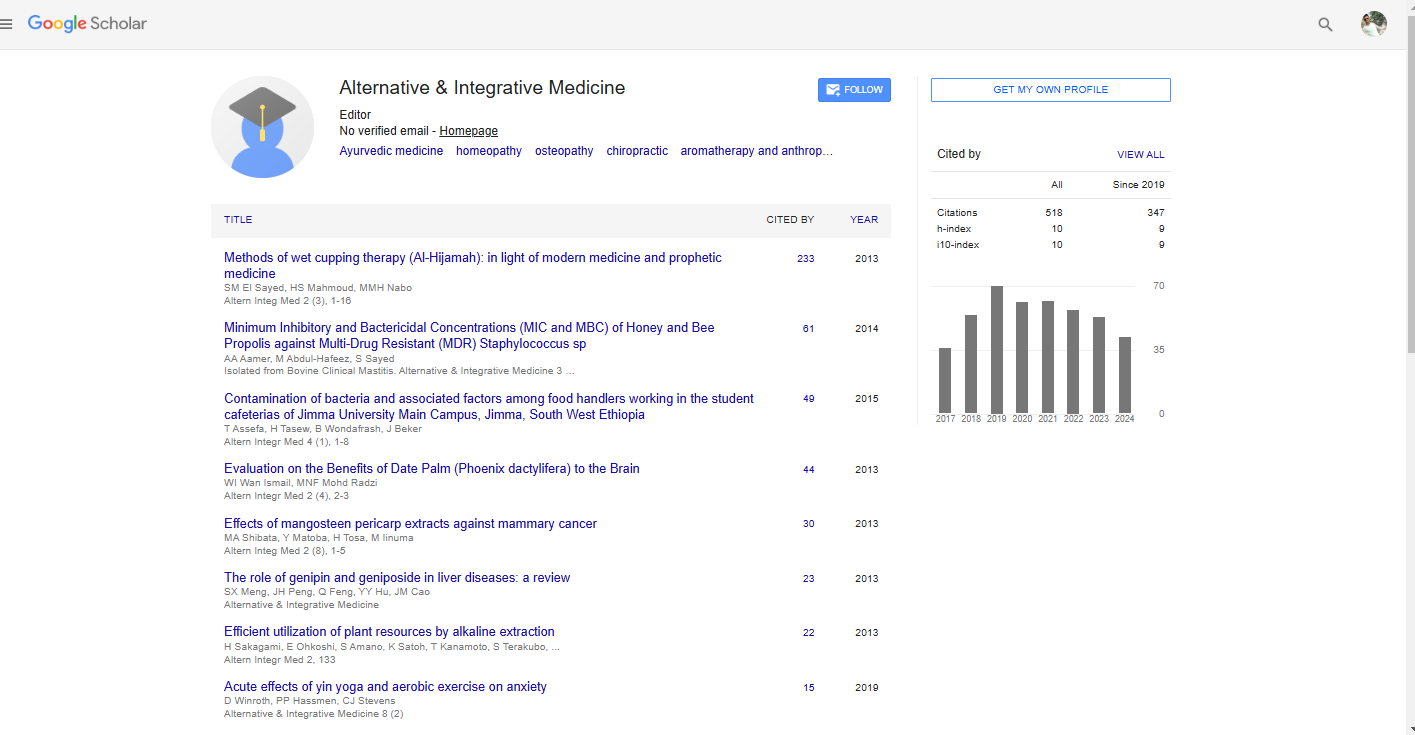
Alternative & Integrative Medicine received 476 citations as per Google Scholar report