Opinion - (2025) Volume 9, Issue 3
Received: 01-Jun-2025, Manuscript No. cmcr-25-178070;
Editor assigned: 03-Jun-2025, Pre QC No. P-178070;
Reviewed: 17-Jun-2025, QC No. Q-178070;
Revised: 23-Jun-2025, Manuscript No. R-178070;
Published:
30-Jun-2025
, DOI: 10.37421/2684-4915.2025.9. 376
Citation: Reyes, Amanda. ”Atypical Disease: Unmasking Diagnostic Puzzles.” Clin Med Case Rep 09 (2025):376.
Copyright: © 2025 Reyes A. This is an open-access article distributed under the terms of the Creative Commons Attribution License, which permits unrestricted use, distribution and reproduction in any medium, provided the original author and source are credited.
This case report highlights a rare, localized presentation of Pemphigus Vulgaris, a typically widespread autoimmune blistering disease. It's a reminder that presentations can deviate significantly from classic descriptions, making diagnosis a challenge. Understanding these unusual manifestations is crucial for timely and accurate clinical identification and management, especially when the disease presents in a limited or atypical fashion, often mimicking other dermatological conditions [1].
Here's what this case series and review tells us: COVID-19 isn't just a respiratory illness; it can present with a surprisingly broad range of neurological symptoms. We're seeing everything from headaches and anosmia to more severe complications like encephalitis, stroke, and Guillain-Barré syndrome. Recognizing these less common neurological manifestations is vital for clinicians, ensuring appropriate diagnostic work-up and management in patients with suspected or confirmed SARS-CoV-2 infection, even in the absence of typical respiratory symptoms [2].
Kawasaki Disease, typically known for fever, rash, and conjunctivitis, can throw curveballs with its presentations. This report focuses on those less common signs, like unusual cardiac involvement or gastrointestinal issues, highlighting that the disease isn't always textbook. It's a key takeaway that clinicians should maintain a high index of suspicion for Kawasaki Disease even when classical features are absent, particularly in younger children who might present with incomplete or atypical forms, to prevent serious complications like coronary artery aneurysms [3].
Myasthenia Gravis, often seen as a condition of fluctuating muscle weakness, can surprise us with how it shows up. This paper talks about presentations that don't fit the usual picture, making diagnosis a real puzzle. What this really means is that doctors need to be extra vigilant, considering Myasthenia Gravis even when patients present with seemingly unrelated symptoms or localized weakness, as delayed diagnosis can significantly impact patient outcomes [4].
Tuberculosis isn't just a lung disease; it can appear in almost any part of the body, often in ways that are far from typical. This pictorial review helps us see these unusual extrapulmonary manifestations, from bone and joint involvement to neurological or abdominal sites. The big idea here is that clinicians need a broad perspective when diagnosing TB, especially in endemic areas, because these atypical presentations can lead to significant diagnostic delays if solely focusing on respiratory symptoms [5].
Systemic Lupus Erythematosus (SLE) is known as 'the great masquerader,' and this case report underscores why. It delves into unusual ways SLE can present, which can easily be mistaken for other conditions. The takeaway is clear: while classic symptoms guide diagnosis, an open mind to less common manifestations is essential for early detection and tailored treatment, preventing disease progression and improving patient outcomes in this complex autoimmune disorder [6].
Dengue fever, while common, doesn't always stick to its typical script of fever, rash, and joint pain. This research, coming from Eastern Nepal, highlights that we're seeing more and more unusual clinical manifestations, sometimes affecting organs like the liver or brain without the classic signs. This insight is crucial for doctors in dengue-prone regions, prompting them to consider dengue even with atypical presentations, ensuring prompt diagnosis and management to prevent severe outcomes [7].
Gout isn't always about a painful big toe. This series of cases dives into how gout can show up in unexpected places or with atypical symptoms, making it a real diagnostic puzzle. It teaches us that inflammation and crystal deposits can occur in various joints and tissues, far beyond the stereotypical podagra. The key takeaway is to include gout in the differential diagnosis for patients presenting with inflammatory arthritis in unusual locations, particularly if other common causes have been ruled out [8].
Multiple Sclerosis (MS) typically brings to mind symptoms like vision problems, numbness, or difficulty walking. But this case series reminds us that MS can manifest in truly unusual ways, defying easy categorization. We need to remember that MS can affect almost any part of the central nervous system, leading to rare presentations that might initially be misdiagnosed. This means a broad differential and thorough investigation are crucial when facing neurological symptoms that don't quite fit the mold [9].
Sarcoidosis, a systemic inflammatory disease, can present in a myriad of ways, and not always in the lungs or skin. This report and review highlight just how diverse its manifestations can be, from affecting the nervous system to the heart or kidneys, often without the classic signs. The key takeaway is to consider sarcoidosis in the differential diagnosis for patients with unexplained multi-organ involvement, particularly when common conditions have been excluded, necessitating a comprehensive diagnostic approach [10].
Clinical practice consistently faces scenarios where diseases defy their classical descriptions, presenting instead with unusual or atypical manifestations. This divergence from textbook presentations poses significant diagnostic challenges, often leading to delays in identification and appropriate management across various medical disciplines. The need for clinicians to maintain a high index of suspicion and a broad differential diagnosis is paramount, as consistently demonstrated across a wide range of medical conditions, encompassing autoimmune disorders, infectious diseases, and inflammatory conditions. Recognizing these less common forms is not just an academic exercise; it critically impacts patient outcomes by enabling earlier intervention, preventing severe complications, and facilitating more effective treatment strategies.
For instance, Pemphigus Vulgaris, typically a widespread autoimmune blistering disease, can present in a rare, localized fashion, easily mimicking other dermatological conditions and complicating its initial identification [1]. Similarly, Systemic Lupus Erythematosus (SLE) lives up to its moniker as 'the great masquerader,' with unusual presentations that can be readily mistaken for unrelated conditions, unequivocally underscoring the necessity for an open-minded and vigilant diagnostic approach [6]. Sarcoidosis, a systemic inflammatory disease, also exhibits a myriad of diverse manifestations extending far beyond the typical lungs or skin, frequently affecting vital systems like the nervous system, heart, or kidneys, often without classic signs [10]. Gout, commonly associated with acute pain in the big toe, can surprisingly appear in unexpected locations or with atypical symptoms, thereby necessitating its inclusion in the differential diagnosis for inflammatory arthritis presenting in unusual anatomical sites [8]. Even neurological disorders such as Myasthenia Gravis, known for fluctuating muscle weakness, can present atypically, transforming diagnosis into a real puzzle and demanding extra vigilance from medical professionals to prevent poor patient outcomes [4]. Multiple Sclerosis (MS) further illustrates this diagnostic complexity, with manifestations capable of affecting almost any part of the central nervous system, leading to rare presentations that might initially be misdiagnosed, highlighting the need for comprehensive neurological evaluation [9].
Infectious diseases are likewise no exception to this pattern of unusual presentations. COVID-19, while primarily recognized as a respiratory illness, has emerged with a surprisingly broad range of neurological symptoms, including severe headaches, anosmia, encephalitis, stroke, and Guillain-Barré syndrome, sometimes even in the absence of typical respiratory signs, posing a significant challenge for frontline clinicians [2]. Tuberculosis (TB), commonly understood as a lung disease, frequently manifests extrapulmonarily in areas such as bone and joints, neurological tissues, or abdominal sites, often leading to significant diagnostic delays if medical practitioners solely focus on respiratory symptoms [5]. Dengue fever, a prevalent concern in regions like Eastern Nepal, increasingly demonstrates unusual clinical signs affecting critical organs such as the liver or brain, diverging significantly from its typical script of fever, rash, and joint pain. This crucial insight prompts doctors in dengue-prone regions to consider the infection even with atypical presentations, ensuring prompt diagnosis and management to prevent severe and life-threatening outcomes [7].
Kawasaki Disease, usually characterized by a distinct set of features including fever, rash, and conjunctivitis, can throw curveballs with less common signs, such as unusual cardiac involvement or gastrointestinal issues. Clinicians, particularly when evaluating younger children, must maintain an exceptionally high index of suspicion for incomplete or atypical forms of the disease to prevent serious and potentially irreversible complications like coronary artery aneurysms [3]. Across all these diverse conditions, the consistent message from recent case reports and reviews is unequivocally clear: an over-reliance on classical symptomology alone is insufficient for effective modern medical practice. A comprehensive diagnostic approach, which integrates a broad understanding of disease variability and the potential for unusual organ involvement, is not merely beneficial but absolutely crucial for optimal patient care.
Ultimately, the ability to accurately identify and effectively manage these atypical manifestations hinges on robust clinical reasoning, diligent and thorough investigation, and a profound appreciation for the vast spectrum of disease expression. Early detection and tailored treatment, guided by an unwavering awareness of these unusual presentations, are fundamental to significantly improving patient outcomes and successfully navigating the inherent complexities of contemporary medicine.
Many common and rare diseases frequently present with unusual or atypical manifestations, posing significant diagnostic challenges for clinicians worldwide. Conditions such as Pemphigus Vulgaris, typically a widespread autoimmune blistering disease, can appear in rare, localized forms. Systemic Lupus Erythematosus (SLE) consistently demonstrates its ability to masquerade as other conditions, requiring vigilant consideration of its less common presentations. Sarcoidosis exhibits a myriad of diverse manifestations beyond its typical pulmonary or cutaneous involvement, affecting various organ systems. Gout, often stereotypically linked to the big toe, can surprisingly manifest in unexpected joints or with atypical symptoms, making its identification a puzzle. Myasthenia Gravis and Multiple Sclerosis (MS) also commonly deviate from their classic neurological presentations, affecting unexpected body parts or systems and mimicking other conditions, demanding thorough investigation. Infectious diseases are no exception; COVID-19 can exhibit a surprisingly broad range of neurological symptoms, while Tuberculosis (TB) commonly presents extrapulmonarily in various organs, and Dengue fever increasingly shows atypical organ involvement beyond its known febril symptoms. Even Kawasaki Disease, typically seen in children, can have unusual cardiac or gastrointestinal signs, necessitating a high index of suspicion. This collection of cases highlights the critical need for medical professionals to adopt a broad diagnostic perspective and maintain a high index of suspicion. Moving beyond textbook definitions to consider the full spectrum of disease presentation is vital. Early recognition of these atypical forms is essential for accurate diagnosis, timely intervention, and ultimately, improving patient outcomes and preventing severe complications across diverse medical fields, ensuring more effective patient management.
None
None
Indexed at, Google Scholar, Crossref
Indexed at, Google Scholar, Crossref
Indexed at, Google Scholar, Crossref
Indexed at, Google Scholar, Crossref
Indexed at, Google Scholar, Crossref
Indexed at, Google Scholar, Crossref
Indexed at, Google Scholar, Crossref
Indexed at, Google Scholar, Crossref
Indexed at, Google Scholar, Crossref
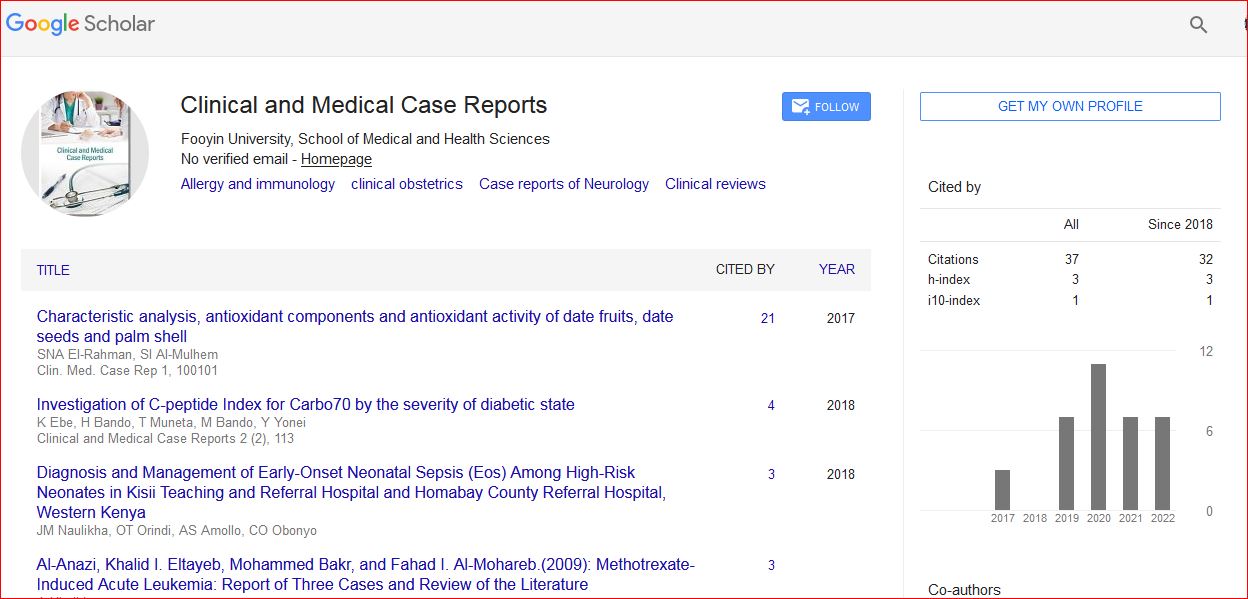
Clinical and Medical Case Reports received 53 citations as per Google Scholar report