Perspective - (2025) Volume 10, Issue 4
Received: 01-Jul-2025, Manuscript No. apn-26-179148;
Editor assigned: 03-Jul-2025, Pre QC No. P-179148;
Reviewed: 14-Jul-2025, QC No. Q-179148;
Revised: 22-Jul-2025, Manuscript No. R-179148;
Published:
29-Jul-2025
, DOI: 10.37421/2573-0347.2025.10.441
Citation: Fischer, Daniel. âAPNsâ Vital Role in Healthcare Policy and Leadership.â J Adv Practice Nurs 10 (2025):441.
Copyright: © 2025 Fischer D. This is an open-access article distributed under the terms of the Creative Commons Attribution License, which permits unrestricted use,
distribution and reproduction in any medium, provided the original author and source are credited.
Advanced Practice Nurses (APNs) are increasingly recognized for their pivotal roles in policy advocacy and leadership, influencing healthcare systems to improve patient outcomes and address health inequities. Their clinical expertise provides a unique perspective for informing policy development, while their leadership skills are essential for driving change within organizations and professional bodies. This involves engaging in legislative processes, contributing to professional guidelines, and championing evidence-based practice at local, national, and international levels [1].
Leadership development for APNs is crucial for effective policy engagement. Programs focusing on communication, negotiation, and strategic planning empower APNs to articulate their value and influence decision-makers. Cultivating a leadership mindset allows APNs to identify opportunities for policy intervention and mobilize stakeholders to support patient-centered initiatives [2].
APNs are instrumental in advocating for policies that expand access to care, particularly in underserved communities. Their ability to practice to the full extent of their education and training, coupled with a commitment to health equity, makes them invaluable assets in shaping public health policy and addressing social determinants of health [3].
The integration of APNs into policy-making bodies and advisory committees is essential for ensuring that nursing perspectives are represented. Their insights inform the development of practical, patient-centered healthcare regulations and guidelines, ultimately improving the quality and efficiency of healthcare delivery [4].
Effective policy advocacy by APNs requires understanding the legislative landscape and building coalitions with other healthcare professionals and community stakeholders. Strategic engagement can amplify their message and increase the likelihood of policy success, leading to systemic improvements in healthcare [5].
The leadership roles of APNs extend to shaping the future of nursing practice and education. By influencing curriculum development and advocating for advanced training, they ensure that the next generation of nurses is equipped to meet evolving healthcare demands and contribute to policy initiatives [6].
Addressing systemic issues in healthcare often requires APNs to take on leadership roles in research and evidence translation. Their ability to lead research initiatives and disseminate findings informs policy decisions and promotes the adoption of best practices across healthcare settings [7].
The unique contribution of APNs to policy advocacy lies in their direct patient care experience, which provides invaluable insights into the real-world impact of healthcare policies. This patient-centered perspective is critical for developing equitable and effective healthcare solutions [8].
Advancing APN roles in leadership and policy requires dedicated educational initiatives and mentorship. Preparing APNs with the necessary skills in policy analysis, advocacy, and leadership is paramount to their successful engagement in shaping healthcare systems [9].
The evolving landscape of healthcare necessitates APNs to actively participate in policy discourse and leadership. Their contributions are vital for ensuring that policies are informed by clinical reality, promoting quality patient care, and fostering sustainable healthcare systems [10].
The pivotal roles of Advanced Practice Nurses (APNs) in policy advocacy and leadership are increasingly acknowledged for their capacity to enhance healthcare systems, improve patient outcomes, and mitigate health disparities. Their clinical acumen offers a distinctive vantage point for policy formulation, while their leadership capabilities are fundamental to driving transformations within healthcare organizations and professional associations. This encompasses active participation in legislative processes, contributions to professional standards, and the promotion of evidence-based practices at various societal levels [1].
The development of leadership competencies is paramount for APNs to effectively engage in policy matters. Structured programs designed to foster skills in communication, negotiation, and strategic planning equip APNs to effectively convey their contributions and influence key decision-makers. The cultivation of a leadership orientation enables APNs to identify opportunities for policy impact and to galvanize stakeholders in support of patient-focused endeavors [2].
APNs play a critical role in championing policies that broaden access to healthcare, particularly within underserved populations. Their capacity to practice to the full extent of their professional scope and their dedication to health equity position them as essential contributors to public health policy and the addressing of social determinants of health [3].
Integrating APNs into policy-making bodies and advisory groups is indispensable for ensuring that nursing perspectives are adequately represented. Their informed viewpoints contribute to the creation of pragmatic, patient-centric healthcare regulations and guidelines, ultimately leading to enhanced quality and efficiency in healthcare delivery [4].
Successful policy advocacy by APNs hinges on a thorough understanding of the legislative environment and the cultivation of collaborative relationships with fellow healthcare professionals and community stakeholders. Strategic engagement serves to amplify their advocacy message and increase the probability of achieving policy objectives, thereby facilitating comprehensive improvements in healthcare [5].
APNs' leadership responsibilities extend to influencing the future trajectory of nursing practice and education. Through their input on curriculum development and advocacy for advanced training opportunities, they ensure that future generations of nurses are well-prepared to address evolving healthcare needs and to contribute meaningfully to policy initiatives [6].
Addressing complex systemic challenges within healthcare frequently necessitates APNs assuming leadership positions in research and the translation of evidence into practice. Their proficiency in leading research endeavors and disseminating findings is crucial for informing policy decisions and encouraging the adoption of optimal practices across diverse healthcare settings [7].
The distinctive value APNs bring to policy advocacy stems from their direct engagement with patients, which provides critical insights into the practical consequences of healthcare policies. This patient-centric viewpoint is vital for the development of equitable and effective healthcare solutions [8].
The advancement of APN roles in leadership and policy requires targeted educational strategies and robust mentorship programs. Equipping APNs with essential skills in policy analysis, advocacy, and leadership is fundamental to their successful involvement in shaping healthcare systems [9].
In response to the dynamic healthcare landscape, APNs are called upon to actively participate in policy dialogues and leadership roles. Their contributions are indispensable for ensuring that policies are grounded in clinical realities, thereby promoting high-quality patient care and fostering sustainable healthcare systems [10].
Advanced Practice Nurses (APNs) are vital in policy advocacy and leadership, significantly impacting healthcare systems, patient outcomes, and health equity. Their clinical expertise and leadership skills are instrumental in policy development and driving organizational change. Effective policy engagement requires leadership development, equipping APNs with communication, negotiation, and strategic planning skills. APNs champion policies that expand access to care, particularly in underserved communities, and advocate for health equity. Their integration into policy-making bodies ensures nursing perspectives are represented, leading to improved healthcare regulations and delivery. Successful advocacy involves understanding the legislative landscape and building coalitions. APNs also shape the future of nursing education and practice through leadership in curriculum development and advanced training. Their roles extend to leading research and evidence translation to inform policy decisions. Direct patient care experience provides APNs with unique insights crucial for developing equitable healthcare solutions. Advancing APN roles necessitates dedicated education and mentorship in policy analysis, advocacy, and leadership. Ultimately, APNs' active participation in policy discourse is essential for informed policies, quality patient care, and sustainable healthcare.
None
None
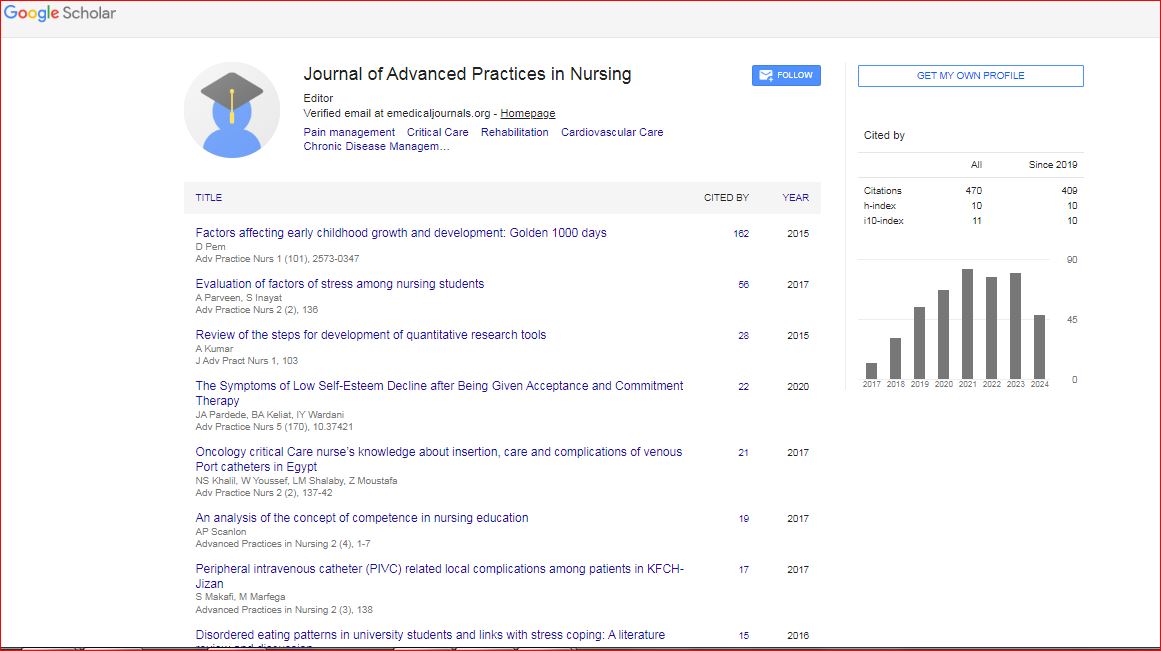
Journal of Advanced Practices in Nursing received 410 citations as per Google Scholar report