Opinion - (2025) Volume 10, Issue 4
Received: 01-Jul-2025, Manuscript No. apn-26-179154;
Editor assigned: 03-Jul-2025, Pre QC No. P-179154;
Reviewed: 14-Jul-2025, QC No. Q-179154;
Revised: 22-Jul-2025, Manuscript No. R-179154;
Published:
29-Jul-2025
, DOI: 10.37421/2573-0347.2025.10.443
Citation: El-Sayed, Ahmed. âAPNs Champion Patient Autonomy Across Diverse Care.â J Adv Practice Nurs 10 (2025):443.
Copyright: © 2025 El-Sayed A. This is an open-access article distributed under the terms of the Creative Commons Attribution License, which permits unrestricted use,
distribution and reproduction in any medium, provided the original author and source are credited.
The critical role of advanced practice nurses (APNs) in upholding patient autonomy and navigating complex ethical decision-making, particularly in end-of-life care and chronic illness management, is a significant area of focus in contemporary healthcare. These nurses are increasingly entrusted with responsibilities that demand a nuanced understanding of ethical principles and patient-centered care. Their ability to facilitate informed consent, respect patient values, and advocate effectively within interdisciplinary teams is paramount to ensuring patients' rights are protected, even when their preferences diverge from healthcare provider recommendations. This emphasis on strong ethical reasoning skills positions APNs as key stakeholders in safeguarding patient autonomy [1].
The challenges faced by APNs in balancing the principle of beneficence with patient autonomy, especially when treatment options are limited or involve significant risks, necessitate the adoption of robust shared decision-making models. These models empower patients by fostering trust and collaboration, leading to more effective and ethically sound care plans. Strategies for APNs to facilitate informed choices include providing comprehensive information in accessible formats and diligently addressing patient anxieties, thereby enabling patients to make choices that align with their values and goals [2].
Furthermore, the ethical imperative for APNs to respect and facilitate advance care planning is a cornerstone of promoting patient autonomy. By enabling patients to express their wishes regarding future medical treatment, APNs ensure that their values guide care even if they lose decision-making capacity. This requires sensitive and effective communication skills, particularly when engaging with vulnerable populations, to initiate these crucial conversations and ensure patient preferences are documented and honored [3].
The advent of digital health technologies introduces new ethical considerations for APNs, impacting patient autonomy in unprecedented ways. Issues surrounding data privacy, informed consent for remote monitoring, and the potential for technology to both enhance and erode patient control over their health information require careful navigation. APNs must possess a deep understanding of these complexities to advocate effectively for patient rights in the digital age and ensure that technological advancements do not compromise patient autonomy [4].
Cultural competence plays a vital role in the ethical decision-making processes of APNs and their ability to promote patient autonomy, especially when working with diverse populations. Understanding patients' cultural beliefs, values, and communication styles is essential to ensuring that care aligns with their preferences and respects their autonomy. Integrating cultural considerations into ethical frameworks provides practical guidance for APNs to navigate these diverse ethical landscapes effectively [5].
In the realm of mental health, APNs confront unique ethical challenges in supporting patient autonomy within the context of severe mental illness. Issues such as capacity assessment, the judicious use of involuntary treatments, and the ethical responsibility to balance self-determination with safety and recovery are critical. APNs advocate for patient-centered approaches that promote autonomy while acknowledging the constraints imposed by the condition, striving for a balance that respects the individual's rights and well-being [6].
The evolving role of APNs in palliative and hospice care places a significant emphasis on maintaining patient autonomy and dignity at the end of life. Ethical dilemmas surrounding pain management, the withdrawal of life-sustaining treatments, and spiritual care require APNs to act as dedicated advocates for patient wishes. Facilitating open communication among patients, families, and the healthcare team is paramount in ensuring that end-of-life care reflects the patient's deeply held values and desires [7].
Artificial intelligence (AI) presents a new frontier of ethical implications for APNs, particularly concerning patient autonomy. AI-driven decision support systems can significantly influence patient choices, necessitating ethical obligations for APNs to ensure transparency, accountability, and patient control. The development and adherence to ethical guidelines governing AI implementation in nursing are crucial for safeguarding patient autonomy in an increasingly technologically driven healthcare landscape [8].
Situations where patient autonomy conflicts with family wishes or institutional policies pose significant ethical challenges for APNs, often leading to moral distress. The strategies APNs employ to advocate for patient-centered care while navigating these complex interpersonal and systemic dynamics are critical. Research in this area underscores the necessity of robust ethical support systems to aid APNs in these challenging circumstances [9].
Finally, the establishment of ethical frameworks for decision-making with patients of diminished capacity is essential for upholding residual autonomy. APNs must ethically engage with surrogates and legal guardians, utilizing principles of substituted judgment and best interests. Recognizing and respecting the personhood of individuals with impaired decision-making abilities is fundamental to ensuring their dignity and rights are preserved [10].
Advanced practice nurses (APNs) are instrumental in upholding patient autonomy, a fundamental ethical principle in healthcare. This is particularly evident in complex care settings involving end-of-life care and chronic illness management, where APNs must navigate intricate ethical dilemmas. Their role necessitates a commitment to clear communication, robust informed consent processes, and unwavering respect for patient values and preferences, even when these diverge from medical recommendations. The development of strong ethical reasoning skills and the capacity to advocate for patients within multidisciplinary teams are critical competencies for APNs to effectively champion patient autonomy [1].
In situations where treatment options are limited or carry substantial risks, APNs face the delicate challenge of balancing beneficence with patient autonomy. The implementation of shared decision-making models is crucial for empowering patients, fostering a collaborative relationship built on trust. APNs employ strategies such as providing comprehensive, accessible information and addressing patient concerns to facilitate informed choices, ensuring patients are active participants in their care decisions [2].
Advance care planning represents a vital ethical commitment for APNs, directly supporting patient autonomy by ensuring their future medical wishes are known and respected. This process requires APNs to possess exceptional communication skills, enabling them to initiate sensitive discussions about future care, particularly with vulnerable populations. By facilitating these conversations, APNs ensure that patient values guide their care even if they lose the capacity to make decisions [3].
The integration of digital health technologies presents new ethical landscapes for APNs, influencing patient autonomy in various ways. Concerns regarding data privacy, informed consent for remote monitoring, and the dual potential of technology to both enhance and diminish patient control over their health information are paramount. APNs must be equipped to understand and address these ethical complexities, acting as advocates for patient rights in the digital era [4].
Cultural competence is a cornerstone for APNs in ethically promoting patient autonomy, especially when serving diverse patient populations. Understanding and integrating patients' cultural beliefs, values, and communication styles into care plans is essential to align treatment with patient preferences and uphold their autonomy. APNs develop practical guidance for incorporating cultural considerations into ethical frameworks to ensure culturally sensitive and autonomous care [5].
In mental health settings, APNs grapple with specific ethical challenges related to patient autonomy in the presence of severe mental illness. This includes careful capacity assessment and the ethical application of involuntary treatments, all while balancing the patient's right to self-determination with the need for safety and recovery. APNs champion patient-centered approaches that maximize autonomy within the constraints of the individual's condition [6].
Within palliative and hospice care, APNs play a crucial role in preserving patient autonomy and dignity at the end of life. They navigate ethical dilemmas concerning pain management, the cessation of life-sustaining treatments, and spiritual support, acting as steadfast advocates for patient wishes. Facilitating open dialogue among patients, families, and the healthcare team is essential to ensure end-of-life care honors the patient's desires [7].
The increasing use of artificial intelligence (AI) in advanced nursing practice introduces significant ethical considerations regarding patient autonomy. APNs must ensure transparency, accountability, and patient control when AI-driven systems are involved in decision-making. The development of clear ethical guidelines for AI implementation is vital to protect patient autonomy and ensure responsible technological integration in nursing [8].
APNs frequently encounter situations where patient autonomy conflicts with family expectations or institutional policies, leading to moral distress. Their ethical decision-making processes involve advocating for patient-centered care while navigating these challenging interpersonal and systemic dynamics. The need for robust ethical support for APNs in these complex scenarios is a critical finding [9].
Ethical frameworks for caring for patients with diminished capacity are crucial for preserving their residual autonomy. APNs employ principles such as substituted judgment and best interests, engaging ethically with surrogates and legal guardians. Respecting the personhood of individuals with impaired decision-making abilities is fundamental to upholding their autonomy and dignity [10].
This compilation of articles highlights the multifaceted role of advanced practice nurses (APNs) in upholding patient autonomy across various healthcare contexts. APNs are central to ethical decision-making, particularly in complex care, end-of-life situations, and chronic illness management. They navigate challenges related to limited treatment options, cultural diversity, mental health conditions, and the integration of digital health technologies and artificial intelligence. Key strategies employed by APNs include shared decision-making, advance care planning, and culturally competent care. The literature also addresses situations where patient autonomy conflicts with family wishes or institutional policies, emphasizing the need for ethical support. Ethical frameworks for patients with diminished capacity are also discussed, stressing the preservation of residual autonomy. Overall, the articles underscore the APN's critical function as an advocate for patient rights and self-determination in modern healthcare.
None
None
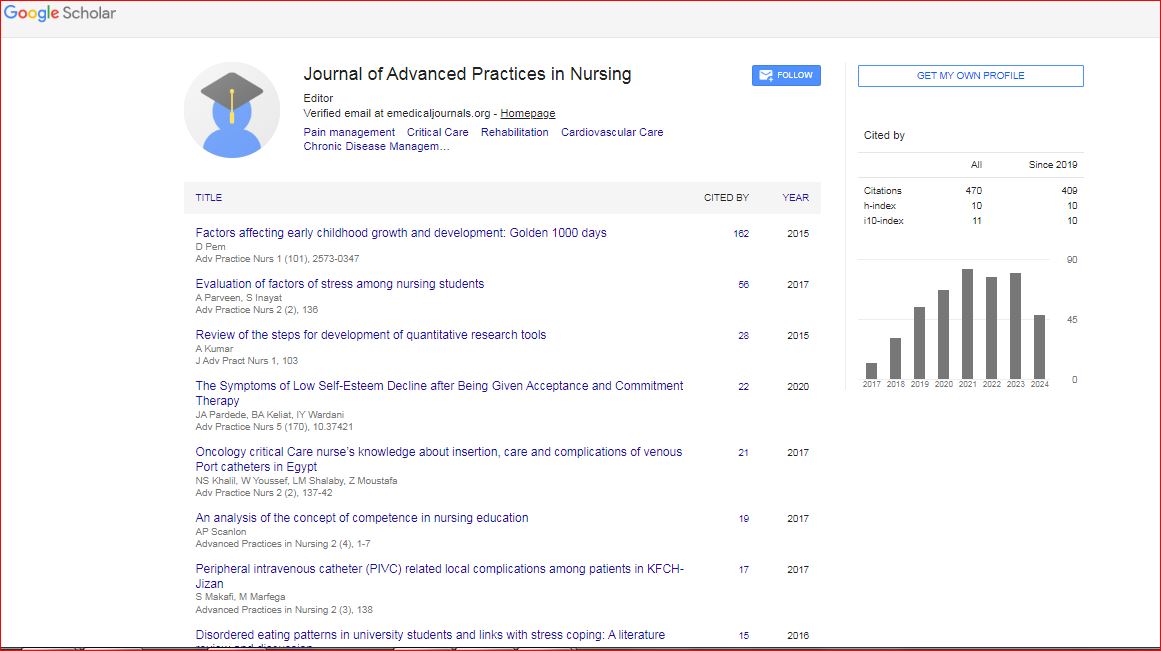
Journal of Advanced Practices in Nursing received 410 citations as per Google Scholar report