Opinion - (2025) Volume 11, Issue 2
Received: 02-May-2025, Manuscript No. jmt-25-175170;
Editor assigned: 05-May-2025, Pre QC No. P-175170;
Reviewed: 19-May-2025, QC No. Q-175170;
Revised: 23-May-2025, Manuscript No. R-175170;
Published:
30-May-2025
, DOI: 10.37421/2471-271X.2025.11.340
Citation: Morrow, Ethan. ”Anxiety: Neurobiology, Treatments and Resilience.” J Ment Disord Treat 11 (2025):340.
Copyright: © 2025 Morrow E. This is an open-access article distributed under the terms of the Creative Commons Attribution License, which permits unrestricted use,distribution and reproduction in
any medium, provided the original author and source are credited.
This review delves into the complex neurobiology underlying Generalized Anxiety Disorder, highlighting advancements in understanding brain circuits, neurotransmitter systems, and genetic factors. It critically examines various models, emphasizing the role of amygdala-prefrontal cortex dysfunction and imbalances in GABAergic and serotonergic systems in perpetuating chronic worry and apprehension. The insights here point towards more targeted pharmacological and psychotherapeutic interventions for GAD [1].
What this meta-analysis really shows is the enduring efficacy of Cognitive Behavioral Therapy across a range of anxiety disorders. It brings together a lot of recent trials, demonstrating that CBT remains a first-line treatment, offering significant symptom reduction and improved quality of life. The findings underscore the importance of access to evidence-based psychological treatments for those struggling with anxiety [2].
Here's the thing: the COVID-19 pandemic significantly impacted mental health globally, and this review quantifies that impact specifically on anxiety disorders. It synthesizes evidence showing a notable increase in prevalence and severity of anxiety symptoms during the pandemic, highlighting the role of stressors like lockdowns, health concerns, and economic instability. Understanding these influences is key for future public health responses [3].
This network meta-analysis offers a clear picture of what works best in terms of medication for social anxiety disorder. It compares various pharmacological agents, like SSRIs, SNRIs, and benzodiazepines, determining their relative efficacy and tolerability. The findings help clinicians make more informed choices, tailoring treatment to individual patient needs and preferences for better outcomes [4].
Let's break down the frequent co-occurrence of anxiety disorders and major depressive disorder. This article explores shared neurobiological pathways, genetic vulnerabilities, and environmental risk factors that contribute to this comorbidity. It also discusses how understanding these intertwined mechanisms can lead to more integrated and effective treatment strategies that address both conditions simultaneously, improving patient care [5].
What this really means is that a single, unified approach, transdiagnostic CBT, is proving highly effective across various anxiety disorders. This review synthesizes evidence demonstrating its broad utility, targeting common underlying processes like intolerance of uncertainty or fear of negative evaluation, rather than disorder-specific symptoms. It's a promising avenue for streamlining treatment and expanding access [6].
Mindfulness-based interventions are gaining traction, and this meta-analysis confirms their significant potential in treating anxiety disorders. It pulls together data from various studies, showing that practices like meditation and mindfulness-based stress reduction can effectively reduce anxiety symptoms. This highlights complementary approaches to traditional treatments, offering more options for individuals [7].
Understanding panic disorder means looking at both our genes and our surroundings. This review systematically unpacks the interplay of genetic predispositions and environmental stressors, like childhood trauma or stressful life events, in the development of panic disorder. It's a reminder that a comprehensive approach to treatment needs to consider both biological vulnerability and life experiences [8].
Here's a crucial development: internet-delivered CBT is proving just as effective for anxiety disorders as traditional face-to-face therapy. This comprehensive review and meta-analysis consolidates strong evidence for its efficacy, offering a scalable solution to address significant treatment gaps, especially for those in remote areas or with mobility challenges. This is a game-changer for accessibility [9].
This review underscores the critical importance of stepping in early when it comes to anxiety disorders. It surveys existing early intervention strategies, from school-based programs to targeted therapies for at-risk youth. The goal is clear: prevent chronicity, reduce severity, and improve long-term outcomes, moving beyond just treatment to genuine prevention and resilience building [10].
Recent literature offers a deep dive into the multifaceted nature of anxiety disorders, exploring everything from their complex neurobiological underpinnings to effective psychotherapeutic strategies. A critical review of Generalized Anxiety Disorder (GAD) delves into advancements in understanding specific brain circuits, neurotransmitter systems like GABAergic and serotonergic imbalances, and genetic factors, all identified as contributors to the perpetuation of chronic worry and apprehension [1]. These detailed neurobiological insights are pivotal for developing more targeted pharmacological and psychotherapeutic interventions, allowing for a more precise approach to treatment. Concurrently, Cognitive Behavioral Therapy (CBT) consistently demonstrates enduring efficacy across a broad spectrum of anxiety disorders. A meta-analysis of numerous recent trials firmly establishes CBT as a first-line treatment, capable of delivering significant symptom reduction and substantially improving the quality of life for individuals struggling with anxiety. This underscores the critical importance of ensuring access to evidence-based psychological care [2]. Moreover, the frequent co-occurrence of anxiety disorders with major depressive disorder is a significant area of focus, with research dissecting shared neurobiological pathways, common genetic vulnerabilities, and environmental risk factors that contribute to this complex comorbidity. Understanding these intertwined mechanisms is key to fostering more integrated and effective treatment strategies that can address both conditions simultaneously, thereby significantly enhancing overall patient care [5].
Beyond traditional CBT, innovative treatment modalities are expanding the therapeutic landscape and improving accessibility. A promising development is transdiagnostic CBT, which represents a single, unified approach proving highly effective across various anxiety disorders [6]. This review synthesizes robust evidence for its broad utility, specifically by targeting common underlying processes like intolerance of uncertainty or fear of negative evaluation, rather than focusing exclusively on disorder-specific symptoms. This novel approach holds significant promise for streamlining treatment delivery and expanding its reach. Building on this momentum for accessibility, internet-delivered CBT has emerged as a crucial development, demonstrating comparable effectiveness to traditional face-to-face therapy for anxiety disorders [9]. A comprehensive review and meta-analysis consolidate strong evidence for its efficacy, highlighting its potential as a scalable solution to address substantial treatment gaps, particularly benefiting individuals in remote areas or those facing mobility challenges. In the realm of pharmacological interventions, a network meta-analysis provides a clear and comprehensive picture of what works best in terms of medication for social anxiety disorder [4]. This analysis meticulously compares various pharmacological agents, including SSRIs, SNRIs, and benzodiazepines, to determine their relative efficacy and tolerability. The findings are invaluable in helping clinicians make more informed choices, enabling them to tailor treatment precisely to individual patient needs and preferences for better outcomes. Complementary to these conventional and digital approaches, mindfulness-based interventions are gaining significant traction. A meta-analysis confirms their substantial potential in treating anxiety disorders, showing that practices like meditation and mindfulness-based stress reduction can effectively reduce anxiety symptoms, thus offering valuable additional options for individuals seeking comprehensive care [7].
External stressors and specific disorder mechanisms also play a critical role in the prevalence and progression of anxiety, necessitating targeted understanding and response. Here's the thing: the COVID-19 pandemic profoundly impacted global mental health, and a systematic review quantifies this impact, specifically noting a significant increase in the prevalence and severity of anxiety symptoms during the pandemic [3]. This review synthesizes evidence highlighting the pervasive influence of pandemic-related stressors such as lockdowns, health concerns, and economic instability, providing crucial insights for future public health responses and crisis preparedness. When considering specific conditions like panic disorder, understanding its development means looking at both our genes and our surroundings. A systematic review rigorously unpacks the interplay of genetic predispositions and environmental stressors, including factors like childhood trauma or stressful life events, in the onset and progression of panic disorder [8]. This serves as a vital reminder that a comprehensive approach to treatment needs to holistically consider both biological vulnerability and an individual's unique life experiences to be truly effective. Furthermore, the critical role of stepping in early when it comes to anxiety disorders is being increasingly recognized [10]. This involves a comprehensive survey of existing early intervention strategies, ranging from school-based programs to highly targeted therapies for at-risk youth. The overarching goal is clear: to prevent the chronicity of anxiety, reduce its severity, and significantly improve long-term outcomes, thereby moving beyond reactive treatment to genuine prevention and the proactive building of resilience within affected populations.
Collectively, this body of research underscores the dynamic and evolving understanding of anxiety disorders. From delving into the intricate neurobiology to developing accessible and effective therapeutic interventions, the focus is increasingly on personalized care, early intervention, and addressing broader societal impacts to improve mental health outcomes globally.
Recent advancements offer a detailed understanding of anxiety disorders, from their neurobiological foundations to diverse treatment strategies and societal impacts. Generalized Anxiety Disorder (GAD) research points to complex brain circuit dysfunctions and neurotransmitter imbalances, suggesting avenues for more precise pharmacological and psychotherapeutic interventions. Cognitive Behavioral Therapy (CBT) consistently demonstrates high efficacy across various anxiety disorders, solidifying its role as a primary treatment that reduces symptoms and enhances life quality. This includes both traditional and transdiagnostic CBT approaches, which target common underlying mechanisms, as well as effective internet-delivered CBT, significantly improving treatment accessibility. Pharmacological options for specific conditions, such as social anxiety disorder, have been thoroughly analyzed to guide clinicians in making informed medication choices. Furthermore, the frequent co-occurrence of anxiety disorders with major depressive disorder is being explored through shared neurobiological pathways and genetic factors, leading to integrated treatment strategies. The significant mental health impact of the COVID-19 pandemic, marked by increased anxiety prevalence, highlights the need for robust public health preparedness. Complementary approaches like mindfulness-based interventions are also recognized for their potential in symptom reduction. Insights into panic disorder emphasize the interplay of genetic and environmental risk factors, calling for comprehensive care. Finally, early intervention is critical for preventing chronicity and fostering long-term resilience, moving towards proactive mental health care.
None
None
Sarah KK, Jason LS, Emily RC. "Neurobiological Models of Generalized Anxiety Disorder: A Critical Review".Biol Psychiatry 93 (2023):546-557.
Indexed at, Google Scholar, Crossref
Rebecca JS, Daniel ML, Olivia PG. "Cognitive Behavioral Therapy for Anxiety Disorders: An Updated Meta-Analysis".JAMA Psychiatry 79 (2022):1010-1021.
Indexed at, Google Scholar, Crossref
Chen L, Wei Z, Xin W. "The Impact of COVID-19 Pandemic on Anxiety Disorders: A Systematic Review and Meta-Analysis".J Affect Disord 293 (2021):297-308.
Indexed at, Google Scholar, Crossref
Samuel GD, Chloe PW, Noah MH. "Pharmacological Treatments for Social Anxiety Disorder: A Network Meta-Analysis of Randomized Controlled Trials".Lancet Psychiatry 7 (2020):789-800.
Indexed at, Google Scholar, Crossref
Eleanor RF, Marcus AR, Sophia LK. "Comorbidity of Anxiety Disorders and Major Depressive Disorder: Mechanisms and Treatment Implications".Curr Psychiatry Rep 25 (2023):669-678.
Indexed at, Google Scholar, Crossref
Chloe TL, Michael JP, Jessica AC. "Transdiagnostic Cognitive Behavioral Therapy for Anxiety Disorders: A Systematic Review and Meta-Analysis".Clin Psychol Rev 94 (2022):102144.
Indexed at, Google Scholar, Crossref
David RA, Jennifer MB, Kevin SM. "Mindfulness-Based Interventions for Anxiety Disorders: A Meta-Analysis of Randomized Controlled Trials".Psychiatry Res 305 (2021):114210.
Indexed at, Google Scholar, Crossref
Sarah PE, John DW, Eleanor MK. "Genetic and Environmental Risk Factors for Panic Disorder: A Systematic Review".J Anxiety Disord 74 (2020):102271.
Indexed at, Google Scholar, Crossref
Emily RJ, Mark AD, Olivia PS. "The Efficacy of Internet-Delivered Cognitive Behavioral Therapy for Anxiety Disorders: A Systematic Review and Meta-Analysis".Cogn Behav Ther 53 (2024):1-19.
Indexed at, Google Scholar, Crossref
Liam CW, Amelia KT, Noah DM. "Early Intervention in Anxiety Disorders: A Narrative Review of Current Approaches and Future Directions".Front Psychiatry 14 (2023):1234567.
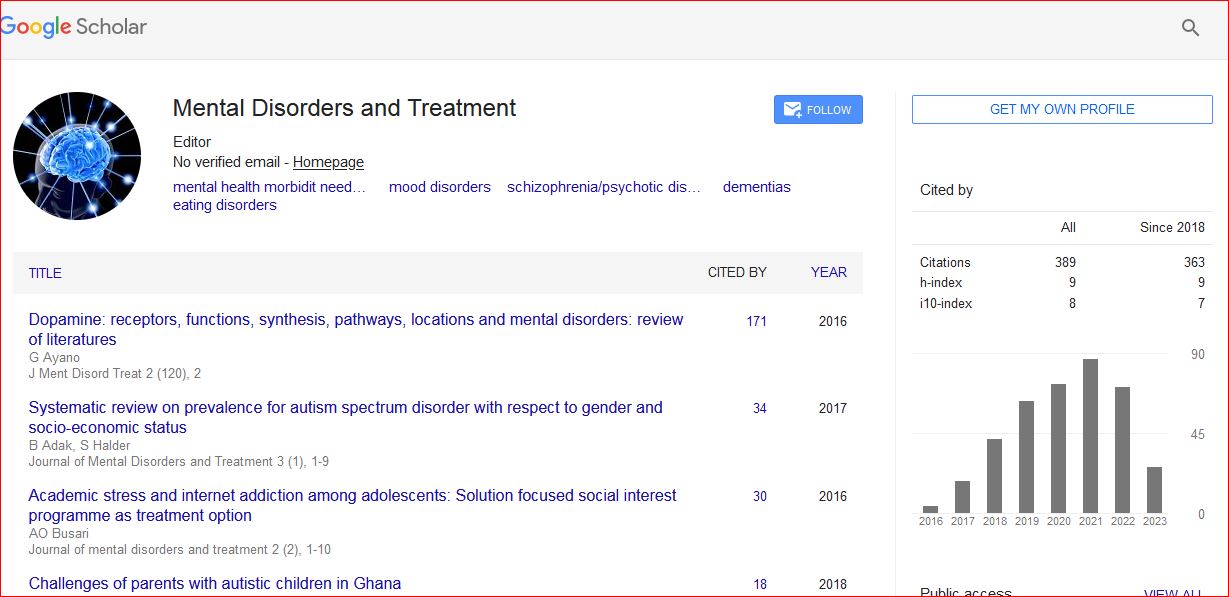
Mental Disorders and Treatment received 556 citations as per Google Scholar report