Short Communication - (2025) Volume 10, Issue 3
Received: 01-May-2025, Manuscript No. PE-26-179284;
Editor assigned: 05-May-2025, Pre QC No. P-179284;
Reviewed: 19-May-2025, QC No. Q-179284;
Revised: 22-May-2025, Manuscript No. R-179284;
Published:
29-May-2025
, DOI: 10.37421/2472-1042.2025.10.286
Citation: Svensson, Johan. ”Antimicrobial Stewardship: A Wise Investment.” Pharmacoeconomics 10 (2025):289.
Copyright: © 2025 Svensson J. This is an open-access article distributed under the terms of the Creative Commons Attribution License, which permits unrestricted use, distribution and reproduction in any medium, provided the original author and source are credited.
Antimicrobial stewardship programs (ASPs) are recognized as critical components in the global effort to optimize antibiotic utilization and combat the escalating threat of antimicrobial resistance (AMR) [1].
From a pharmacoeconomic standpoint, these programs present significant advantages, including the potential for substantial reductions in healthcare expenditures associated with treating infections, shortening hospital stays, and minimizing the occurrence of adverse drug events [1].
Effective implementation of ASPs necessitates a profound understanding of their economic ramifications, which often involves conducting detailed cost-effectiveness analyses and developing budget impact models to rigorously justify investment and strategic resource allocation [1].
This study delves into the cost-effectiveness of a comprehensive, multifaceted antimicrobial stewardship intervention implemented within a hospital environment. The findings strongly indicate that despite the initial investment required for ASP resources, the long-term financial savings generated by preventing multidrug-resistant infections and curtailing unnecessary antibiotic prescriptions substantially exceed these upfront costs. This underscores the value of ASPs as a sound economic intervention [2].
The economic burden imposed by antimicrobial resistance (AMR) is profoundly substantial, posing a significant challenge to healthcare systems worldwide. Antimicrobial stewardship programs (ASPs) are positioned to play a pivotal role in mitigating this pervasive burden through the optimization of antibiotic prescribing practices [3].
This particular research quantifies the considerable economic impact of AMR within a large healthcare system and provides compelling evidence that targeted ASP interventions can lead to significant cost reductions alongside improvements in patient outcomes [3].
This review is specifically focused on the pharmacoeconomic evaluation of various antimicrobial stewardship program (ASP) models. It highlights a consistent theme: while certain interventions may demand considerable upfront investment, their long-term economic benefits are undeniable. These benefits include decreased expenditure on ineffective treatments and a marked reduction in hospital-acquired infections, collectively positioning them as a prudent investment for healthcare systems [4].
The development and subsequent implementation of national antimicrobial stewardship guidelines carry significant economic implications. This paper undertakes an assessment of the economic feasibility and potential return on investment associated with such guidelines. It strongly emphasizes that their widespread adoption has the capacity to yield substantial savings at a national level by effectively curbing antibiotic misuse and thereby slowing the subsequent rise of resistant pathogens [5].
This article explores the intricate pharmacoeconomic aspects associated with the implementation of antimicrobial stewardship programs (ASPs) in settings characterized by limited resources. It critically provides a framework for evaluating the cost-effectiveness of various ASP interventions, demonstrating that even within the constraints of limited resources, a strategically implemented program can yield significant economic benefits. This is achieved by optimizing antibiotic use and effectively controlling healthcare expenditures [6].
The financial implications stemming from physician education and feedback mechanisms, which are integral components of antimicrobial stewardship programs (ASPs), are thoroughly examined in this study. The research reveals that investing in targeted educational initiatives and providing real-time feedback on antibiotic prescribing patterns can lead to a significant reduction in the utilization of unnecessary antibiotics. This, in turn, results in both improved clinical outcomes for patients and considerable cost savings for the healthcare system [7].
This paper concentrates on the pharmacoeconomic benefits derived from the integration of diagnostic stewardship alongside antimicrobial stewardship initiatives. By meticulously optimizing the utilization of diagnostic tests, healthcare providers are empowered to make more informed and precise treatment decisions. This leads directly to more appropriate antibiotic prescribing, a tangible reduction in healthcare costs, and an overall improvement in patient management strategies [8].
The economic consequences that arise from the implementation of electronic health record (EHR) alerts and sophisticated decision support tools within antimicrobial stewardship programs (ASPs) are thoroughly explored. This research compellingly demonstrates that despite the existence of initial implementation costs, these technological interventions prove highly effective in significantly improving antibiotic prescribing practices and consequently reducing the associated healthcare expenditures [9].
This article discusses the pharmacoeconomic impact specifically associated with targeted antimicrobial stewardship program (ASP) interventions designed for particular pathogens, such as Clostridioides difficile. The findings derived from this research strongly indicate that by actively reducing the incidence and severity of such infections through the optimization of antibiotic use, ASPs can generate substantial cost savings. These savings are directly related to the costs of treatment and the prolonged hospital stays often associated with these infections [10].
Antimicrobial stewardship programs (ASPs) are fundamental to optimizing antibiotic use and combating antimicrobial resistance (AMR). From a pharmacoeconomic viewpoint, ASPs offer substantial advantages, including reduced healthcare costs related to infections, shorter hospital stays, and fewer adverse drug events. Implementing effective ASPs requires a comprehensive understanding of their economic impact, necessitating cost-effectiveness analyses and budget impact models to justify investment and resource allocation [1].
This study examines the cost-effectiveness of a comprehensive antimicrobial stewardship intervention in a hospital setting. The results indicate that while there is an initial investment in ASP resources, the long-term savings from preventing multidrug-resistant infections and reducing unnecessary antibiotic prescriptions far outweigh these costs, establishing ASPs as a valuable economic intervention [2].
The economic burden of antimicrobial resistance (AMR) is considerable. Antimicrobial stewardship programs (ASPs) play a crucial role in mitigating this burden by optimizing antibiotic use. This research quantifies the economic impact of AMR in a large healthcare system and demonstrates how targeted ASP interventions can lead to significant cost reductions and improved patient outcomes [3].
This review focuses on the pharmacoeconomic evaluation of different ASP models. It highlights that while some interventions require significant upfront investment, their long-term economic benefits, including decreased expenditure on ineffective treatments and reduced hospital-acquired infections, make them a wise investment for healthcare systems [4].
The development and implementation of national antimicrobial stewardship guidelines have substantial economic implications. This paper assesses the economic feasibility and return on investment of such guidelines, emphasizing that their widespread adoption can lead to significant savings at a national level by reducing antibiotic misuse and the subsequent rise of resistant pathogens [5].
This article explores the pharmacoeconomic aspects of implementing ASPs in resource-limited settings. It provides a framework for evaluating the cost-effectiveness of ASP interventions, demonstrating that even with limited resources, strategic implementation can yield significant economic benefits by optimizing antibiotic use and controlling healthcare expenditures [6].
The financial implications of physician education and feedback as components of ASPs are examined. This study reveals that investing in targeted educational programs and providing real-time feedback on antibiotic prescribing patterns can significantly reduce unnecessary antibiotic use, leading to both improved clinical outcomes and considerable cost savings [7].
This paper focuses on the pharmacoeconomic benefits of diagnostic stewardship integrated with antimicrobial stewardship. By optimizing the use of diagnostic tests, healthcare providers can make more informed treatment decisions, leading to more appropriate antibiotic use, reduced costs, and better patient management [8].
The economic consequences of implementing electronic health record (EHR) alerts and decision support tools within ASPs are explored. This research demonstrates that while there are initial implementation costs, these technological interventions can significantly improve antibiotic prescribing practices and reduce associated healthcare expenditures [9].
This article discusses the pharmacoeconomic impact of targeted ASP interventions for specific pathogens, such as Clostridioides difficile. The findings indicate that by reducing the incidence and severity of such infections through optimized antibiotic use, ASPs can lead to substantial cost savings related to treatment and prolonged hospital stays [10].
Antimicrobial stewardship programs (ASPs) are vital for optimizing antibiotic use and combating antimicrobial resistance. From a pharmacoeconomic perspective, ASPs yield significant benefits, including reduced healthcare costs, shorter hospital stays, and fewer adverse drug events. Studies demonstrate that implementing ASPs, even with initial investments, leads to long-term savings by preventing resistant infections and reducing unnecessary prescriptions. Targeted interventions, physician education, diagnostic stewardship, and electronic health record tools further enhance cost-effectiveness. National guidelines and programs in resource-limited settings also show economic feasibility and substantial savings. ASPs are a wise investment for healthcare systems, improving both clinical outcomes and financial efficiency.
None
None
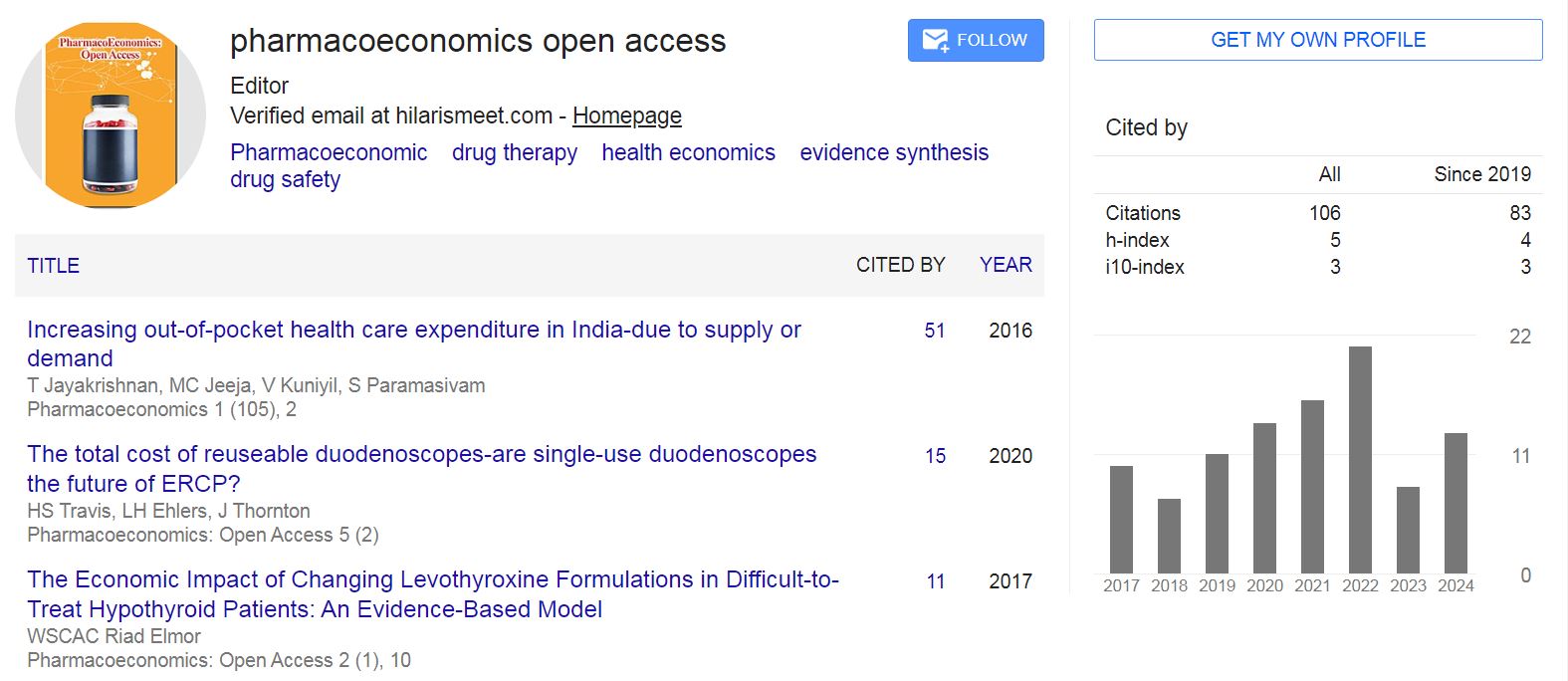
Pharmacoeconomics: Open Access received 106 citations as per Google Scholar report