Perspective - (2025) Volume 16, Issue 2
Received: 01-Apr-2025, Manuscript No. jvst-26-187978;
Editor assigned: 03-Apr-2025, Pre QC No. P-187978;
Reviewed: 17-Apr-2025, QC No. Q-187978;
Revised: 22-Apr-2025, Manuscript No. R-187978;
Published:
29-Apr-2025
, DOI: 10.37421/2157-7579.2025.16.288
Citation: Kumar, Rajesh. ”Animal Vaccination: Health, Economy,
and Public Well-being.” J Vet Sci Techno 16 (2025):288.
Copyright: © 2025 Kumar R. This is an open-access article distributed under the terms of the Creative Commons Attribution License, which permits unrestricted use, distribution
and reproduction in any medium, provided the original author and source are credited.
Vaccination stands as a fundamental pillar in the contemporary management of animal health, playing an indispensable role in the prophylaxis of a vast array of infectious diseases affecting both livestock and companion animals. By stimulating the animal's immune system to identify and combat specific pathogens, vaccines contribute to a significant reduction in disease incidence, mortality, and morbidity. This ultimately translates into enhanced animal welfare, augmented productivity within agricultural systems, and diminished economic losses for farmers and associated stakeholders. Furthermore, vaccination is of paramount importance in the control of zoonotic diseases, thereby safeguarding public health by curtailing the transmission of pathogens from animals to humans. The ongoing development of safe and effective vaccines, complemented by well-designed vaccination programs, is crucial for the maintenance of healthy animal populations and the assurance of a secure food supply [1].
The advancement of innovative vaccine technologies, encompassing subunit, DNA, and mRNA vaccines, presents promising avenues for improving both the efficacy and safety of animal disease prevention strategies. These sophisticated platforms are capable of eliciting more robust and precisely targeted immune responses, potentially overcoming the limitations inherent in traditional vaccine formulations. For example, mRNA vaccines offer rapid development and production capabilities, facilitating swifter responses to emerging infectious threats. Moreover, the application of systems biology and bioinformatics methodologies aids in the identification of optimal vaccine targets and the design of more potent immunogens, paving the way for enhanced control of both endemic and novel animal diseases [2].
Effective vaccination strategies are indispensable for the containment of highly contagious and economically devastating animal diseases, such as foot-and-mouth disease (FMD) and peste des petits ruminants (PPR). The implementation of comprehensive vaccination programs, frequently integrated with biosecurity measures and robust surveillance networks, is essential for achieving disease eradication and containment. The success of these initiatives is contingent upon accurate disease assessment, a thorough understanding of pathogen epidemiology, and the attainment of high vaccine coverage within susceptible animal populations. International cooperation and the adoption of standardized protocols are also vital components in the management of transboundary animal diseases [3].
The economic advantages derived from animal vaccination are considerable, extending well beyond the mere avoidance of direct disease-related expenditures. The prevention of disease outbreaks through vaccination ensures the continuity of animal productivity, thereby maintaining stable supply chains for essential products such as meat, milk, and other animal-derived goods. This economic stability is fundamental to the livelihoods of agricultural producers and the broader agricultural economy. Furthermore, by minimizing the necessity for extensive therapeutic interventions and quarantine procedures, vaccination contributes to more efficient resource allocation within both the veterinary and agricultural sectors [4].
The prevention of zoonotic diseases represents a critical function of animal vaccination, carrying profound implications for public health. Diseases transmissible from animals to humans, including rabies, avian influenza, and West Nile virus, pose significant health risks. Comprehensive vaccination programs implemented within animal populations serve as an essential barrier, diminishing the circulation of these pathogens and consequently reducing the likelihood of human exposure and infection. This integrated 'One Health' approach, which harmonizes human and animal health strategies, highlights the pivotal role of veterinary vaccination in sustaining overall societal well-being [5].
Achieving adequate herd immunity, especially within diverse and mobile animal populations, presents a significant challenge in animal vaccination efforts. Additionally, addressing vaccine hesitancy or limited access to vaccination services in certain geographical areas poses further hurdles. Maintaining the cold chain integrity for vaccine storage and transportation is also a critical factor in ensuring vaccine efficacy. Moreover, the ongoing emergence of novel pathogen strains necessitates continuous vaccine development and adaptation to sustain protective immunity. Current research focused on adjuvant technologies and improved delivery systems aims to enhance vaccine performance and surmount these obstacles [6].
The global surveillance and monitoring of animal diseases are inextricably linked to the effectiveness of vaccination campaigns. The establishment of robust surveillance systems facilitates the early detection of disease outbreaks, enabling the deployment of targeted vaccination efforts and preventing their widespread dissemination. Data derived from these systems are instrumental in assessing vaccine efficacy and identifying pathogens that may necessitate the development of new or modified vaccines. This cyclical process of surveillance and vaccination is fundamental to preserving vaccination's efficacy as a disease prevention modality [7].
Public awareness and effective stakeholder engagement are paramount for the successful execution of animal vaccination programs. Educating farmers, veterinarians, and the general public regarding the benefits of vaccination, the inherent risks associated with diseases, and the safety profiles of vaccines cultivates trust and encourages compliance. Addressing public concerns and countering misinformation through transparent communication and evidence-based information is vital for maximizing vaccine uptake and achieving herd immunity objectives [8].
The role of vaccination in the control of antimicrobial resistance (AMR) is often underestimated but holds considerable significance. By preventing bacterial and viral infections, vaccination effectively reduces the reliance on antibiotic treatments, thereby diminishing the selective pressure that drives the development of resistance. This proactive, preventative approach constitutes an essential element of a comprehensive strategy to combat the escalating threat of AMR across both human and animal health sectors [9].
The future trajectory of animal vaccination is anticipated to be characterized by significant innovation, with a heightened focus on precision vaccinology, the development of multi-valent vaccines, and the seamless integration of advanced diagnostic tools. Personalized vaccination strategies, meticulously tailored to the specific needs of individual animals and prevailing regional disease risks, are expected to become increasingly commonplace. Furthermore, the utilization of artificial intelligence and big data analytics will play a pivotal role in predictive modeling for disease outbreaks and the optimization of vaccination strategies to achieve maximum impact [10].
Vaccination serves as a critical foundation for modern animal health management, playing a pivotal role in the prevention of a broad spectrum of infectious diseases affecting livestock and companion animals. By stimulating the animal's immune system to recognize and effectively combat specific pathogens, vaccines lead to a substantial reduction in disease occurrences, mortality rates, and overall morbidity. This translates into improved animal welfare standards, enhanced agricultural productivity, and a decrease in economic losses for those involved in animal husbandry and related industries. Moreover, vaccination is vital for the control of zoonotic diseases, thereby contributing to the safeguarding of public health by limiting the potential for pathogen transmission from animals to humans. The ongoing development of safe and effective vaccines, coupled with strategic vaccination programs, is essential for maintaining healthy animal populations and ensuring a secure food supply [1].
The advent of novel vaccine technologies, including subunit, DNA, and mRNA vaccines, offers promising avenues for elevating the efficacy and safety of animal disease prevention. These advanced platforms possess the capability to elicit stronger and more specific immune responses, potentially overcoming the limitations associated with traditional vaccine approaches. For instance, mRNA vaccines facilitate rapid development and production cycles, enabling quicker responses to emerging infectious disease threats. Additionally, the integration of systems biology and bioinformatics aids in the identification of optimal vaccine targets and the design of more effective immunogens, thereby facilitating improved control over both endemic and emerging animal diseases [2].
Implementing effective vaccination strategies is paramount for controlling highly contagious and economically devastating animal diseases such as foot-and-mouth disease (FMD) and peste des petits ruminants (PPR). The successful execution of comprehensive vaccination programs, often alongside biosecurity enhancements and surveillance efforts, is crucial for disease eradication and containment. The efficacy of these programs hinges on accurate disease assessment, a deep understanding of pathogen epidemiology, and the achievement of high vaccine coverage within susceptible animal populations. International collaboration and the standardization of protocols are also indispensable for managing transboundary animal diseases [3].
The economic benefits associated with animal vaccination are substantial, extending beyond the direct avoidance of disease-related costs. By preventing disease outbreaks, vaccination safeguards animal productivity, thereby ensuring the stability of supply chains for meat, milk, and other animal products. This stability is crucial for the economic well-being of farmers and the broader agricultural economy. Furthermore, by reducing the need for extensive treatment regimens and quarantine measures, vaccination promotes more efficient resource allocation within both the veterinary and agricultural sectors [4].
Preventing zoonotic diseases through animal vaccination is a critical concern with significant implications for public health. Diseases that can be transmitted from animals to humans, such as rabies, avian influenza, and West Nile virus, pose serious health risks. Comprehensive vaccination programs in animal populations act as a vital protective barrier, reducing the circulation of these pathogens and consequently lowering the risk of human exposure and subsequent infection. This 'One Health' approach, which integrates human and animal health strategies, underscores the profound importance of veterinary vaccination in maintaining overall societal well-being [5].
Challenges in animal vaccination include the difficulty of achieving adequate herd immunity, particularly in geographically dispersed and mobile animal populations, and addressing vaccine hesitancy or lack of accessibility in certain regions. Ensuring the integrity of the cold chain for vaccine storage and transport is also critical for maintaining vaccine potency. Furthermore, the emergence of new pathogen strains necessitates continuous vaccine development and adaptation to sustain effective protection. Ongoing research focused on adjuvant technologies and improved delivery systems aims to enhance vaccine performance and overcome these existing hurdles [6].
Global surveillance and monitoring of animal diseases are intrinsically linked to the success of vaccination campaigns. The implementation of robust surveillance systems allows for the early detection of disease outbreaks, enabling targeted vaccination efforts and preventing their widespread dissemination. Data generated from these systems inform assessments of vaccine efficacy and help identify pathogens that may require novel or modified vaccines. This continuous feedback loop is essential for maintaining the effectiveness of vaccination as a primary tool for disease prevention [7].
Public awareness and effective engagement with stakeholders are vital for the successful implementation of animal vaccination programs. Educating farmers, veterinarians, and the general public about the benefits of vaccination, the risks associated with diseases, and the safety of vaccines helps to build trust and encourage compliance. Addressing concerns and misinformation through transparent communication and evidence-based information is crucial for maximizing vaccine uptake and achieving herd immunity objectives [8].
The contribution of vaccination to controlling antimicrobial resistance (AMR) is often overlooked but is highly significant. By preventing bacterial and viral infections, vaccination diminishes the need for antibiotic treatments, thereby reducing the selective pressure that drives the development of resistance. This preventative strategy is a crucial component of a comprehensive approach to combating the growing threat of AMR in both human and animal health sectors [9].
The future of animal vaccination is poised for significant innovation, with an increasing emphasis on precision vaccinology, the development of multi-valent vaccines, and the integration of advanced diagnostic technologies. Personalized vaccination strategies tailored to individual animal needs and specific regional disease risks are likely to become more prevalent. Moreover, the application of artificial intelligence and big data analytics will play a critical role in predictive modeling for disease outbreaks and optimizing vaccination strategies for maximum public health impact [10].
Vaccination is a cornerstone of animal health, preventing diseases in livestock and companion animals, enhancing welfare and productivity, and reducing economic losses. Novel technologies like mRNA vaccines offer improved efficacy and rapid response to emerging threats. Effective strategies are crucial for controlling devastating diseases like FMD and PPR, requiring comprehensive programs, biosecurity, and surveillance. The economic benefits are substantial, safeguarding animal productivity and supply chains. Vaccination plays a vital role in preventing zoonotic diseases, protecting public health through a One Health approach. Challenges include achieving herd immunity, vaccine hesitancy, and maintaining cold chain integrity. Robust surveillance systems are essential for early outbreak detection and informing vaccination strategies. Public awareness and stakeholder engagement are key to program success, while vaccination also aids in controlling antimicrobial resistance by reducing antibiotic use. Future innovations include precision vaccinology and AI-driven optimization.
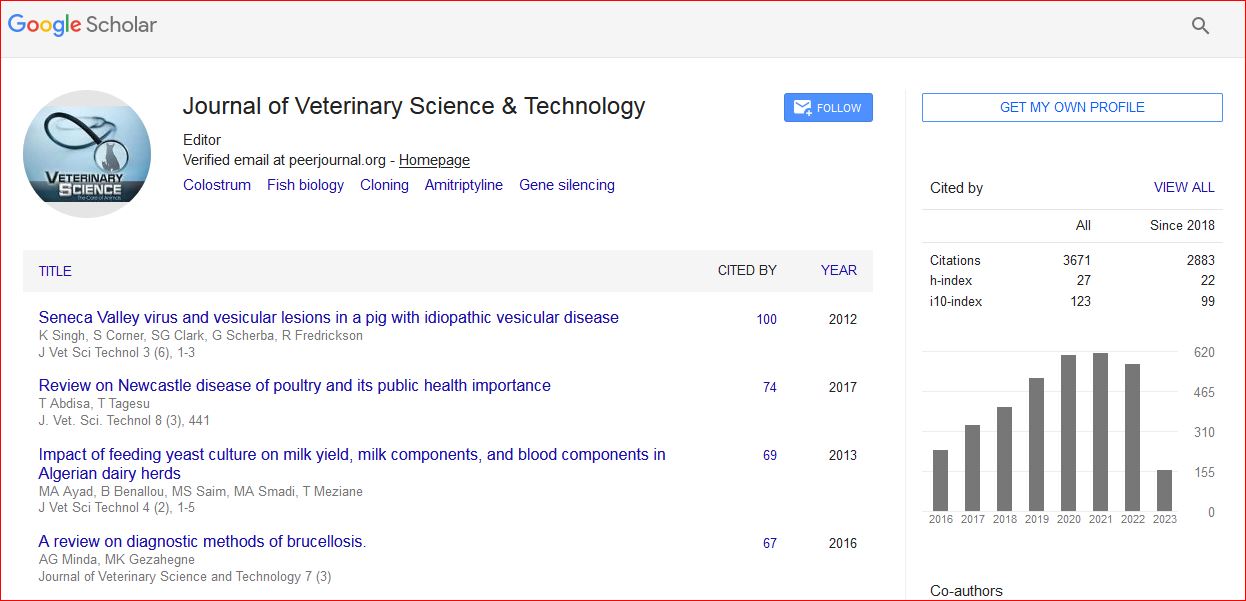
Veterinary Science & Technology received 4472 citations as per Google Scholar report