Perspective - (2025) Volume 9, Issue 3
Received: 02-Jun-2025, Manuscript No. ahbs-26-182441;
Editor assigned: 04-Jun-2025, Pre QC No. P-182441;
Reviewed: 18-Jun-2025, QC No. Q-182441;
Revised: 23-Jun-2025, Manuscript No. R-182441;
Published:
30-Jun-2025
, DOI: 10.37421/2952-8097.2025.9.319
Citation: El-Mahdy, Nadia. ”Animal Behavior: A Proactive Indicator
of Disease.” J Anim Health Behav Sci 09 (2025):319.
Copyright: © 2025 El-Mahdy N. This is an open-access article distributed under the terms of the Creative Commons Attribution License, which permits unrestricted use,
distribution and reproduction in any medium, provided the original author and source are credited.
Changes in animal behavior have emerged as critical early indicators for the detection of infectious disease outbreaks. These subtle shifts in patterns, such as feeding habits, social interactions, general activity levels, and vocalizations, can manifest before the onset of overt clinical signs of illness. The monitoring of these behavioral alterations facilitates prompt detection, enabling the implementation of timely intervention and containment strategies across both domestic and wild animal populations. This proactive approach is paramount for mitigating the spread of diseases and their consequent economic and ecological ramifications [1].
Behavioral syndromes within wildlife populations can serve as valuable early warning signals for emerging infectious diseases. For instance, an increase in lethargy, modifications in foraging strategies, or uncharacteristic boldness exhibited by animals might suggest an underlying pathological condition. A comprehensive understanding of these pre-clinical behavioral changes is indispensable for effective epidemiological surveillance and the successful execution of conservation efforts, particularly when dealing with cryptic diseases that could otherwise remain undetected until significant population declines become apparent [2].
The application of sophisticated machine learning techniques to the analysis of animal behavior data presents a potent methodology for the early identification of subtle signs indicative of infectious disease. Machine learning algorithms are capable of discerning deviations from established normal behavioral patterns in individual animals or within groups, and can correlate these deviations with the potential presence of pathogens. This data-driven approach substantially enhances both the sensitivity and the speed of disease detection, offering a significant advancement beyond traditional symptom-based surveillance methods [3].
Infectious diseases affecting poultry can often be recognized through specific behavioral changes. These may include a reduction in feed intake, an increase in resting periods, altered dust bathing behaviors, and a noticeable decrease in egg production. The prompt recognition of these early indicators is vital for poultry producers, enabling them to swiftly implement essential biosecurity measures and appropriate veterinary interventions. Such timely actions are crucial for preventing widespread outbreaks and minimizing associated economic losses within the industry [4].
Alterations in social behavior among domestic animals can act as significant indicators for the initial stages of infectious diseases. Manifestations such as reduced social grooming, increased instances of aggression, a tendency towards isolation, or the occurrence of abnormal vocalizations might represent some of the earliest observable signs. A thorough understanding of these social dynamics and the disruptions they may undergo provides a valuable, non-invasive method for the early detection of diseases within herds and flocks [5].
The integration of sensor technology and wearable devices on animals is actively revolutionizing the capacity to monitor subtle behavioral changes that are indicative of infectious diseases. These advanced technologies allow for the continuous tracking of key parameters, including activity levels, feeding behavior, and body temperature. This continuous data stream enables the detection of deviations from established baseline patterns, which may signal an early infection even before any visible clinical signs become apparent [6].
Changes in motor activity, encompassing reduced locomotion, extended periods of standing, or alterations in gait, represent significant behavioral indicators of disease in livestock. Such modifications in movement can directly reflect the presence of pain, discomfort, or systemic illness stemming from infectious agents. The early identification of these behavioral shifts, whether through direct observation or sensor-based methodologies, facilitates rapid diagnosis and prompt treatment, thereby improving animal welfare and effectively preventing the further spread of disease [7].
Vocalization patterns in animals can undergo significant changes in response to the presence of infectious diseases, offering another promising avenue for early detection. Distress calls, modifications in the frequency or intensity of normal vocalizations, or a complete absence of vocal activity can all serve as indicators of illness. The analysis of these auditory signals can effectively complement visual observations and sensor-based monitoring techniques, providing a more comprehensive picture of animal health [8].
The integrity of feeding behavior is recognized as a highly sensitive indicator of an animal's health status. A diminished appetite, altered eating speed, or changes in the way animals sort their food can precede the appearance of more severe clinical signs associated with infectious diseases. Monitoring these feeding patterns, often facilitated by automated systems, provides a practical and highly effective method for the early detection of diseases within agricultural settings [9].
Alterations in thermoregulatory behavior, such as an increased tendency to seek shade, huddling behaviors, or shifts in lying or standing posture, can manifest as early indicators of fever or discomfort related to infectious diseases. Although these behaviors might not always be readily observable through casual inspection, they can be effectively detected using advanced monitoring systems. This capability adds another crucial layer of data for proactive health management strategies within animal populations [10].
Infectious disease outbreaks in animal populations are often heralded by discernible changes in behavior, serving as critical early warning signals. Subtle modifications in the everyday activities of animals, including their feeding habits, social interactions, general activity levels, and vocalizations, can precede the manifestation of overt clinical symptoms. The capability to monitor these behavioral shifts allows for the timely detection of potential outbreaks, which in turn enables the swift implementation of intervention and containment strategies, benefiting both domestic and wild animal populations. Adopting this proactive stance is essential for limiting the spread of diseases and mitigating their subsequent economic and ecological consequences [1].
Within wildlife ecosystems, the presence of specific behavioral syndromes can act as early indicators of emerging infectious diseases. Observable changes such as increased lethargy, deviations in foraging behavior, or uncharacteristic boldness in animals may signify an underlying pathological condition. A profound understanding of these pre-clinical behavioral alterations is vital for robust epidemiological surveillance and for supporting effective conservation initiatives, particularly in the context of cryptic diseases that might otherwise go unnoticed until significant population declines occur [2].
The integration of machine learning technologies for the analysis of animal behavior data offers a powerful approach for the early detection of infectious diseases. These advanced algorithms are adept at identifying subtle deviations from normal behavioral patterns in individual animals or entire groups, correlating these anomalies with the potential presence of pathogens. This data-driven methodology significantly boosts the sensitivity and speed of disease detection, moving surveillance efforts beyond traditional symptom-based assessments [3].
In commercial poultry farming, infectious diseases can be identified through specific behavioral changes, such as a reduction in feed consumption, increased periods of inactivity, altered dust bathing patterns, and a decline in egg production. The timely recognition of these initial indicators is crucial for poultry farmers, empowering them to rapidly deploy biosecurity measures and seek veterinary assistance. Prompt action is key to preventing the widespread dissemination of diseases and minimizing resultant economic losses [4].
In domestic animals, shifts in social behavior can serve as preliminary signals of the onset of infectious diseases. These may include decreased social grooming, heightened aggression, withdrawal or isolation, or unusual vocalizations. Understanding these social dynamics and how they are disrupted provides a valuable and non-invasive means for the early detection of diseases within herds and flocks, facilitating timely veterinary intervention [5].
The advancement of sensor technology and the development of wearable devices for animals are transforming the monitoring of subtle behavioral changes associated with infectious diseases. These technologies facilitate continuous tracking of vital parameters such as activity levels, feeding patterns, and body temperature. This constant data stream enables the identification of deviations from normal patterns, which can signal an early infection before any visible clinical signs emerge [6].
Observable changes in motor activity, including decreased movement, prolonged standing, or irregular gaits, are significant behavioral indicators of disease in livestock. These changes often reflect pain, discomfort, or systemic illness caused by infectious agents. Early detection through direct observation or sensor systems allows for prompt diagnosis and treatment, leading to improved animal welfare and the prevention of disease transmission [7].
Analysis of vocalization patterns offers another critical method for the early detection of infectious diseases in animals. Changes such as the production of distress calls, alterations in the frequency or intensity of normal sounds, or a complete cessation of vocalizations can all indicate illness. Incorporating the analysis of these auditory signals can significantly enhance the comprehensive understanding of animal health when used alongside visual and sensor-based monitoring [8].
An animal's feeding behavior is a highly sensitive barometer of its health status. A reduced appetite, altered eating speed, or changes in food selection can precede the appearance of more severe clinical signs of infectious disease. Monitoring these feeding behaviors, often through automated systems, offers a practical and effective strategy for early disease detection in agricultural environments [9].
Thermoregulatory behaviors, such as seeking out cooler areas, huddling, or changes in posture, can provide early indications of fever or discomfort linked to infectious diseases. While not always evident through casual observation, these behaviors can be reliably detected using sophisticated monitoring systems. This capability adds another vital data point for proactive health management in animal populations, enabling earlier intervention and better outcomes [10].
Animal behavior serves as a crucial early indicator of infectious diseases. Subtle changes in feeding, social interactions, activity, and vocalizations can precede visible symptoms, allowing for prompt detection and intervention in both domestic and wild populations. This proactive approach is vital for disease containment and mitigating economic and ecological impacts. Machine learning and sensor technologies, including wearable devices, are enhancing the ability to monitor these subtle behavioral shifts, offering data-driven methods for early disease identification beyond traditional symptom-based surveillance. Specific behavioral changes like reduced appetite, altered motor activity, and vocalization pattern shifts are key indicators. Early recognition of these signs is critical for implementing timely biosecurity measures, veterinary interventions, and improving animal welfare, thereby preventing widespread outbreaks and significant losses.
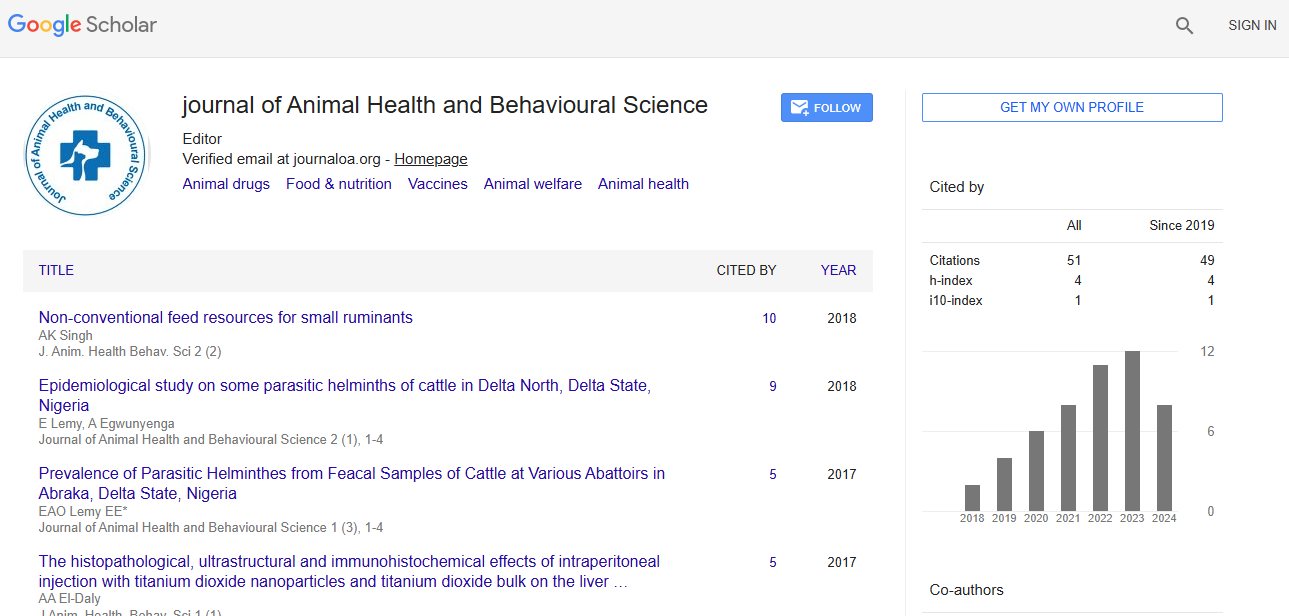
Journal of Animal Health and Behavioural Science received 38 citations as per Google Scholar report