Short Communication - (2025) Volume 9, Issue 2
Received: 01-Apr-2025, Manuscript No. ahbs-26-182411;
Editor assigned: 03-Apr-2025, Pre QC No. P-182411;
Reviewed: 17-Apr-2025, QC No. Q-182411;
Revised: 22-Apr-2025, Manuscript No. R-182411;
Published:
29-Apr-2025
, DOI: 10.37421/2952-8097.2025.9.312
Citation: Muller, Karl F.. "Animal Behavior: A Key To Zoonotic
Disease Spillover." J Anim Health Behav Sci 09 (2025):312.
Copyright: © 2025 Muller F. Karl This is an open-access article distributed under the terms of the Creative Commons Attribution License, which permits unrestricted use,
distribution and reproduction in any medium, provided the original author and source are credited.
The intricate relationship between animal behavior and the emergence and transmission of zoonotic diseases represents a critical area of scientific inquiry, highlighting how altered behaviors in both domestic and wild animals can significantly increase the risk of zoonotic spillover. Environmental changes and intensified human-animal interactions are key drivers of these behavioral shifts, carrying substantial implications for both animal and human health, thereby necessitating a comprehensive One Health approach to surveillance, prevention, and control strategies. Understanding behavioral ecology is thus emerging as a critical component for predicting and mitigating zoonotic disease threats, offering crucial insights into pathogen dynamics [1].
Anthropogenic activities, including habitat fragmentation and the global wildlife trade, demonstrably impact animal behavior, leading to a heightened risk of zoonotic disease transmission. Changes in animal movement patterns, social structures, and dietary habits, often driven by human encroachment, can create more opportunities for pathogen spillover to humans, underscoring the need to incorporate behavioral insights into conservation and public health policies for effective zoonotic risk management [2].
Wildlife serves as a significant reservoir for zoonotic pathogens, and their behavioral ecology plays a pivotal role in transmission dynamics. Factors such as foraging behavior, social interactions, and stress levels within wildlife populations can directly influence pathogen shedding and host susceptibility, thereby impacting the frequency and intensity of spillover events. A thorough understanding of these behavioral aspects is therefore paramount for developing targeted surveillance and intervention strategies [3].
The process of domestication and contemporary husbandry practices exert a notable influence on the behavior of livestock, consequently affecting their susceptibility to zoonotic diseases. Selective breeding and confinement can alter immune responses and social behaviors, potentially opening new pathways for pathogen transmission between animals and humans. This underscores the critical need for responsible animal management that prioritizes both animal welfare and public health considerations [4].
Within the domestic sphere, the behavior of companion animals plays a discernible role in the transmission of zoonotic diseases within households. Certain behaviors, such as mutual grooming, sharing of living spaces, and even playful interactions, can facilitate the exchange of pathogens between pets and their human owners. Educating pet owners about potential zoonotic risks and promoting responsible pet ownership practices are therefore essential preventative measures [5].
Urbanization and its associated environmental transformations profoundly influence the behavior of urban wildlife, such as rodents and birds, consequently altering their role in zoonotic disease transmission. Modified feeding habits and increased proximity to humans in urban settings can amplify the risk of pathogen spillover. These findings highlight the necessity for integrated urban planning and public health interventions that account for wildlife behavior [6].
Behavioral adaptations in animals in response to climate change can create novel interfaces for zoonotic disease transmission. Shifts in migration patterns, breeding seasons, and habitat utilization, driven by climate variability, can lead to increased contact between susceptible animal populations, pathogens, and human communities. A proactive approach to understanding and managing these climate-driven zoonotic risks is therefore crucial [7].
Direct human interaction with wild animals, such as feeding and petting, can induce behavioral changes that elevate the risk of zoonotic disease transmission. Animal habituation to humans can lead to increased contact, thereby facilitating pathogen spread. Public education regarding the potential dangers of close interaction with wildlife is essential to mitigate these risks [8].
Behavioral epidemiology offers valuable tools for understanding and managing zoonotic diseases. The study of animal behaviors, including their social networks, movement patterns, and stress responses, provides critical insights into disease transmission pathways. Integrating behavioral science into zoonotic disease surveillance and control programs is thus highly advocated for improved efficacy [9].
Alterations in animal communication and social behaviors, often influenced by environmental stressors and human activities, can significantly impact disease dynamics and zoonotic potential. Changes in social structures and communication patterns may affect pathogen transmission rates and host susceptibility, emphasizing the need for further research into these complex behavioral-pathogen interactions [10].
The emergence and transmission of zoonotic diseases are intricately linked to alterations in animal behavior, which can be influenced by a myriad of factors including environmental changes and human-animal interactions. These behavioral shifts in both domestic and wild animals serve to amplify the risk of zoonotic spillover, presenting significant challenges for both veterinary and public health sectors. Consequently, a robust One Health approach is indispensable for effective surveillance, prevention, and control strategies, with behavioral ecology emerging as a cornerstone for predicting and mitigating future zoonotic threats [1].
Human-induced environmental modifications, such as habitat fragmentation and the pervasive wildlife trade, exert a profound impact on animal behavior and subsequently elevate the risk of zoonotic disease transmission. The resultant changes in animal movement, social organization, and feeding patterns, often a direct consequence of human encroachment, can significantly facilitate pathogen spillover events into human populations. Therefore, the integration of behavioral insights into conservation efforts and public health policies is paramount for the judicious management of zoonotic risks [2].
Within the broader context of zoonotic diseases, wildlife often harbors pathogens, and their inherent behaviors critically influence transmission dynamics. The study of animal behavioral ecology reveals that factors such as foraging strategies, intricate social interactions, and physiological stress levels within wildlife populations can directly modulate pathogen shedding and influence host susceptibility, thereby playing a crucial role in the occurrence of spillover events. This necessitates a deep understanding of these behavioral facets for the development of precisely targeted surveillance and intervention measures [3].
Livestock, through the processes of domestication and contemporary husbandry practices, undergo behavioral and physiological changes that can affect their susceptibility to zoonotic diseases. Selective breeding and confinement environments can lead to modifications in immune responses and social behaviors, potentially creating novel routes for pathogen transmission between animals and humans. This underscores the ethical imperative for responsible animal management practices that consider both animal welfare and the broader implications for public health [4].
Companion animals, an integral part of many households, also play a role in zoonotic disease transmission through their behaviors. Everyday interactions such as mutual grooming, shared living spaces, and even playful activities can inadvertently create pathways for pathogen exchange between pets and owners. Consequently, comprehensive education for pet owners regarding zoonotic risks, coupled with the promotion of responsible pet ownership, is crucial for disease prevention [5].
Urban environments, characterized by significant anthropogenic alterations, profoundly impact the behavior of resident wildlife, including common species like rodents and birds, thereby influencing their involvement in zoonotic disease transmission cycles. Altered feeding behaviors and increased close proximity between urban wildlife and human populations can significantly escalate the risk of pathogen spillover. This emphasizes the need for integrated urban planning strategies and public health initiatives that actively consider these ecological and behavioral dynamics [6].
Climate change is a significant driver of behavioral adaptations in animals, which can, in turn, create new opportunities for zoonotic disease transmission. Changes in migratory routes, altered breeding seasons, and shifts in habitat utilization patterns, all influenced by climate variability, can lead to increased contact between pathogen-carrying animal populations, susceptible wildlife, and human communities. A forward-looking approach to understanding and managing these climate-driven zoonotic risks is thus essential [7].
Direct human engagement with wildlife, such as intentional feeding or petting, can induce behavioral changes in animals, leading to increased contact and a subsequent rise in zoonotic disease risk. When wild animals become habituated to human presence, they exhibit reduced fear responses, fostering closer interactions that can facilitate pathogen transmission. Public awareness campaigns highlighting the inherent risks associated with such close contact with wildlife are vital [8].
Behavioral epidemiology offers a powerful framework for understanding and effectively managing zoonotic diseases. By systematically studying animal behaviorsâ??encompassing their social structures, movement patterns, and responses to environmental stressorsâ??researchers can gain critical insights into the complex pathways of disease transmission. The integration of behavioral science principles into existing zoonotic disease surveillance and control programs is therefore highly recommended for enhanced effectiveness [9].
Subtle yet significant changes in animal communication and social behaviors, potentially exacerbated by environmental stressors and ongoing human activities, can profoundly affect disease dynamics and the zoonotic potential of pathogens. Alterations in established social hierarchies and communication methods could directly impact pathogen transmission rates and the susceptibility of host populations. Further in-depth research is imperative to unravel these intricate behavioral-pathogen interactions [10].
This collection of research highlights the critical link between animal behavior and the emergence and spread of zoonotic diseases. Altered behaviors in wildlife and domestic animals, driven by environmental changes, human activities, and climate change, increase the risk of pathogen spillover to humans. Factors such as habitat fragmentation, wildlife trade, urbanization, domestication, and direct human-animal interactions all play a role. Understanding animal behavior, including social dynamics, movement patterns, and communication, is essential for developing effective surveillance, prevention, and control strategies. A One Health approach and the integration of behavioral epidemiology are crucial for managing these complex threats to both animal and human health.
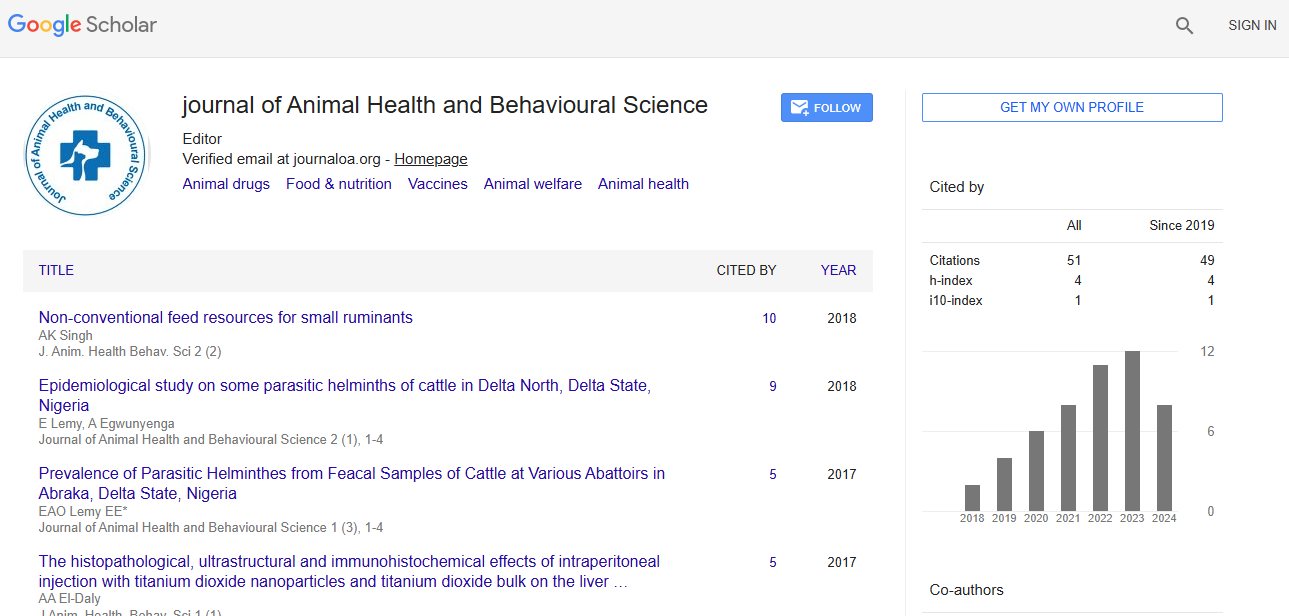
Journal of Animal Health and Behavioural Science received 38 citations as per Google Scholar report