Short Communication - (2025) Volume 9, Issue 5
Received: 03-Oct-2025, Manuscript No. jcao-26-187160;
Editor assigned: 06-Oct-2025, Pre QC No. P-187160;
Reviewed: 20-Oct-2025, QC No. Q-187160;
Revised: 24-Oct-2025, Manuscript No. R-187160;
Published:
30-Oct-2025
, DOI: 10.37421/2684-6004.2025.9.315
Citation: Jimenez, Ricardo. ”Anesthesia Safety: Risk Management and Quality Improvement.” J Clin Anesthesiol 09 (2025):315.
Copyright: © 2025 Jimenez R. This is an open-access article distributed under the terms of the Creative Commons Attribution License, which permits unrestricted use, distribution and reproduction in any medium, provided the original author and source are credited.
The landscape of modern medical practice, particularly within the critical domain of anesthesia, is increasingly defined by a proactive and rigorous approach to safety and risk management. This necessitates a deep understanding of potential pitfalls and the implementation of robust strategies to avert adverse events. Anesthesiology has seen significant evolution in its pursuit of patient safety, moving from reactive measures to comprehensive, system-wide preventative frameworks [1].
The integration of human factors into anesthesia practice is paramount. Understanding how cognitive processes, biases, and situational stressors influence decision-making is crucial for identifying and mitigating error pathways. This involves acknowledging the inherent complexities of human cognition and its interaction with demanding clinical environments [2].
Technological advancements have profoundly impacted the ability to enhance anesthesia safety. Innovations in electronic health records, sophisticated monitoring devices, and automated systems offer tangible benefits in reducing errors and improving the precision of care delivery. These tools are becoming indispensable in the modern operating room [3].
Medication safety remains a central pillar of anesthetic care. The potential for medication errors is significant, and therefore, the development and implementation of evidence-based strategies for prevention are critical. These include measures such as barcoding, standardization of labeling, and thorough drug reconciliation processes [4].
Crew Resource Management (CRM) training has emerged as a powerful tool for improving team performance and patient safety in high-stakes environments like anesthesia. Its structured approach enhances communication, decision-making under pressure, and ultimately, reduces the incidence of adverse events [5].
Patient monitoring is a cornerstone of ensuring safety during anesthesia. Current standards and technological advancements in both invasive and non-invasive monitoring techniques are vital for the early detection of physiological deterioration, allowing for timely intervention [6].
The impact of provider fatigue on anesthesia care cannot be overstated. Studies consistently link physician fatigue to an increased risk of errors and impaired cognitive function. Addressing this requires careful consideration of scheduling, rest, and workload management to maintain optimal performance and patient safety [7].
A just culture is essential for fostering an environment where safety concerns can be raised without fear of retribution. This blame-free approach encourages the reporting of errors and near misses, which is fundamental for learning and implementing systemic improvements across the entire anesthesia department [8].
Simulation-based training has become an invaluable method in anesthesia education. It provides a safe, controlled environment for developing both technical skills and team coordination, proving effective in reducing errors and enhancing preparedness for critical events [9].
Effective adverse event reporting systems are a pathway to safer care in anesthesiology. Analyzing these reports systematically allows for the identification of trends, challenges, and facilitators, which is crucial for driving continuous quality improvement initiatives and enhancing overall patient safety [10].
The multifaceted domain of anesthesia safety and risk management is characterized by a proactive stance aimed at mitigating adverse events. This involves the implementation of robust protocols, a commitment to continuous quality improvement, and fostering effective communication within the perioperative team. Key aspects include diligent patient monitoring, ensuring medication safety, addressing human factors, and leveraging technology to elevate the standard of anesthetic care [1].
Examining human factors within anesthesia is critical, particularly the influence of cognitive biases and situational stressors on decision-making processes, which can contribute to errors. The study advocates for strategies such as crew resource management (CRM) and structured debriefing to cultivate a safety-conscious culture and optimize team performance [2].
Technology plays a pivotal role in enhancing anesthesia safety, with significant advancements noted in electronic health records, sophisticated monitoring devices, and automated drug infusion systems. These technological tools are instrumental in minimizing medication errors and improving patient outcomes by providing greater precision and oversight [3].
Medication safety is fundamental to anesthetic practice. Research in this area highlights common medication errors encountered in the operating room and presents evidence-based preventive strategies. These include the implementation of barcoding systems, standardized drug labeling, and comprehensive drug reconciliation protocols to minimize risks [4].
Crisis Resource Management (CRM) training is a subject of systematic review regarding its effectiveness in improving anesthesia team performance and patient safety. Evidence suggests that well-structured CRM programs lead to better communication, enhanced decision-making under pressure, and a notable reduction in adverse events, underscoring its importance [5].
Patient monitoring is a critical element of anesthesia safety. This review discusses current standards and technological developments in patient monitoring, encompassing both invasive and non-invasive techniques, and their crucial role in the early detection of physiological deterioration, thereby enabling prompt interventions [6].
The study investigates the impact of fatigue among anesthesia providers, establishing a link between physician fatigue, increased error rates, and compromised cognitive function. Recommendations for optimizing scheduling, ensuring adequate rest periods, and managing workload are provided to effectively mitigate these associated risks [7].
The establishment of a just culture within anesthesia is vital. This approach emphasizes a blame-free environment that encourages the reporting of errors and near misses. Such a culture facilitates learning and supports systemic improvements without the fear of negative repercussions for individuals [8].
The application of simulation in anesthesia education is explored for its efficacy in developing technical skills and improving team collaboration in a secure, controlled setting. Research indicates that simulation-based training is effective in reducing errors and enhancing preparedness for rare but critical events, thus bolstering overall safety [9].
This paper offers a detailed examination of adverse event reporting systems in anesthesiology. It addresses the inherent challenges and facilitating factors for effective reporting, stressing the necessity of standardized data collection and analysis to support continuous quality improvement initiatives and advance patient safety [10].
This collection of research highlights critical aspects of anesthesia safety and risk management. Key areas of focus include proactive strategies for mitigating adverse events through robust protocols and continuous quality improvement. The impact of human factors, such as cognitive biases and fatigue, on decision-making and error rates is explored, emphasizing the need for structured training like Crew Resource Management (CRM) and a just culture to foster open reporting. Technological advancements in monitoring, electronic health records, and automated systems are recognized for their role in reducing errors and improving patient outcomes. Medication safety is addressed with strategies for prevention, and the importance of effective patient monitoring for early detection of deterioration is underscored. Simulation-based training is presented as a valuable tool for skill development and teamwork enhancement. Finally, the effectiveness of adverse event reporting systems for driving systemic improvements and ensuring safer patient care is discussed.
None
None
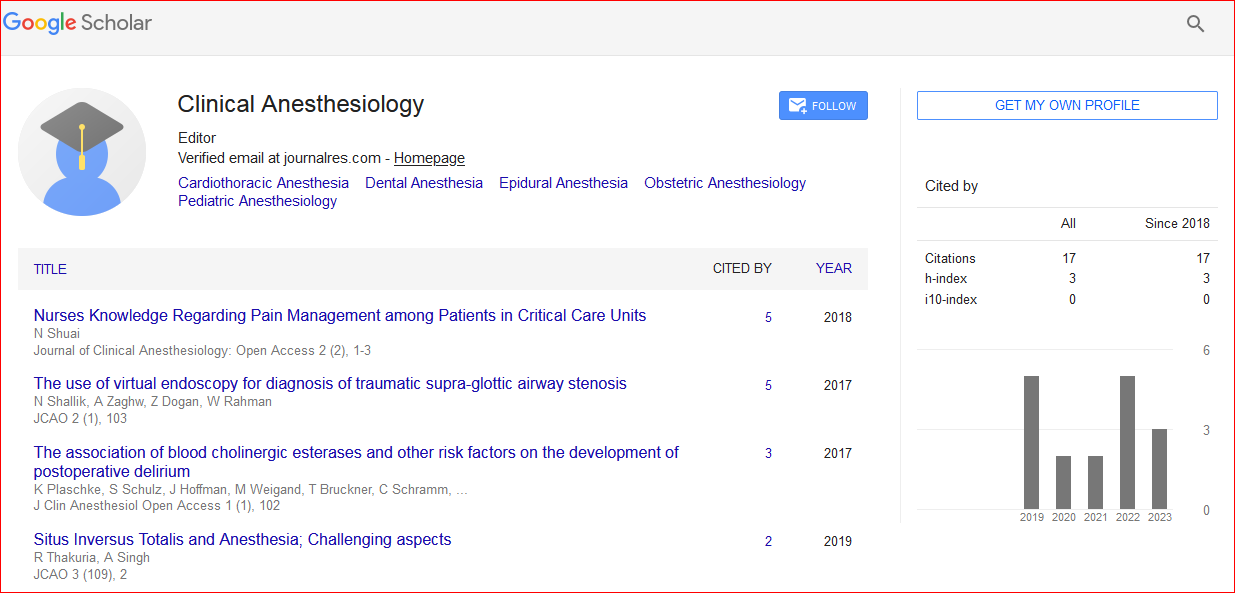
Journal of Clinical Anesthesiology: Open Access received 31 citations as per Google Scholar report