Mini Review - (2025) Volume 7, Issue 2
Received: 20-Apr-2024, Manuscript No. POLLUTION-24-142602;
Editor assigned: 23-Jul-2024, Pre QC No. POLLUTION-24-142602 (PQ);
Reviewed: 06-Aug-2024, QC No. POLLUTION-24-142602;
Revised: 14-Apr-2025, Manuscript No. POLLUTION-24-142602 (R);
Published:
21-Apr-2025
, DOI: 10.37421/2684-4958.2025.8.376
Citation: Wash, Kong. "An Examination of How Wind Farm Development Affects the Marine Environment." J Pollution 08 (2025): 376.
Copyright: © 2025 Wash K. This is an open-access article distributed under the terms of the creative commons attribution license which permits unrestricted use, distribution and reproduction in any medium, provided the original author and source are credited.
The transition toward renewable energy has driven the rapid expansion of offshore wind farms, capitalizing on the strong and consistent winds over marine environments. While these developments contribute to climate change mitigation and energy sustainability, they also pose complex challenges to marine ecosystems. This article explores the multifaceted environmental impacts of offshore wind farms, including habitat disturbance, noise pollution, changes in water quality and potential benefits such as artificial reef creation and biodiversity enhancement.
Transition • Environmental impacts • Offshore • Wind farms
The increasing demand for renewable energy has led to the rapid expansion of wind farms, both onshore and offshore. Offshore wind farms, in particular, have gained popularity due to their ability to harness strong and consistent wind currents over the ocean. While offshore wind farms offer significant environmental benefits by reducing reliance on fossil fuels and lowering greenhouse gas emissions, their development and operation can have profound impacts on the marine environment. This article examines the various ways in which wind farm development affects marine ecosystems, encompassing both the potential benefits and detrimental effects.
Impact on marine habitats
The construction and operation of offshore wind farms involve several activities that can alter marine habitats. These include seabed preparation, installation of turbines and foundations and the laying of submarine cables.
Seabed disturbance
Habitat disruption: The installation of wind turbine foundations requires extensive seabed preparation, including dredging and pile driving. These activities can disrupt benthic habitats, leading to the displacement or destruction of benthic organisms such as corals, sponges and benthic invertebrates. The physical disturbance of the seabed can also resuspend sediments, reducing water quality and smothering nearby habitats [1-4].
Sediment plumes: Sediment plumes created by seabed disturbance can have far-reaching effects on marine life. Suspended sediments can reduce light penetration, affecting photosynthetic organisms such as seagrasses and phytoplankton. Additionally, sedimentation can clog the gills of filter-feeding organisms and bury eggs and larvae, impacting their survival and reproduction.
Artificial reefs
Habitat creation: On the positive side, wind turbine foundations and associated structures can act as artificial reefs, providing new habitats for marine organisms. These structures can attract various species, including fish, crustaceans and mollusks, enhancing local biodiversity. The colonization of these artificial reefs by marine life can lead to the establishment of complex and productive ecosystems.
Biodiversity enhancement: Studies have shown that offshore wind farms can increase local biodiversity by providing hard substrates for sessile organisms and shelter for mobile species. The presence of these artificial reefs can create new feeding, breeding and nursery grounds, potentially enhancing the overall health of marine ecosystems.
Effects on marine fauna
The presence and operation of wind farms can impact various marine species, including fish, marine mammals and seabirds, through noise pollution, habitat alteration and collision risks.
Noise pollution
Construction noise: The construction phase of offshore wind farms generates significant underwater noise from activities such as pile driving, drilling and vessel operations. These sounds can interfere with the communication, navigation and foraging behaviors of marine mammals such as dolphins and whales. Prolonged exposure to construction noise can lead to stress, disorientation and even temporary or permanent hearing loss in marine mammals [5-8].
Operational noise: Once operational, wind turbines continue to produce underwater noise from the rotation of blades, gearboxes and other mechanical components. While operational noise levels are generally lower than construction noise, they can still impact marine life, particularly fish and invertebrates that rely on sound for communication and predator avoidance.
Habitat alteration
Fish communities: The introduction of wind farm structures can alter local fish communities by providing new habitats and changing predator-prey dynamics. Some fish species may benefit from the shelter and food resources offered by artificial reefs, leading to increased abundance and diversity. However, others may be displaced by the habitat changes or attracted to the area, increasing competition and predation pressure.
Marine mammals: Marine mammals may avoid areas with high levels of underwater noise or increased vessel traffic associated with wind farm operations. This displacement can reduce access to important feeding and breeding grounds, impacting their health and reproductive success. Additionally, the presence of wind farm structures can create barriers to movement, affecting migration patterns.
Collision risks
Birds and bats: Offshore wind turbines pose a collision risk to birds and bats, particularly during migration periods. Birds may collide with turbine blades, leading to injury or death. The risk of collision varies depending on the species, weather conditions, and turbine design. Measures such as strategic placement of turbines, turbine shut-down during peak migration periods and the use of deterrent devices can help mitigate collision risks.
Marine mammals and fish: The risk of collision with underwater structures and cables is generally low for marine mammals and fish. However, the presence of these structures can alter their movement patterns and behavior, potentially leading to increased energy expenditure and reduced fitness.
Impacts on water quality
Offshore wind farm development can influence water quality through sediment resuspension, chemical pollution and changes in hydrodynamics.
Sediment resuspension
Turbidity increase: Construction activities such as dredging and pile driving can resuspend sediments, increasing turbidity levels in the water column. High turbidity can reduce light penetration, affecting photosynthetic organisms and primary productivity. Additionally, suspended sediments can carry pollutants and nutrients, impacting water quality and ecosystem health.
Pollutant release: Sediments can contain pollutants such as heavy metals, hydrocarbons, and organic compounds. Resuspension of these sediments during construction can release these pollutants into the water column, potentially affecting the health of marine organisms and the quality of marine resources [9].
Chemical pollution
Lubricants and fuels: The operation and maintenance of wind turbines involve the use of lubricants, hydraulic fluids and fuels, which can leak or spill, leading to chemical pollution. These substances can be toxic to marine life, causing physiological stress, behavioral changes and mortality.
Anti-fouling coatings: Wind farm structures are often coated with anti-fouling paints to prevent the growth of marine organisms. These coatings can leach toxic compounds into the water, impacting nontarget species and contributing to chemical pollution.
Hydrodynamic changes
Water circulation: The presence of wind farm structures can alter local hydrodynamics, affecting water circulation patterns, sediment transport and nutrient distribution. Changes in water flow can impact the distribution and abundance of plankton, fish larvae and other marine organisms, influencing ecosystem dynamics.
Scour and erosion: The installation of wind turbines can cause localized scour and erosion around the foundations, altering seabed morphology and potentially impacting benthic habitats. Scour protection measures, such as rock armoring or mats, can help mitigate these effects but may also create new habitats for marine organisms.
Socioeconomic considerations
The development of offshore wind farms also has socioeconomic implications, affecting fisheries, tourism and coastal communities.
Fisheries
Resource competition: Offshore wind farms can compete with commercial and recreational fisheries for space and resources. The exclusion of fishing activities from wind farm areas can lead to conflicts between stakeholders. However, the creation of artificial reefs can enhance local fish populations, potentially benefiting fisheries in the long term.
Economic impacts: The economic impacts of wind farm development on fisheries can be both positive and negative. While restricted access to fishing grounds can reduce catch and income for fishers, the establishment of wind farms can create new economic opportunities through job creation and increased demand for local services.
Tourism
Visual impact: The visual impact of offshore wind farms can influence tourism, particularly in coastal areas where scenic views are a major attraction. While some tourists may perceive wind farms as visually intrusive, others may view them as symbols of environmental sustainability, potentially attracting eco-tourists.
Recreational activities: Offshore wind farms can also impact recreational activities such as boating, sailing and diving. The presence of wind farm structures can alter navigation routes and create new opportunities for recreational activities around artificial reefs.
Coastal communities
Community benefits: Offshore wind farm development can bring economic benefits to coastal communities through job creation, infrastructure development and increased investment. Community engagement and benefit-sharing mechanisms can help ensure that local communities receive a fair share of the benefits.
Environmental awareness: The presence of offshore wind farms can raise environmental awareness and support for renewable energy among coastal communities. Educational programs and outreach activities can help promote understanding and acceptance of wind energy development.
Mitigation and management strategies
To minimize the environmental impacts of offshore wind farm development, effective mitigation and management strategies are essential. These strategies should be based on comprehensive Environmental Impact Assessments (EIAs) and involve stakeholder engagement.
Environmental Impact Assessments (EIAs)
Baseline studies: Baseline studies should be conducted to assess the existing environmental conditions and identify sensitive habitats and species. This information is crucial for designing wind farms that minimize environmental impacts.
Impact monitoring: Ongoing monitoring of environmental impacts during construction and operation is essential for assessing the effectiveness of mitigation measures and adapting management strategies as needed.
Mitigation measures
Noise mitigation: To reduce the impact of underwater noise on marine life, noise mitigation measures such as bubble curtains, softstart pile driving and seasonal restrictions on construction activities can be implemented.
Habitat restoration: Habitat restoration and enhancement measures, such as the creation of artificial reefs and the restoration of damaged habitats, can help offset the impacts of wind farm development on marine ecosystems.
Pollution control: Strict pollution control measures should be implemented to prevent chemical spills and leaks during construction and operation. The use of environmentally friendly materials and technologies can also help reduce pollution risks.
Stakeholder engagement
Community involvement: Engaging local communities and stakeholders in the planning and decision-making process is crucial for addressing concerns and ensuring that the benefits of wind farm development are shared equitably.
Fisheries management: Collaborative fisheries management approaches that involve fishers, scientists, and policymakers can help resolve conflicts and promote the sustainable use of marine resources.
Offshore wind farm development offers significant environmental benefits by providing clean, renewable energy and reducing greenhouse gas emissions. However, it also poses challenges for marine ecosystems through habitat disruption, noise pollution and changes in water quality. By understanding these impacts and implementing effective mitigation.
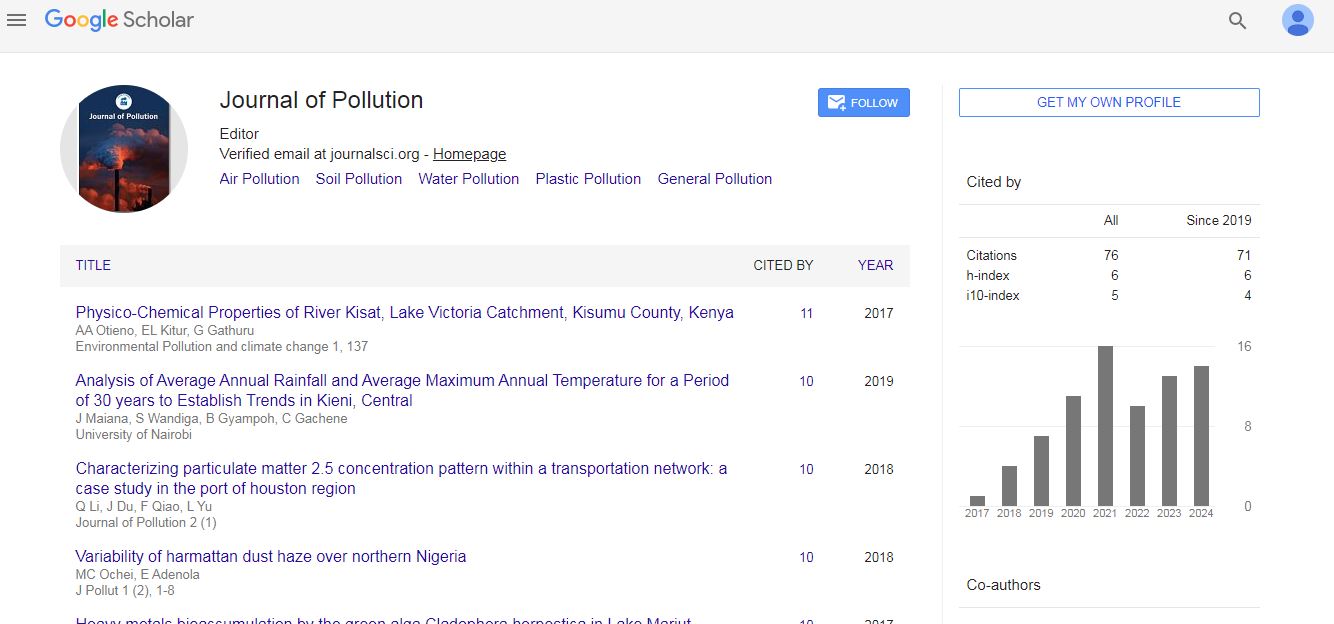
Journal of Pollution received 64 citations as per Google Scholar report