Opinion - (2025) Volume 9, Issue 5
Received: 03-Oct-2025, Manuscript No. jcre-26-187223;
Editor assigned: 06-Oct-2025, Pre QC No. P-187223;
Reviewed: 20-Oct-2025, QC No. Q-187223;
Revised: 24-Oct-2025, Manuscript No. R-187223;
Published:
31-Oct-2025
, DOI: 10.37421/2795-6172.2025.9.350
Citation: Oliveira, Beatriz. ”Aerobic Exercise: Prediabetes Reversal, Blood Glucose Control.” J Clin Res 09 (2025):353.
Copyright: © 2025 Oliveira B. This is an open-access article distributed under the terms of the Creative Commons Attribution License, which permits unrestricted use, distribution and reproduction in any medium, provided the original author and source are credited.
Aerobic exercise has emerged as a potent strategy for managing prediabetes, a condition characterized by elevated blood glucose levels that increase the risk of type 2 diabetes and cardiovascular disease. Its positive impact on glycemic control is well-documented and multifaceted. Regular engagement in aerobic activities demonstrably improves insulin sensitivity and enhances glucose uptake by muscles, leading to reductions in both fasting blood glucose and HbA1c levels, making it a cornerstone intervention for preventing diabetes progression [1].
Consistent aerobic training also proves effective in mitigating postprandial glucose excursions, helping individuals with prediabetes to manage the sharp rises in blood sugar that often occur after meals by improving glucose disposal and metabolic flexibility [2].
The effectiveness of aerobic exercise in glycemic control is influenced by critical factors such as intensity and duration, with moderate-intensity exercise performed for at least 150 minutes per week showing the most robust benefits [3].
Furthermore, combining aerobic exercise with resistance training can offer additive advantages for blood glucose management in prediabetic adults, as this approach concurrently enhances insulin sensitivity and muscle mass, both vital for maintaining glucose homeostasis [4].
Beyond direct glycemic effects, aerobic exercise positively influences incretin hormone responses, contributing to improved glucose-dependent insulin secretion and reduced glucagon levels, further supporting better glycemic regulation [5].
The benefits of aerobic exercise extend to improvements in cardiovascular risk factors, including blood pressure and lipid profiles, underscoring its holistic impact on metabolic health [6].
Achieving sustained improvements in blood glucose levels necessitates adherence to aerobic exercise programs, highlighting the importance of strategies that promote long-term engagement, such as personalized plans and social support [7].
In a significant proportion of individuals, regular aerobic physical activity can even lead to the reversal of prediabetes to normoglycemia, driven by its cumulative effects on insulin sensitivity and beta-cell function [8].
Mechanistically, aerobic exercise enhances muscle glucose transporter (GLUT4) expression and activity, which is crucial for increasing peripheral glucose uptake and utilization [9].
Optimizing blood glucose reduction in prediabetic adults can be further achieved through personalized aerobic exercise prescriptions tailored to individual metabolic responses, potentially enhancing both efficacy and adherence [10].
The intervention of aerobic exercise offers a significant positive impact on blood glucose control in adults diagnosed with prediabetes. By engaging in regular aerobic activities, individuals can experience improved insulin sensitivity and a greater uptake of glucose by their muscles. This physiological response directly contributes to lower fasting blood glucose levels and reduced HbA1c, establishing aerobic exercise as a primary method for preventing the transition to type 2 diabetes [1].
Moreover, consistent participation in aerobic training has been shown to effectively reduce the sharp increases in blood sugar that occur after meals, known as postprandial glucose excursions. This improvement in glucose disposal and metabolic flexibility is a key characteristic of healthy glucose metabolism [2].
The efficacy of aerobic exercise in managing prediabetes is closely tied to its intensity and duration. Studies indicate that moderate-intensity aerobic exercise, when performed consistently for at least 150 minutes per week, yields the most significant benefits for controlling blood glucose levels [3].
An enhanced approach involves combining aerobic exercise with resistance training, which provides synergistic benefits for blood glucose management in prediabetic individuals. This combined strategy effectively improves both insulin sensitivity and muscle mass, both critical components for maintaining stable glucose levels [4].
Aerobic exercise also positively influences the body's hormonal balance related to glucose regulation. It modulates incretin hormone responses, leading to improved glucose-dependent insulin secretion and decreased glucagon levels, thereby contributing to better overall glycemic regulation in those with prediabetes [5].
Beyond its direct metabolic benefits, aerobic exercise positively impacts cardiovascular health, a common concern in individuals with prediabetes. It contributes to improvements in associated risk factors, such as elevated blood pressure and unfavorable lipid profiles, highlighting a comprehensive effect on metabolic well-being [6].
Crucially, the long-term success of aerobic exercise for blood glucose management in prediabetes hinges on sustained adherence to these programs. Therefore, implementing strategies that foster long-term engagement, such as customized exercise plans and robust social support systems, is vital for maximizing the clinical benefits observed [7].
In many cases, regular aerobic physical activity has demonstrated the remarkable ability to reverse prediabetes, leading to a state of normoglycemia. This reversal is attributed to the cumulative positive effects of consistent exercise on insulin sensitivity and the proper functioning of pancreatic beta-cells [8].
At the cellular level, aerobic exercise enhances the expression and activity of muscle glucose transporters, specifically GLUT4. This molecular adaptation plays a pivotal role in increasing the capacity of muscles to take up and utilize glucose from the bloodstream [9].
To further optimize the positive effects of aerobic exercise, personalized prescription strategies based on an individual's unique metabolic responses are proving to be highly effective. Tailoring exercise regimens can enhance both the efficacy of glucose reduction and the likelihood of long-term adherence among prediabetic adults [10].
Aerobic exercise is a vital intervention for prediabetic adults, significantly improving blood glucose control. It enhances insulin sensitivity, muscle glucose uptake, and reduces postprandial glucose spikes, thereby preventing the progression to type 2 diabetes. The effectiveness is influenced by exercise intensity and duration, with moderate activity for 150 minutes weekly being optimal. Combining aerobic with resistance training offers additive benefits. Aerobic exercise also positively impacts hormonal responses, cardiovascular risk factors, and can lead to the reversal of prediabetes to normoglycemia. Adherence and personalized exercise plans are crucial for sustained benefits. Mechanisms include improved GLUT4 expression and incretin hormone modulation.
None
None
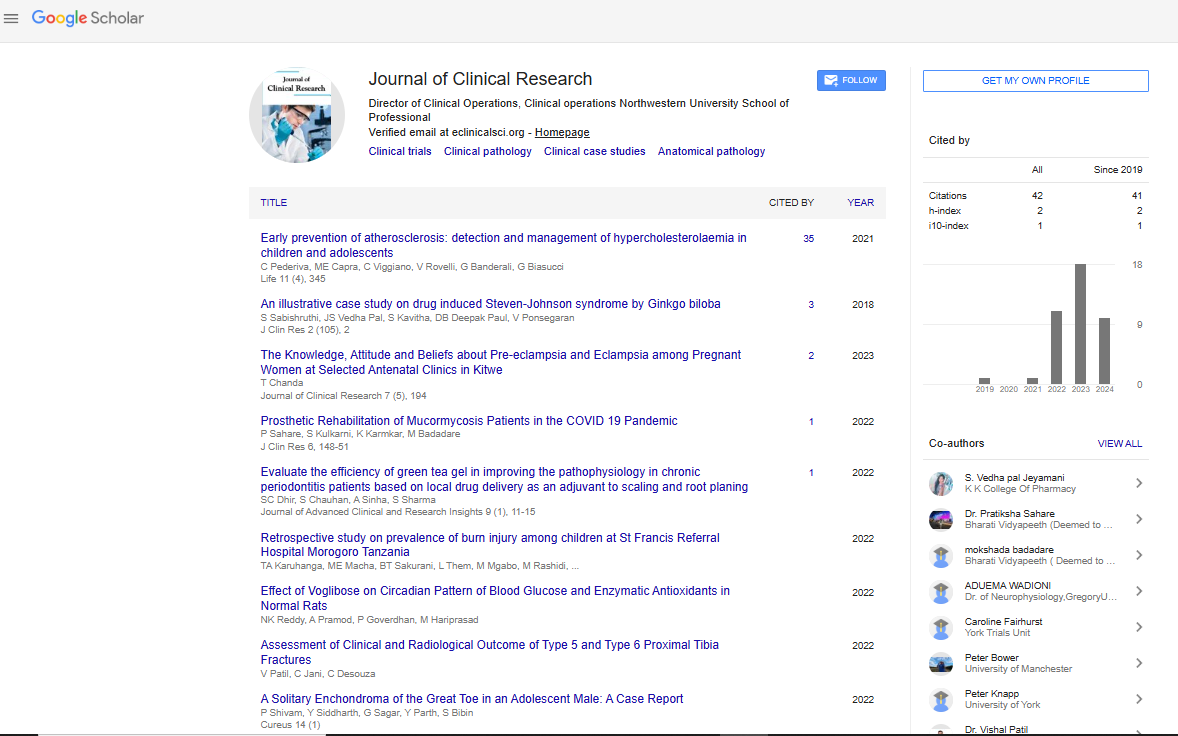
Journal of Clinical Research received 11 citations as per Google Scholar report