Opinion - (2025) Volume 9, Issue 5
Received: 03-Oct-2025, Manuscript No. jcre-26-187219;
Editor assigned: 06-Oct-2025, Pre QC No. P-187219;
Reviewed: 20-Oct-2025, QC No. Q-187219;
Revised: 24-Oct-2025, Manuscript No. R-187219;
Published:
31-Oct-2025
, DOI: 10.37421/2795-6172.2025.9.350
Citation: Oliveira, Beatriz. ”Aerobic Exercise: A Powerful Tool for Diabetes Prevention.” J Clin Res 09 (2025):350.
Copyright: © 2025 Oliveira B. This is an open-access article distributed under the terms of the Creative Commons Attribution License, which permits unrestricted use, distribution and reproduction in any medium, provided the original author and source are credited.
The management of prediabetes represents a critical public health challenge, aiming to prevent the progression to type 2 diabetes, a condition associated with significant morbidity and mortality. A cornerstone of this management strategy involves lifestyle modifications, prominently featuring regular physical activity. Among the various forms of exercise, aerobic activity has emerged as a particularly effective intervention for improving glycemic control in individuals with prediabetes. This has been consistently demonstrated across numerous research studies, highlighting its physiological benefits and potential to reverse or delay the onset of diabetes. The scientific community has extensively investigated the impact of aerobic exercise, underscoring its role in enhancing insulin sensitivity and improving glucose uptake by the muscles, which are key mechanisms in combating insulin resistance characteristic of prediabetes. The profound influence of consistent aerobic activity provides a tangible, non-pharmacological strategy that can significantly alter the trajectory of prediabetes for affected adults. This approach offers a proactive method for managing the condition and is supported by evidence showing reductions in key glycemic markers. [1] Aerobic exercise interventions have proven to be highly effective in improving insulin sensitivity among individuals diagnosed with prediabetes. This enhancement plays a pivotal role in facilitating better glucose utilization by the body's peripheral tissues, thereby contributing to a reduction in hyperglycemia. The research consistently suggests that engaging in moderate to vigorous intensity aerobic activity over a sustained period is essential for eliciting these beneficial metabolic changes. This emphasis on sustained and appropriate intensity training underlines the importance of developing personalized exercise prescriptions tailored to individual needs and capabilities. Such individualized approaches are crucial for maximizing the therapeutic effects of exercise. [2] This research compellingly highlights how the integration of aerobic exercise into the daily routines of adults with prediabetes can significantly mitigate their risk of advancing to type 2 diabetes. The observable improvements in critical glycemic markers, such as fasting plasma glucose and HbA1c levels, are directly attributed to the enhanced metabolic responses elicited by exercise. It is now widely accepted that exercise functions as a potent modulator of glucose homeostasis, playing an indispensable role in preventing metabolic dysfunction. This understanding has shifted the paradigm towards exercise as a primary therapeutic modality. [3] The frequency and duration of aerobic exercise are pivotal factors influencing its effectiveness in managing blood glucose levels within prediabetic populations. The findings from various studies consistently indicate that regular and consistent engagement, even at moderate intensities, leads to sustained and meaningful improvements in glycemic control. This observation strongly suggests that long-term adherence to well-structured exercise programs is paramount for achieving lasting glycemic control and for the successful prevention of type 2 diabetes. The commitment to an active lifestyle is thus key. [4] This research further emphasizes the broad spectrum of benefits associated with aerobic exercise for adults diagnosed with prediabetes, extending well beyond mere glucose regulation. Notably, it encompasses improvements in lipid profiles and overall cardiovascular health. The synergistic interplay of these physiological enhancements contributes significantly to a reduction in overall metabolic risk, positioning aerobic exercise as an indispensable component in the comprehensive management of prediabetes. Its multifaceted impact is a significant advantage. [5] Adherence to aerobic exercise programs among prediabetic populations can be substantially bolstered through the strategic implementation of various motivational techniques. This study delves into the exploration of behavioral interventions specifically designed to support sustained engagement with exercise, which in turn leads to consistent and improved reductions in blood glucose levels. The findings underscore that the efficacy of exercise is not solely dependent on the activity itself but also on establishing it as a lasting and integrated habit in one's lifestyle. [6] This article provides an in-depth examination of the specific molecular mechanisms through which aerobic exercise influences glucose metabolism in prediabetic states. It meticulously investigates how exercise actively modulates key cellular pathways, including those related to glucose transporter expression and mitochondrial function. This detailed molecular perspective offers a deeper and more nuanced understanding of the physiological adaptations that collectively contribute to improved blood glucose control. The insights are crucial for targeted interventions. [7] The strategic combination of aerobic exercise with tailored dietary modifications presents a synergistic approach that offers superior benefits for managing blood glucose levels in adults with prediabetes. This study conclusively demonstrates that this integrated strategy yields more significant positive outcomes when compared to pursuing either intervention in isolation. It powerfully emphasizes the critical importance of adopting a holistic lifestyle approach for achieving optimal glycemic control and effectively preventing the development of type 2 diabetes. [8] This paper undertakes a comprehensive review of the existing evidence concerning the differential impact of various aerobic exercise intensities on blood glucose regulation in individuals with prediabetes. It posits that both moderate and vigorous intensity exercise can confer significant benefits, although the optimal 'dose' or intensity may exhibit individual variability. Consequently, the recommendation for personalized exercise prescriptions is reinforced to ensure maximal therapeutic efficacy for each individual. [9] The long-term efficacy of aerobic exercise in preventing the onset of type 2 diabetes among individuals already diagnosed with prediabetes is remarkably substantial. This longitudinal study provides compelling confirmation that sustained participation in aerobic exercise programs is directly associated with enduring improvements in glycemic control and a significantly reduced incidence of diabetes over an extended period. This establishes aerobic exercise as a vital preventive strategy. [10]
The regular practice of aerobic exercise has been unequivocally demonstrated to lower blood glucose levels in adults diagnosed with prediabetes. This beneficial effect is closely associated with improvements in insulin sensitivity, enabling muscles to take up glucose more effectively. The core takeaway is that consistent engagement in aerobic activities offers a practical, non-medicinal approach to managing prediabetes and potentially delaying or averting the development of type 2 diabetes. Evidence from studies supports this, showing notable reductions in HbA1c and fasting glucose levels. [1] Aerobic exercise interventions have proven efficacy in enhancing insulin sensitivity among individuals categorized as having prediabetes. This heightened sensitivity facilitates improved glucose utilization by peripheral tissues, which in turn helps to reduce elevated blood glucose levels. The research findings indicate that adopting a moderate to vigorous intensity of aerobic activity for a prolonged duration is paramount for achieving these advantageous metabolic changes. This highlights the necessity for tailored exercise plans. [2] This particular study underscores the significant role of incorporating aerobic exercise into the lifestyle choices of adults with prediabetes, effectively reducing their risk of progressing to type 2 diabetes. The observed enhancements in key glycemic indicators, such as fasting plasma glucose and HbA1c, are directly attributable to the augmented metabolic response triggered by exercise. It is clear that exercise serves as a potent regulator of glucose balance within the body. [3] The intensity, frequency, and duration of aerobic exercise are critical determinants of its effectiveness in regulating blood glucose levels among individuals identified with prediabetes. The evidence suggests that consistent participation, even at moderate exertion levels, yields enduring improvements. This points to the crucial importance of long-term commitment to exercise regimens for maintaining stable glycemic control and preventing the onset of diabetes. [4] This research highlights the extensive health advantages of aerobic exercise for prediabetic adults, which extend beyond the regulation of glucose metabolism. These benefits also encompass improvements in lipid profiles and overall cardiovascular well-being. The collective impact of these enhancements contributes to a diminished overall metabolic risk, firmly establishing aerobic exercise as a foundational element in the management of prediabetes. [5] In prediabetic populations, adherence to aerobic exercise programs can be significantly improved through the implementation of various motivational strategies. This study explores specific behavioral interventions that actively support sustained engagement, resulting in consistent and effective reductions in blood glucose levels. Therefore, the success of exercise interventions is also contingent on fostering long-term habit formation. [6] This article delves into the specific molecular pathways and mechanisms through which aerobic exercise exerts its glucose-lowering effects in prediabetic individuals. It examines how exercise influences critical cellular processes such as the expression of glucose transporters and the function of mitochondria, thereby providing a deeper scientific understanding of the physiological adaptations responsible for improved glycemic control. [7] The integration of aerobic exercise alongside structured dietary changes provides a synergistic approach to managing blood glucose levels in adults experiencing prediabetes. This study demonstrates that this combined intervention strategy leads to superior clinical outcomes compared to implementing either aerobic exercise or dietary changes independently, emphasizing the value of a comprehensive lifestyle approach. [8] This publication reviews the scientific literature pertaining to the impact of varying intensities of aerobic exercise on blood glucose regulation in individuals with prediabetes. The review suggests that both moderate and vigorous exercise intensities can be beneficial, but acknowledges that the optimal intensity may differ among individuals. Consequently, the adoption of personalized exercise prescriptions is advocated for maximizing effectiveness. [9] The long-term effectiveness of aerobic exercise in preventing the development of type 2 diabetes in individuals diagnosed with prediabetes is substantial and well-documented. This longitudinal research confirms that continuous engagement in aerobic exercise programs leads to sustained improvements in glycemic control and a marked reduction in the incidence of diabetes over time, reinforcing its role as a vital preventive measure. [10]
Aerobic exercise is a highly effective, non-pharmacological strategy for managing prediabetes and preventing type 2 diabetes. Consistent engagement in aerobic activities enhances insulin sensitivity, improves glucose uptake by muscles, and leads to significant reductions in blood glucose levels, HbA1c, and fasting glucose. Both moderate and vigorous intensities are beneficial, with personalized prescriptions recommended. Beyond glycemic control, aerobic exercise also improves lipid profiles and cardiovascular health. Adherence can be enhanced through behavioral strategies, and combined with dietary modifications, offers synergistic benefits. Understanding the molecular mechanisms further solidifies its therapeutic role. Long-term participation ensures sustained benefits and significantly reduces the risk of developing type 2 diabetes.
None
None
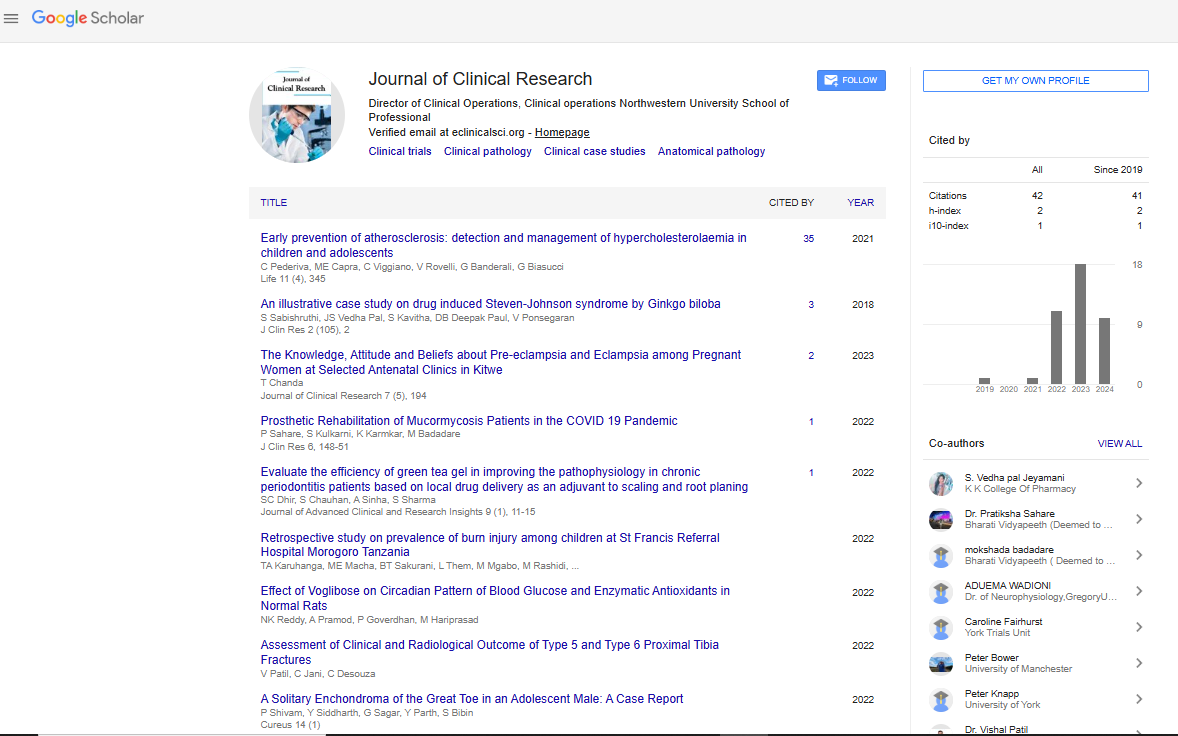
Journal of Clinical Research received 11 citations as per Google Scholar report