Commentary - (2025) Volume 14, Issue 2
Received: 01-Mar-2025, Manuscript No. jtsm-26-179506;
Editor assigned: 03-Mar-2025, Pre QC No. P-179506;
Reviewed: 17-Mar-2025, QC No. Q-179506;
Revised: 24-Mar-2025, Manuscript No. R-179506;
Published:
31-Mar-2025
, DOI: 10.37421/2167-0919.2025.14.491
Citation: Yamamoto, Kenji. ”Advancing Telecommunications: AI, SDN, and Quantum Frontiers.” J Telecommun Syst Manage 14 (2025):491.
Copyright: © 2025 Yamamoto K. This is an open-access article distributed under the terms of the Creative Commons Attribution License, which permits unrestricted use, distribution and reproduction in any medium, provided the original author and source are credited.
The landscape of modern telecommunications is characterized by an insatiable demand for higher throughput, lower latency, and unwavering reliability, driven by the proliferation of services such as 5G and the Internet of Things (IoT) [1].
The continuous evolution of network infrastructure necessitates sophisticated strategies to meet these escalating requirements, pushing the boundaries of existing capabilities. This article delves into the crucial domain of performance optimization, exploring advanced techniques that underpin the efficiency and responsiveness of contemporary communication systems. The insights provided are vital for network operators striving to deliver a superior user experience while simultaneously enhancing operational efficiency in an increasingly competitive market. Understanding and implementing these methods is paramount for future network success. 5G networks, with their promise of ultra-high speeds and minimal delay, present a unique set of challenges and opportunities for resource management [2].
The intelligent allocation and utilization of network resources are no longer secondary considerations but central to achieving the full potential of this next-generation technology. This paper investigates the pivotal role of artificial intelligence and machine learning in this context, examining how these technologies can proactively address network demands. The findings underscore the importance of intelligent algorithms in predicting traffic patterns, optimizing spectrum usage, and dynamically assigning computational resources to ensure optimal network performance and energy efficiency. Beyond the core network, the energy consumption of telecommunication base stations represents a significant operational cost and environmental concern [3].
The drive towards sustainability in the telecommunications industry necessitates a focused effort on reducing the energy footprint of network infrastructure. This study explores various advanced techniques aimed at optimizing energy efficiency within base stations. The discussion encompasses methods such as intelligent sleep mode scheduling, dynamic power control mechanisms, and the integration of renewable energy sources. These optimizations are not only crucial for reducing operational expenditures but also for mitigating the overall environmental impact of telecommunication networks. In parallel with advancements in resource management and energy efficiency, the architectural paradigms of telecommunication networks are undergoing a profound transformation [4].
Software-Defined Networking (SDN) has emerged as a key enabler of enhanced flexibility and performance, fundamentally altering how networks are controlled and managed. This article examines the significant role of SDN in fostering more agile and responsive network environments. By centralizing network control and enabling programmability, SDN facilitates more dynamic resource allocation and simplifies overall network management, which is indispensable for supporting the diverse and evolving service demands of the future. Complementing the principles of SDN, Network Function Virtualization (NFV) offers a compelling approach to improving the cost-effectiveness and scalability of telecommunications services [5].
Traditionally, network functions were implemented on dedicated hardware, leading to high costs and slow deployment cycles. NFV revolutionizes this by allowing network functions to operate as software on general-purpose hardware. This paradigm shift enables faster service deployment, more efficient resource utilization, and enhanced agility, making it a cornerstone of modern network architecture. The ever-increasing volume and velocity of data traffic in high-speed optical networks demand sophisticated traffic engineering solutions [6].
Minimizing latency and maximizing throughput are critical for the performance of data-intensive applications. This research presents a novel approach to traffic engineering, focusing on dynamic wavelength assignment and intelligent routing algorithms. These techniques are designed to efficiently manage fluctuating traffic demands, ensuring that network resources are utilized optimally to deliver seamless data flow. As the demand for real-time applications and the Internet of Things continues to surge, minimizing latency becomes an even more critical performance metric [7].
Edge computing emerges as a powerful solution, enabling data processing to occur closer to the end-users and data sources. This paper examines the implementation of edge computing for reducing latency in telecommunication services. By bringing computational power to the network edge, applications achieve significantly improved responsiveness, which is particularly vital for time-sensitive services. Within the context of 5G networks, network slicing offers a groundbreaking capability to tailor network resources to specific application requirements [8].
This technology allows for the creation of virtual, isolated network segments, each optimized for distinct Quality of Service (QoS) parameters. The study investigates the performance implications of network slicing, highlighting its crucial role in supporting a diverse range of services, from enhanced mobile broadband to ultra-reliable low-latency communications. The exponential growth in mobile data traffic necessitates continuous optimization of wireless resource allocation [9].
Enhanced Mobile Broadband (eMBB) services, a key component of 5G, rely heavily on efficient spectrum utilization and effective interference management. This article addresses these challenges by proposing dynamic spectrum sharing and advanced interference mitigation techniques. The goal is to maximize spectral efficiency and user throughput, thereby meeting the escalating demand for high-bandwidth mobile data services. Looking towards the future, the potential of quantum computing to revolutionize complex network optimization problems is a subject of intense research [10].
While still in its nascent stages, quantum computing offers the theoretical possibility of solving problems intractable for classical computers. This research explores the application of quantum computing in optimizing telecommunication network routing, presenting potential algorithms and frameworks for achieving significant performance gains in large-scale network management scenarios.
The contemporary telecommunications ecosystem is defined by an escalating demand for enhanced network capabilities, including higher data rates, reduced latency, and superior reliability, largely propelled by the widespread adoption of services like 5G and the Internet of Things (IoT) [1].
To effectively address these growing requirements, sophisticated methodologies for optimizing network performance are indispensable. This article offers a comprehensive exploration of these advanced techniques, focusing on their application in modern telecommunications networks to improve overall efficiency and user experience. The insights presented are crucial for network operators seeking to maintain a competitive edge and ensure the robust functioning of their infrastructure. Within the realm of 5G networks, intelligent resource management stands as a cornerstone for achieving optimal performance and efficiency [2].
The dynamic and unpredictable nature of network traffic necessitates the application of advanced technologies like artificial intelligence (AI) and machine learning (ML). This paper meticulously examines how AI and ML algorithms can be leveraged to predict traffic fluctuations, optimize the utilization of spectrum, and dynamically allocate computational resources. Such intelligent management is vital for enhancing overall network performance and concurrently reducing energy consumption, paving the way for scalable and efficient 5G infrastructure. Energy efficiency in telecommunication base stations is a critical aspect of operational sustainability and cost reduction [3].
The continuous operation of these stations contributes significantly to the overall energy footprint of telecommunication networks. This study focuses on developing and implementing advanced techniques to optimize energy consumption at the base station level. Key strategies discussed include intelligent sleep mode scheduling, dynamic power control, and the integration of renewable energy sources, all aimed at minimizing operational costs and reducing the environmental impact of network operations. Software-Defined Networking (SDN) represents a paradigm shift in network architecture, offering unprecedented levels of flexibility and control over telecommunication networks [4].
By decoupling the control plane from the data plane, SDN enables centralized management and programmability, leading to more dynamic and responsive network operations. This article highlights how SDN facilitates agile resource allocation and simplifies network management processes. These capabilities are essential for adapting to the diverse and rapidly evolving service demands characteristic of modern telecommunication networks. Complementing the advancements brought by SDN, Network Function Virtualization (NFV) plays a crucial role in enhancing the cost-effectiveness and scalability of telecommunications services [5].
NFV transforms traditional hardware-centric network functions into software applications that can run on commodity hardware. This virtualization approach significantly accelerates service deployment, improves resource utilization, and offers greater flexibility compared to legacy hardware-based solutions. The research emphasizes how NFV contributes to building more agile and economically viable telecommunication infrastructures. In the context of high-speed optical networks, effective traffic engineering is paramount for maintaining low latency and maximizing throughput, especially for data-intensive applications [6].
The fluctuations in traffic demand require dynamic and intelligent management of network resources. This paper introduces an advanced approach to traffic engineering that employs dynamic wavelength assignment and sophisticated routing algorithms. These techniques are designed to efficiently handle varying traffic loads, ensuring optimal data flow and network performance. Latency reduction is a critical performance indicator for many modern telecommunication services, particularly those involving real-time interactions and the Internet of Things (IoT) [7].
Edge computing emerges as a pivotal technology for addressing this challenge by bringing computation closer to the data source and end-user. This research investigates the practical implementation of edge computing within telecommunication services and its substantial impact on latency reduction. The discussion covers architectural considerations and the performance benefits derived from processing data at the network edge. Network slicing in 5G systems provides a sophisticated mechanism for tailoring network capabilities to specific application needs, thereby ensuring optimal performance [8].
This technology allows for the creation of isolated virtual networks, each optimized to meet distinct Quality of Service (QoS) requirements. The study explores the performance implications of implementing network slicing, underscoring its importance in supporting a wide spectrum of services, from enhanced mobile broadband to ultra-reliable low-latency communication applications. Optimizing wireless resource allocation is essential for delivering the enhanced mobile broadband (eMBB) services promised by future wireless networks [9].
The continuous increase in data demand requires efficient utilization of the available spectrum and effective management of interference. This article presents a novel methodology for wireless resource allocation, incorporating dynamic spectrum sharing and advanced interference management techniques. The primary objective is to maximize spectral efficiency and user throughput, thereby meeting the ever-growing appetite for data services. Looking ahead, quantum computing holds immense potential for revolutionizing the optimization of complex telecommunication network routing problems [10].
Although still in its early developmental stages, quantum computing offers the prospect of overcoming the limitations of classical computation for certain classes of problems. This research delves into the theoretical frameworks and potential algorithms for applying quantum computing to network routing, aiming to achieve unprecedented performance gains in large-scale network management scenarios.
This compilation of research highlights critical advancements in telecommunications network performance optimization. Key areas explored include advanced techniques for network performance enhancement using software-defined networking and network function virtualization, which enable dynamic resource allocation and greater flexibility. The role of artificial intelligence and machine learning in intelligent resource management for 5G networks is emphasized, alongside strategies for optimizing energy efficiency in base stations. Furthermore, the importance of traffic engineering for high-speed optical networks, the application of edge computing for reducing latency, and the benefits of network slicing in 5G are discussed. Finally, the potential of quantum computing for network routing optimization is presented as a future frontier.
None
None
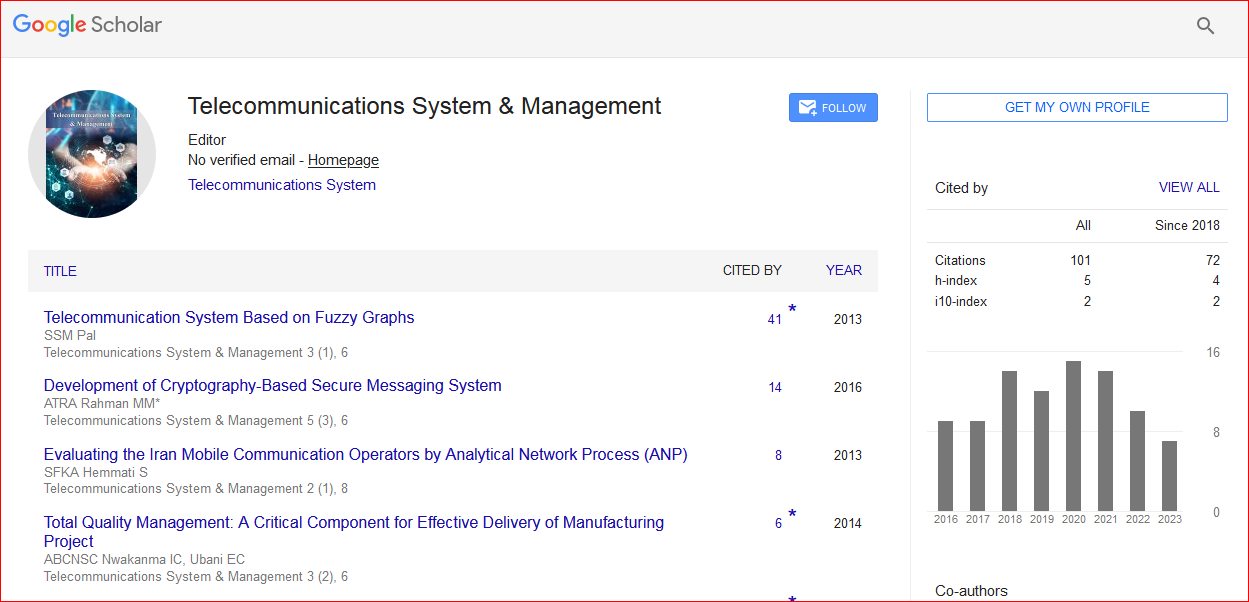
Telecommunications System & Management received 109 citations as per Google Scholar report