Commentary - (2025) Volume 10, Issue 6
Received: 02-Nov-2025, Manuscript No. apn-26-179349;
Editor assigned: 04-Nov-2025, Pre QC No. P-179349;
Reviewed: 16-Nov-2025, QC No. Q-179349;
Revised: 23-Nov-2025, Manuscript No. R-179349;
Published:
30-Nov-2025
, DOI: 10.37421/2573-0347.2025.10.460
Citation: Clarke, Benjamin. âAdvancing APN Skills: Continuous Learning and Leadership. J Adv Practice Nurs 10 (2025):460.
Copyright: © 2025 Clarke B. This is an open-access article distributed under the terms of the Creative Commons Attribution License, which permits unrestricted use, distribution
and reproduction in any medium, provided the original author and source are credited.
The professional development of advanced practice nurses (APNs) is a critical determinant of high-quality healthcare delivery in contemporary health systems. These nurses, possessing advanced clinical knowledge and skills, require continuous learning to maintain their expertise and adapt to the ever-evolving landscape of medical science and patient care needs. This commitment to ongoing education ensures that APNs can effectively meet the complex challenges of modern healthcare, thereby optimizing patient outcomes and contributing to the overall efficiency of healthcare services. The dynamic nature of healthcare necessitates a proactive approach to professional growth, enabling APNs to stay abreast of the latest advancements and best practices within their specialized fields [1].
The rapid evolution of healthcare environments presents both opportunities and challenges for advanced practice nurses, underscoring the imperative for their engagement in ongoing professional development. The integration of digital resources and online learning platforms offers accessible avenues for APNs to enhance their knowledge base and clinical skills. While virtual professional development presents distinct benefits such as broad accessibility and cost-effectiveness, it also necessitates careful consideration of its integration into clinical practice. A blended learning approach is often advocated to cater to the diverse learning preferences and geographical constraints of APNs, ensuring comprehensive skill development and knowledge acquisition [2].
Mentorship plays a pivotal role in shaping the professional trajectories and fostering the growth of advanced practice nurses. Effective mentorship programs are characterized by structured knowledge transfer, targeted skill development, and crucial emotional support, guiding APNs through the complexities of their roles. Strong mentoring relationships are instrumental in enabling APNs to navigate intricate clinical scenarios, overcome professional hurdles, and achieve their career ambitions. The establishment and sustained implementation of impactful mentorship initiatives within healthcare organizations are therefore crucial for cultivating skilled and confident APNs, contributing significantly to their professional advancement and retention [3].
The development of leadership competencies is an essential aspect of advanced practice nursing, enabling APNs to contribute to systemic improvements and influence healthcare policy. APNs acquire these skills through a variety of means, including formal leadership training programs, hands-on experiential learning, and self-directed professional development efforts. Opportunities for practical application, constructive feedback, and reflective practice are paramount in nurturing effective nurse leaders. Healthcare institutions are encouraged to cultivate environments that actively promote leadership growth among APNs, recognizing their unique potential to enhance healthcare systems and patient care delivery [4].
Evidence-based practice (EBP) stands as a cornerstone for the advancement of nursing practice, guiding clinical decision-making and ensuring the delivery of high-quality patient care. Advanced practice nurses are tasked with integrating EBP into their daily routines through critical appraisal of research, adoption of best practices, and diligent outcome evaluation. Addressing the facilitators and barriers to EBP implementation is vital for its successful integration into clinical workflows. Continuous professional development focused on EBP is indispensable for APNs committed to providing patient-centered and outcome-driven care, reflecting the highest standards of nursing excellence [5].
Interprofessional education and collaboration are increasingly recognized as fundamental components of effective healthcare delivery, particularly for advanced practice nurses. Enhanced patient care coordination, a reduction in medical errors, and overall improvements in health outcomes are direct benefits derived from APNs working collaboratively with other healthcare professionals. The promotion of various interprofessional collaboration models, coupled with targeted professional development activities, equips APNs with the necessary communication and teamwork skills. Training programs designed to foster these competencies are essential for successful interprofessional practice, leading to more integrated and efficient patient care [6].
The scope of practice for advanced practice nurses is continually expanding, driven by technological advancements that necessitate ongoing adaptation and skill enhancement. Emerging technologies such as telehealth and artificial intelligence are reshaping healthcare delivery, requiring APNs to develop proficiency in new diagnostic tools, data analytics, and virtual care modalities. Proactive professional development is essential for APNs to effectively leverage these technological innovations, thereby improving patient access to care and enhancing the overall quality of healthcare services. This adaptability ensures APNs remain at the forefront of healthcare innovation [7].
Simulation-based training offers a valuable pedagogical approach for advanced practice nurses, providing a secure environment for skill acquisition and critical thinking development. Through simulated scenarios, APNs can practice complex procedures, refine decision-making abilities, and enhance their preparedness for real-world clinical challenges. The efficacy of simulation training is maximized through well-designed scenarios and structured debriefing sessions. Incorporating simulation into APN curricula and ongoing professional development programs is recommended to foster advanced clinical competencies and ensure readiness for demanding healthcare roles [8].
Significant financial and organizational barriers can impede the professional development of advanced practice nurses, including limited funding, lack of protected time for learning, and insufficient institutional support. These constraints can hinder APNs' capacity to pursue further education and specialized training, impacting their ability to advance their careers and enhance their practice. Strategies aimed at advocating for increased investment in APN professional development are crucial. Demonstrating the return on investment, particularly in terms of improved patient outcomes and reduced healthcare costs, can bolster support for such initiatives. Policy changes and a strong commitment from healthcare institutions are vital to overcoming these obstacles and fostering a culture of continuous learning [9].
Continuing professional development (CPD) is fundamental for advanced practice nurses to maintain their competence, expertise, and adherence to evolving professional standards. CPD encompasses a wide array of learning modalities, including formal courses, workshops, conferences, and self-directed study. Regulatory bodies and professional organizations play a crucial role in establishing CPD requirements and promoting a culture of lifelong learning within the profession. A steadfast commitment to ongoing CPD is indispensable for APNs to deliver safe, effective, and up-to-date patient care in the dynamic and complex healthcare environment of today [10].
The multifaceted landscape of professional development opportunities for advanced practice nurses (APNs) is extensively explored in current literature, highlighting the crucial role of continuous learning. Maintaining high standards of care, adapting to evolving healthcare technologies, and fostering leadership are key drivers for this ongoing educational pursuit. Specific areas of focus include postgraduate education, specialized certifications, interprofessional collaboration, and the impact of research on clinical practice. The authors emphasize the necessity of supportive organizational structures and individual commitment to ensure APNs remain at the forefront of healthcare innovation and patient outcome improvement [1].
The rapidly changing healthcare environment necessitates that advanced practice nurses actively engage in ongoing professional development to remain effective and adaptable. This engagement is facilitated by leveraging digital resources and online learning platforms, which enhance APNs' skills and knowledge base. While virtual professional development offers benefits such as accessibility and cost-effectiveness, challenges related to its integration into clinical practice must be addressed. A blended learning approach is often recommended to accommodate diverse learning needs and geographical locations, ensuring comprehensive professional growth [2].
Mentorship serves as a powerful catalyst for the professional growth and career advancement of advanced practice nurses. Effective mentorship programs are characterized by the successful transfer of knowledge, the development of essential clinical skills, and the provision of vital emotional support. These relationships are critical for APNs to successfully navigate complex clinical roles, overcome professional challenges, and achieve their career aspirations. The development of a framework for establishing and sustaining impactful mentorship initiatives within healthcare organizations is crucial for fostering a supportive environment for APNs [3].
The cultivation of leadership competencies is a significant aspect of advanced practice nursing, enabling APNs to drive change and improve healthcare systems. APNs acquire leadership skills through various channels, including formal training, practical experience, and self-directed learning. Opportunities for hands-on practice, constructive feedback, and reflective learning are indispensable for developing effective nurse leaders. Healthcare institutions are urged to foster environments that actively promote leadership development among APNs, recognizing their unique contributions to healthcare delivery and system improvement [4].
Evidence-based practice (EBP) is paramount in advancing nursing practice and ensuring the delivery of optimal patient care. Advanced practice nurses must integrate EBP into their daily routines by critically appraising research, implementing best practices, and evaluating outcomes. Identifying and overcoming the facilitators and barriers to EBP implementation is essential for its successful adoption. Continuous professional development focused on EBP is vital for APNs to provide high-quality, patient-centered care that is informed by the latest scientific evidence [5].
Interprofessional education and collaboration are vital for advanced practice nurses to enhance patient care coordination, reduce medical errors, and improve overall health outcomes. Working effectively with other healthcare professionals is a key component of modern healthcare delivery. Various models of interprofessional collaboration exist, and professional development activities are designed to support these collaborative efforts. Training programs that equip APNs with strong communication and teamwork skills are crucial for successful interprofessional practice and improved patient care [6].
The evolving scope of practice for advanced practice nurses requires continuous adaptation to technological advancements, such as telehealth and artificial intelligence. This necessitates ongoing skill enhancement and professional development to effectively utilize new diagnostic tools, data analytics, and virtual care delivery methods. Proactive engagement in professional development is key to ensuring APNs can leverage these emerging technologies to improve patient care and access. This adaptability ensures APNs remain integral to healthcare innovation [7].
Simulation-based training offers a highly effective method for advanced practice nurses to develop and refine critical clinical skills in a safe and controlled environment. This approach allows APNs to practice complex procedures, enhance their critical thinking, and improve decision-making abilities before encountering real-life patient scenarios. The effectiveness of simulation is amplified by well-designed scenarios and robust debriefing strategies. Its integration into APN curricula and professional development programs is recommended to bolster readiness and competence [8].
Professional development for advanced practice nurses can be significantly hindered by financial and organizational barriers, including limited funding, insufficient protected time for learning, and inadequate institutional support. These challenges can impede APNs' ability to pursue essential education and training, impacting their career progression and capacity to contribute fully to patient care. Advocating for increased investment in APN professional development, supported by evidence of improved patient outcomes and cost-effectiveness, is crucial. Policy changes and institutional commitment are necessary to address these barriers effectively [9].
Continuing professional development (CPD) is indispensable for advanced practice nurses to maintain their competence and expertise in a dynamic healthcare landscape. CPD encompasses a range of activities, including formal courses, workshops, conferences, and self-directed learning. Regulatory bodies and professional organizations establish CPD requirements to ensure practitioners remain up-to-date. A strong commitment to ongoing CPD is fundamental for APNs to provide safe, effective, and evidence-based patient care, upholding the highest standards of professional practice [10].
This collection of research explores various facets of professional development for advanced practice nurses (APNs). Key themes include the importance of continuous learning for maintaining high standards of care, adapting to technological advancements, and developing leadership skills. Specific areas of focus are postgraduate education, specialized certifications, interprofessional collaboration, and evidence-based practice. The role of mentorship and simulation-based training in APN development is highlighted, alongside strategies for overcoming financial and organizational barriers. The imperative for APNs to engage in ongoing professional development, including digital learning and continuing education, is consistently emphasized to ensure competent and excellent patient care in a rapidly evolving healthcare environment.
None
None
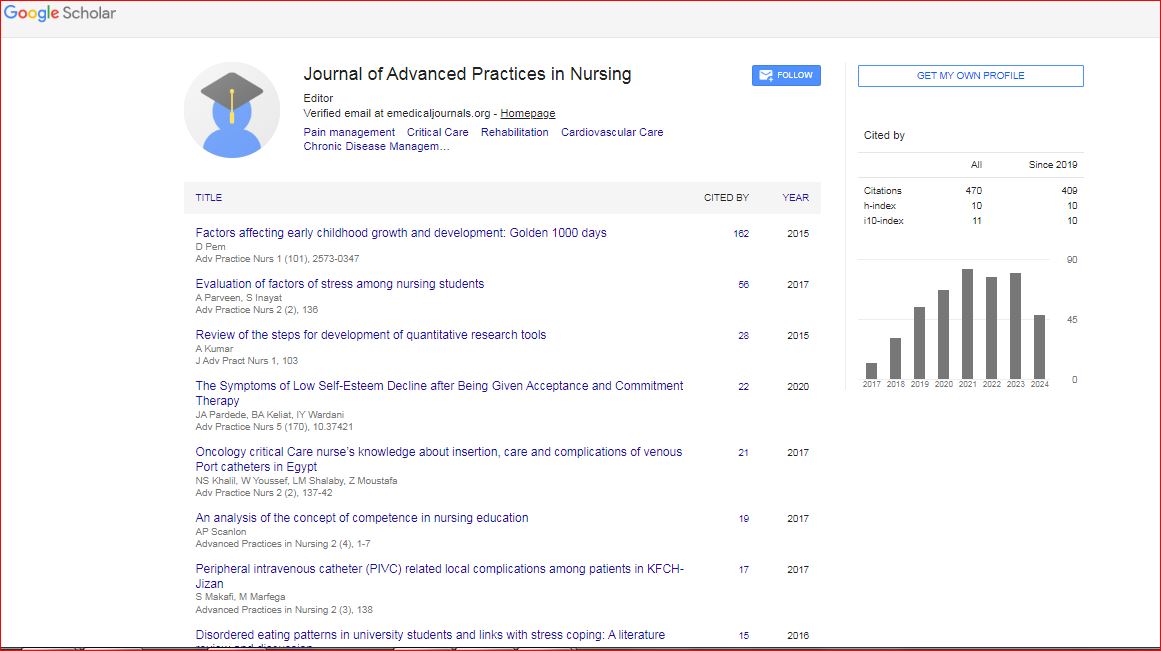
Journal of Advanced Practices in Nursing received 410 citations as per Google Scholar report