Opinion - (2025) Volume 10, Issue 6
Received: 02-Nov-2025, Manuscript No. apn-26-179358;
Editor assigned: 04-Nov-2025, Pre QC No. P-179358;
Reviewed: 16-Nov-2025, QC No. Q-179358;
Revised: 23-Nov-2025, Manuscript No. R-179358;
Published:
30-Nov-2025
, DOI: 10.37421/2573-0347.2025.10.464
Citation: Novak, Katarina. âAdvanced Practice Nurses: Pharmacokinetics for Optimal Care.â J Adv Practice Nurs 10 (2025):464.
Copyright: © 2025 Novak K. This is an open-access article distributed under the terms of the Creative Commons Attribution License, which permits unrestricted use, distribution
and reproduction in any medium, provided the original author and source are credited.
Advanced practice nurses (APNs) are increasingly recognized for their pivotal role in optimizing patient care through a deep understanding of pharmacological principles. A fundamental aspect of this expertise lies in pharmacokinetics, the study of how the body absorbs, distributes, metabolizes, and excretes drugs. Understanding these processes is crucial for APNs to make informed clinical decisions that enhance therapeutic outcomes and minimize adverse drug reactions. This knowledge empowers APNs to tailor medication regimens to individual patient needs, a cornerstone of personalized medicine. Specifically, the ability to interpret pharmacokinetic data allows for precise dosage adjustments, effective management of polypharmacy, and the careful consideration of patient populations with altered physiological states, such as those with renal or hepatic impairment, and the elderly [1].
In the context of chronic kidney disease (CKD), APNs face unique challenges due to altered renal function, which profoundly impacts drug pharmacokinetics. This necessitates careful selection, dosing, and monitoring of medications to prevent drug accumulation and avoid nephrotoxic agents. APNs are instrumental in utilizing pharmacokinetic principles to anticipate these challenges and manage drug-drug interactions within this vulnerable patient group, thereby improving quality of life and potentially slowing disease progression [2].
The field of pharmacogenomics further enhances the capabilities of APNs in personalized medication management. By understanding how genetic variations influence drug metabolism and efficacy, APNs can tailor treatments to achieve improved outcomes and reduce adverse events. Examples in pain management and cardiovascular disease illustrate how pharmacogenomic testing aids in selecting the most appropriate drug and dose, representing a significant step towards precision medicine in advanced nursing practice [3].
Managing polypharmacy in geriatric patients presents a significant challenge where pharmacokinetic knowledge is paramount. The aging process brings about complex pharmacokinetic and pharmacodynamic changes that increase the risk of adverse drug reactions and therapeutic failure. APNs can leverage pharmacokinetic principles, coupled with comprehensive medication reviews and patient education, to deprescribe unnecessary medications, simplify regimens, and enhance adherence, thereby improving safety and quality of life for older adults [4].
In the realm of infectious diseases, APNs play a critical role in optimizing antiviral therapy, particularly for patients with complex profiles. Pharmacokinetic variations, influenced by viral load, co-infections, and individual metabolism, can significantly affect drug efficacy and toxicity. APNs are essential in monitoring therapeutic drug levels, recognizing resistance, and adjusting dosages to ensure optimal outcomes in advanced care settings [5].
Antibiotic stewardship is another area where advanced practice nurses leverage pharmacokinetic and pharmacodynamic (PK/PD) principles. Understanding PK/PD is vital for selecting appropriate antibiotics, determining optimal dosing regimens, and mitigating antimicrobial resistance. By applying these principles, APNs can ensure target drug concentrations at the infection site, thereby improving treatment success and reducing toxicity, making it a cornerstone of effective stewardship [6].
In palliative care, the management of opioid analgesia presents distinct pharmacokinetic challenges. Variations in drug metabolism, receptor sensitivity, and organ function can influence opioid efficacy and side effect profiles. APNs utilize pharmacokinetic knowledge to individualize opioid therapy, effectively manage pain, and mitigate side effects like constipation and respiratory depression, thereby optimizing comfort and quality of life [7].
The influence of body composition on drug pharmacokinetics is a critical consideration for APNs. Variations in fat mass, lean body mass, and hydration status can alter drug distribution, metabolism, and elimination. APNs employ practical strategies to adjust medication dosages based on body composition, particularly for lipophilic and hydrophilic drugs, ensuring safe and effective drug therapy across diverse populations [8].
Pharmacokinetics of anticoagulation therapy is another specialized area where APNs are vital. Patient-specific factors, including genetic polymorphisms, organ function, and drug interactions, significantly impact anticoagulant efficacy and safety. APNs monitor therapeutic ranges, adjust doses, and educate patients on adherence and bleeding risks, ensuring precise and safe management of these critical medications [9].
Finally, the integration of therapeutic drug monitoring (TDM) into advanced practice nursing practice is a powerful tool for optimizing medication therapy. Guided by pharmacokinetic principles, TDM allows for precise adjustment of drug dosages to achieve therapeutic targets and minimize toxicity, especially for drugs with narrow therapeutic windows. APNs interpret TDM results to make informed clinical decisions, enhancing patient outcomes and safety in medication management [10].
The critical intersection of pharmacokinetics and clinical decision-making for advanced practice nurses (APNs) is explored, emphasizing how understanding drug absorption, distribution, metabolism, and excretion (ADME) is fundamental for optimizing therapeutic outcomes and minimizing adverse drug reactions. APNs leverage this knowledge to tailor medication regimens to individual patient needs, interpret pharmacokinetic data for dosage adjustments, manage polypharmacy, and address specific patient populations, including those with renal or hepatic impairment and the elderly, thereby enhancing precision and evidence-based medication choices in complex clinical scenarios [1].
APNs managing patients with chronic kidney disease (CKD) encounter unique pharmacokinetics challenges due to altered renal function. This review highlights the profound impact on drug ADME, necessitating careful drug selection, dosing, and monitoring. APNs utilize pharmacokinetic principles to anticipate drug accumulation, avoid nephrotoxic agents, and manage drug-drug interactions in this vulnerable population, playing an indispensable role in proactive medication management to improve quality of life and slow CKD progression [2].
The application of pharmacogenomics in advanced nursing practice enables personalized medication management by leveraging knowledge of how genetic variations influence drug metabolism and efficacy. APNs can tailor treatments for improved outcomes and reduced adverse events, using pharmacogenomic testing in areas like pain management and cardiovascular disease to select the most appropriate drug and dose, signifying a move towards precision medicine [3].
Advanced practice nurses are crucial in managing polypharmacy in geriatric patients, where aging-induced pharmacokinetic and pharmacodynamic changes increase the risk of adverse drug reactions. By applying pharmacokinetic principles alongside comprehensive medication reviews and patient education, APNs can deprescribe unnecessary medications, simplify regimens, and improve adherence, mitigating the risks of polypharmacy and enhancing the safety and quality of life for older adults [4].
In the context of complex patient profiles, APNs play a vital role in optimizing antiviral therapy by understanding pharmacokinetic variations influenced by factors like viral load, co-infections, and patient metabolism. They monitor therapeutic drug levels, recognize signs of resistance, and adjust dosages to ensure optimal outcomes, underscoring the importance of a nuanced pharmacokinetic understanding for effective antiviral management in advanced care settings [5].
APNs contribute significantly to antibiotic stewardship by applying pharmacokinetic and pharmacodynamic (PK/PD) principles. This understanding is crucial for appropriate antibiotic selection, optimal dosing regimens, and minimizing antimicrobial resistance. By leveraging PK/PD data, APNs achieve target drug concentrations at the infection site, enhancing treatment success and reducing toxicity, making this application a cornerstone of effective antibiotic stewardship [6].
In palliative care, APNs optimize opioid analgesia by understanding the pharmacokinetic challenges associated with variations in drug metabolism, receptor sensitivity, and organ function. They utilize this knowledge to individualize opioid therapy, manage pain effectively, and mitigate side effects such as constipation and respiratory depression, thereby playing a vital role in optimizing pharmacotherapy for patient comfort and quality of life [7].
The influence of body composition on drug pharmacokinetics is a key consideration for APNs in ensuring safe and effective drug therapy. They assess variations in fat mass, lean body mass, and hydration status, which alter drug distribution, metabolism, and elimination, and use this information to adjust medication dosages, particularly for lipophilic and hydrophilic drugs, across diverse patient populations [8].
Pharmacokinetic considerations are essential for APNs managing anticoagulation therapy. They account for patient-specific factors like genetic polymorphisms, organ function, and drug interactions that affect anticoagulant efficacy and safety. APNs monitor therapeutic ranges, adjust doses, and educate patients on adherence and bleeding risks, demonstrating how a robust pharmacokinetic understanding enables precise and safe management of anticoagulants [9].
Therapeutic drug monitoring (TDM), guided by pharmacokinetic principles, is integrated into advanced practice nursing to optimize medication therapy. APNs interpret TDM results to precisely adjust drug dosages, achieve therapeutic targets, and minimize toxicity, especially for drugs with narrow therapeutic windows, thereby enhancing patient outcomes and safety in medication management [10].
This collection of articles highlights the critical role of advanced practice nurses (APNs) in leveraging pharmacokinetic principles to optimize patient care across various clinical settings. APNs utilize their understanding of how the body processes drugs to make precise medication decisions, manage complex patient conditions like chronic kidney disease and polypharmacy in the elderly, and personalize treatments through pharmacogenomics. Key areas of application include optimizing antiviral and anticoagulant therapies, effective pain management in palliative care, and enhancing antibiotic stewardship. The integration of therapeutic drug monitoring and consideration of body composition further underscore the APN's expertise in ensuring safe and effective pharmacotherapy. Ultimately, a deep pharmacokinetic knowledge empowers APNs to improve patient safety, enhance treatment efficacy, and elevate the quality of care provided.
None
None
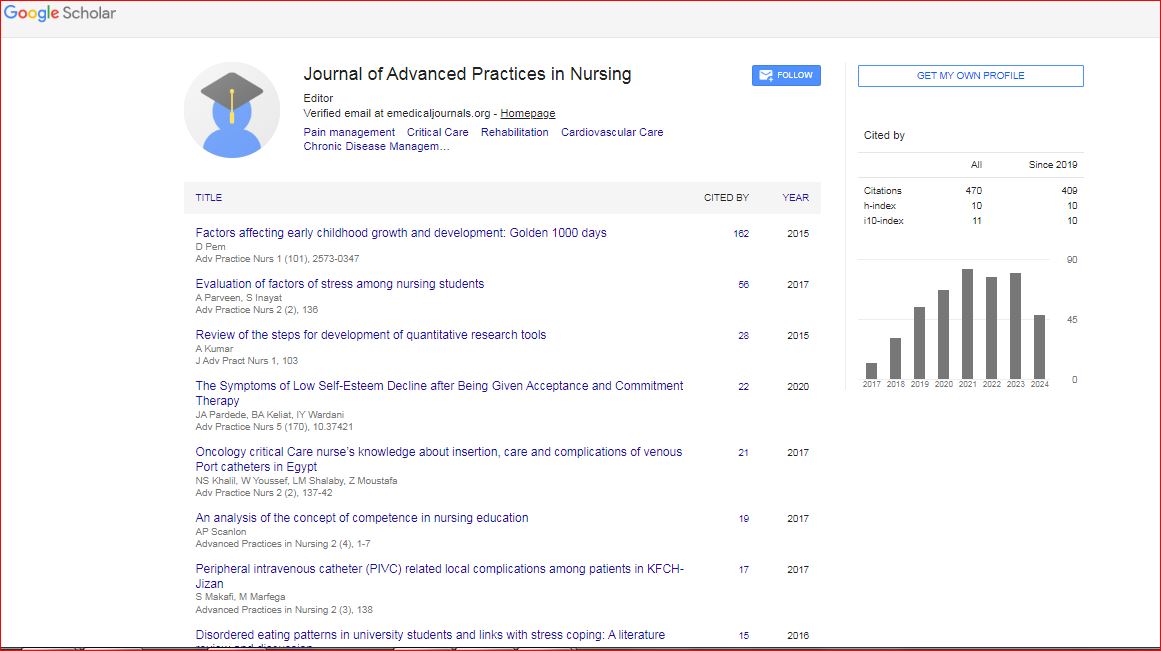
Journal of Advanced Practices in Nursing received 410 citations as per Google Scholar report