Brief Report - (2025) Volume 10, Issue 6
Received: 02-Nov-2025, Manuscript No. apn-26-179347;
Editor assigned: 04-Nov-2025, Pre QC No. P-179347;
Reviewed: 16-Nov-2025, QC No. Q-179347;
Revised: 23-Nov-2025, Manuscript No. R-179347;
Published:
30-Nov-2025
, DOI: 10.37421/2573-0347.2025.10.459
Citation: Bello, Aisha. âAdvanced Nursing Risk Management: Patient Safety and Outcomes.â J Adv Practice Nurs 10 (2025):459.
Copyright: © 2025 Bello A. This is an open-access article distributed under the terms of the Creative Commons Attribution License, which permits unrestricted use, distribution
and reproduction in any medium, provided the original author and source are credited.
Effective risk management is a foundational element in the delivery of advanced nursing care, directly influencing patient safety and the achievement of optimal health outcomes. This encompasses the proactive identification, thorough assessment, and strategic mitigation of a wide spectrum of potential hazards that may arise within clinical settings. These hazards can range from subtle clinical errors and issues related to medication administration to the significant risk of patient falls. Advanced practice nurses are integral to this process, taking on the vital responsibility of developing, implementing, and overseeing robust safety protocols designed to safeguard patients. Furthermore, they are instrumental in cultivating a pervasive culture of safety throughout the healthcare environment and championing continuous quality improvement initiatives, particularly within specialized areas such as maternal health settings where the stakes are exceptionally high. The evolution of healthcare delivery has seen a significant integration of technology into advanced nursing practice, introducing both novel safety challenges and unprecedented opportunities for enhancement. The widespread implementation of sophisticated systems, including electronic health records, telehealth platforms, and artificial intelligence-driven diagnostic tools, necessitates a meticulous approach to patient safety. This careful consideration must extend to critical areas such as data security, patient privacy, and the potential for system malfunctions or errors. Advanced practice nurses are therefore required to possess a high degree of adaptability and expertise in evaluating and adopting new technological advancements. Simultaneously, they must establish comprehensive protocols to effectively mitigate the inherent risks associated with these technologies, ensuring their safe and beneficial application across diverse maternal health contexts. A patient safety culture stands as a critical determinant that profoundly influences the overall quality of healthcare services provided. Advanced practice nurses play an indispensable role in fostering an organizational environment where all staff members feel secure and empowered to report errors, near misses, and other safety concerns without apprehension of punitive measures. This commitment to fostering an open communication loop is essential for the timely identification of systemic issues that may compromise patient care. It subsequently enables the development and implementation of targeted, preventative strategies, a process that is particularly vital and impactful within the demanding and high-stakes environment of maternal healthcare. Medication safety is universally recognized as a cornerstone of comprehensive risk management strategies within the domain of advanced nursing practice. Advanced practice nurses bear the significant responsibility of ensuring the accuracy and appropriateness of medication prescribing, dispensing, and administration processes. A particular emphasis is placed on the management of high-alert medications, which carry a heightened risk of patient harm if misused. This critical aspect of care involves conducting thorough patient assessments, possessing a deep understanding of potential drug interactions, and rigorously implementing standardized protocols designed to minimize the occurrence of medication errors. The consequences of such errors in maternal care can be exceptionally severe and far-reaching. The prevention of patient falls represents another significant and persistent safety concern that demands vigilant attention within advanced nursing care settings. Addressing this requires a multifaceted approach, beginning with comprehensive and individualized fall risk assessments for every patient. Concurrently, environmental modifications must be undertaken to create safer physical spaces, and evidence-based interventions must be consistently implemented and tailored to the unique needs of each patient. Advanced practice nurses are positioned to lead the development, implementation, and ongoing oversight of robust fall prevention programs. A key focus within these programs is often placed on protecting vulnerable patient populations, such as pregnant women and mothers in the postpartum period. Adverse event reporting and the subsequent analysis of these events are fundamental pillars supporting effective risk management practices in healthcare. Advanced practice nurses are pivotal figures in establishing and diligently maintaining efficient and reliable systems for the reporting, thorough investigation, and comprehensive learning derived from adverse events. This data-driven approach is instrumental in identifying emerging trends and patterns of potential harm. It subsequently allows for the systematic implementation of targeted interventions specifically designed to prevent the recurrence of such events, thereby contributing to a significant enhancement of safety within maternal health services and beyond. Effective communication and seamless teamwork are absolutely critical to ensuring patient safety within the complex landscape of advanced nursing care. Advanced practice nurses serve as facilitators of interprofessional collaboration, ensuring that communication among all members of the healthcare team is clear, concise, and accurate, especially during high-risk procedures or when managing complex patient care scenarios that are frequently encountered in maternal health contexts. This collaborative approach minimizes the potential for misunderstandings and promotes a unified strategy for patient well-being. The intricate healthcare regulatory environment exerts a substantial influence on the strategic development and implementation of risk management initiatives in advanced nursing practice. Advanced practice nurses must remain continuously informed and adept at navigating the evolving landscape of regulations and guidelines pertaining to patient safety and the overall quality of care. Ensuring strict compliance with these mandates is paramount, as is actively advocating for the adoption and enforcement of policies that consistently promote the highest standards of maternal health and patient well-being. Quality improvement (QI) methodologies represent essential and powerful tools for proactive risk management within the field of advanced nursing. Advanced practice nurses are often at the forefront of leading the implementation of QI initiatives, employing established frameworks such as Plan-Do-Study-Act (PDSA) cycles. These cycles provide a structured approach to systematically identify areas within patient care that are ripe for improvement, rigorously test potential interventions, and ultimately work to sustain positive changes that enhance patient safety, with a particular emphasis on the specialized requirements of maternal care. Ethical considerations are intricately interwoven with the practice of risk management in advanced nursing. Advanced practice nurses are frequently called upon to navigate complex ethical dilemmas that arise in patient care. This necessitates a commitment to upholding patient autonomy, ensuring informed consent is a meaningful process, and delivering equitable care to all individuals. Furthermore, it involves actively addressing potential biases that may exist within care delivery systems and diligently advocating for the fundamental rights of patients, particularly those belonging to vulnerable populations receiving maternal health services.
Effective risk management is a fundamental component of advanced nursing practice, with a primary objective of ensuring patient safety and optimizing clinical outcomes. This involves a proactive and systematic approach to identifying, assessing, and mitigating potential hazards that may arise in healthcare settings. Such hazards can encompass a broad spectrum of issues, including clinical errors, complications arising from medication administration, and the prevalent risk of patient falls. Advanced practice nurses play a pivotal role in the design and implementation of robust safety protocols, contributing significantly to the establishment of a strong safety culture, and actively promoting continuous quality improvement efforts, especially within maternal health contexts where specific vulnerabilities exist. The increasing integration of technology within advanced nursing care presents a dynamic interplay of unique safety challenges and promising opportunities for enhanced care delivery. The adoption of electronic health records, the expansion of telehealth services, and the utilization of AI-driven diagnostic tools all necessitate careful consideration of crucial aspects such as data security, patient privacy, and the potential for systemic errors or failures. Advanced practice nurses must therefore be skilled in the evaluation and adoption of new technologies, simultaneously developing and enforcing protocols designed to mitigate the associated risks, particularly as they apply to the diverse and sensitive needs of maternal health patients. A robust patient safety culture is recognized as a critical determinant that significantly influences the overall quality of care provided in advanced nursing settings. Advanced practice nurses are instrumental in cultivating an environment where healthcare professionals feel secure and empowered to report errors and near misses without fear of reprisal. This open communication channel is essential for the timely identification of systemic issues within the care delivery process. It enables the proactive development and implementation of effective preventative strategies, a function that is especially vital and impactful in the high-stakes domain of maternal healthcare. Ensuring medication safety stands as a paramount objective within the framework of risk management for advanced nursing practice. Advanced practice nurses are responsible for meticulous oversight of medication prescribing, dispensing, and administration processes, with a focused emphasis on high-alert medications that pose a greater risk of harm. This comprehensive approach demands thorough patient assessment, a deep understanding of potential drug interactions, and the diligent application of standardized protocols to minimize medication errors. The potential consequences of such errors in the context of maternal care can be profound and devastating. The prevention of patient falls represents a significant safety concern that requires consistent and diligent attention within advanced nursing care. This necessitates a comprehensive approach that includes detailed fall risk assessments for all patients, coupled with environmental modifications to enhance safety and the implementation of evidence-based interventions tailored to individual patient needs. Advanced practice nurses are typically at the forefront of leading the development and oversight of fall prevention programs, paying special attention to the needs of vulnerable populations, including pregnant women and postpartum mothers. Adverse event reporting and the subsequent analysis of these events are fundamental to any effective risk management strategy in healthcare. Advanced practice nurses play a critical role in establishing and maintaining robust systems for reporting, investigating, and learning from adverse events. This data-driven methodology is crucial for identifying trends and patterns of harm, which in turn informs the implementation of targeted interventions aimed at preventing recurrence. This continuous learning cycle is essential for enhancing safety within maternal health services. Effective communication and strong teamwork are indispensable elements for ensuring patient safety in advanced nursing practice. Advanced practice nurses facilitate interprofessional collaboration, ensuring that communication among all healthcare team members is clear, concise, and accurate. This is particularly crucial during high-risk procedures or when managing complex patient care scenarios that are commonly encountered in maternal health settings, thereby minimizing the potential for errors due to miscommunication. The healthcare regulatory environment plays a significant role in shaping and guiding risk management strategies in advanced nursing. Advanced practice nurses must remain current with all evolving regulations and guidelines related to patient safety and the quality of care. Ensuring compliance with these standards is essential, as is actively advocating for policies that uphold and promote the highest standards of maternal health and overall patient well-being. Quality improvement (QI) methodologies serve as essential tools for proactive risk management in advanced nursing practice. Advanced practice nurses are often leaders in implementing QI initiatives, utilizing frameworks such as the Plan-Do-Study-Act (PDSA) cycle. This structured approach enables the identification of areas for improvement, the testing of interventions, and the sustained implementation of positive changes that enhance patient safety, particularly within the specialized field of maternal care. Ethical considerations are intrinsically linked with the practice of risk management in advanced nursing. Advanced practice nurses are tasked with navigating complex ethical dilemmas, ensuring patient autonomy, obtaining informed consent, and providing equitable care. This includes addressing potential biases in care delivery and advocating for patient rights, especially for vulnerable populations who receive maternal health services.
This collection of research highlights the multifaceted nature of risk management in advanced nursing practice, emphasizing its critical role in ensuring patient safety and optimal outcomes, particularly in maternal health settings. Key areas discussed include proactive hazard identification and mitigation, the integration of technology and its associated risks, fostering a culture of safety through open communication, and ensuring medication safety with a focus on high-alert drugs. Strategies for fall prevention, the importance of adverse event reporting and analysis for continuous improvement, and the necessity of effective interprofessional communication and teamwork are also detailed. Furthermore, the influence of regulatory landscapes and the application of quality improvement methodologies are examined. Ethical considerations, such as patient autonomy and equitable care, are presented as integral components of risk management. Advanced practice nurses are consistently identified as central figures in leading and implementing these safety initiatives to enhance the quality and security of patient care.
None
None
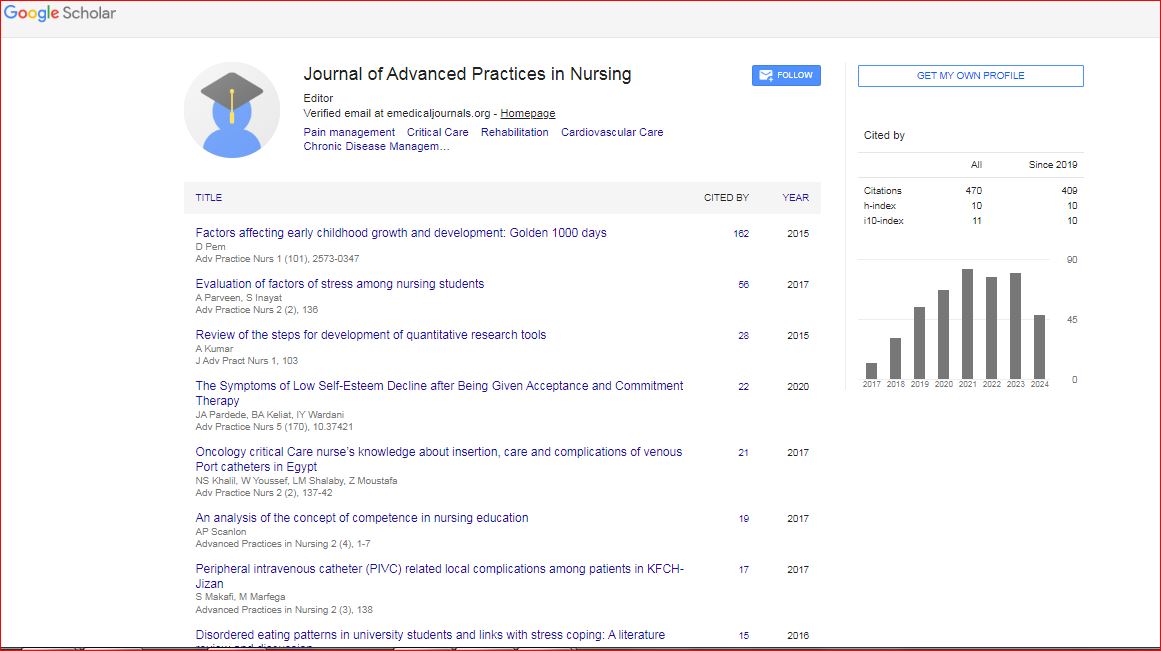
Journal of Advanced Practices in Nursing received 410 citations as per Google Scholar report