Short Communication - (2025) Volume 13, Issue 6
Received: 01-Dec-2025, Manuscript No. JCMG-26-185567;
Editor assigned: 03-Dec-2025, Pre QC No. P-185567;
Reviewed: 17-Dec-2025, QC No. Q-185567;
Revised: 22-Dec-2025, Manuscript No. R-185567;
Published:
29-Dec-2025
, DOI: 10.37421/2472-128X.2025.13.375
Citation: ElSayed, Nadine. ”Advanced Cancer Profiling for Personalized Treatment.” J Clin Med Genomics 13 (2025):375.
Copyright: © 2025 ElSayed N. This is an open-access article distributed under the terms of the Creative Commons Attribution License, which permits unrestricted use, distribution and reproduction in any medium, provided the original author and source are credited.
The field of cancer genomics has undergone a profound transformation, with tumor profiling emerging as a cornerstone of modern oncological practice. Next-generation sequencing technologies have revolutionized our ability to dissect the molecular underpinnings of cancer, enabling the identification of critical genetic alterations that guide therapeutic decisions. This personalized approach moves beyond a one-size-fits-all model, allowing clinicians to tailor treatments to the specific molecular landscape of an individual patient's tumor. The ultimate goal is to enhance treatment efficacy, minimize toxicity, and improve overall survival rates for cancer patients. By understanding the unique genomic signature of a tumor, we can unlock new avenues for targeted therapies and immunotherapies, offering more precise and effective interventions. This paradigm shift towards precision medicine necessitates the development and integration of sophisticated bioinformatic tools and robust clinical workflows to translate complex genomic data into actionable clinical insights. The journey towards fully realizing the potential of precision oncology is ongoing, with continuous advancements in technology and our understanding of cancer biology. The impact of this field is far-reaching, influencing not only treatment selection but also early detection strategies and the management of hereditary cancer syndromes. Consequently, a comprehensive understanding of tumor profiling is essential for all stakeholders in cancer care, from researchers to clinicians and policymakers. The evolution of cancer genomics continues to push the boundaries of what is possible in cancer treatment and management. This field is rapidly expanding, offering new hope and improved outcomes for patients worldwide. Liquid biopsies, particularly the analysis of circulating tumor DNA (ctDNA), represent a significant advancement, complementing traditional tissue-based biopsies. These non-invasive techniques offer a dynamic window into tumor evolution, enabling real-time monitoring of treatment response and the early detection of resistance mechanisms. The ability to track genetic changes in a patient's blood over time provides invaluable information for adaptive treatment strategies, allowing for timely adjustments to therapy as the tumor evolves. This continuous monitoring is critical in the dynamic landscape of precision oncology, where therapeutic interventions must often be refined to overcome treatment challenges. The ease of access and reduced invasiveness of liquid biopsies make them a powerful tool for serial sampling and comprehensive assessment of disease burden and heterogeneity. As technology advances, liquid biopsies are poised to play an even more integral role in the clinical management of cancer, from initial diagnosis to long-term follow-up. Their potential extends to early detection and prognostication, offering a less burdensome alternative for patients undergoing treatment. The integration of liquid biopsy data with other clinical information promises to further enhance our ability to personalize cancer care. This innovative approach offers a less invasive way to gather critical genetic information about a patient's cancer. The insights gained from ctDNA analysis can guide treatment decisions and help manage the complexities of cancer therapy. This technology represents a significant step forward in the pursuit of personalized cancer medicine. It offers a complementary approach to traditional diagnostic methods. Germline genetic variants are increasingly recognized for their dual role in cancer predisposition and influencing therapeutic responses. A comprehensive genomic assessment should therefore encompass both somatic mutations within the tumor and inherited genetic variations. This dual perspective provides a more holistic understanding of an individual's cancer risk and their potential to respond to specific treatments. By considering germline predispositions, clinicians can implement proactive surveillance strategies and offer tailored preventative measures for at-risk individuals. Furthermore, germline variants can dictate drug metabolism or efficacy, impacting treatment selection and potentially leading to adverse events. Integrating germline information alongside somatic profiling allows for a more nuanced and individualized approach to cancer care, optimizing therapeutic outcomes and minimizing unnecessary toxicities. The interplay between germline and somatic genetics is a complex but critical area of study in oncology. Understanding these interactions is key to developing truly personalized treatment regimens. This integrated approach promises to enhance the effectiveness of cancer therapies. It also allows for better prediction of treatment responses and potential side effects. The consideration of germline genetics adds another layer of personalization to cancer management. This approach aims to optimize patient care. The interpretation of vast amounts of genomic data generated by advanced sequencing technologies presents a significant computational challenge. The development of sophisticated bioinformatics pipelines and robust analytical algorithms is paramount for extracting clinically meaningful insights from this complex data. These tools are essential for identifying actionable mutations, detecting novel biomarkers, and accurately classifying tumor subtypes. Without advanced computational capabilities, the sheer volume and complexity of genomic information would remain largely inaccessible for clinical decision-making. Databases that catalog known genetic alterations, their functional impact, and their association with therapeutic responses are also critical components of this infrastructure. Timely and accurate interpretation is crucial, as treatment decisions often need to be made within specific timeframes to maximize patient benefit. The field of computational genomics is thus indispensable for translating genomic discoveries into tangible clinical applications. The ongoing advancement in bioinformatics is key to unlocking the full potential of cancer genomics. These computational tools are vital for making sense of the complex genetic information. They help in identifying the most relevant genetic alterations for treatment. This aspect is crucial for timely clinical decision-making. The efficiency of these analyses directly impacts patient care. Tumor mutational burden (TMB) has emerged as a key predictive biomarker, particularly in the context of immunotherapy. A high TMB, indicative of a large number of somatic mutations, often correlates with an increased likelihood of neoantigen presentation. These neoantigens can be recognized by the immune system, making the tumor more susceptible to immune-mediated destruction. Consequently, patients with high TMB tumors are more likely to respond favorably to immunotherapeutic agents. This biomarker has shown utility across a spectrum of cancer types, offering a broader application than some genotype-specific markers. Its integration into clinical practice aids in selecting patients who are most likely to benefit from immunotherapy, thereby optimizing resource allocation and patient outcomes. Continued research aims to refine TMB assessment and understand its full predictive power in combination with other biomarkers. The utility of TMB as a biomarker is a significant development in immunotherapy. It helps identify patients who will benefit most from these treatments. This approach optimizes treatment selection. It also maximizes the chances of a positive response. The assessment of TMB is becoming increasingly important in clinical decision-making. Its role in predicting immunotherapy response is well-established. Addressing the cost-effectiveness of comprehensive genomic profiling is a critical factor for its widespread adoption and accessibility in cancer care. While the initial investment in sequencing technologies and bioinformatics infrastructure can be substantial, the long-term benefits of personalized medicine, including improved treatment outcomes and reduced healthcare costs associated with ineffective therapies, are increasingly evident. As sequencing technologies continue to mature and costs decline, the economic rationale for implementing routine genomic profiling becomes more compelling. Value-based healthcare models are emerging that emphasize the demonstration of clinical and economic benefits. Therefore, robust health economic analyses are necessary to support the integration of genomic profiling into standard clinical practice, ensuring that its benefits are accessible to all patients who could potentially gain from it. The economic landscape of cancer care is evolving rapidly. Genomic profiling plays a key role in this evolution. The decreasing cost of sequencing makes it more feasible. The value proposition is becoming stronger. This is important for wider implementation. Economic considerations are crucial for equitable access. Acquired resistance to targeted therapies represents a significant clinical hurdle in the management of cancer. Understanding the molecular mechanisms underlying the development of this resistance is paramount for devising effective salvage strategies. Genomic profiling, particularly in longitudinal studies, can reveal the emergence of new mutations or altered signaling pathways that confer resistance. This knowledge enables the selection of alternative targeted agents, the exploration of combination therapies designed to overcome resistance pathways, or the adoption of immune-based approaches. By continually assessing the tumor's genomic profile as it evolves under therapeutic pressure, clinicians can adapt treatment plans to maintain disease control and prolong patient survival. The dynamic nature of cancer evolution necessitates an adaptive treatment paradigm. This requires ongoing monitoring and re-evaluation of therapeutic strategies. Research into resistance mechanisms is crucial. It informs the development of next-generation therapies. Understanding these mechanisms is key to overcoming treatment failures. The ethical considerations surrounding germline genomic information in cancer patients are multifaceted and demand careful attention. When germline testing is integrated into cancer care, it is imperative to ensure that patients provide fully informed consent, understanding the implications of discovering inherited predispositions not only for themselves but also for their family members. Protecting patient privacy and maintaining the confidentiality of sensitive genetic information are paramount ethical obligations. Furthermore, access to appropriate genetic counseling services is essential to help patients interpret their results, understand their risks, and make informed decisions regarding genetic testing and management. Navigating these ethical complexities is crucial for building trust and ensuring that the integration of germline genomics into oncology is conducted responsibly and with the utmost respect for patient autonomy and well-being. Ethical frameworks provide guidance. They ensure responsible use of genetic information. Patient consent is vital. Privacy protection is essential. Genetic counseling is a key component. This ensures informed decision-making. Multi-omic approaches, which integrate data from genomics with other molecular layers such as transcriptomics, proteomics, and metabolomics, offer a more comprehensive and holistic view of tumor biology. By combining these different data streams, researchers and clinicians can gain a deeper understanding of the complex molecular networks and pathways that drive cancer development and progression. This integrated perspective can uncover novel therapeutic targets and biomarkers that might be missed when analyzing genomics in isolation. For example, a genomic alteration might have subtle downstream effects on protein expression or metabolic activity that are only revealed through multi-omic analysis. This approach holds immense promise for advancing precision medicine by enabling more accurate diagnoses, better patient stratification, and the development of more effective and targeted therapeutic strategies. The synergy of multi-omic data integration is a powerful approach. It provides a deeper understanding of cancer. This leads to the identification of new targets. It also improves biomarker discovery. This approach enhances precision medicine. It has the potential to revolutionize cancer treatment. The establishment of robust clinical guidelines for comprehensive tumor profiling is a critical step towards standardizing practices and ensuring equitable access to the benefits of precision oncology. These guidelines serve to unify approaches across different institutions and healthcare systems, promoting consistency in diagnostic procedures and therapeutic recommendations. Key areas that require detailed guidance include the selection of appropriate specimens for profiling, the choice of molecular assays based on clinical context and available technologies, standardized methods for data interpretation, and clear frameworks for integrating genomic findings into clinical decision-making processes. Well-defined guidelines are essential for maximizing the utility of tumor profiling, minimizing variability in clinical practice, and ultimately ensuring that all patients who could benefit from personalized therapies receive them in a timely and appropriate manner. Standardized guidelines are vital. They ensure consistency. This promotes equitable access. They cover specimen selection and assay choice. Data interpretation and decision-making are also addressed. This leads to better patient care.
Tumor profiling, particularly through advanced sequencing techniques, is fundamental to personalized cancer treatment. This approach allows for the identification of specific genetic alterations that predict a patient's response to targeted therapies and immunotherapies. By understanding the unique molecular profile of a tumor, clinicians can move beyond conventional treatments like chemotherapy towards tailored strategies, thereby improving patient outcomes and reducing harmful side effects. This paradigm shift towards precision medicine necessitates robust bioinformatics pipelines and seamless integration with clinical decision-making processes to effectively utilize the generated genomic data. The continuous evolution of cancer genomics is profoundly impacting how we diagnose, treat, and manage cancer, offering new avenues for hope and improved survival for patients globally. The impact of these advancements extends to early detection and the management of hereditary cancer risks. This comprehensive understanding is crucial for all involved in cancer care, shaping the future of oncology. This field continues to expand, promising better treatments and outcomes. Liquid biopsies, such as circulating tumor DNA (ctDNA) analysis, significantly enhance tumor profiling by offering a less invasive method to detect and monitor genetic changes. This approach allows for the tracking of treatment response and the identification of emerging resistance mechanisms, which is critical for adaptive therapeutic strategies in precision oncology. These real-time insights into tumor evolution facilitate dynamic monitoring, enabling clinicians to adjust treatment plans as the cancer progresses or responds. The ease of access and reduced invasiveness make liquid biopsies valuable for serial sampling, providing a comprehensive picture of disease heterogeneity over time. As technology advances, liquid biopsies are expected to play an even more prominent role in cancer management, from initial diagnosis to long-term follow-up, potentially aiding in early detection and prognostication. This innovative technology complements traditional methods and offers a less burdensome way to obtain crucial genetic information. The insights derived can guide treatment adjustments and improve patient care. It represents a significant step forward in personalized cancer medicine. Germline genetic variants contribute significantly to cancer predisposition and can influence how a patient responds to specific drugs. Therefore, comprehensive genomic profiling should ideally consider both the somatic mutations present in the tumor and the patient's inherited germline variations. This integrated approach provides a more complete picture of an individual's cancer risk and their potential therapeutic benefits. Recognizing germline predispositions can enable proactive screening and preventative measures for at-risk individuals. Moreover, germline variants can affect drug metabolism and efficacy, informing treatment choices and helping to anticipate potential adverse reactions. Incorporating germline information alongside tumor profiling leads to a more individualized and effective cancer care strategy, optimizing treatment outcomes and minimizing unnecessary toxicity. The complex relationship between germline and somatic genetics is vital for truly personalized cancer treatment. Understanding these interactions is key to enhancing therapy effectiveness and predicting responses. This integrated perspective aims to optimize patient management. Analyzing the vast datasets generated by modern genomic profiling presents a considerable computational challenge. The development of advanced bioinformatics pipelines and sophisticated analytical tools is essential for extracting clinically relevant information from complex genomic alterations. These computational resources are crucial for identifying actionable mutations, discovering novel biomarkers, and accurately classifying tumors. Without effective bioinformatics, the sheer volume of genomic data would be difficult to interpret for clinical decision-making. Databases that catalog genetic variations, their functional impact, and therapeutic associations are also critical components of this analytical framework. The timely and accurate interpretation of genomic data is vital, as treatment decisions often have time-sensitive implications. The ongoing advancement in computational genomics is indispensable for translating genomic discoveries into practical clinical applications, ensuring efficiency in analysis and timely patient care. Tumor mutational burden (TMB) is emerging as an important predictive biomarker, particularly for assessing response to immunotherapy across various cancer types. A high TMB typically indicates a greater number of somatic mutations, which can lead to the generation of more neoantigens recognized by the immune system. Tumors with high TMB are often more susceptible to immune attack, making them more likely to respond favorably to immunotherapeutic agents. This biomarker offers a broad utility, complementing other genotype-specific markers. Its use in clinical practice helps identify patients who are most likely to benefit from immunotherapy, thereby optimizing treatment selection and resource allocation. Further research is ongoing to refine TMB assessment and understand its predictive capabilities in conjunction with other biomarkers. The role of TMB in predicting immunotherapy response is a significant advancement. It aids in identifying suitable candidates for these therapies. This approach optimizes treatment selection and response potential. TMB assessment is increasingly vital for clinical decisions. Considering the cost-effectiveness of comprehensive genomic profiling is a critical aspect for its widespread implementation and accessibility in cancer care. While the initial costs associated with sequencing technologies and bioinformatics infrastructure may be significant, the long-term advantages of personalized medicine, including enhanced treatment outcomes and reduced healthcare expenditures from ineffective treatments, are becoming increasingly clear. As sequencing technology costs decrease, the economic justification for routine genomic profiling strengthens. Value-based healthcare models are emerging that prioritize the demonstration of clinical and economic benefits. Therefore, conducting thorough health economic analyses is essential to support the integration of genomic profiling into standard clinical practice, ensuring that its advantages are available to all patients who could potentially benefit. Economic factors are important for broad adoption. Declining costs make it more feasible. The value proposition is growing. This supports wider implementation and equitable access. Acquired resistance to targeted cancer therapies poses a major clinical challenge. Understanding the molecular mechanisms driving this resistance is essential for developing effective salvage treatment strategies. Genomic profiling, especially through longitudinal studies, can identify new mutations or altered signaling pathways that contribute to resistance. This information guides the selection of alternative targeted agents, the development of combination therapies designed to overcome resistance, or the implementation of immune-based treatments. By continuously evaluating the tumor's genomic profile as it evolves under treatment pressure, clinicians can adapt treatment plans to maintain disease control and improve patient survival. The dynamic nature of cancer evolution requires an adaptive treatment approach, necessitating ongoing monitoring and reassessment of therapeutic strategies. Research into resistance mechanisms is key to advancing new therapies and overcoming treatment failures. The ethical considerations related to germline genomic information in cancer patients are complex and require careful management. When germline testing is incorporated into cancer care, it is crucial to obtain fully informed consent from patients, ensuring they understand the implications of discovering inherited predispositions for themselves and their families. Protecting patient privacy and maintaining the confidentiality of genetic information are paramount ethical responsibilities. Additionally, providing access to appropriate genetic counseling services is essential for patients to interpret their test results, understand associated risks, and make informed decisions about genetic testing and management. Addressing these ethical challenges is vital for fostering trust and ensuring that the use of germline genomics in oncology is conducted responsibly and with respect for patient autonomy. Ethical frameworks guide responsible use of genetic data. Patient consent is vital for privacy. Genetic counseling supports informed decisions. This ensures ethical patient care. Multi-omic approaches that integrate genomic data with other molecular information, such as transcriptomics, proteomics, and metabolomics, provide a more comprehensive understanding of tumor biology. By combining these diverse data sources, researchers and clinicians can gain deeper insights into the complex molecular networks driving cancer development and progression. This integrated perspective can uncover novel therapeutic targets and biomarkers that might be overlooked when analyzing genomics alone. For instance, a genomic alteration's subtle downstream effects on protein expression or metabolic activity may only become apparent through multi-omic analysis. This approach holds significant potential for advancing precision medicine, enabling more accurate diagnoses, better patient stratification, and the development of more effective and targeted therapies. The synergistic integration of multi-omic data offers a powerful way to understand cancer. It aids in identifying new therapeutic targets and biomarkers. This enhances precision medicine and can transform cancer treatment. Developing robust clinical guidelines for comprehensive tumor profiling is essential for standardizing practices and ensuring equitable access to precision oncology. These guidelines aim to create consistency in approaches across institutions, promoting uniformity in diagnostic procedures and treatment recommendations. Key aspects requiring detailed guidance include selecting appropriate specimens, choosing molecular assays based on clinical context, standardizing data interpretation, and establishing clear frameworks for integrating genomic findings into clinical decision-making. Well-defined guidelines are crucial for maximizing the utility of tumor profiling, minimizing practice variations, and ensuring that all eligible patients receive timely and appropriate personalized therapies. Standardized guidelines are vital for consistency and equitable access. They cover specimen selection, assay choice, data interpretation, and clinical decision-making. This ultimately improves patient care and outcomes.
Tumor profiling using advanced sequencing is crucial for personalized cancer treatment, identifying mutations that guide targeted and immune therapies. Liquid biopsies offer a less invasive way to monitor treatment response and resistance. Germline genetic variants also play a role, influencing predisposition and drug response, necessitating integrated profiling. Complex genomic data requires sophisticated bioinformatics for interpretation. Tumor mutational burden (TMB) is a key biomarker for immunotherapy response. Cost-effectiveness is a consideration for widespread implementation. Understanding mechanisms of acquired resistance is vital for salvage therapies. Ethical considerations surrounding germline data are complex, requiring informed consent and counseling. Multi-omic approaches offer a comprehensive view of tumor biology. Clinical guidelines are essential for standardizing practices and ensuring equitable access to profiling.
None
None
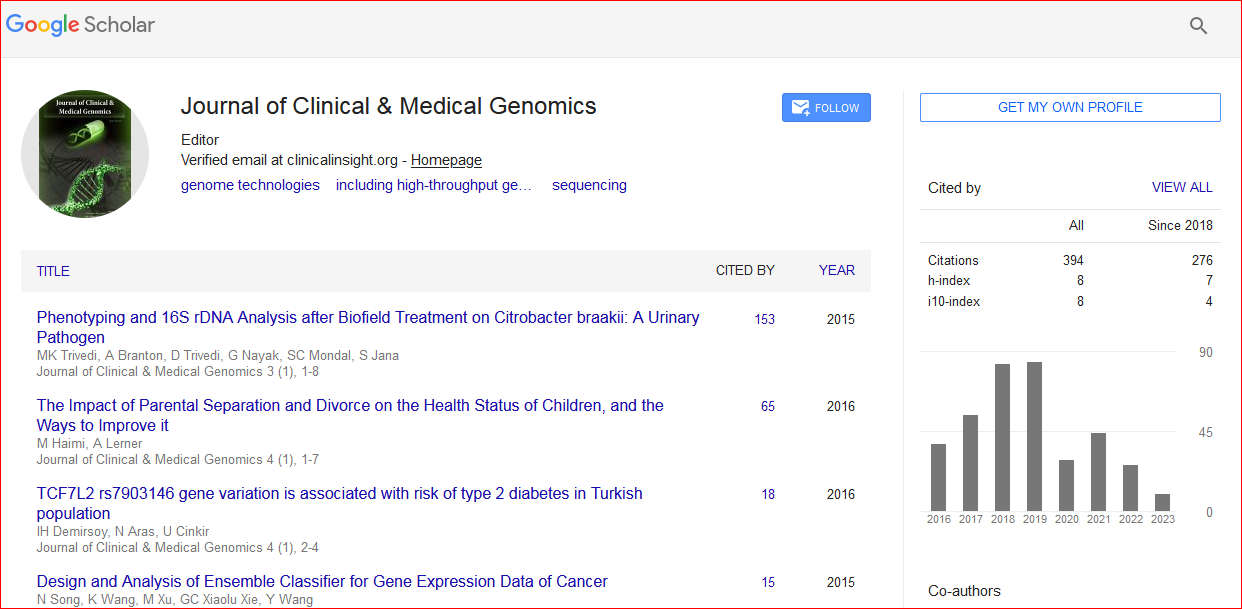
Journal of Clinical & Medical Genomics received 391 citations as per Google Scholar report