Brief Report - (2025) Volume 9, Issue 5
Received: 01-Oct-2025, Manuscript No. cmcr-25-178076;
Editor assigned: 03-Oct-2025, Pre QC No. P-178076;
Reviewed: 17-Oct-2025, QC No. Q-178076;
Revised: 22-Oct-2025, Manuscript No. R-178076;
Published:
29-Oct-2025
, DOI: 10.37421/2684-4915.2025.9.392
Citation: Rahman, Afiqah. ”ADRs: Challenges, Technology, and Enhanced Patient Safety.” Clin Med Case Rep 09 (2025):392.
Copyright: © 2025 Rahman A. This is an open-access article distributed under the terms of the Creative Commons Attribution License, which permits unrestricted use, distribution and reproduction in any medium, provided the original author and source are credited.
Adverse drug reactions (ADRs) represent a pervasive and critical challenge within healthcare systems worldwide, significantly impacting patient safety and healthcare costs. The complexity of medication management, coupled with the varied physiological responses of individuals, makes the prediction and prevention of ADRs a continuous area of focus for researchers and clinicians. Addressing this multifaceted issue requires understanding the existing limitations in monitoring, the specific vulnerabilities of patient populations, and the potential of emerging technologies to mitigate risks. A closer look at hospital settings reveals that despite the presence of formal systems for monitoring and reporting ADRs, their practical implementation often falls short. This shortfall is frequently attributed to systemic hurdles such as insufficient training for staff, chronic staffing shortages, and the immense workloads faced by healthcare professionals. What this really means is, while the intent to capture ADR data is there, the operational realities impede thorough and consistent reporting. Boosting awareness and simplifying these reporting processes are key steps that could seriously improve drug safety within hospital walls [1].
When considering pediatric patients, here's the thing: children are not merely smaller versions of adults. Their unique physiological makeup, including differences in drug metabolism, distribution, and excretion, makes them uniquely susceptible to distinct patterns of ADRs. This review and meta-analysis emphasize the critical need for dedicated pharmacovigilance strategies specifically tailored to account for these inherent physiological differences and their varying drug exposures, which are absolutely vital to ensure their safety [2].
Expanding on this, even outside the acute care environment, pediatric outpatients experience substantial adverse drug reactions. This highlights that ADRs are a significant concern beyond hospital walls, necessitating better reporting mechanisms and increased awareness among both caregivers and clinicians to prevent harm in younger populations [9].
Moving to another vulnerable demographic, older adults frequently encounter a higher incidence of adverse drug reactions and other drug-related problems. This increased susceptibility is largely driven by factors like polypharmacy â?? the concurrent use of multiple medications â?? as well as age-related physiological changes that affect drug processing, and the presence of multiple underlying health conditions. Understanding these complex risks is paramount for improving medication management and ensuring patient safety within this demographic [4].
This becomes even more pronounced in hospitalized patients where polypharmacy, advanced age, renal or hepatic impairment, and multiple comorbidities are significant contributors to ADR risk. What this really means is, clinicians need to proactively identify these factors to better manage risks and enhance safety in hospitals [7].
The human element in ADR reporting also plays a crucial role. A cross-sectional study delves into the reasons why healthcare professionals may or may not report adverse drug reactions. It shows that while awareness of established reporting systems generally exists, practical barriers like time constraints during busy shifts and a perceived lack of feedback from reported incidents often deter actual reporting. Encouraging a stronger, more supportive reporting culture, coupled with the implementation of simpler, more user-friendly processes, is key to enhancing pharmacovigilance effectiveness [5].
Looking ahead, technology is set to revolutionize ADR prediction. This systematic review explores how Artificial Intelligence (AI) is changing the game. AI algorithms can sift through massive datasets, including clinical notes and drug databases, to identify potential risks much faster and sometimes more accurately than traditional methods. This points to a future where AI plays a central role in making drugs safer even before they reach patients [3].
Let's break down how machine learning (ML) specifically is being used to predict adverse drug reactions using real-world data. By analyzing electronic health records, insurance claims, and even social media, ML models can spot subtle patterns and predict potential ADRs, often improving upon traditional surveillance methods. It's a powerful tool for modern pharmacovigilance, enabling more proactive safety measures [8].
Furthermore, the growing field of pharmacogenomics offers a pathway to truly personalized medicine. This area of study investigates how an individualâ??s genetic makeup influences their response to drugs and their susceptibility to adverse drug reactions. By utilizing genetic information, it becomes possible to predict which individuals might react negatively to a particular medication, allowing for tailored treatments that align with an individual's unique genetic profile [6].
Ultimately, a systematic review and meta-analysis paints a clear picture: adverse drug reactions in hospitalized patients are a common and preventable cause of morbidity and mortality. They often lead to longer hospital stays and significantly increased healthcare costs. These findings underscore the critical need for robust pharmacovigilance and comprehensive prevention strategies within inpatient settings to safeguard patient well-being and optimize resource utilization [10].
Adverse drug reactions (ADRs) continue to be a significant public health concern, contributing to morbidity, mortality, and increased healthcare expenditures across various patient populations and clinical settings. The pervasive nature of ADRs demands a comprehensive understanding of their underlying causes, contributing factors, and the effectiveness of current monitoring and reporting mechanisms. Research consistently points to systemic challenges in pharmacovigilance, even in highly structured environments like hospitals [1]. For example, despite the existence of formal monitoring and reporting protocols, their practical application is often hindered by issues such as inadequate staff training, insufficient personnel, and heavy workloads. What this really means is that the intent to ensure drug safety is often undermined by operational realities, highlighting a critical need for simplified reporting processes and enhanced awareness among healthcare professionals to improve overall drug safety within hospital systems [1].
Vulnerable populations, such as pediatric patients and older adults, face unique challenges regarding ADRs. Children are not simply miniaturized adults; their distinct physiological characteristics, including differences in drug metabolism and response, necessitate specialized pharmacovigilance approaches [2]. The consequences of neglecting these differences can be severe, emphasizing that tailored strategies are absolutely vital for their safety. This vulnerability extends beyond inpatient care, as studies indicate that pediatric outpatients also experience significant ADRs, underscoring the necessity for improved reporting and greater awareness among caregivers and clinicians to prevent harm in younger populations outside the hospital setting [9]. Similarly, older adults are at an elevated risk for ADRs and other drug-related issues, primarily due to polypharmacy, age-related physiological changes that impact drug pharmacokinetics and pharmacodynamics, and the presence of multiple chronic health conditions. Understanding these interconnected risk factors is crucial for optimizing medication management and ensuring patient safety in this demographic [4]. In hospitalized settings, these risks are amplified, with factors like polypharmacy, advanced age, renal or hepatic impairment, and existing comorbidities being major contributors to ADRs. Clinicians must proactively identify and manage these multifaceted risks to enhance patient safety in hospitals [7].
The effectiveness of pharmacovigilance largely depends on robust reporting practices by healthcare professionals. However, studies reveal that while awareness of ADR reporting systems is generally present, practical barriers frequently impede actual reporting [5]. Time constraints during demanding shifts and a perceived lack of feedback following reported incidents are common deterrents. This scenario calls for strategic interventions to foster a stronger reporting culture, coupled with the implementation of more user-friendly and efficient reporting processes. Encouraging a system where reporting is valued and seen as integral to patient care, rather than an additional burden, is key to enhancing pharmacovigilance effectiveness and improving the quality of safety data collected [5].
Significant advancements in technology are offering promising solutions for the proactive prediction and prevention of ADRs. Artificial Intelligence (AI) is transforming the landscape by enabling algorithms to rapidly analyze vast datasets to identify potential drug risks with greater speed and accuracy than traditional methods [3]. This capability positions AI as a pivotal tool for enhancing drug safety even before new medications reach widespread patient use. Expanding on this, machine learning (ML) models are leveraging real-world data, including electronic health records, insurance claims, and even social media, to identify patterns and predict potential adverse reactions [8]. This approach significantly improves upon conventional pharmacovigilance by enabling more proactive and data-driven risk assessments. Moreover, the field of pharmacogenomics is paving the way for truly personalized medicine by studying how an individual's genetic makeup influences their response to drugs and their susceptibility to ADRs. By incorporating genetic information, it becomes possible to predict adverse reactions, allowing for individualized treatment plans tailored to a patient's unique genetic profile, thereby minimizing risk and maximizing therapeutic benefit [6].
Ultimately, the collective body of research paints a compelling picture: adverse drug reactions in hospitalized patients are not only common but also a preventable cause of significant morbidity and mortality, often leading to extended hospital stays and escalating healthcare costs [10]. These findings underscore an urgent and critical need for the development and implementation of robust pharmacovigilance programs and comprehensive prevention strategies in inpatient settings. A holistic approach that combines improved reporting, targeted interventions for vulnerable populations, and the strategic integration of advanced predictive technologies like AI, ML, and pharmacogenomics is essential to significantly enhance drug safety and optimize patient outcomes globally.
Adverse drug reactions (ADRs) present a significant global health challenge, impacting patient safety across various demographics and healthcare settings. Research shows that while formal monitoring and reporting systems exist in hospitals, their effectiveness is often hampered by practical barriers such as inadequate training, staff shortages, and heavy workloads [1]. Children, due to their unique physiological differences and varied drug exposures, require specialized pharmacovigilance strategies to mitigate ADR risks [2, 9]. Similarly, older adults face a heightened risk of ADRs and other drug-related problems, largely attributable to polypharmacy, age-related physiological changes, and multiple comorbidities, emphasizing the need for targeted medication management [4, 7]. The underreporting of ADRs by healthcare professionals is a persistent issue, often stemming from time constraints and a perceived lack of feedback from reporting systems. Fostering a stronger reporting culture and simplifying processes are crucial steps for enhancing pharmacovigilance [5]. On the technological front, Artificial Intelligence (AI) and Machine Learning (ML) are emerging as powerful tools for predicting ADRs. AI algorithms can analyze vast datasets to identify potential risks more rapidly and accurately than traditional methods, suggesting a pivotal role in future drug safety [3]. ML, specifically, can leverage real-world data from electronic health records, insurance claims, and social media to predict ADRs, significantly improving modern pharmacovigilance efforts [8]. Furthermore, the field of pharmacogenomics is advancing personalized medicine by studying how genetic makeup influences drug responses and susceptibility to ADRs, enabling predictions of adverse reactions before they occur [6]. Overall, these studies underscore that ADRs are a common and often preventable cause of morbidity, mortality, prolonged hospital stays, and increased healthcare costs, particularly in hospitalized patients [10]. Proactive identification of risk factors, combined with robust pharmacovigilance, improved reporting mechanisms, and the integration of cutting-edge technologies like AI, ML, and pharmacogenomics, is essential to enhance drug safety and optimize patient outcomes.
None
None
Indexed at, Google Scholar, Crossref
Indexed at, Google Scholar, Crossref
Indexed at, Google Scholar, Crossref
Indexed at, Google Scholar, Crossref
Indexed at, Google Scholar, Crossref
Indexed at, Google Scholar, Crossref
Indexed at, Google Scholar, Crossref
Indexed at, Google Scholar, Crossref
Indexed at, Google Scholar, Crossref
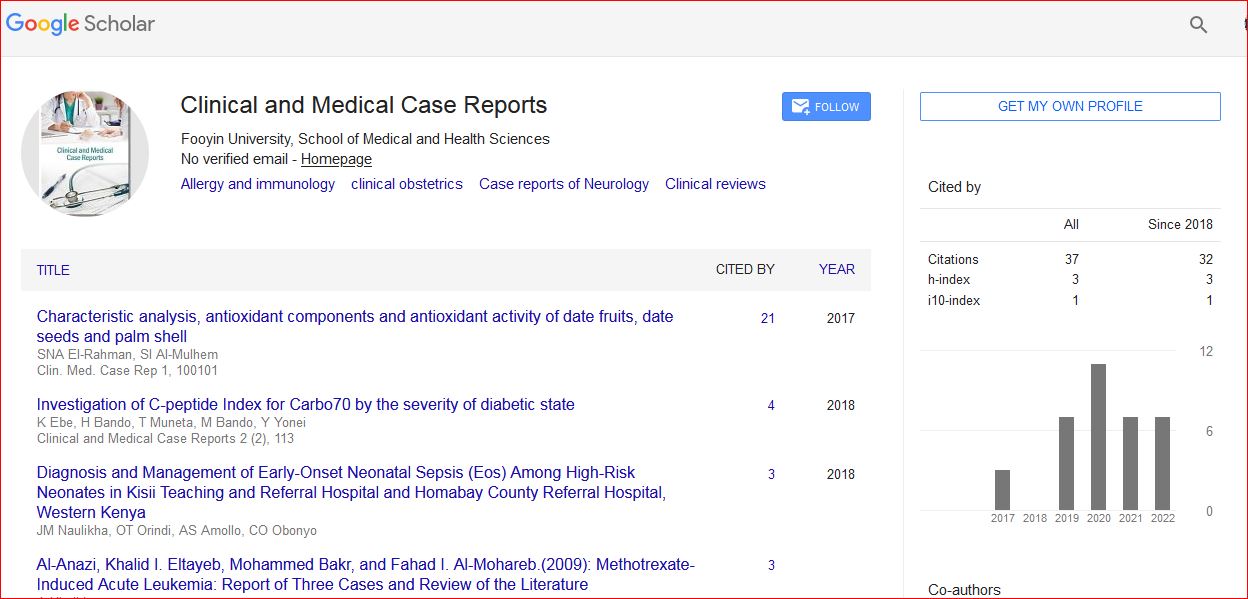
Clinical and Medical Case Reports received 53 citations as per Google Scholar report