Short Communication - (2025) Volume 14, Issue 4
Received: 01-Jul-2025, Manuscript No. aim-25-177767;
Editor assigned: 03-Jul-2025, Pre QC No. P-177767;
Reviewed: 17-Jul-2025, QC No. Q-177767;
Revised: 22-Jul-2025, Manuscript No. R-177767;
Published:
29-Jul-2025
, DOI: 10.37421/2427-5162.2025.14.585
Citation: Gonzales, Maria. ”Acupuncture: Proven for Chronic Pain Relief.” Alt Integr Med 14 (2025):585.
Copyright: © 2025 Gonzales M. This is an open-access article distributed under the terms of the Creative Commons Attribution License, which permits unrestricted use, distribution and reproduction in any medium, provided the original author and source are credited.
Acupuncture has emerged as a significant therapeutic modality for a diverse range of chronic pain conditions, substantiated by extensive research. An overview of systematic reviews highlights its effectiveness and safety in managing chronic musculoskeletal pain, often yielding better outcomes than placebo and comparable results to conventional treatments, thereby establishing its valuable role in pain management strategies. [1] Further reinforcing its efficacy, an updated systematic overview specifically addressing chronic low back pain confirmed that acupuncture provides substantial relief and improved functional capacity for patients. Its commendable safety profile positions it as a viable treatment option, especially when standard care proves insufficient for persistent low back discomfort. [2] For chronic neck pain, a comprehensive overview of systematic reviews and meta-analyses has demonstrated acupuncture's ability to significantly reduce pain intensity and enhance functional outcomes. This supports its integration as a valuable complementary or alternative therapy for individuals seeking relief from persistent cervical discomfort. [3] The benefits of acupuncture extend to degenerative joint diseases, as evidenced by an overview focusing on osteoarthritis. This analysis concluded that acupuncture offers considerable advantages in both pain reduction and the improvement of physical function in osteoarthritis patients, suggesting its role as a beneficial therapeutic addition to existing management protocols. [4] Addressing complex widespread pain syndromes, a systematic review and meta-analysis on fibromyalgia syndrome indicated that acupuncture is effective in alleviating pain and improving overall well-being. Coupled with a favorable safety profile, it stands as a promising treatment for this challenging condition. [5] Investigations into regional pain conditions, such as shoulder pain, reveal acupuncture's effectiveness. A systematic review and meta-analysis demonstrated that acupuncture significantly reduces pain and promotes functional recovery for various types of shoulder pain, including chronic conditions, positioning it as an important intervention in rehabilitation. [6] Chronic knee pain, a prevalent debilitating condition, also benefits from acupuncture. A systematic review and meta-analysis of randomized controlled trials reported positive outcomes, showing that acupuncture effectively reduces pain and improves physical function in affected patients, thereby validating its role as a beneficial treatment option. [7] The utility of acupuncture has also been established for chronic plantar fasciitis. A systematic review and meta-analysis concluded that acupuncture effectively reduces pain and improves function for patients, offering a valuable non-pharmacological treatment choice for this common cause of heel pain. [8] For myofascial pain syndrome, characterized by localized muscle pain and trigger points, a systematic review and meta-analysis confirmed acupuncture's efficacy. It significantly reduces pain and improves the quality of life for patients, highlighting its potential therapeutic role in managing this condition. [9] Finally, the role of acupuncture in chronic tendinopathy has been systematically reviewed, suggesting its effectiveness in reducing pain and improving function. This supports its integration into rehabilitation strategies for patients experiencing persistent tendon issues, offering a pathway to improved outcomes. [10]
Research consistently supports acupuncture as a safe and effective treatment for a broad spectrum of chronic pain conditions. An overview of systematic reviews found acupuncture beneficial for chronic musculoskeletal pain, often superior to placebo and comparable to conventional treatments, making it a viable option for managing persistent discomfort. [1] An updated overview confirms acupuncture's significant role in chronic low back pain, providing substantial relief and improved function for patients. Its high safety profile makes it an attractive treatment, especially when standard care is insufficient for ongoing low back issues. [2] For chronic neck pain, a systematic overview indicates acupuncture's effectiveness in reducing pain intensity and improving functional outcomes. This solidifies its position as a valuable complementary or alternative therapy for persistent neck discomfort, enhancing patient quality of life. [3] A systematic review focused on osteoarthritis highlights acupuncture's considerable benefits in reducing pain and improving physical function for patients. This suggests it is a valuable therapeutic addition to current management strategies for this widespread chronic condition. [4] Regarding fibromyalgia syndrome, a systematic review and meta-analysis found acupuncture effective in alleviating pain and improving overall well-being. Its favorable safety profile positions it as a promising treatment for individuals living with this complex and often challenging condition. [5] The effectiveness of acupuncture for various types of shoulder pain, including chronic conditions, is well-documented in a systematic review and meta-analysis. It significantly reduces pain and enhances functional recovery, establishing it as a key intervention in managing shoulder discomfort. [6] A systematic review on chronic knee pain reveals positive outcomes for acupuncture, demonstrating its ability to effectively reduce pain and improve physical function. This positions acupuncture as a beneficial and evidence-based treatment option for patients experiencing persistent knee discomfort. [7] For chronic plantar fasciitis, acupuncture is an effective method for pain reduction and improved function, according to a systematic review and meta-analysis. It offers a valuable non-pharmacological treatment choice for patients suffering from this common and often debilitating foot condition. [8] In cases of myofascial pain syndrome, a systematic review and meta-analysis shows that acupuncture significantly reduces pain and improves quality of life. This highlights its potential as a crucial therapeutic intervention in the comprehensive management of this localized pain condition. [9] A systematic review and meta-analysis on chronic tendinopathy indicates that acupuncture is an effective treatment for reducing pain and improving function. These findings support its integration into rehabilitation strategies for patients with persistent tendon issues, aiding in recovery and mobility. [10]
Acupuncture consistently demonstrates effectiveness and safety across a wide range of chronic pain conditions. Systematic reviews and meta-analyses highlight its significant benefits in managing chronic musculoskeletal pain, including low back pain, neck pain, shoulder pain, knee pain, and plantar fasciitis. For conditions like osteoarthritis, fibromyalgia syndrome, myofascial pain syndrome, and chronic tendinopathy, acupuncture has been shown to reduce pain intensity, improve physical function, and enhance overall quality of life. Many studies conclude that acupuncture often yields better outcomes than placebo or no intervention, and is comparable to some conventional treatments, making it a viable and valuable complementary or alternative therapy. Its favorable safety profile further supports its integration into pain management strategies, particularly when standard care is insufficient or patients seek non-pharmacological options. The accumulated evidence firmly positions acupuncture as an important therapeutic tool for various persistent pain conditions.
None
None
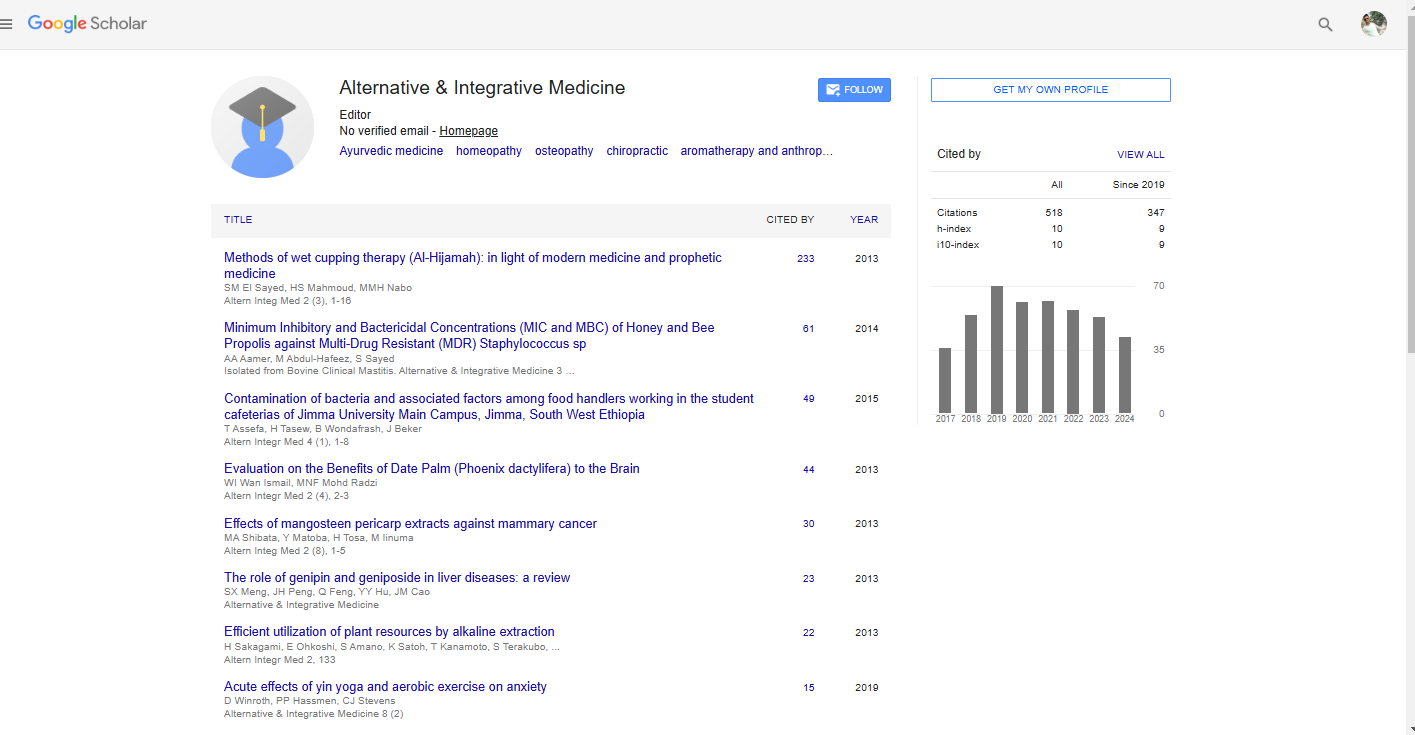
Alternative & Integrative Medicine received 476 citations as per Google Scholar report