Perspective - (2025) Volume 13, Issue 4
Received: 04-Aug-2025, Manuscript No. jcdd-25-176819;
Editor assigned: 06-Aug-2025, Pre QC No. P-176819;
Reviewed: 20-Aug-2025, QC No. Q-176819;
Revised: 25-Aug-2025, Manuscript No. R-176819;
Published:
01-Sep-2025
, DOI: 10.37421/2329-9517.2025.13.685
Citation: Ncube, Samuel. ”ACEi/ARBs: Efficacy, Safety, Clinical
Management.” J Cardiovasc Dis Diagn 13 (2025):685.
Copyright: © 2025 Ncube S. This is an open-access article distributed under the terms of the Creative Commons Attribution License, which permits unrestricted use, distribution
and reproduction in any medium, provided the original author and source are credited.
ACE inhibitors and angiotensin receptor blockers (ARBs) continue to be critical in managing various cardiovascular diseases. Their established benefits in treating conditions like hypertension, heart failure, and chronic kidney disease have been further supported by recent clinical insights. This class of drugs plays a pivotal role in improving patient outcomes by effectively targeting the renin-angiotensin-aldosterone system. Understanding their sustained relevance is key for contemporary medical practice, ensuring patients receive optimal care for these prevalent conditions [1].
Here's the thing, ACE inhibitors offer significant renal protection, which is particularly beneficial for patients with diabetes and chronic kidney disease. This protective effect extends beyond just blood pressure control. The underlying mechanisms involve complex pathways that mitigate renal damage and slow disease progression. Current perspectives emphasize their crucial role, while ongoing research continues to explore future directions for enhancing their renoprotective capabilities and optimizing patient management strategies [2].
Angioedema, though an uncommon adverse effect, is a known complication associated with ACE inhibitors. It manifests as rapid swelling, often in the face, lips, tongue, or throat, and can be life-threatening if not promptly addressed. This piece reviews its pathophysiology, which often involves bradykinin accumulation, alongside typical clinical presentations. Crucially, it outlines the best approaches for managing this condition, emphasizing the importance of early recognition and swift intervention to ensure patient safety and prevent severe outcomes [3].
For individuals diagnosed with heart failure and a reduced ejection fraction, ACE inhibitors are recognized as a fundamental component of treatment. Their efficacy in improving symptoms, reducing hospitalizations, and extending survival is well-documented. This article specifically focuses on how to ensure their optimal use in clinical practice. It delves into proper dosing regimens, methods for effective titration to achieve therapeutic goals, and the critical importance of close patient monitoring to maximize benefits and minimize adverse effects, thereby optimizing overall patient care [4].
ACE inhibitors remain a cornerstone in the management of hypertension, a prevalent cardiovascular risk factor. This review provides an updated perspective on their multifaceted role, detailing their overall effectiveness in lowering blood pressure. It also examines their performance across diverse patient demographics, considering factors such as age, ethnicity, and comorbidities. Furthermore, the article explores their judicious use in combination with other antihypertensive medications to achieve synergistic effects and better blood pressure control, adapting treatment strategies to individual patient needs [5].
In the context of diabetic nephropathy, ACE inhibitors have a long-standing and well-established role. This paper thoroughly re-evaluates their effectiveness, not only in managing but also in preventing the progression of this serious microvascular complication of diabetes. It offers a clearer picture of their profound renoprotective effects, which go beyond simple glycemic or blood pressure control, and explores what this means for contemporary clinical practice in slowing kidney disease progression and improving long-term renal outcomes for diabetic patients [6].
During the initial phases of the COVID-19 pandemic, significant questions arose regarding the safety and continued use of ACE inhibitors and ARBs. This review meticulously gathers the available evidence to address those early concerns, which included theories about potential viral entry mechanisms. It provides updated recommendations for clinicians on safely prescribing and continuing these essential medications for patients during the pandemic, clarifying their role and dispelling misconceptions based on emerging scientific data [7].
Let's break down the intricate mechanisms by which ACE inhibitors exert their therapeutic effects. This comprehensive review dives deep into their molecular mechanisms of action, illustrating precisely how they interact with the renin-angiotensin-aldosterone system (RAAS). It details how they prevent the conversion of Angiotensin I to Angiotensin II, leading to vasodilation, reduced aldosterone secretion, and decreased sodium retention, ultimately producing their beneficial cardiovascular and renal effects at a cellular level [8].
When prescribing ACE inhibitors, it is absolutely crucial for clinicians to be acutely aware of potential drug-drug interactions. This review specifically highlights several clinically significant interactions that can lead to adverse events or reduce therapeutic efficacy. It discusses interactions, particularly with common medications such as Nonsteroidal Anti-inflammatory Drugs (NSAIDs), potassium-sparing diuretics, and lithium, helping healthcare professionals to anticipate and avoid harmful combinations and ensure patient safety through careful medication management [9].
This article offers a critical examination of the evidence supporting the use of ACE inhibitors and ARBs in patients with chronic kidney disease (CKD). It meticulously evaluates their demonstrated benefits in slowing CKD progression and reducing proteinuria, acknowledging their limitations, such as the risk of hyperkalemia or acute kidney injury in certain populations. Furthermore, it discusses strategic considerations for selecting the most appropriate patients for these therapies, emphasizing personalized medicine and careful monitoring to maximize efficacy and minimize risks in CKD management [10].
Angiotensin-converting enzyme (ACE) inhibitors, often used in conjunction with Angiotensin Receptor Blockers (ARBs), play an indispensable role in the long-term management of various cardiovascular diseases [1]. These medications are critical for conditions such as hypertension, heart failure, and chronic kidney disease, having demonstrated consistent benefits in improving patient outcomes. Their efficacy in hypertension management is well-documented, performing effectively across diverse patient populations and proving valuable in combination with other antihypertensive agents to achieve optimal blood pressure control [5]. For individuals battling heart failure with reduced ejection fraction, ACE inhibitors form a cornerstone of treatment, demanding precise dosing, careful titration to therapeutic levels, and diligent patient monitoring to maximize their effectiveness and ensure the best possible results [4].
At a molecular level, ACE inhibitors exert their effects by inhibiting the conversion of Angiotensin I to Angiotensin II, thereby modulating the renin-angiotensin-aldosterone system (RAAS) [8]. This action leads to several beneficial physiological responses, including systemic vasodilation, decreased aldosterone secretion, and reduced sodium and water retention. These combined effects ultimately lower blood pressure and reduce cardiac workload, contributing significantly to the management of cardiovascular conditions and improving overall patient prognosis [1]. Understanding these intricate mechanisms is key to appreciating their broad therapeutic impact.
A particularly noteworthy aspect of ACE inhibitors is their profound renoprotective capability, which is of substantial benefit, especially for patients living with diabetes and pre-existing chronic kidney disease [2]. This protection extends beyond mere blood pressure reduction, involving intricate mechanisms that directly mitigate renal damage and slow the progression of kidney disease. In the context of diabetic nephropathy, ACE inhibitors hold a well-established and critically re-evaluated position, showing significant effectiveness in both preventing the onset and managing the advancement of this severe complication of diabetes. Their renoprotective effects provide a clearer picture of their clinical importance in improving long-term renal outcomes [6]. When considering their application in chronic kidney disease more broadly, ACE inhibitors and ARBs are subjects of critical appraisal, with evidence supporting their benefits in slowing disease progression and reducing proteinuria. However, careful patient selection and continuous monitoring are paramount to address potential limitations, such as the risk of hyperkalemia or acute kidney injury in vulnerable patient groups [10].
While highly beneficial, it is crucial for healthcare providers to be acutely aware of the potential adverse effects and significant drug-drug interactions associated with ACE inhibitors. One notable, though uncommon, side effect is angioedema. This condition presents as rapid swelling, frequently affecting the face, lips, tongue, or throat, and can swiftly become life-threatening if not recognized and managed promptly. Understanding its pathophysiology, which often involves an increase in bradykinin levels, along with typical clinical presentations, is vital for effective and timely intervention [3]. Beyond angioedema, practitioners must also consider clinically significant drug-drug interactions. These interactions, especially with commonly prescribed medications such as Nonsteroidal Anti-inflammatory Drugs (NSAIDs), potassium-sparing diuretics, and lithium, can lead to adverse events or diminish the therapeutic efficacy of ACE inhibitors. Proactive awareness and careful medication reconciliation are essential to prevent harmful combinations and maintain patient safety throughout the course of treatment [9].
The continued importance of ACE inhibitors and ARBs is regularly reinforced by new clinical insights. For instance, during the initial global health crisis of the COVID-19 pandemic, there were considerable questions and concerns regarding the safety of continuing ACE inhibitors and ARBs for patients. A comprehensive review of emerging evidence was crucial in addressing these early apprehensions. It ultimately provided updated recommendations that supported the judicious use of these medications for patients during the pandemic, clarifying their role based on scientific data and dispelling initial misconceptions [7]. This scenario underscores the dynamic nature of clinical practice and the necessity for healthcare professionals to stay informed. Ultimately, ACE inhibitors and ARBs maintain their status as indispensable tools in cardiovascular and renal medicine, with their ongoing research and clinical application continually refining strategies to improve patient outcomes across a wide spectrum of diseases [1].
ACE inhibitors and Angiotensin Receptor Blockers (ARBs) are pivotal in managing cardiovascular and renal diseases, including hypertension, heart failure, and chronic kidney disease, consistently improving patient outcomes. They offer significant renal protection, particularly for patients with diabetes and CKD, by mitigating damage and slowing disease progression. Their role in diabetic nephropathy is well-established, emphasizing renoprotective effects. These medications work by modulating the renin-angiotensin-aldosterone system, leading to beneficial effects like vasodilation. Optimal use in conditions like heart failure with reduced ejection fraction requires careful dosing and monitoring. While highly effective, clinicians must be vigilant about potential adverse effects such as angioedema, a known but uncommon complication requiring prompt management due to bradykinin accumulation. Additionally, awareness of crucial drug-drug interactions, especially with NSAIDs, potassium-sparing diuretics, and lithium, is essential for patient safety. Even during health crises like the COVID-19 pandemic, evidence supported their continued, safe use, addressing initial concerns. The comprehensive understanding of their molecular mechanisms, clinical applications, side effects, and interactions ensures their sustained relevance in modern medicine. Continuous insights reinforce their importance in diverse patient populations, underscoring the need for informed prescription and patient-centric care.
Indexed at, Google Scholar, Crossref
Indexed at, Google Scholar, Crossref
Indexed at, Google Scholar, Crossref
Indexed at, Google Scholar, Crossref
Indexed at, Google Scholar, Crossref
Indexed at, Google Scholar, Crossref
Indexed at, Google Scholar, Crossref
Indexed at, Google Scholar, Crossref
Indexed at, Google Scholar, Crossref
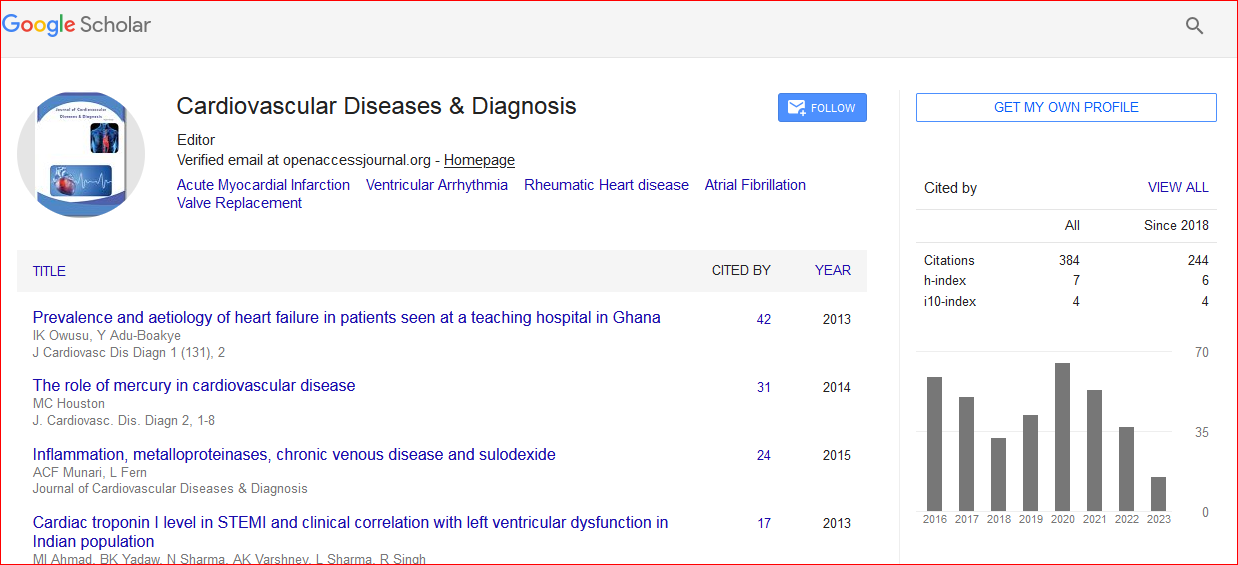
Cardiovascular Diseases & Diagnosis received 427 citations as per Google Scholar report